
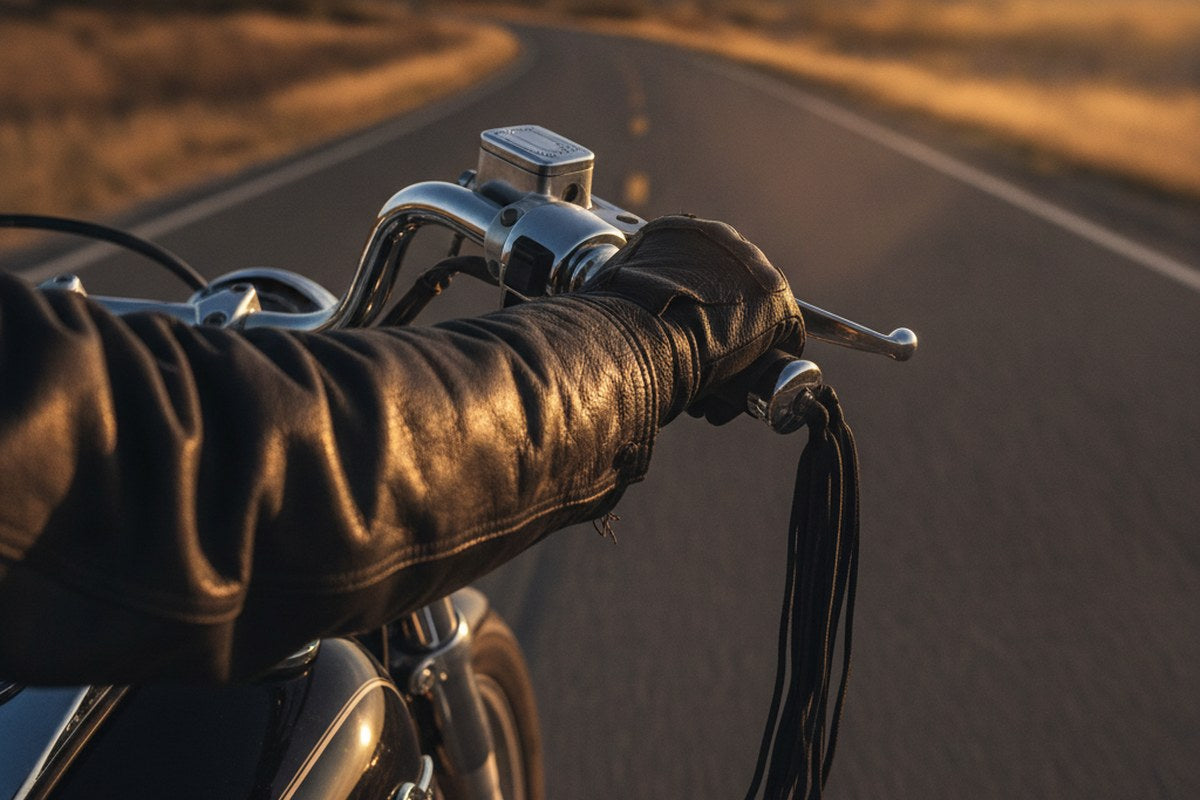
Because you're sitting at the end of the suspension chain, and whatever the forks and shock don't catch gets delivered straight up your spine. On a motorcycle you sit almost vertically over the rear wheel, so every expansion joint and pothole becomes an axial jolt — a compression pulse traveling from the seat through your pelvis into your lumbar discs. In a car, an angled seat, cushioning, and better isolation absorb most of that. On a bike, the last shock absorber is you.
It gets worse over time for two reasons. Seat foam breaks down — a saddle that damped hits when new can be transmitting nearly everything a few seasons later. And discs tolerate repeated compression less kindly as we get more miles on us; studies on whole-body vibration have consistently linked long exposure with back discomfort, which is exactly the input a stiff seat feeds you.
What helps: keep your suspension serviced and sag set for your actual weight (many bikes leave the factory too stiff or too soft), run correct tire pressures, rise slightly off the seat with knees soft for the hits you see coming, and don't ride slouched — a rounded spine takes bumps far worse than a tall one. Then add the missing layer: shock absorption at the seat itself, so the pulse is spread and softened before it ever reaches your spine.



No comments yet. Be the first rider to weigh in.