
Because the muscles that hold you upright are running out of gas — on schedule. Good riding posture is an active job: your deep back and core muscles hold the pelvis neutral and the spine stacked, minute after minute, with no movement to refresh blood flow. Static holds drain muscles far faster than motion does, and constant vibration through the seat drains them faster still. Around the one-hour mark they quietly clock out, your pelvis rolls backward, and your spine settles into that C-shaped slump.
The problem is the slouch costs more than it saves. A rounded lumbar spine loads the discs unevenly, shifts weight onto your tailbone, and makes every bump hit harder — which is why the last 30 minutes of a ride often hurt more than the first two hours combined.
What helps:
- Reset before you fail: every 15 minutes, roll the pelvis forward, sit tall, drop the shoulders. Cheap insurance.
- Weight the pegs briefly to wake everything up.
- Stop hourly, even for two minutes of walking.
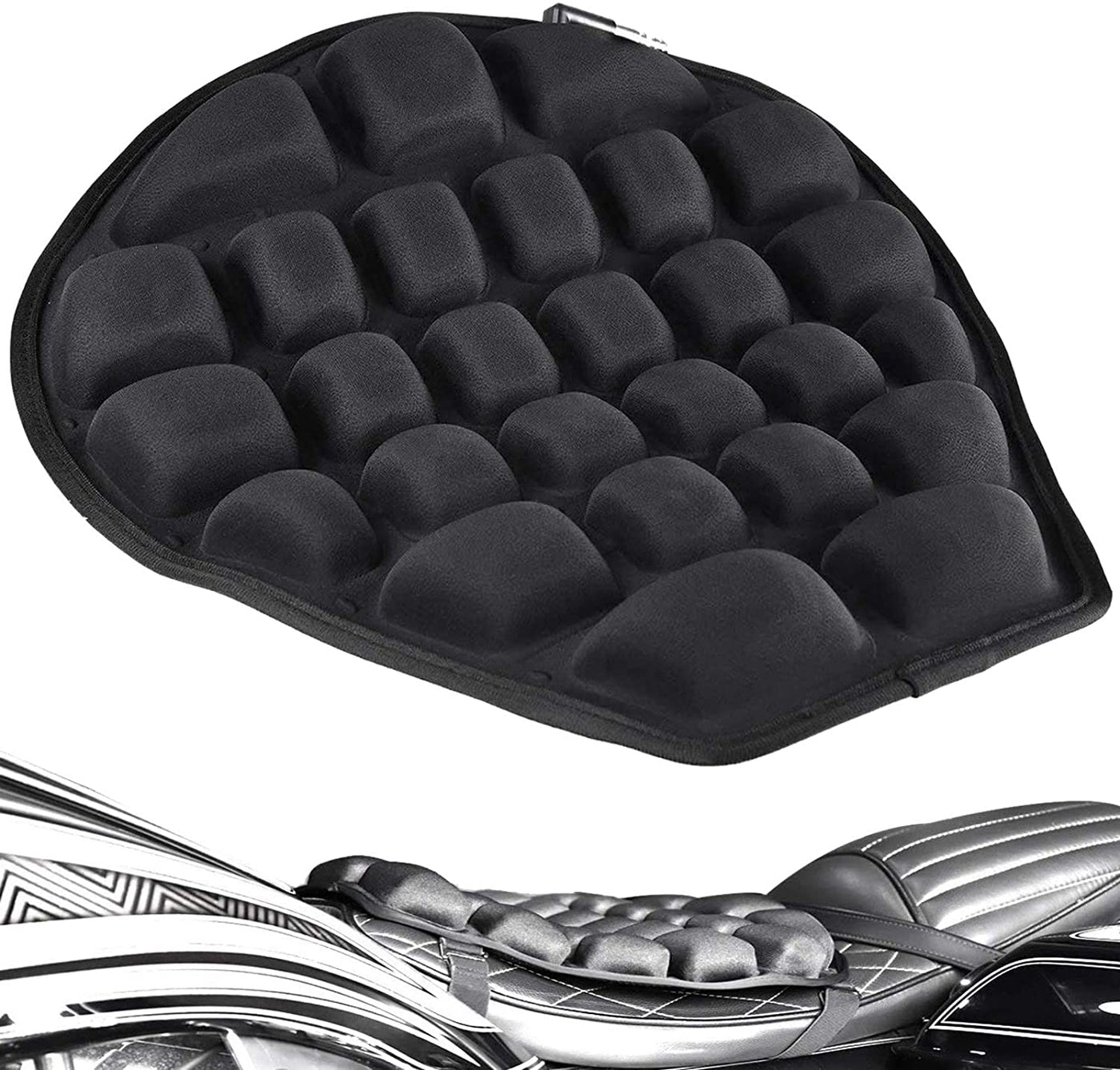
And reduce the drain itself: a lot of what exhausts those postural muscles is bracing against pressure points and bumps. Spread the pressure, absorb the hits at the seat, and the muscles that keep you tall simply last longer.



No comments yet. Be the first rider to weigh in.