
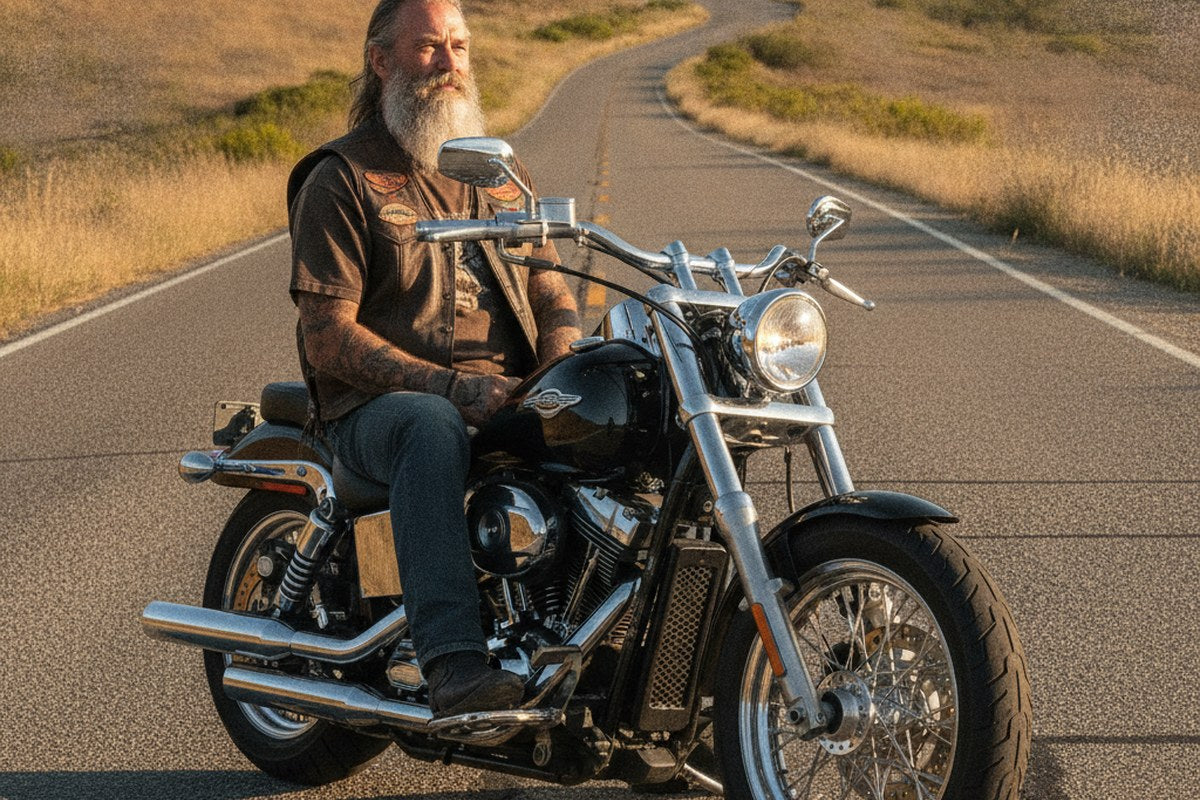
Smooth pavement loads your spine steadily. A bumpy road loads it in hits — and hits are much harder on your back than steady pressure. Every pothole and washboard section sends an impact up through the seat, and your spine takes it as a rapid compression, like a small jump landing you didn't get to prepare for. Two things make it worse. First, your muscles brace: when the road gets rough, everything from your glutes to your neck tightens up to stabilize you, and hours of that bracing is exhausting on its own — that's the “pogo stick up my spine” feeling riders describe. Second, the hits are unpredictable, so half of them catch you mid-slouch, loading the spine in exactly the position it handles impact worst.
How much reaches your back depends on what's between you and the road:
- Tires and suspension: correct pressures and well-set suspension absorb the first layer. Stiff, worn, or overinflated setups pass everything through.
- Technique: on a motorcycle, get light on the seat over rough patches — knees and pegs make excellent shock absorbers. Slowing down cuts impact energy dramatically.
- The last inch: a hard seat delivers whatever's left directly into your sit bones and spine. An air layer between you and the seat — the same principle as air-ride truck seats — soaks up that final transmission, turning sharp hits into dull pushes. On rough roads, that last inch is often the difference between finishing the ride and dreading it.



No comments yet. Be the first rider to weigh in.