
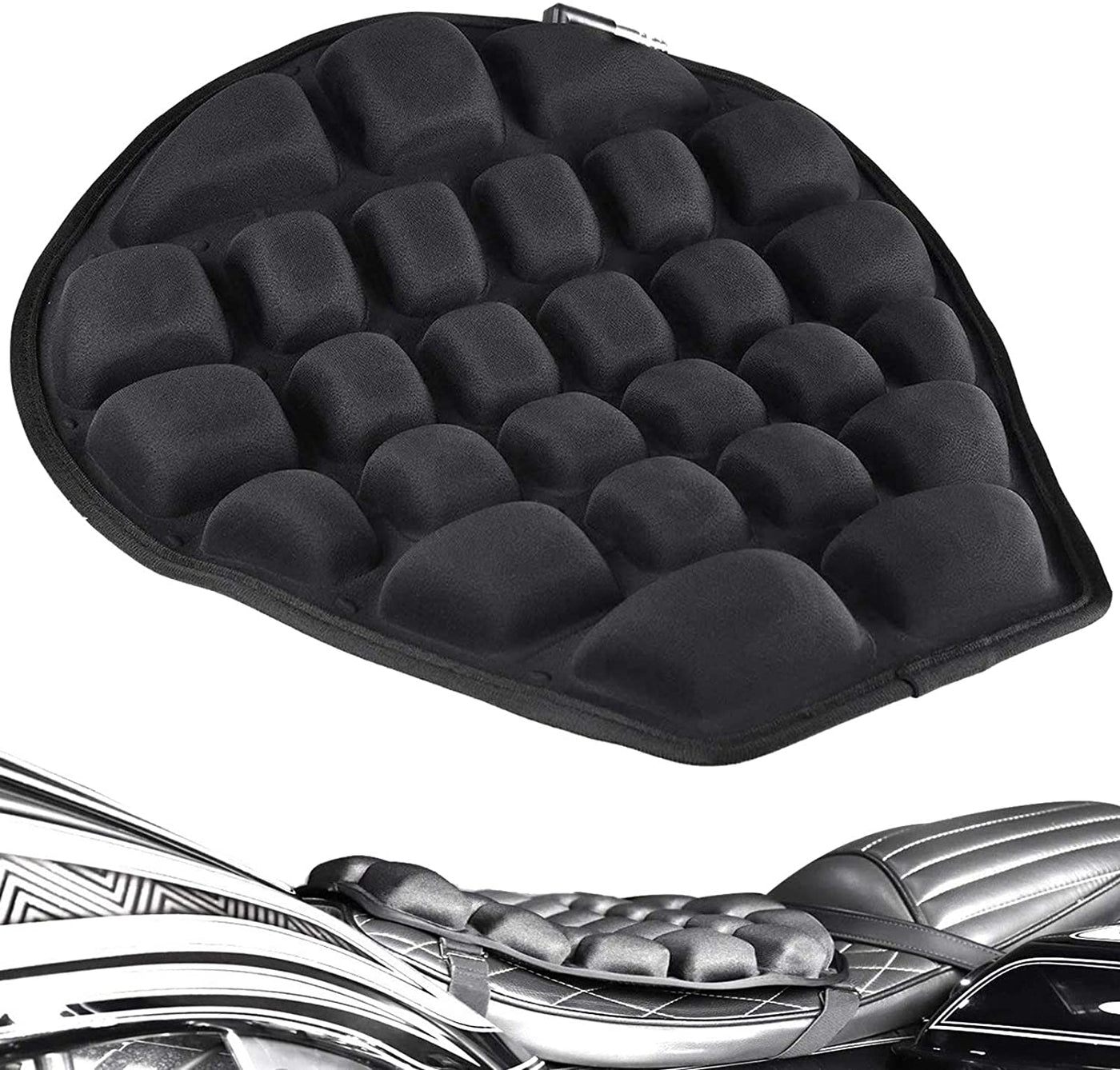
Because on a motorcycle, your spine is the suspension. Three loads stack up every mile: a static riding posture that locks your lumbar spine in one position, engine and road vibration traveling straight up through the seat, and your entire upper-body weight concentrated on two small sit bones. None of that is a fitness problem — it's physics, and it hits riders with strong backs too.
In a car, a contoured seat, a backrest, and soft suspension share those loads for you. On a bike there's no backrest, the seat foam packs down, and every crack in the pavement becomes a small axial jolt to discs that are already compressed and not moving. Held still long enough, the muscles guarding your lower back fatigue, tighten, and start to burn.
What actually helps:
- Set the bars and pegs so your pelvis sits neutral, not tucked under.
- Reset your posture every 15–20 minutes — roll the pelvis, drop the shoulders.
- Take weight on the pegs over rough sections and stop for a real break every hour.
Fit and movement handle two of the three loads. The one most riders never touch is the contact point itself — spreading pressure off those two sit bones and absorbing shock before it reaches your spine. That's the layer that quietly gives you your miles back.




No comments yet. Be the first rider to weigh in.