
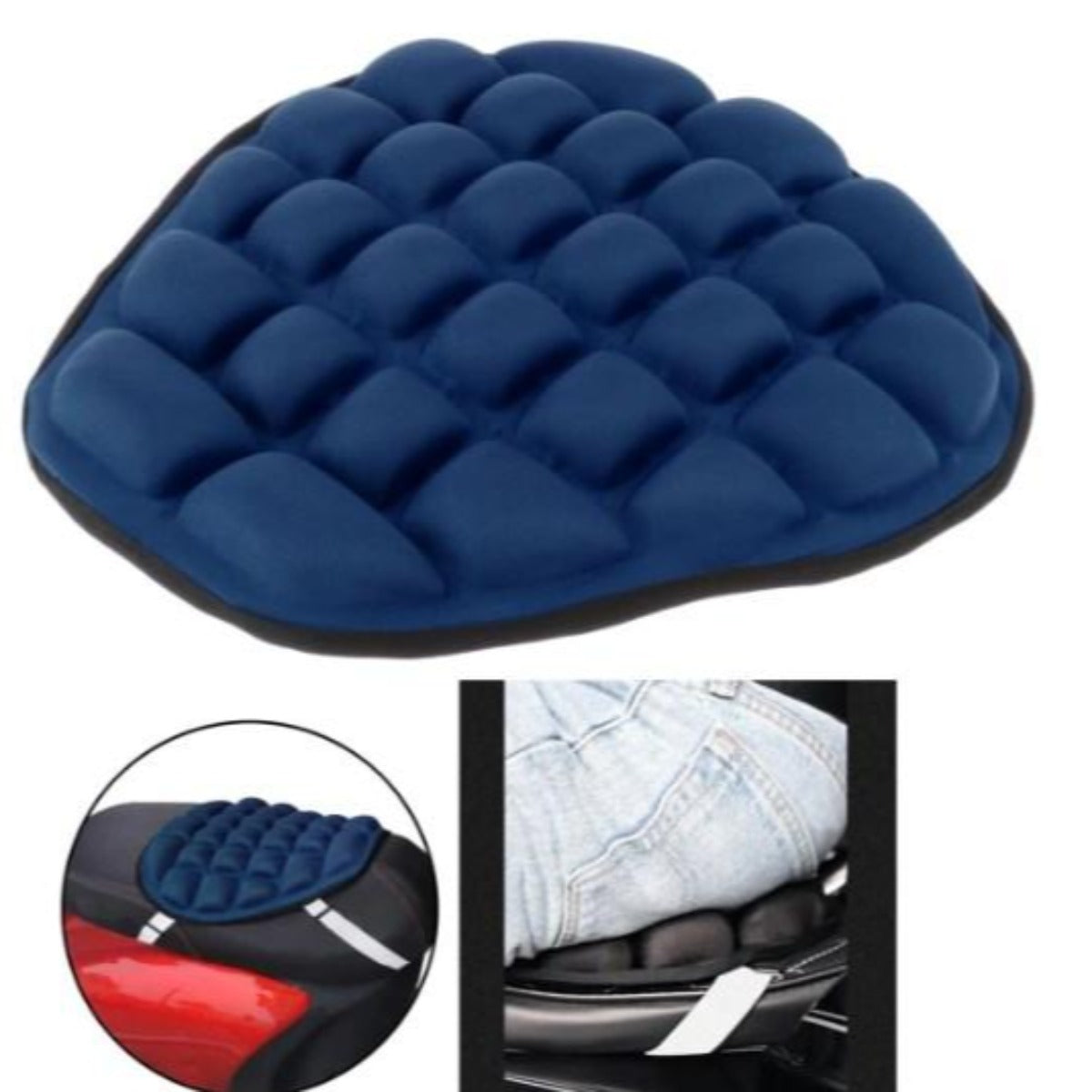
Because it wasn't built for your back — it was built for a price point and a showroom. That's not cynicism; it's how the economics work. The factory has to hit a cost target, and the seat is one of the easiest places to save money. It also has to look sleek on the sales floor, which favors thin, sculpted foam over anything designed for hour three of a ride.
Here's what that means where you sit:
- One foam for everybody. A single density is supposed to serve a 140-pound rider and a 260-pound rider. It can't. For most people it's too firm in exactly the wrong spots.
- All the weight on two points. A flat, firm pan concentrates most of your body weight on your two sit bones. Pressure builds, blood flow drops, and somewhere around the one-hour mark the ache and the dead-legs feeling arrive on schedule.
- Nothing absorbing the road. Thin foam passes vibration and sharp hits straight through — the pogo-stick-up-your-spine feeling on every expansion joint.
- It gets worse with age. Foam packs out and loses rebound, so a seat that was tolerable at 5,000 miles can be brutal at 30,000.
The fix is changing the contact-point math: spread the load across the whole seat instead of two points, and put something between your spine and the bumps. That's exactly the layer most riders skip — and the one that buys back the most miles per dollar.




No comments yet. Be the first rider to weigh in.