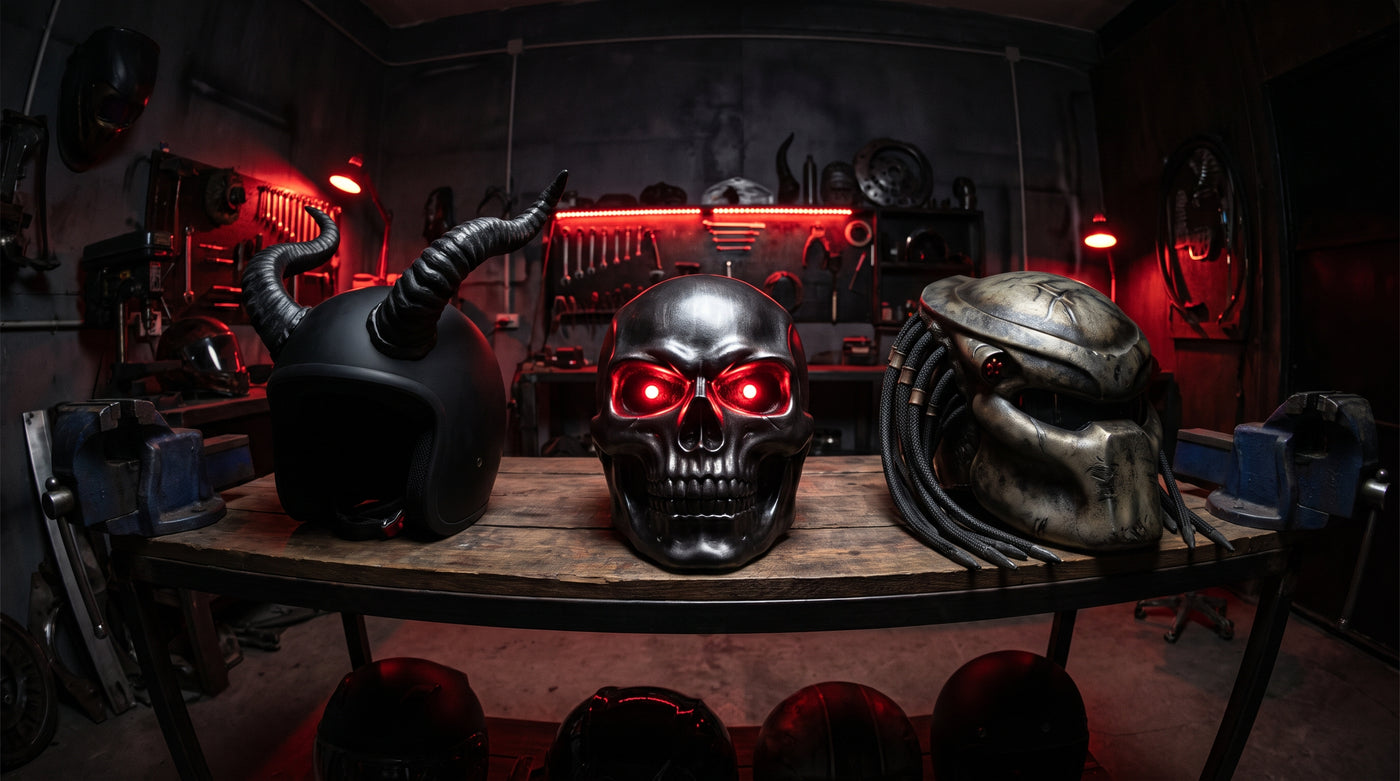
A scary motorcycle helmet sitting on a shelf at a bike show usually draws more phone cameras than the $40,000 custom chopper beside it. Riders walk past chrome wheels and hand-tooled leather seats to crowd around a lid with a skull jaw or demon horns that look ripped from a horror film set. The reaction makes sense. Your helmet is the first thing anyone notices on a ride.
This guide covers the major categories of scary motorcycle helmets that carry real DOT certification for street riding. You will learn which designs hold up at highway speeds, how to spot a novelty fake that gives zero actual head protection, what affordable helmet covers can do for under $30, and which scary style pairs best with each type of motorcycle.
Why Scary Motorcycle Helmets Outsell Plain Ones
The custom graphic helmet segment has grown faster than any other helmet category since 2020. On major retailers like RevZilla, graphic and themed helmets outsell solid-color models roughly 3 to 1 in the half-shell and novelty segments. Scary designs, from skulls to demons to horror movie tributes, consistently sit at the top of the bestseller lists.
The reason is practical. A plain black half shell looks identical to every other rider on the road. A skull-face helmet or a predator jaw design turns the rider into the visual centerpiece of any group ride, bike night, or rally. For cruiser and chopper riders especially, the helmet is part of the outfit, not just protective equipment.
Social media accelerated the trend. An Instagram reel of a rider pulling up to a gas station wearing a demon-horned helmet routinely pulls 500,000 or more views. The same rider in a plain matte black lid barely registers. Riders figured out that a $120 scary helmet generates more attention than $5,000 in chrome accessories, and the content practically makes itself.
Skull-Face Helmets: The Most Popular Scary Motorcycle Helmet Design
Skull-face helmets outsell every other scary design by a wide margin. The concept is simple: the visor and chin area are painted or molded to look like a human skull, with exposed teeth, hollow eye sockets, and sometimes a cracked bone texture extending to the crown.
The best-selling DOT-rated example in this category is the 1Storm HJDS series. It weighs 3.4 pounds, uses a polycarbonate shell, and features a dual-lens anti-fog visor system. The skull graphic wraps the full exterior with no blank spots on any panel. It retails for about $80, which puts it within reach of most riders looking for a first scary helmet without breaking the bank.
For half-shell skull designs, the approach is different. Companies like Daytona Helmets sell DOT-rated half shells with skull graphics airbrushed onto the crown. These run lighter at around 2 pounds and work better in warm climates, but you lose the full jaw line effect that makes full-face skull helmets so visually striking from a distance.
The detail that separates a good skull helmet from a cheap one is the paint quality. Budget versions use a vinyl wrap or water-transfer decal that bubbles and peels after UV exposure. Better options use automotive-grade urethane paint, the same type of finish used on motorcycle gas tanks, which holds up for years of road use. Check the product listing for "hand-painted" or "urethane clear coat" as quality markers. If you want to see what is available right now, the skull motorcycle helmets collection has a solid range of DOT-rated options.

Demon, Predator and Monster Helmet Designs
Beyond skulls, the scary motorcycle helmet market splits into three major design families.
Demon and devil helmets use horn attachments bolted or adhesive-mounted to the crown. The horns are typically made from lightweight fiberglass or resin and add 4 to 8 ounces of weight. The mounting method matters more than the horn material. Bolt-on horns stay put at highway speeds. Adhesive-mounted horns can vibrate loose above 70 mph, which means you are leaving debris on the road and losing your look at the same time. Always check for bolt-through mounting if you plan to ride above city speeds.
Predator-style helmets are the heaviest custom builds in this category. The signature dreadlock attachments, molded from resin or flexible rubber, add 1.5 to 2 pounds to the base shell. A standard Predator build starts around 4.5 pounds total, which is noticeably heavier than most production full-face helmets at 3.2 pounds. Riders with neck issues or anyone planning rides longer than an hour should factor in that extra weight seriously. The upside is that nothing else on the road comes close to the visual impact.
Horror movie tribute helmets cover everything from Pennywise-inspired paint jobs to Jason Voorhees hockey mask face shields and Venom-style builds with 3D fangs. Most of these are custom airbrush jobs applied to existing DOT-rated shells by specialty painters. A professional airbrush on a full-face helmet runs $200 to $600 depending on detail level, plus the cost of the base helmet underneath.

Scary Motorcycle Helmet Covers: The Budget Alternative
A scary motorcycle helmet cover does the same visual job at a fraction of the cost. Instead of buying a dedicated scary helmet, you slip a fabric or neoprene cover over your existing DOT-rated shell. The cover pulls tight around the helmet exterior and transforms a plain lid into a skull face, demon, clown, or zombie design in about 30 seconds.
Covers work best on half-shell and 3/4 open-face helmets. Full-face helmet covers exist but they tend to interfere with visor operation and muffle vents. The biggest advantage of covers is variety: you can own five different scary looks for under $100 total and swap them based on the ride. A skull for regular rides, a demon for rallies, and something seasonal for October events.
Most covers retail between $15 and $30 and are made from stretchy polyester or neoprene. The fit depends on your helmet size and shell shape. Covers designed for round half shells do not fit well on D-shaped or oval helmets, so check the manufacturer's compatibility list before ordering. HeadSkinz and Skullskins are two of the more established cover brands with size guides that actually match real helmet dimensions.
The downside is durability. A cover in direct sun fades noticeably within one riding season. The graphics lose sharpness faster than a painted or molded design. For riders who want the scary look without the full investment, covers are a smart entry point. For riders who want something permanent, a painted or factory-graphic helmet is the better long-term path.

DOT Certification and Scary Helmet Safety
The scary paint, horns, or molded details on the outside of a helmet have zero effect on whether it passes DOT testing. DOT FMVSS 218 tests the shell and liner inside. The standard drops the helmet onto flat and hemispherical anvils at roughly 13.4 mph impact speed and measures how well the inner liner absorbs force before it reaches the rider's skull.
External decorations only become a safety concern when they change the helmet's aerodynamic profile at speed. Tall horns or wide spike attachments can create wind drag that twists the helmet on your head. This is a real problem above 60 mph. If the accessories sit close to the shell surface and stay under 3 inches tall, the aerodynamic effect is minimal and manageable at highway speeds.
The bigger safety concern with scary motorcycle helmets is the novelty problem. Some sellers market realistic-looking skull helmets and horror designs as "novelty only" or "not DOT rated." These helmets use thin ABS plastic with no energy-absorbing EPS liner inside. They look identical to DOT-rated versions in product photos. The only way to tell the difference before buying is to check for the DOT sticker with the manufacturer name and model number printed on it. If the listing says "novelty," it is telling you the helmet will not protect your head in a crash. Walk away from those listings every time.
A helmet that carries both DOT and ECE 22.06 certification has been tested at more impact angles than DOT alone requires. If you are spending $150 or more on a scary full face motorcycle helmet, look for dual certification as a quality indicator.

Scary Motorcycle Helmet Comparison by Design Type
Each scary design type serves a different type of rider and riding situation. Here is how they compare side by side:
| Design Type | Typical Weight | Price Range | DOT Available? | Best For |
|---|---|---|---|---|
| Skull face full-face | 3.2 to 3.6 lbs | $70 to $150 | Yes | Maximum scare factor, all-weather |
| Skull graphic half shell | 1.8 to 2.2 lbs | $50 to $100 | Yes | Warm weather, bike nights |
| Demon horns (bolt-on) | 2.5 to 3.5 lbs | $90 to $200 | Yes (base) | Rallies, group rides, photos |
| Predator style | 4.0 to 5.5 lbs | $150 to $400+ | Varies | Show events, short rides |
| Horror custom airbrush | 3.0 to 3.5 lbs | $250 to $700 | Yes (base) | One-of-a-kind statement pieces |
| Helmet cover | +2 to 4 oz over base | $15 to $30 | N/A (cover only) | Budget riders, swapping looks |
The sweet spot for most riders is the skull face full-face category. It delivers the strongest visual impact, weighs about the same as a standard helmet, and stays under $150. Predator builds look incredible but the added weight makes them impractical for rides longer than 30 to 45 minutes, especially in summer heat.
For riders who split time between daily commuting and weekend events, keeping two helmets makes more sense than compromising on one. A clean DOT-rated half shell for the daily ride and a full-face skull or demon helmet for rallies and shows gives you the best of both worlds without wearing a 4-pound Predator build through rush-hour traffic.
5 Mistakes When Buying a Scary Motorcycle Helmet
- Buying a "novelty" helmet for real road riding. A novelty scary helmet uses a thin shell with no impact-absorbing liner. It provides roughly the same protection as a baseball cap in a crash. If the listing does not clearly state "DOT FMVSS 218," keep looking.
- Ignoring accessory weight at highway speeds. Those 8-inch demon horns look terrifying at a stoplight. At 75 mph, they catch wind and create lateral forces that pull your head sideways. Keep exterior accessories under 3 inches and verify the mounting method can handle sustained highway vibration.
- Assuming all skull helmets are the same quality. A $40 skull helmet from an unknown marketplace brand and a $120 version from 1Storm or HNJ look similar in photos. The difference is shell thickness, EPS liner density, and paint durability. The cheaper version fails in all three areas within months.
- Forgetting visor compatibility on graphic helmets. Some skull-face designs position the graphic across the chin bar and visor hinge area. After 50 visor open-close cycles, the paint chips at the hinge point and ruins the design. Check whether the graphic avoids high-wear contact zones before buying.
- Skipping the fit check because the design looks great. A scary helmet that does not fit properly slides around on your head during riding. Sliding means reduced crash protection and an uncomfortable ride. Measure your head circumference, check the manufacturer size chart, and buy for snug break-in fit, not loose day-one comfort.
If you are ready to pick up a helmet that turns heads and meets DOT standards, the cool motorcycle helmets collection has the full range. Every helmet ships with verified DOT certification and free returns, so you can check the fit at home before committing to a design.

No comments yet. Be the first rider to weigh in.