
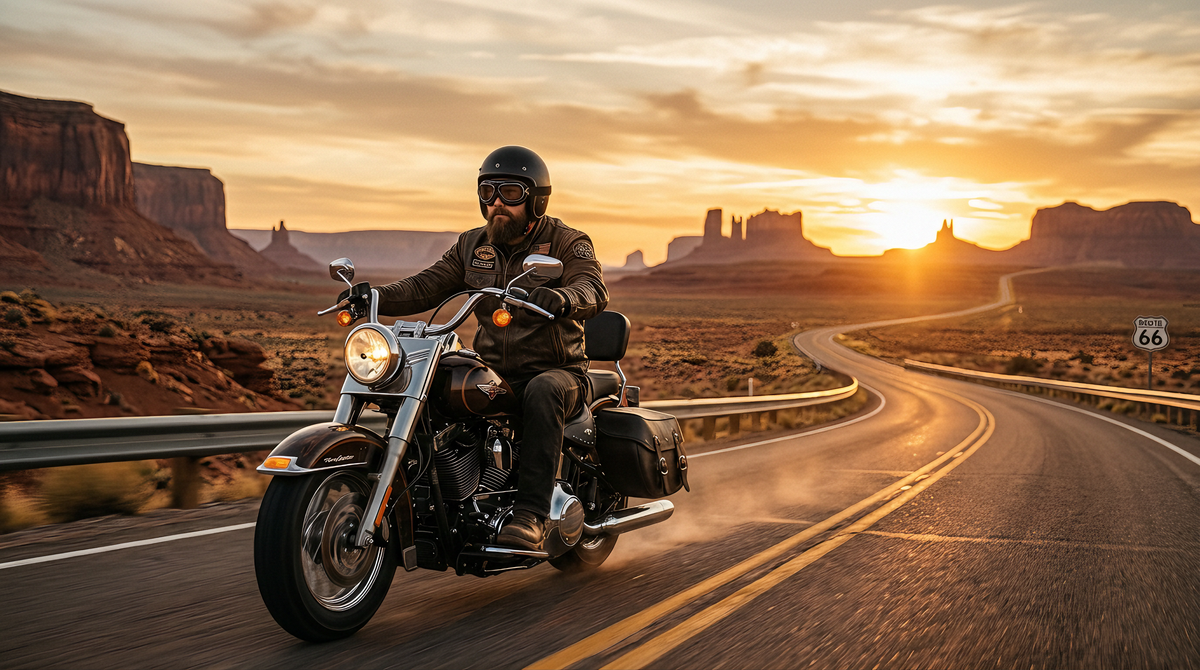
You grab your open-face helmet, throw on a pair of cheap gas station sunglasses, and hit the highway. Thirty minutes in, your eyes are watering from wind blast, a bug just bounced off your cheekbone, and those lenses are fogging up every time you slow down. Sound familiar? Most riders go through two or three garbage pairs before figuring out what actually works.
This guide covers the best motorcycle goggles across nine different riding styles, from vintage cruiser runs to night rides and over-glasses fits. Every pick below is based on real lens specs, frame materials, and how they hold up at highway speed. By the end, you will know exactly which pair fits your face, your helmet, and your riding conditions.
What to Look for Before You Buy Motorcycle Goggles
Not every goggle is built for riding. Ski goggles fog. Shop safety goggles lack UV protection. Paintball masks block your peripheral vision. Here is what separates a real pair of motorcycle goggles from everything else.
Lens material: Polycarbonate is the standard. It handles impact at speed (ANSI Z87.1 rated pairs stop a quarter-inch steel ball at 150 fps) and resists shattering. Glass is heavier and cracks on impact. Cheap acrylic scratches in a month.
UV protection: UV400 blocks 99.9% of UVA and UVB rays. Without it, a full day of riding can cause photokeratitis, which is basically a sunburn on your cornea.
Ventilation: Indirect vents on the top and bottom edges let air move through without creating a wind tunnel. Direct vents (straight holes) let dust in. Foam-backed vents are the best balance.
Seal and padding: Closed-cell foam seals out wind and debris. Open-cell foam is softer but absorbs sweat and breaks down faster. A good pair uses dual-density foam: soft against the skin, firm at the frame edge.
Strap: Look for adjustable elastic at least 1 inch wide. Thin straps slip on helmets. Silicone grip strips on the inside keep things locked in place.
Best Vintage Motorcycle Goggles for Classic Rides
Vintage motorcycle goggles are built around a round or oval lens shape with chrome or brass frames. The look comes straight from 1940s pilot gear, and it pairs perfectly with half-shell and three-quarter helmets. The Halcyon Mark 49 is the benchmark in this category. It uses hand-stitched leather padding, a real glass lens, and a chrome-plated brass frame made in England since 1941.
Most riders will not spend $120 or more on a Halcyon pair. That is fine. There are solid alternatives with polycarbonate lenses and faux-leather padding that handle highway speeds just as well for everyday riding. What matters: the frame should fit snug without pinching your nose bridge, and the lens should be dark enough (Category 3 tint) for daytime but not so dark you cannot see the road at dusk.
If you ride a Harley Softail, Indian Scout, or any cruiser with a retro profile, vintage goggles are the move. They sit flat against most open-face helmets and leave your jaw clear for airflow. Check the ALR vintage goggles collection for pairs that match this style.

Best Aviator Goggles for Cruiser and Touring Riders
Aviator goggles share DNA with vintage styles but tend to be larger, with wider lenses and deeper padding for longer rides. The classic aviator shape covers more of the orbital area around your eyes, which blocks side wind better than a standard round frame.
For cruiser riders doing 2+ hour highway stretches, aviator goggles with anti-fog coating are worth the extra cost. A double-pane lens (two layers of polycarbonate with an air gap) cuts fogging by about 80% compared to single-pane. Brands like Bobster and Pacific Coast use this design in their touring lines.
One thing to watch: aviator goggles with oversized frames can interfere with helmet cheek pads on some three-quarter shells. The solution is to put the goggles on first, then lower the helmet. If you feel pressure on the frame edges, that pair is too wide for your setup. Aim for a frame width under 6.5 inches for most standard helmets.
Best Motorcycle Goggles Over Glasses (OTG Styles)
About 64% of American adults wear corrective lenses, according to the Vision Council's 2024 report. That means most riders either need prescription inserts, contact lenses, or OTG (over-the-glasses) goggles. OTG pairs are the simplest solution: they have a deeper cavity and wider frame that fits over standard eyeglasses without crushing them.
The key spec is internal depth. You need at least 45mm from lens to face to fit most glasses frames inside comfortably. Anything less and your glasses will press against the goggle lens, creating a scratch risk and fogging headache. Width matters too: the goggle interior should clear your glasses arms by at least 5mm on each side.
OTG goggles tend to fog more because of the extra airspace inside. Look for pairs with vented foam on both the top and bottom edges, and consider an anti-fog spray (a $6 bottle lasts months). For riders who also read our biker goggles guide, the OTG requirement narrows your options, but there are solid choices in the $25 to $45 range.

Best Motorcycle Goggles for Open Face Helmets
Open-face (three-quarter) helmets leave your entire lower face exposed. That means your goggles need to handle direct wind, road grit, and insects at speed, not just UV rays. The best goggles for open-face setups have a full perimeter seal, meaning foam or rubber touches your face all the way around, with zero gaps at the nose bridge.
The Biltwell Moto 2.0 is a popular choice in this category. It uses a flexible polyurethane frame and a replaceable foam liner, and the single-pane lens is wide enough (about 160 degrees of horizontal visibility) to cover your peripheral vision without blind spots. Price sits around $30 to $40.
If you ride a Harley Sportster or a bobber with a half-shell helmet, pair your goggles with a motorcycle face mask for chin and cheek coverage. The combination gives you near-full-face protection without switching to a closed helmet. Make sure the mask sits under the goggle seal, not over it, so wind does not push up through the gap.

Best Motorcycle Goggles for Night Riding
Riding after dark with tinted goggles is a fast way to miss a pothole or a deer. Night riding goggles need a clear or yellow-tinted lens. Yellow lenses (often called "amber" or "high-definition") boost contrast in low light by filtering blue wavelengths. They make road markings and brake lights stand out more against dark pavement.
For a specific recommendation: look for a pair with a Category 0 or Category 1 lens tint (transmitting 80% or more visible light). Anything darker than Category 1 cuts too much light for safe night riding. The Bobster Cruiser II comes with interchangeable lenses (smoke, amber, and clear) in a single kit for around $25, which covers day and night in one purchase.
Anti-reflective coating matters here. Oncoming headlights create glare on uncoated lenses, and at 60 mph you have about 3.5 seconds to react to a road hazard. An AR-coated lens reduces that glare by roughly 40%.
Motorcycle Goggles Comparison: Styles at a Glance
| Style | Best For | Lens Tint | Fits Over Glasses | Price Range |
|---|---|---|---|---|
| Vintage Round | Cruiser, cafe racer | Smoke / amber | No | $20 - $130 |
| Aviator | Touring, long highway | Smoke / polarized | Some models | $25 - $60 |
| OTG (Over Glasses) | Prescription wearers | Clear / amber | Yes | $25 - $45 |
| Open Face Seal | Bobber, half-shell | Clear / smoke | No | $30 - $50 |
| Night / Yellow Lens | After-dark riding | Yellow / clear | Varies | $15 - $35 |
| Steampunk / Retro | Shows, rallies, style | Tinted / mirror | No | $15 - $40 |
Best Retro Motorcycle Goggles for Rallies and Style Rides
Retro motorcycle goggles are as much about the look as the function. Steampunk-inspired pairs with copper rivets, hexagonal frames, and flip-up lenses show up at Sturgis, Daytona Bike Week, and local bike nights all summer long. They work fine for low-speed riding, rally cruising, and show bikes.
The catch: most steampunk goggles are not built for sustained highway speeds. The decorative rivets create seal gaps, and the flip-up mechanisms loosen over time. For anything over 45 mph, stick with a standard sealed pair. For everything else, retro goggles add personality to your setup at a low price, usually $15 to $30.
If you want a retro look that also handles real riding, look for pairs with a padded foam seal behind the decorative frame. These bridge the gap between style and function. You can find options like this in the aviator goggles collection at ALR, where the frames have the vintage look but use modern padding and polycarbonate lenses.
5 Goggle Mistakes That Ruin Your Ride
1. Buying tinted goggles as your only pair. Smoke lenses are great at noon. They are dangerous after sunset. If you ride day and night, get a kit with interchangeable lenses or buy two pairs. A clear lens set costs under $15 as a spare.
2. Ignoring the nose bridge fit. A gap at the nose lets wind and dust shoot straight into your eyes at speed. Press the goggles against your face and check for light leaking through the bridge area. If you see daylight, that pair does not fit your face shape.
3. Wearing goggles over a full-face helmet visor. This sounds obvious, but riders do it. Goggles are designed for open-face, half-shell, and modular helmets in the open position. A full-face helmet already has a sealed visor; adding goggles creates pressure points and blocks ventilation.
4. Skipping anti-fog treatment. Fogging is the number one complaint in goggle reviews. A single coat of anti-fog spray before each ride solves it. Cat Crap (yes, that is the real brand name) costs about $6 and lasts 40 to 50 applications.
5. Choosing style over seal. Those skull-frame goggles look incredible on the shelf. But if the foam seal has gaps or the frame flexes when you press it against your face, they will not protect your eyes at 55 mph. Always test the seal before you test the look.
Where to Find the Right Pair
The best motorcycle goggles are the ones that fit your face, match your helmet type, and handle the conditions you actually ride in. A $25 pair with the right seal and lens tint beats a $100 pair that fogs up or leaks wind.
If you are shopping for your next set, the motorcycle goggles collection at American Legend Rider has vintage, aviator, and riding styles in stock with free shipping. Start there and match your helmet type to the frame style using the table above.
No comments yet. Be the first rider to weigh in.