
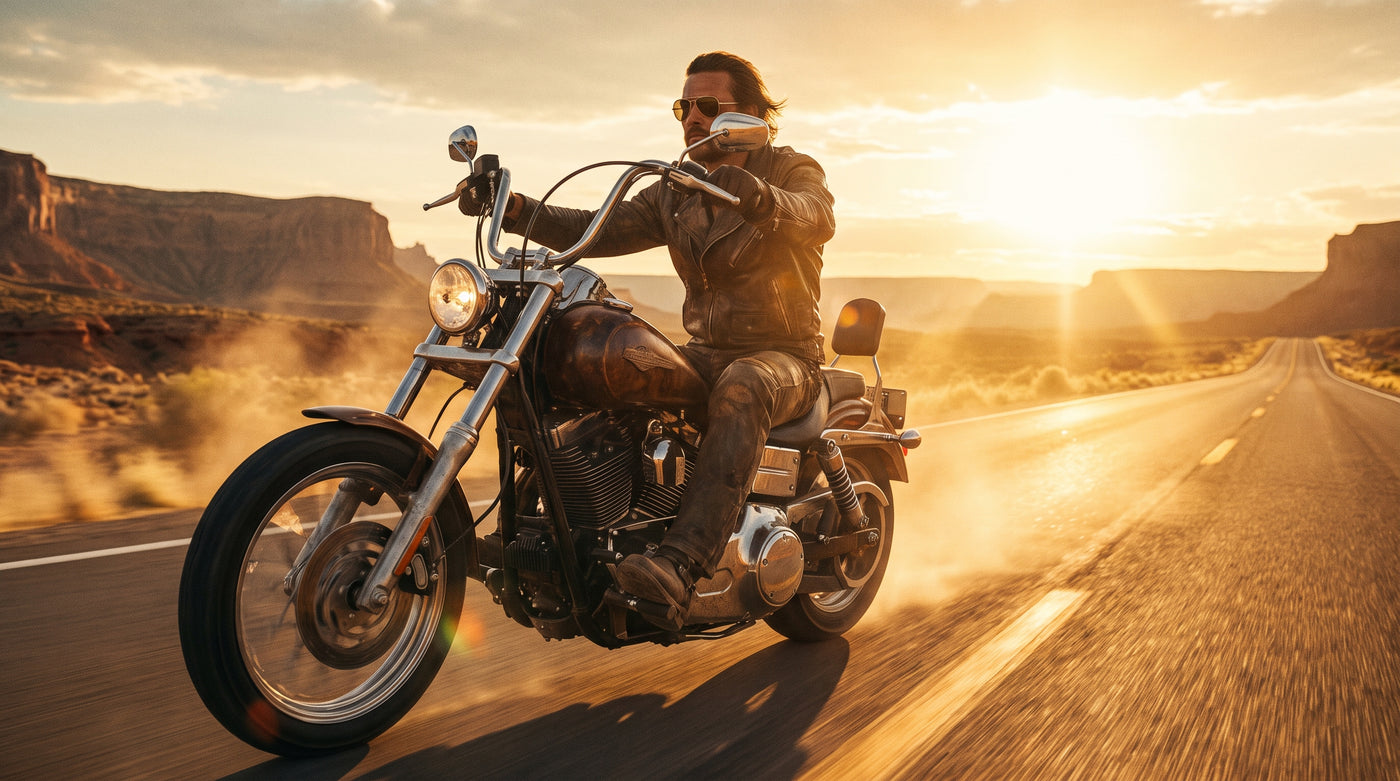
A $10 gas station pair and highway wind at 70 mph make a bad combination. The frames slide, the lenses fog, and one hard gust sends them flying into the next lane. Motorcycle sunglasses for men need to do more than block sunlight. They need to grip your face, cut wind and debris, and hold up ride after ride without scratching out in a single season.
This guide covers what separates real riding sunglasses from regular eyewear you'd grab for a beach day. You'll learn which lens tints work best for day riding vs. overcast conditions, which frame materials survive road abuse, and which styles actually fit under a half-shell or open-face helmet. By the end, you'll know exactly what to look for and what to avoid.
Why Regular Sunglasses Fail on a Motorcycle
Standard fashion sunglasses leave a 3 to 5 mm gap around the edges. At highway speed, wind pushes through those gaps at roughly 6 pounds of pressure per square foot. That means dry eyes, tearing, and zero protection from road grit or insects.
Beyond wind, there's impact. Regular sunglass lenses aren't rated for flying debris. A small rock kicked up by the car ahead of you can crack a standard polycarbonate lens on contact. Motorcycle-specific sunglasses carry an ANSI Z87.1 impact rating, which means the lens can take a direct hit from a quarter-inch steel ball at 150 feet per second without shattering.
Then there's fit. Thin wire arms bend out of shape after one ride. Plastic fashion frames get slippery with sweat. And most standard pairs sit too high or too thick to slide under helmet padding without creating a pressure point on your temple. Riding glasses solve all three problems with wraparound shapes, foam gaskets, and low-profile arms built for helmet clearance.
Lens Tints and Coatings for Motorcycle Sunglasses
The lens matters more than the frame. A UV400 rating is the baseline, blocking all wavelengths below 400 nanometers. Anything less and you're just dimming the light without filtering the radiation that causes long-term eye damage.
Here's how the common tints stack up for riders:
| Lens Tint | Best Conditions | Benefit | Watch Out |
|---|---|---|---|
| Smoke / Gray | Bright sun, clear highway | True color perception, reduces glare evenly | Too dark for dawn or dusk |
| Amber / Yellow | Overcast, fog, dawn/dusk | Boosts contrast, sharpens road edges | Not enough protection in full sun |
| Clear | Night riding | Wind and debris shield without dimming | Zero sun protection |
| Polarized (any tint) | Wet roads, water glare | Eliminates reflected glare from asphalt | Can darken LCD instrument panels |
| Photochromic | Variable light, long rides | Auto-adjusts from clear to dark | Slower transition in cold weather |
Polarized lenses are popular among riders who deal with wet roads or water crossings. They cut reflected glare from asphalt, which is especially useful after rain. The one catch: polarized lenses can make some LCD motorcycle dashboards harder to read at certain angles. If your bike has an LCD display, test the sunglasses at the dealer before you commit.
Photochromic lenses are the most versatile option for riders who go out at dawn and come back after dark. Transitions XTRActive is one of the better-known photochromic coatings, but several riding-specific brands offer their own versions at a lower cost. The main downside is that photochromic coatings react slower in cold air, so the transition from dark to clear can take 30 to 60 seconds longer on a winter morning.
Frame Materials and Fit for Biker Sunglasses
TR-90 nylon is the gold standard for riding frames. A TR-90 frame weighs about 15 to 20 grams, flexes without snapping, and stays stable in temperatures from -4°F to 248°F. That range covers everything from early-spring morning rides to midsummer asphalt heat.
Metal alloy frames look sharper, especially in round or aviator styles. They're heavier (typically 25 to 35 grams) but more adjustable. You can bend the nose pads and arms to fine-tune the fit. The tradeoff is that metal gets hot in direct sun and cold on early rides.
For wind protection, look for a wraparound shape or removable foam gaskets. Foam-padded frames seal the gap between your face and the lens edge, keeping dust, bugs, and wind out at speed. If you want the option to wear them off the bike without looking like you just landed from a motocross track, choose a pair with removable gaskets.
Rubber nose pads and silicone-tipped temple arms prevent slipping under a helmet. This is a small detail that makes a big difference. Without grip points, every head check at a stoplight turns into a glasses-adjustment moment. Good motorcycle eyewear stays locked in place whether you're checking your mirror or leaning into a curve.
Best Motorcycle Sunglasses Styles for 2026
The right style depends on what you ride and how you ride it. Here's a breakdown of the five most popular styles for biker sunglasses this year, matched to riding scenarios.
Round Steampunk
The round steampunk frame is a staple for cafe racer and bobber riders. Double-lens designs with spring-loaded flip-up shields give you two configurations in one pair: tinted for sun, clear for shade or night. The metal alloy frame and side shields add wind protection without foam. Most round steampunk pairs from riding brands weigh under 30 grams and fit cleanly under an open-face helmet.

Retro Round
A simpler take on the round frame without the flip-up mechanism. Retro round sunglasses pair well with vintage riding gear and half-shell helmets. Look for pairs with UV400-rated polycarbonate lenses and anti-scratch coating. The classic round shape works for cruiser riders who want a clean, unfussy look on and off the bike.

Vintage Biker
Vintage motorcycle sunglasses lean into the old-school aesthetic with metal bridges, rounded or teardrop lenses, and slim arms. They fit riders who want eyewear that looks right with a leather jacket and engineer boots. The best vintage pairs include UV400 protection and lightweight alloy frames that tuck neatly under a classic biker helmet.

Polarized Oval
Oval frames with polarized lenses are the all-rounder pick. They suit most face shapes, block reflected glare from wet pavement, and transition between highway riding and parking-lot stops without looking out of place. A good polarized pair in the $30 to $35 range delivers the same optical clarity as pairs costing three times as much from mall brands.

Flip-Up Double Lens
Flip-up sunglasses give you two lens setups in one frame. Ride with the dark outer lens flipped down in bright sun. Flip it up when you enter shade, a tunnel, or a parking garage, and you're instantly on the clear inner lens. The Flip Up Round from ALR uses a UV400-rated double-lens stack in a steampunk-style frame that weighs 28 grams.

How to Fit Motorcycle Sunglasses Under a Helmet
Open-face and half-shell helmets leave 8 to 12 mm of clearance at the temple area. That's enough room for most low-profile riding sunglasses, but not for chunky fashion frames with thick arms.
For the best fit, put on your helmet first, then slide the sunglasses in from the front. The arms should slip between the comfort liner and the shell without pressing hard against your skull. If you feel a hot spot after 10 minutes, the arms are too thick or the frame is too wide.
Full-face helmet riders have it tougher. The cheek pads on a full-face leave almost no room for standard frames. Look for "helmet-ready" or "slim-arm" sunglasses with arms under 4 mm thick. Some riders prefer motorcycle-specific sunglasses with flexible arms that compress slightly against the padding without creating pressure.
A quick test: if you can open and close your visor without bumping the sunglasses, and you can turn your head side to side without the arms shifting, the fit works.
Common Mistakes When Buying Riding Sunglasses
These are the five most common errors riders make when picking sunglasses for the road.
1. Buying by looks and ignoring UV rating. Cheap tinted lenses without UV400 certification are worse than no sunglasses at all. Your pupils dilate behind the dark lens, letting in more unfiltered UV radiation than they would without any eyewear. Always check for a UV400 or "100% UV protection" stamp.
2. Using dark lenses in all conditions. Smoke lenses are perfect for bright sun. They're dangerous at dusk. Keep an amber or yellow pair for low-light riding, or invest in photochromic lenses that adjust automatically.
3. Skipping foam padding. Gasket-free frames let bugs, road grit, and 60 mph wind hit your eyes directly. At highway speed, even a small grain of sand can cause a corneal abrasion. Foam-padded or wraparound frames block nearly all debris.
4. Ignoring temple thickness. Arms thicker than 5 mm press into your skull under helmet padding. That dull ache behind your ear after 30 minutes of riding is the frame, not the helmet. Measure the arm thickness before buying.
5. Skipping replaceable lenses. Scratched lenses cut visibility, especially with oncoming headlights at night. Sunglasses with swappable lens systems let you drop in a fresh lens for $10 to $15 instead of replacing the entire pair.
What to Look for Before You Buy
The short checklist: UV400 rating, ANSI Z87.1 impact rating, wraparound or padded frame, arms under 5 mm for helmet fit, and a lens tint matched to your typical riding conditions. If you ride in mixed light, go photochromic or carry two pairs.
If you're shopping for motorcycle sunglasses, the riding sunglasses collection at American Legend Rider is where I'd start. Every pair is UV400-rated, and prices stay under $35, which means you can grab two tints without stretching the budget.
No comments yet. Be the first rider to weigh in.