
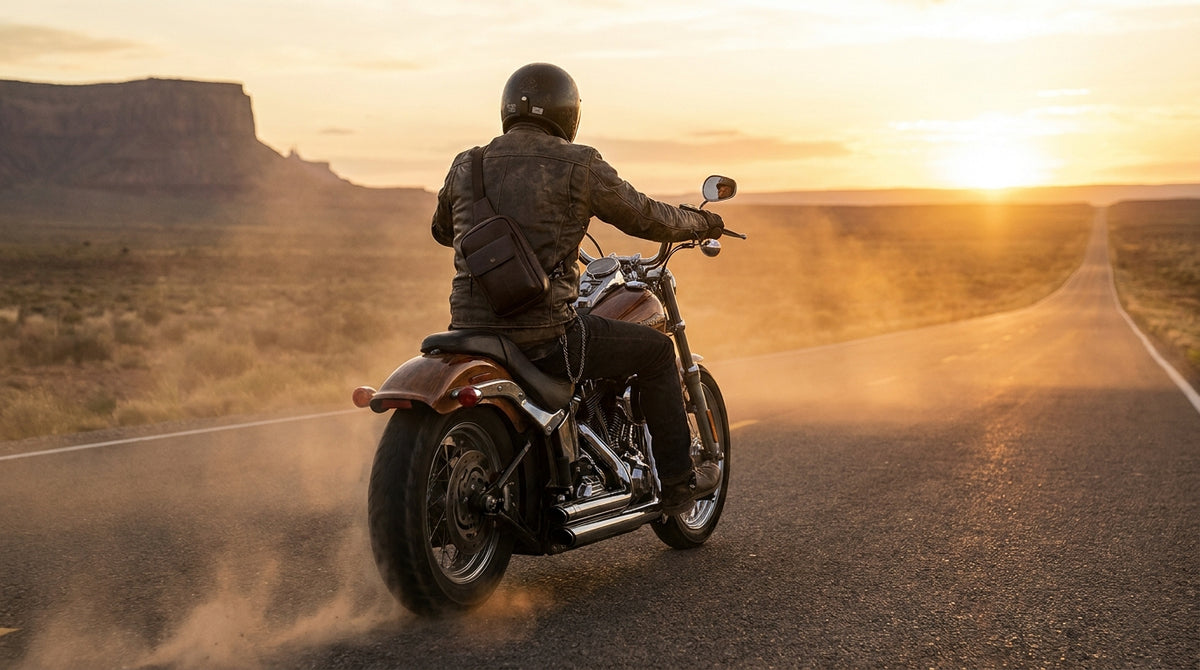
You're heading out for a day ride. Wallet, phone, keys, maybe a small tool kit. You don't need a full saddlebag setup for that. But stuffing everything into your jacket pockets means it all shifts around the second you lean into a curve. A motorcycle shoulder bag solves this without turning you into a pack mule.
This guide covers the best motorcycle shoulder bag styles, the materials and features that actually matter on a bike, and which designs hold up at highway speed. You'll know exactly which type fits your riding style before you finish reading.
Why Riders Are Switching to Shoulder Bags Over Traditional Luggage
Traditional motorcycle luggage works great for touring. Hard cases, full saddlebags, tank bags. But for a quick commute or a Saturday ride, it's overkill. A Givi Monolock V47 side case weighs 4.4 lbs empty, and you still need to install mounting brackets. A crossbody shoulder bag weighs under 2 lbs, goes on and off with you, and fits everything a daily rider actually carries.
Shoulder bags also work better for bikes without luggage mounting points. Sportbikes, cafe racers, scramblers. Try mounting a saddlebag on a Ducati Scrambler Icon and you'll see why riders on those bikes want something simpler. No brackets, no drilling, no permanent modifications to the frame.
The practical side matters too. When you park and walk into a coffee shop or gas station, the bag stays with you. No worrying about someone digging through your saddlebag while you're inside. For commuters and errand riders doing three or four stops per trip, that alone makes a motorcycle shoulder bag worth considering over mounted storage.
Crossbody vs. Sling vs. Messenger: What Actually Works on a Bike
These three terms get tossed around like they mean the same thing. They don't, and the difference matters on a motorcycle.
A crossbody bag has a single strap that goes from one shoulder across your chest to the opposite hip. Compact, usually 5 to 8 liters, and it sits tight against your back. This is the most popular motorcycle shoulder bag style because the cross-chest strap keeps the bag locked in place during acceleration and braking.

A sling bag is similar but usually larger, around 8 to 15 liters, and worn higher on the back. Think of it as a one-strap backpack. The extra volume fits a hydration bladder, a rain layer, or a tablet. The trade-off: more surface area catches wind at speed.

A messenger bag has a wide, flat profile and a single shoulder strap. Fine for carrying documents or a laptop, but weak on a bike above 40 mph. The flat shape acts like a sail in crosswinds, and the single-point strap lets it swing forward under hard braking.
For riding, crossbody bags and sling bags are the practical choices. Messenger bags are better left for the walk from your parking spot to the office.
| Feature | Crossbody | Sling | Messenger |
|---|---|---|---|
| Capacity | 5-8L | 8-15L | 10-20L |
| Wind stability | Excellent | Good | Poor |
| Braking shift | Minimal | Moderate | Significant |
| Best for | Short rides, essentials | Day rides, hydration | Off-bike errands |
Materials That Survive the Road (and Which Ones Don't)
Most motorcycle shoulder bags use one of three materials. Each has a clear trade-off.
Cordura nylon (1000D or higher): the workhorse. It handles abrasion, UV exposure, and rain without breaking down. A 1000-denier Cordura bag will outlast most synthetic alternatives by three to four seasons of daily use. Chrome Industries builds their entire messenger line from this material for good reason.
Leather (full-grain or top-grain): looks right on a cruiser, ages well, and handles light rain if you treat it with a waterproofing spray. But it's heavier than nylon, and direct water exposure without treatment will stain or warp the hide. Real leather bags typically cost $60 to $120 more than nylon equivalents at the same size.

PVC-coated polyester: cheap and fully waterproof, but stiff and prone to cracking in cold weather below 40 degrees Fahrenheit. Fine for a backup bag or a rainy-day spare. Not something you'd rely on season after season as your primary carry.
The sweet spot for most riders: Cordura nylon with a DWR (durable water repellent) coating and sealed zippers. Waterproof without the weight of PVC, durable enough for years of daily use.
Five Features to Check Before You Buy a Motorcycle Shoulder Bag
Not every bag that looks good in a product photo survives real riding. Here's what separates a useful biker shoulder bag from a fashion accessory that ends up collecting dust in your garage.
- Stabilizer strap. A secondary strap that clips around your waist or chest. This keeps the bag locked to your body during hard braking and acceleration. Without it, the bag slides forward every time you stop.
- Reflective panels or piping. Your jacket might have reflective strips, but the bag blocks half of them when it sits on your back. Look for bags with built-in reflective elements on the back panel where headlights hit.
- Water resistance rating. "Water-resistant" can mean anything from light drizzle to a downpour. Look for an IPX4 rating minimum, and favor sealed zippers over covered ones. Zipper covers tend to flap open at highway speed.
- Quick-access pocket. You need to grab your phone or toll pass without unzipping the main compartment. A front-panel zip pocket or a magnetic flap pocket on the strap saves time at every stop.
- Padded back panel. A hard lump pressing against your spine for 200 miles is no fun. A 10mm foam back panel makes a noticeable difference on longer rides and keeps rigid items like keys or multitools from jabbing you.
Best Motorcycle Shoulder Bags Worth the Money
Here are the motorcycle shoulder bag styles that hold up on real rides, based on what riders actually use and re-buy.
Waterproof Crossbody Bags
The most versatile option for daily riders. A good waterproof crossbody weighs around 1.2 lbs, fits a phone, wallet, keys, sunglasses, and a small tool roll, and stays put at 70 mph. The chest strap is the key. Without it, any crossbody becomes a pendulum under braking. With it, you forget the bag is even there after the first mile. Look for one with at least two compartments so your phone screen isn't grinding against your keys.
Sling Backpacks
These split the difference between a crossbody and a full backpack. Around 12 to 15 liters of capacity with a single diagonal strap. They handle a rain layer, a water bottle, and your daily carry without the wind resistance of a full two-strap backpack. The Kriega Sling WP is the gold standard at $89, but solid budget options exist in the $50 to $70 range that use similar 600D ripstop nylon construction.
Skull and Steampunk Shoulder Bags
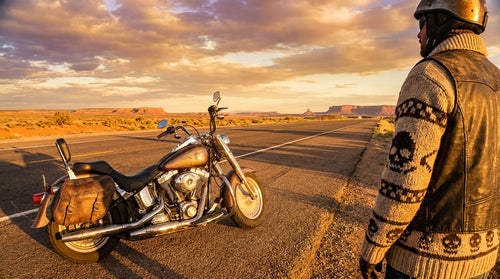
For cruiser and chopper riders who want their gear to match their bike's attitude. These leather-look bags run 8 to 12 liters and feature molded skull or mechanical designs. They're heavier than nylon bags, typically 2 to 3 lbs, but the visual impact is part of the point. If your ride already has a skull helmet and custom pipes, a plain nylon sling bag looks out of place.
Drop Leg Bags
These strap to your thigh rather than your shoulder, but they solve the same problem: carrying daily essentials without mounted luggage. They sit lower, keeping weight off your back and below your center of gravity. Capacity is limited, usually 3 to 5 liters, so they're best for the phone-wallet-keys crowd. Riders who already carry a leg bag know the comfort advantage on hot days when a back-mounted bag means a sweat patch.

Common Mistakes Riders Make with Shoulder Bags
Buying a bag without a stabilizer strap. This is the most common mistake. A single-strap bag without a chest or waist stabilizer swings to your front side every time you brake. After three or four rides, you'll either return it or stop using it. Always check for that secondary clip.
Overloading a small bag. A 5-liter crossbody is designed for phone, wallet, keys, and maybe sunglasses. Stuffing a rain jacket, water bottle, and tire repair kit into it stretches the zippers and puts uneven pressure on the strap. If you need that much capacity, step up to a 12L sling bag instead of forcing a small crossbody to do work it was never built for.
Ignoring strap width. A 1-inch nylon strap cuts into your shoulder after 30 minutes of riding. Look for straps at least 1.5 inches wide, preferably with padding. This matters more on longer rides, but even a 20-minute commute gets uncomfortable with a thin strap carrying 4 lbs of gear.
Wearing the bag too loose. The bag should sit flat against your back with no gap. If it bounces or swings when you walk, it will be worse on the bike. Tighten the strap until the bag sits snug between your shoulder blades. The stabilizer strap handles the rest.
Skipping waterproofing on leather bags. Genuine leather is not waterproof out of the box. Ride a leather shoulder bag through one rainstorm without treatment, and you'll see water spots and warping within days. Apply a leather waterproofing spray before the first ride. Reapply every two to three months if you ride in wet conditions.
Shoulder Bag vs. Tank Bag vs. Leg Bag: Quick Comparison
| Feature | Shoulder Bag | Tank Bag | Leg Bag |
|---|---|---|---|
| Capacity | 5-15L | 8-25L | 2-5L |
| Stays with you off-bike | Yes | No | Yes |
| Wind drag | Low to moderate | Low (sits on tank) | None |
| Access while riding | Pull over first | Yes (map window) | Yes (thigh pocket) |
| Works on all bikes | Yes | Needs magnetic or strap mount | Yes |
| Typical price | $30-$120 | $50-$200 | $25-$60 |
For carrying daily essentials on any bike, a motorcycle shoulder bag wins on convenience. For long-distance navigation and larger storage, a tank bag is better. For bare-minimum carry, a leg bag keeps weight off your upper body entirely. Planning a longer trip? The saddlebag guide covers mounted options for multi-day rides.
The right motorcycle shoulder bag keeps your essentials close without slowing you down. Match the bag type to your ride length and what you need to carry, and you won't think about it again once you clip it on. If you're shopping for one, the bags and luggage collection is where I'd start.

No comments yet. Be the first rider to weigh in.