
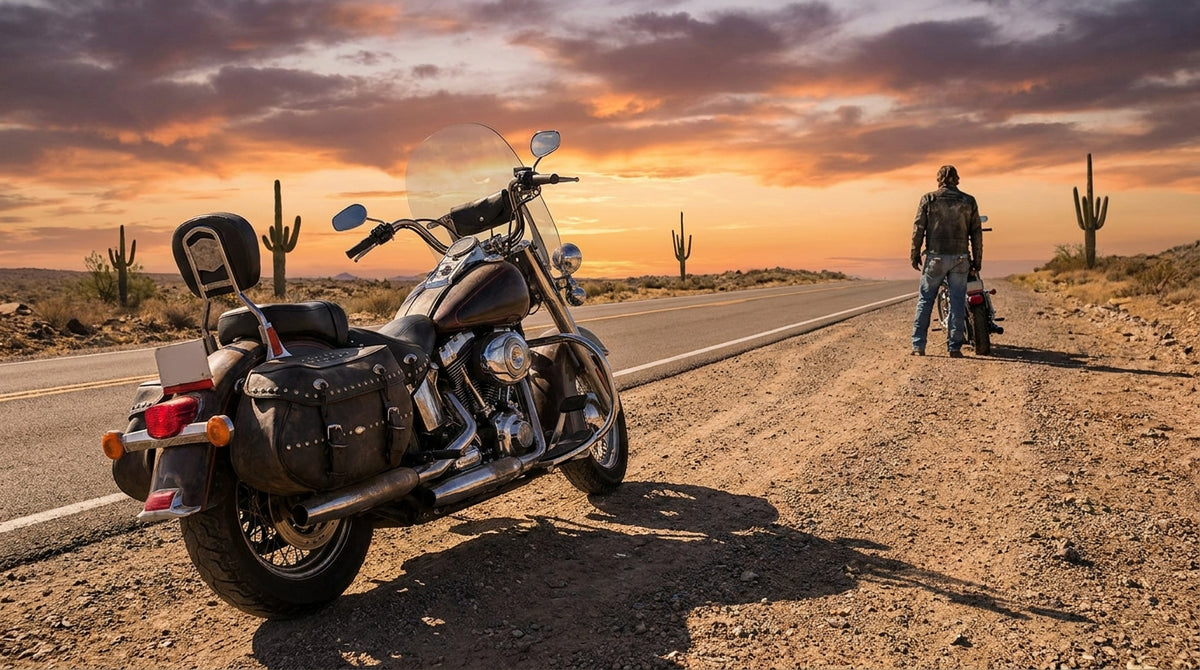
You spend three hours picking a route, another hour checking tire pressure, then stuff everything into a backpack that digs into your shoulders by mile 20. Saddlebags fix that problem permanently. They bolt, strap, or latch onto your bike so the weight sits where it belongs: on the frame, not on your spine.
This guide covers the best motorcycle saddlebags for 2026, broken down by type, material, and riding style. Whether you need a pair of leather throwover bags for weekend cruises or a lockable hard-case setup for cross-country touring, every pick below is tested against real-world fit and weather.
Three Types of Motorcycle Saddlebags and Which One Fits Your Ride
Not all saddlebags work on all bikes. A Harley Softail takes a different mounting system than a Honda CB500X. The wrong choice leads to bags that sag into your tire, melt on your exhaust, or bounce loose at highway speed. Here is what separates the three main types.
| Type | Best For | Capacity | Price Range | Weatherproof? |
|---|---|---|---|---|
| Throw-Over (Soft) | Cruisers, short trips | 10-20L per side | $25-$120 | Water-resistant |
| Hard Case | Touring, ADV bikes | 25-40L per side | $200-$800+ | Fully waterproof |
| Leather | Cruisers, choppers | 8-18L per side | $40-$300 | Treat regularly |
Throw-over bags drape across your rear fender or seat with no permanent mount. They go on and off in seconds. Great for riders who want the option without committing to brackets. The tradeoff: they can shift at highway speed if the straps are loose. Most throw-over sets weigh 3-5 lbs empty and fold flat when not in use, so storing them in a garage or closet is easy.
Hard cases (like Givi Trekker Outback or SW-Motech TRAX) bolt to a fixed rack. They lock, they seal out rain, and they double as seats at a fuel stop. Downsides: heavy, expensive, and bike-specific mounting hardware adds another $100-$200. If your bike is a dedicated touring machine, though, hard cases are worth every dollar. The Givi Trekker Outback 37L, for example, has survived full-speed drops on ADV rally courses without popping open.
Leather saddlebags suit cruisers and bobbers where the look matters as much as the function. Real leather (not bonded) develops a patina over thousands of miles. PU leather costs less but cracks after two or three seasons of UV exposure. A good leather bag from a reputable maker lasts 10+ years with annual conditioning. The stitching matters as much as the hide: double-stitched, waxed thread at all stress points is the standard to look for.
Best Leather Saddlebags for Cruisers
Leather bags match the lines of a Harley Sportster or Indian Scout better than anything plastic. A good pair uses 1.2mm or thicker cowhide, reinforced stitching at the stress points, and quick-release buckles so you are not fumbling with snaps at every gas station.
Two things separate a $40 leather bag from a $200 one: the hide thickness and the internal frame. Cheap bags use 0.6-0.8mm leather that flops over when empty. Quality bags use 1.2mm+ leather with a semi-rigid insert that keeps the bag's shape whether it is full or not. That rigidity also prevents the worst-case scenario: a bag sagging into a spinning rear tire at 60 mph.
The Motorcycle Side Bag from American Legend Rider uses a universal strap mount that fits most cruiser fender rails without drilling. The leather is thick enough to hold its shape empty, which keeps the bag from collapsing into your rear wheel. That single detail matters more than any brand name on the tag.

For riders who want a barrel-style bag, the Skull Motorcycle Saddle Bag adds a waterproof PU leather shell with reinforced interior walls. It mounts to a sissy bar or rear fender and holds about 8-10 liters, enough for a rain layer, a basic tool roll, and a phone charger. The skull embossing is subtle enough to look sharp without screaming for attention. Barrel bags also work well as tool rolls on bikes with limited fender real estate, like bobbers with chopped rear ends.

Best Throw-Over Saddlebags for Quick Trips
Throw-over bags are the lowest-commitment option. No drilling, no brackets, no permanent changes to your bike. The Universal Waterproof Motorbike Saddle Bag pair from ALR uses a reinforced center yoke that drapes over the seat or rear fender. Each side holds roughly 15 liters. The Oxford cloth shell handles light rain, though you will want a cover for a full downpour.

The key spec to check on any throw-over bag is the yoke width. Too narrow and it bunches up on a wide fender. Too wide and the bags hang low enough to brush your exhaust pipes. Measure your seat or fender width before ordering. Most universal bags fit 8-14 inch fenders, but confirm before you buy.
Budget tip: throw-over bags under $50 often skip internal frame stiffeners. Without them, a loaded bag sags into your rear tire at speed. If the bag does not hold its shape when empty, pass on it. Spend the extra $20-$30 for stiffened panels. It is cheaper than replacing a melted bag or fixing tire rub damage on your fender.
One overlooked advantage of throw-over bags: you can take them off at your destination and carry them like a duffel. Hard cases stay on the bike. Leather bags rarely have carry handles. Throw-overs with a shoulder strap convert from motorcycle luggage to carry-on in seconds. That matters if you are riding to a trailhead, a campsite, or a hotel.
Best Hard Case Saddlebags for Long-Distance Touring
For multi-day rides, hard cases are the standard. The Givi Trekker Outback 37L is a popular benchmark at about $350 per case. It is fully waterproof (not just water-resistant), locks with a key, and mounts to Givi's quick-release rack. Total capacity with a pair: 74 liters, enough for a week of clothes and gear.
SW-Motech TRAX ADV cases offer a similar setup at a slightly lower price point. Both systems use aluminum construction, which survives a tip-over better than ABS plastic cases like the Shad SH36. Aluminum dents on impact. ABS cracks. A dented case still keeps your gear dry. A cracked one does not.
If budget is the main concern, Shad SH36 cases run about $180 per case and use ABS plastic with a single-key lock. They are lighter than aluminum (about 4 lbs each vs 7 lbs) but less durable in a crash. For highway touring without off-road sections, ABS cases do the job. For anything involving gravel, dirt, or the possibility of a drop, go aluminum.
The downside of hard cases: weight. A pair of Givi Outbacks adds 12-14 lbs to your bike before you put anything inside. On a 450-lb touring rig like a Honda Gold Wing, that is barely noticeable. On a 350-lb naked bike, it changes the handling. For a full breakdown of saddlebag sizing, check the ALR saddlebag guide.
How to Mount Motorcycle Saddlebags Without Scratching Your Paint
Mounting method depends on the bag type and your bike's frame. Getting it wrong means paint damage, exhaust burns, or bags that fly off at speed. Here is the right way for each type.
- Throw-over: Lay the yoke flat across the seat or fender. Run the under-straps through your rear grab rail or around the subframe. Tighten until the bags hang level. Check that the bottom edge clears your exhaust by at least 2 inches. Double-check after your first 10 miles of riding, since straps stretch slightly under load.
- Bolt-on hard cases: Install the brand-specific rack (Givi PLR, SW-Motech Quick-Lock EVO). The rack bolts to passenger peg mounts or subframe attachment points. Torque to spec, usually 25-30 Nm for steel mounts. Cases click onto the rack without tools.
- Leather with strap mount: Thread the mounting straps through your fender strut or around the rear subframe tube. Use rubber backing strips between the strap and your paint to prevent rub marks. Tighten firm but not crushing. Over-tightened straps compress rubber backing and expose paint underneath.
One mistake riders make: skipping the test ride after installation. Load the bags with weight (water bottles work), ride around the block at increasing speeds up to about 45 mph, and stop to check that nothing shifted, rubbed, or contacted the rear tire. Five minutes of testing prevents a disaster at highway speed.

What to Look for in the Best Motorcycle Saddlebags
Six specs matter more than brand logos:
- Capacity (liters per side): 10-15L handles day rides. 20-30L covers overnights. 35L+ is touring territory.
- Material: Full-grain leather outlasts bonded leather by 5-8 years. Cordura nylon handles abrasion better than generic polyester. Aluminum hard cases beat ABS plastic in crash durability.
- Mounting system: Universal strap mounts fit most bikes. Quick-release racks (Givi, SW-Motech) are faster but bike-specific. Check compatibility with your exact model before ordering.
- Weather sealing: Look for welded seams or a rain cover. Zippers alone leak. YKK water-resistant zippers are the minimum.
- Reflective panels: Any bag that sits at tail-light height should have reflective tape or panels. Some states require it for aftermarket luggage. Florida, for instance, requires reflectors on any luggage that extends beyond the bike's profile.
- Lock compatibility: Hard cases lock with a key. Soft bags need a secondary cable lock if you leave them on the bike. The Waterproof Motorcycle Tail Bag from ALR includes D-ring attachment points for running a cable through.

Common Saddlebag Mistakes and How to Avoid Them
1. Ignoring exhaust clearance. Soft bags melt when they touch a hot exhaust pipe. The minimum safe gap is 2 inches. Heat shields help but do not replace proper clearance. One melted bag at 70 mph becomes a safety hazard, not just a cosmetic problem. Check clearance with the suspension fully compressed (sit on the bike with gear) because the gap shrinks under load.
2. Overloading one side. Uneven weight makes the bike pull to one side under braking. Pack heavy items (tools, bottles) on both sides equally. A 5-lb imbalance is noticeable on a lightweight bike like a Yamaha Bolt (542 lbs wet). Weigh each bag on a bathroom scale before you ride. It takes 30 seconds.
3. Buying based on looks alone. A beautiful hand-tooled leather bag with no internal frame collapses into your rear wheel the first time you ride with it half-empty. Function first, then style. Ask one question before buying: does this bag hold its shape when empty? If the answer is no, keep looking.
4. Skipping the rain test. Before loading gear for a trip, fill the bag with paper towels and hose it down for 5 minutes. If the towels are wet, you need a rain cover or a different bag. This saves a soaked sleeping bag on day one of a tour. Most "water-resistant" bags fail this test at the zipper seams.
5. Forgetting the weight limit. Most throw-over bags max out at 10-12 lbs per side. Hard cases handle 20-25 lbs. Exceeding the limit stresses the mounting hardware and can crack a fender strut on rough roads. The weight limit is usually stamped on a tag inside the bag or listed in the product specs.

Picking the Right Saddlebags for Your Bike
Match the bag to the ride, not the other way around.
- Weekend cruiser rides (under 200 miles): Leather or throw-over bags, 10-15L per side. Keep it light.
- Commuting: A single sling bag or a small throw-over pair. Quick on, quick off.
- Multi-day touring: Hard cases with 30L+ capacity. Add a tank bag for items you need at fuel stops.
- ADV and off-road: Aluminum hard cases mounted to a crash-bar rack. Plastic cases crack on drops. Expect to pay $600-$800 for a quality pair with rack.
If you ride a cruiser and want bags that match the bike's character, the ALR saddlebag collection has leather and waterproof options built for that exact purpose. For everything else you carry on a ride, the full motorcycle bags lineup covers leg bags, chest bags, and tail packs.
No comments yet. Be the first rider to weigh in.