
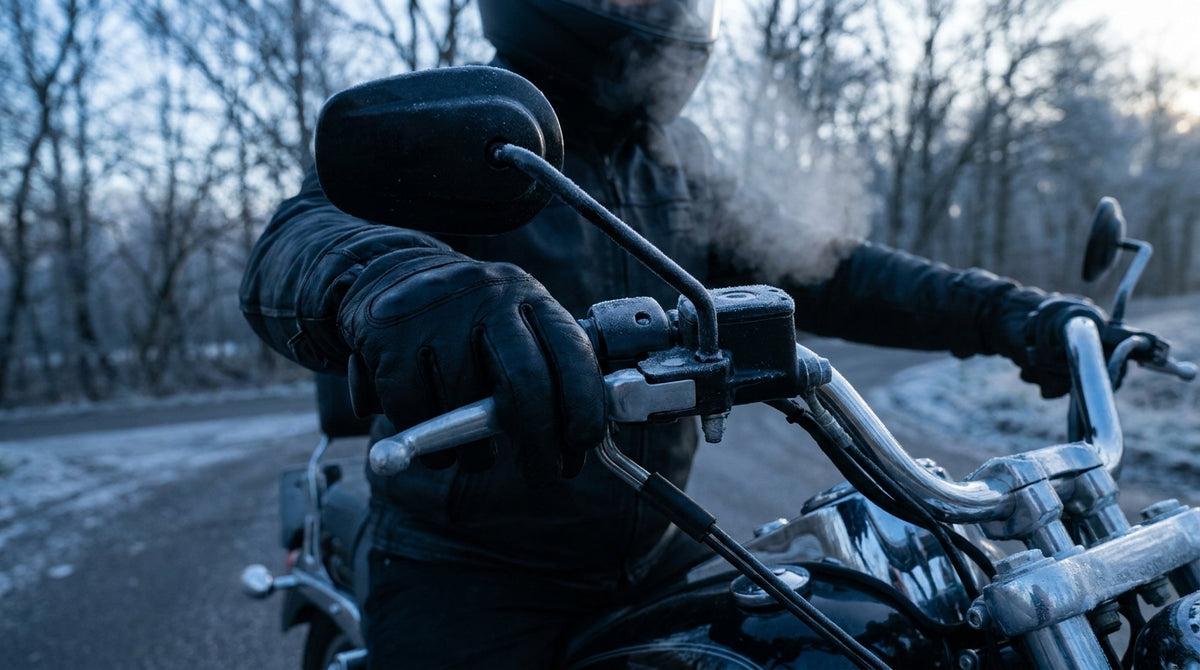
At 45 mph in 40-degree air, the windchill on the back of your hand is about 27 degrees. That is why riders who are perfectly comfortable standing at the gas pump lose feeling in two fingers fifteen minutes down the road. The problem is not the temperature. It is the wind moving heat off your skin faster than your body can replace it.
Heated motorcycle gloves fix that by adding heat instead of only trapping it. But they are not the right answer for every rider or every ride, and a bad pair will cook the back of your hand while your fingertips stay numb. Here is how the three warming options actually compare, what the watt and run-time numbers mean, and how to pick the setup that matches the riding you really do.
Heated gloves vs thermal gloves vs heated grips
Riders searching for heated motorcycle gloves usually end up choosing between three different products. They solve the same problem in very different ways.
Heated gloves run thin carbon-fiber or alloy wire through the back of the hand and the fingers, powered by a battery in the cuff or a lead to the bike. They warm the whole hand, including fingertips, which is the part that goes numb first.
Thermal gloves have no power at all. They use a windproof membrane plus insulation to slow heat loss. They are lighter, cheaper, never need charging, and they are plenty for most riding above roughly 40 degrees.
Heated grips warm the bar itself, so heat comes through your palm. Palms stay warm and fingertips stay cold, because the back of your hand is still taking the full windblast. They work best paired with a windproof glove.
| Option | Warms | Needs power | Best below | Typical price |
|---|---|---|---|---|
| Heated gloves | Back of hand and fingers | Yes, battery or bike | 40°F | $45 |
| Thermal/winter gloves | Traps body heat only | No | 45°F | $29 to $52 |
| Heated grips | Palm only | Yes, wired to bike | 50°F with a windproof glove | $80 |
Most riders do not need to choose just one. Grips plus a good windproof glove covers fall riding. Heated gloves take over when it drops into the 30s.
Battery powered heated motorcycle gloves: reading the numbers
Two specs decide whether a heated glove is worth buying: how much heat it makes and how long it makes it for. Those two fight each other.
A typical battery powered heated motorcycle glove runs a 7.4V lithium pack around 2,200mAh. On the low setting that gives roughly 5 to 6 hours. On high, where it pulls the most current, expect closer to 2 to 2.5 hours. Nobody rides on high the whole time. You warm up on high for ten minutes, then drop to medium or low to hold the temperature.
Three heat levels is the number you want. Two-level gloves force a choice between not quite enough and far too much. Also check where the wire runs. If the element only covers the back of the hand and skips the finger tubes, your fingertips stay cold, which defeats the whole purpose.

The other quiet advantage of a battery glove over a wired one: you can walk into a diner with your gloves still warm, and you are not tethered to the bike by a cable that snags when you dismount.
Why winter motorcycle gloves need a membrane, not just padding
Thick is not the same as warm. A bulky glove with no windproof layer lets air move straight through the shell and strip heat off your skin. That is why a 3mm windproof glove often beats a fat fleece one at highway speed.
Look for a laminated membrane between the shell and the lining. It blocks wind and sheds rain while still letting sweat vapor escape. Sweat is the hidden enemy on a long cold ride. Damp hands lose heat roughly 20 times faster than dry ones, so a glove that traps moisture will leave you colder at hour three than at hour one.
A long gauntlet cuff matters more than most riders expect. It goes over the jacket sleeve and stops the air funnel that forms at your wrist. A short cuff tucked inside the sleeve lets cold air run up your forearm.

At $29.45 this is the pair I would hand a rider who commutes 20 minutes each way and does not want to think about charging anything. Touchscreen fingertips, waterproof shell, no batteries.
Touchscreen fingertips and why they stop working in the cold
Nearly every winter glove now advertises touchscreen compatibility. The conductive thread in the index finger and thumb carries the tiny electrical charge your phone screen is looking for.
Two things kill it. Water on the fingertip spreads the charge and the screen reads a smear instead of a point. And the thread wears out. After a season of pulling gloves on and off, the conductive fibers in a cheap glove fray and the feature quietly dies. Gloves with a conductive patch stitched in, rather than a few threads woven through the fabric, last much longer.
Practical fix either way: mount your phone and use it for navigation only, not texting. Pulling a glove off at a stoplight in 35-degree air undoes ten minutes of warmth.

Fit: the mistake that makes any glove cold
A glove that is too tight is a cold glove. Insulation only works because of the air it holds, and squeezing your hand compresses that air out. Tight gloves also restrict blood flow to the fingers, which is the one thing you cannot afford in the cold.
Winter gloves should run about half a size up from your summer leather. You want a few millimeters of air at the fingertips, enough that you can wiggle them, not so much that the glove rotates on the bar.
Check these four things with the glove on, sitting on the bike:
- Full fist closure around the grip without the cuff digging into your wrist.
- Front brake reach with one or two fingers, no fighting the seam.
- Clutch feel at the friction point. If you cannot feel it, the glove is too thick for that bike.
- Fingertip space of roughly 3 to 5mm. Pressed-tight tips go numb first.
Pre-curved palms help. A flat-cut glove fights your hand every time you close it on the bar, and that constant tension is tiring on a two-hour winter ride. The same sizing logic applies to any riding glove, and our guide to picking the right motorcycle gloves covers the year-round side of it.

Heated grips: cheaper to run, half the coverage
Heated grips wire into the bike, so there is no battery to charge and no run-time limit. USB and 12V versions pull roughly 20 to 30 watts total, which any charging system handles without complaint.
The honest limitation is coverage. Your palm gets warm, the back of your hand gets nothing. On a bike with a fairing or handguards that is usually enough, because the wind is already broken. On a naked cruiser at 65 mph it is not.
Grips do one thing heated gloves cannot: they keep working forever on a long ride. For riders doing 300-mile winter days, grips plus a windproof glove beats a glove battery that dies at hour two.

Cold hands often start at your feet and neck
Your body protects its core first. When your torso starts losing heat, it narrows the blood vessels in your hands and feet to keep warm blood where it matters. That means you can be wearing excellent gloves and still have cold fingers because your neck is open to the wind.
The gap between helmet and jacket collar is the biggest single heat leak on most riders. A windproof balaclava closes it and usually does more for finger temperature than upgrading gloves.

Feet work the same way. Thin cotton socks in riding boots sweat, then chill, and the cold feeds back into how warm your whole body feels.

If you would rather skip batteries entirely, thick wool handles most of it. Wool keeps insulating when damp, which cotton does not.

When heated gloves are the wrong buy
Heated gloves are not an upgrade for every rider. If most of your cold-weather riding happens above 45 degrees, a $29 windproof thermal glove will keep you just as comfortable with nothing to charge and nothing to fail.
They are also a poor match for short trips. A heated element needs five to ten minutes to bring the glove up to temperature, so on a 15-minute run you spend most of the ride waiting for heat you paid extra for. Insulation starts working the second you put it on.
And they add bulk. The wire element and battery pocket make a heated glove thicker than a plain winter glove, which costs you clutch and brake feel. On a bike with a light, progressive clutch that is fine. On an older cruiser with a heavy pull, the loss of feel is real and worth testing before you commit.
Five mistakes that leave riders cold
- Buying one size too small. Compressed insulation and restricted blood flow. The single most common reason a good glove feels cold.
- Running heat on high the whole ride. Drains a 2,200mAh pack in about two hours and makes you sweat, which makes you colder later. Warm up on high, hold on low.
- Short cuffs under the jacket sleeve. Creates an air funnel straight up the forearm. Gauntlet over the sleeve, every time.
- Cotton glove liners. They soak up sweat and hold it against your skin. Use a thin wool or synthetic liner, or none at all.
- Ignoring the neck. An open collar cools your core, and your body answers by cutting circulation to your fingers. Gloves cannot win that fight.
Matching the setup to your riding
- Short commute, 40°F and up: a windproof thermal glove. No charging, no fuss.
- Commute below 40°F: battery heated gloves on the low setting, or grips plus a windproof glove if your bike has a fairing.
- All-day winter miles: heated grips wired to the bike, windproof gauntlet glove, and a balaclava closing the collar gap.
- Wet and cold: prioritize the waterproof membrane over insulation thickness. Wet hands lose heat far faster than cool dry ones.
One thing worth saying plainly: no-name marketplace heated gloves are the wrong place to save $15. You are putting a lithium pack and a wire element against your skin, and a glove with no stated voltage, no cell certification and no replacement battery is a bad trade. Gear with published specs and real support is worth the difference.
If you are shopping, the motorcycle gloves collection is where I would start, and the waterproof glove guide is the companion read if rain is your bigger problem than cold. Get the fit right first. Warm hands on a cold morning are the difference between a ride you remember and one you cut short.

No comments yet. Be the first rider to weigh in.