
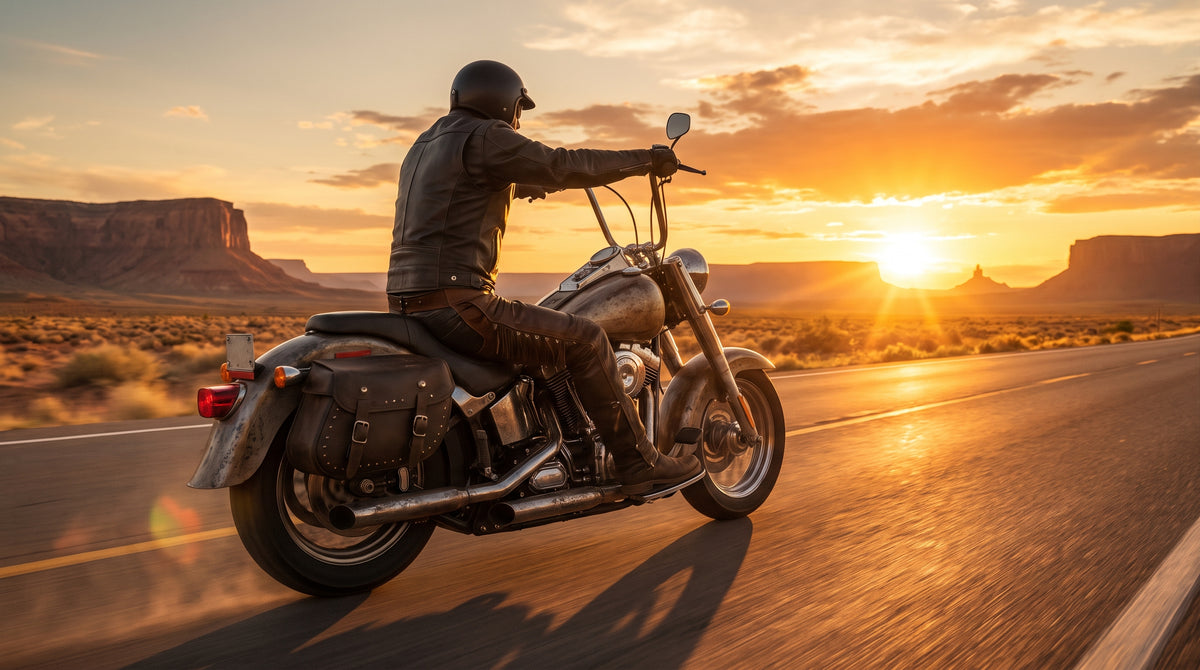
A rider in a t-shirt and sneakers can technically hop on a motorcycle and ride. Plenty of people do it every weekend. But one low-side on gravel at 25 mph will scrape through a cotton tee in about 0.3 seconds, and bare ankles offer zero protection against a 400-degree exhaust pipe. Good biker gear is the difference between walking away from a slide and spending six weeks in a burn unit.
This guide covers every piece of biker gear you need, from the top of your head to the soles of your boots. You will know exactly what to buy first, what features actually matter, and what you can safely skip until later. Every recommendation maps to real products, real specs, and real rider priorities.
Helmets: The One Piece of Biker Gear You Cannot Skip
A DOT-certified helmet is the single most important piece of biker gear you will ever own. NHTSA data shows that helmets reduce the risk of fatal head injury by 37% for riders and 41% for passengers. That stat alone ends the debate.
Three main styles dominate the market. Full-face helmets cover everything and offer the best protection. A Shoei RF-1400 full-face weighs around 3.2 lbs and passes both DOT and Snell M2020 standards. Half-shell helmets (also called skull caps) give you the classic cruiser look with less coverage. They pass DOT but leave your chin exposed. Modular helmets split the difference with a flip-up chin bar.
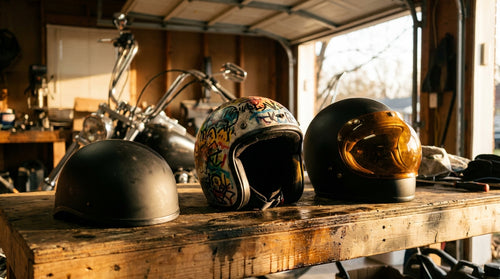
For cruiser and chopper riders, a half-shell or novelty-style DOT helmet fits the biker look without sacrificing legality. Just make sure you see "DOT FMVSS 218" on the label, not a sticker someone slapped on a novelty shell.

What to Look For
- DOT certification printed on the helmet (not just a sticker)
- Snug fit with no pressure points. The helmet should not rotate when you shake your head.
- EPS liner that absorbs impact energy. Cheap novelty helmets skip this entirely.
- Weight under 4 lbs for a full-face. Anything heavier causes neck fatigue on long rides.
Eye Protection: Goggles, Sunglasses, or Face Shield
Wind, dust, and bugs at 60 mph will blind you in seconds without eye protection. If your helmet has a full face shield, you are covered. But half-shell and open-face riders need separate eyewear.
Motorcycle goggles with foam padding seal against wind and debris. Standard sunglasses leave gaps at the sides where air rushes in. Look for polycarbonate lenses rated ANSI Z87.1 for impact resistance. Cheap plastic lenses can shatter on a rock hit.
For night riding, keep a clear lens set in your saddlebag. Amber or yellow lenses improve contrast in low light without dimming your view of the road.

Jackets: Leather Still Wins for Abrasion Resistance
A leather motorcycle jacket is not just about the look. Cowhide leather has an abrasion resistance of roughly 3.5 seconds at highway speed before wearing through. A standard textile jacket manages about 1.5 seconds. Denim lasts less than half a second. The math is simple.
A good biker jacket needs three things: 1.0-1.2mm thick leather (thinner feels nice but wears through faster), armor pockets at the shoulders and elbows for CE-rated inserts, and a snug fit that does not flap in the wind. Loose fabric catches air at speed and will fatigue you on a long ride.
Textile jackets work for touring in rain and heat, but for everyday riding and the classic biker look, real leather jackets outperform everything else in crash protection and durability. One quality leather jacket will outlast three synthetic ones.

Gloves: Your Hands Hit the Ground First
In a crash, your instinct is to put your hands out. Without gloves, the pavement will take the skin off your palms in less than a second. Even a low-speed tip-over in a parking lot will shred bare hands.
Leather motorcycle gloves with reinforced palms are the standard. Look for double-stitched seams and a gauntlet cuff that covers your wrist. The Knox Handroid, one of the most protective gloves on the market, uses separate finger armor and a palm slider. But even a basic pair of cowhide leather gloves with a Velcro closure beats riding bare-handed by a huge margin.
For summer, fingerless gloves keep your hands cool but sacrifice knuckle and fingertip protection. They are fine for short cruises in town. For highway riding, go full-finger every time.

Boots: Ankle Protection Is the Priority
A motorcycle boot needs to do two things: protect your ankle from the bike's heat and weight if it tips, and keep your foot from twisting on impact. Regular sneakers or work boots fail at both.
Real biker boots rise at least 6 inches above the ankle. They use oil-resistant soles that grip wet pegs, and sturdy construction that keeps your foot from folding in a low-side. A classic engineer-style boot like those from Harley-Davidson or Chippewa weighs about 3-4 lbs per boot and lasts 5-10 years of daily riding with basic care.
Waterproofing matters if you ride in any weather. Boots with a full-grain leather upper and a sealed welt will keep water out far better than glued-sole boots that separate after a few rainstorms.
Bags: Carry What You Need Without a Backpack
Backpacks shift your center of gravity, trap heat against your back, and bounce around at speed. Motorcycle-specific bags solve every one of those problems.
A drop-leg bag straps to your thigh and holds your phone, wallet, and keys without interfering with your riding position. Saddlebags bolt to the bike and carry everything from rain gear to tools. Tank bags stick magnetically and keep essentials within arm's reach.
The choice depends on your ride. For daily commuting, a compact leg bag handles the basics. For long-distance touring, hard saddlebags with at least 15 liters of capacity per side give you enough room for a weekend trip. For quick rides, even a simple roll-top dry bag bungeed to the rear seat works.
Biker Gear Priority: What to Buy First
You do not need to buy everything at once. Here is the order that makes the most sense based on safety impact and cost.
| Priority | Gear | Why It Ranks Here | Budget Range |
|---|---|---|---|
| 1 | DOT Helmet | Head injuries are the #1 cause of motorcycle fatalities | $80 - $500+ |
| 2 | Gloves | Hands always hit ground first; cheap and critical | $25 - $150 |
| 3 | Boots | Ankle fractures are common and keep you off the bike for months | $80 - $300 |
| 4 | Jacket | Road rash protection; leather lasts years | $150 - $600 |
| 5 | Eye Protection | Required by law in most states for open-face helmets | $15 - $80 |
| 6 | Bags | Convenience, not safety, so it comes last | $30 - $250 |
Cheap vs. Quality Biker Gear: Where to Spend and Where to Save
Not every piece of biker gear needs to be top-shelf. Sunglasses at $20 from a brand like Bobster will handle wind and UV just as well as $100 fashion frames. But skimping on a helmet or jacket puts your skin and skull at real risk.
Helmets are worth spending on. A $250 Bell Qualifier with a multi-density EPS liner will absorb impact forces that a $40 flea-market novelty shell simply cannot handle. The $40 shell might pass DOT on paper, but the liner is thinner and the shell flexes more on impact.
Leather jackets are an investment that pays off over years. A $200 cowhide jacket with 1.0mm+ leather will last 5 to 8 years of regular riding. A $60 PU (faux leather) jacket peels and cracks after one season. Per-year cost, the real leather wins every time.
Boots fall in the middle. A $120 pair of genuine leather biker boots with a Goodyear welt can be resoled and will last a decade. A $60 cemented-sole boot from an unknown brand falls apart in 12-18 months. The choice is obvious.
5 Common Biker Gear Mistakes That Cost Money or Skin
- Buying a helmet that is too loose. A half-size too big means the helmet shifts in a crash and does not absorb the impact properly. Measure your head circumference at the widest point above your eyebrows. If you are between sizes, go smaller.
- Wearing denim as protective gear. Jeans feel tough until they meet asphalt at 30 mph. Denim abrades through in 0.6 seconds or less. If you ride in jeans, at minimum add CE knee armor inserts. Better yet, wear riding-specific pants with aramid fiber lining.
- Skipping gloves on short rides. Most tip-overs happen at low speed in parking lots and intersections. Your palms and wrists take the worst of it. A $30 pair of leather gloves in your jacket pocket takes five seconds to put on.
- Buying no-name marketplace gear with fake safety labels. Some sellers on third-party marketplaces slap DOT stickers on non-certified helmets. If the price seems too good, look for the manufacturer's DOT certification number molded into the shell, not just a sticker on the back.
- Ignoring fit in favor of style. A jacket that is too tight restricts your arm movement on the bars. Boots that pinch cut off circulation to your feet. Gear that does not fit right does not protect right, and you will stop wearing it after two rides.
Where to Start Shopping for Biker Gear
The best approach is to buy one quality piece at a time, starting with a helmet. Get that right, then add gloves and boots. A leather jacket is the next big purchase. Fill in the rest as your budget allows.
If you are looking for biker gear built for real riding, not disposable marketplace junk, the American Legend Rider gear collection is where riders start. Real leather, DOT-rated helmets, and gear that holds up ride after ride. Every piece is built to last, not to be replaced next season.

No comments yet. Be the first rider to weigh in.