
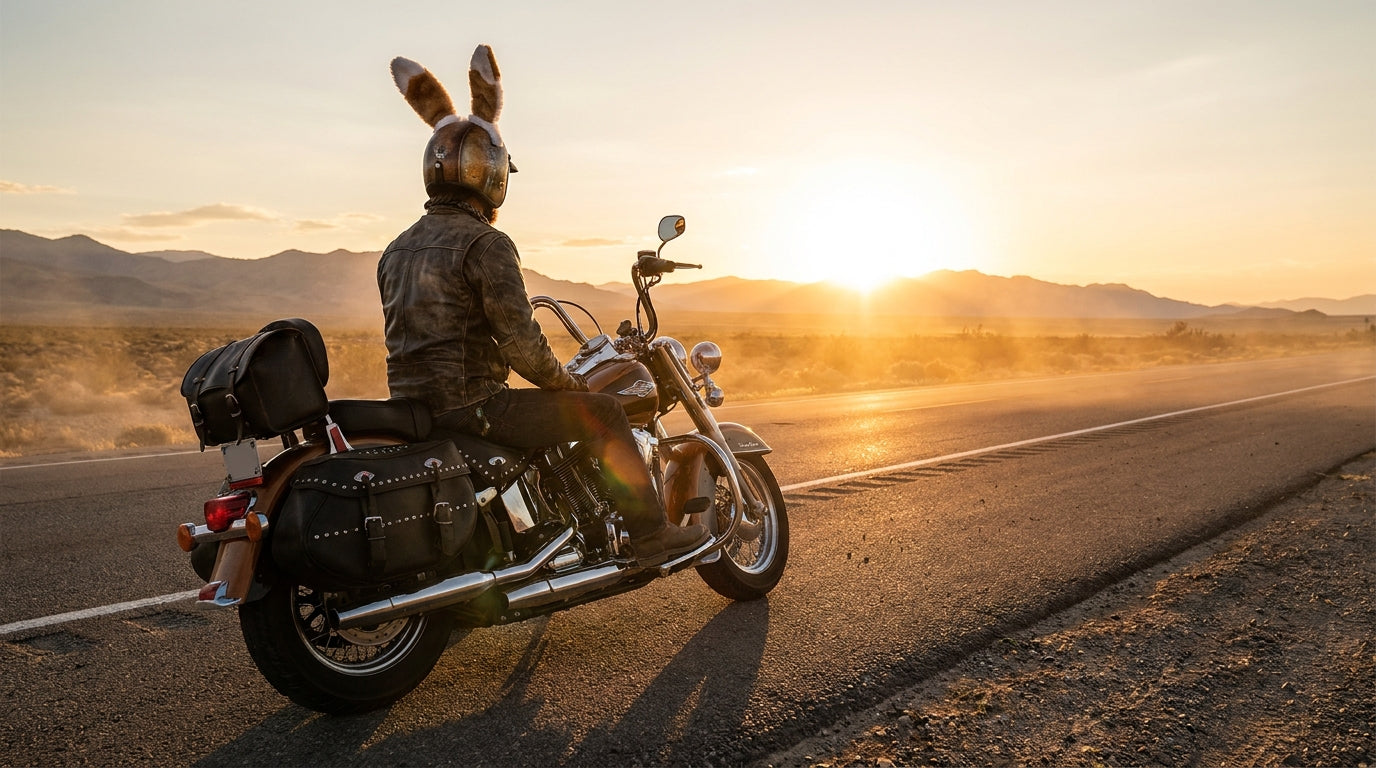
You pull up to a group ride, and every helmet in the lot looks the same. Matte black, maybe a stripe. Then someone rolls in with giant plush bunny ears on their full face lid. The whole mood changes. Bunny motorcycle helmets went from a joke to a genuine riding trend over the past two years. Social media did the heavy lifting, but now riders want real products that hold up on real roads.
This guide covers every type of bunny motorcycle helmet you can buy right now. You will learn the difference between a plush cover and a custom build, which colors and materials last, how to get the fit right on your specific helmet, and what mistakes cost riders money. Every product linked here is verified live and in stock.
What Is a Bunny Motorcycle Helmet?
There are two ways to get the bunny look on your lid. The first is a plush helmet cover that slides over your existing full face helmet. It adds ears, a face shape, and texture without replacing your helmet. The second is a fully custom-sculpted or airbrushed helmet built from scratch by a specialty shop.
Covers dominate the market right now. Roughly 9 out of 10 bunny helmets you see at rallies and on social media are covers, not custom builds. A quality plush cover runs between $35 and $50. A custom sculpted bunny helmet from a specialty painter starts around $300 and can hit $800 for detailed fiber and resin work.
For most riders, a cover is the smarter move. You keep your DOT-rated base helmet intact, swap the look whenever you feel like it, and spend a fraction of what a custom job costs. Custom builds look incredible, but they take 4 to 8 weeks to finish and lock you into one design. The motorcycle helmet covers guide breaks down how covers work across all styles if you want the full picture.
Best Bunny Motorcycle Helmet Covers Worth Buying
Not all bunny covers are built the same. Material quality, ear height, stitching, and how well the cover grips your helmet shell all vary between brands. Here are four bunny motorcycle helmet covers that riders are actually buying and keeping on their lids.
Black Bunny Ears Cover
The Black Bunny Ears Motorcycle Helmet Cover takes the bunny look and strips it down to something clean and aggressive. No cartoon face, no googly eyes. Just a matte black plush shell with two tall standing ears. It fits most full face helmets with shell circumferences between 56 and 62 cm, which covers sizes S through XL on brands like HJC, Shoei, and Bell. The black fabric hides road grime and bugs better than any lighter color, which matters if you wear it on daily commutes. At $37.95, this is the entry point for the bunny style and the most popular pick among male riders.

Gray Bunny Cover
The Gray Bunny Motorcycle Helmet Cover takes a softer approach. The neutral gray tone sits well against silver, white, matte black, or dark-colored helmets without clashing. The plush uses a shorter pile than some of the character-based covers. That means less wind flutter above 60 mph and a tighter look overall. It uses the same universal elastic fit system with interior straps. If you want the bunny look without drawing every eye in the parking lot, gray is the move. Priced at $37.95, same as the black version.

Melody Pink Bunny Plush Cover
For riders who want color and personality, the Melody Pink Bunny Plush cover stands out from 200 feet away. The pink is bright but not neon. This one is based on the Sanrio character My Melody, so it has a shaped face with embroidered eyes and a signature bow detail. The plush material is denser than the solid-color covers, adding about 15mm of bulk to the helmet profile. That extra thickness also means slightly more wind resistance at speed, so this is better suited for city riding and group events than long highway stretches. Priced at $42.95.

Cinnamoroll Bunny Ears Cover
The Cinnamoroll Motorcycle Helmet Cover is the premium pick in this lineup. It is based on the Sanrio character known for its long, floppy bunny ears and round face. The plush on this cover is dense and well-stitched, with clean color separation between the white body and blue accents. At $47.95, it costs about $10 more than the basic bunny covers, but the construction quality and character detail justify the price bump. Riders who wear this one report it gets more comments and photo requests at meetups than any other style in the lineup. The floppy ears do move at speed, but they sit close to the helmet shell, so drag stays lower than you would expect.

Fluffy, Fuzzy or Clean: Picking the Right Bunny Helmet Texture
Riders search for "fluffy bunny motorcycle helmet" and "fuzzy bunny motorcycle helmet" as separate things, and they should be treated differently. The texture of the plush changes how the cover performs on the road.
Fluffy covers have long plush fibers, usually 8 to 15mm tall. They look dramatic in photos and get the most attention at gas stops. The tradeoff: they trap dust, bugs, and moisture faster than anything else. Cleaning after a rain ride is mandatory, not optional.
Fuzzy covers use shorter pile, around 3 to 6mm. The texture is visible up close but more contained. Wind resistance drops noticeably compared to the long-fiber versions. These are the better choice for riders who wear the cover on daily commutes or regular highway runs.
Clean covers skip the fur entirely. They use sewn fabric or structured vinyl with molded ears. No texture at all, just shape. They are the lightest option, easiest to clean, and handle highway speed the best. But they lose some of the visual impact that makes bunny helmets a head-turner in the first place.
| Feature | Fluffy (8-15mm) | Fuzzy (3-6mm) | Clean (0mm) |
|---|---|---|---|
| Wind Drag | High | Moderate | Low |
| Visual Impact | Maximum | Medium | Subtle |
| Cleaning Effort | High (hand wash) | Moderate | Low (wipe) |
| Durability | 6-12 months | 12-18 months | 18+ months |
| Best For | Shows, photos | Daily riding | Highway commutes |
Pink, Black, White and Gray: Bunny Helmet Color Guide
GSC search data shows riders look for specific bunny helmet colors by name. Here is what each color option actually means in practice.
Black bunny helmets are the top seller for a reason. They match any bike color, hide dirt, and look less like a costume. If you ride a dark cruiser or sport bike, black keeps the look aggressive. ALR's Black Bunny Ears cover is the most popular version at $37.95.
Pink bunny helmets are the second most searched option. The Melody cover in bright pink is the standout here. Pink works best as a contrast color on white, silver, or black helmets. Riders who want something bolder than gray but more specific than generic "cute" go pink.
White bunny helmets show up in search data but are harder to find as a standalone product. The Cinnamoroll cover is mostly white with blue accents, which is the closest option. White plush gets dirty fast, so expect to wash it every 3 to 4 rides if you commute.
Gray bunny helmets split the difference between black and white. They are visible enough to get noticed but muted enough to not dominate. The Gray Bunny cover is the most versatile option for riders who swap between bikes or want something that works year-round.
How Bunny Helmet Covers Fit Your Helmet
Most bunny motorcycle helmet covers are built for full face helmets. The rounded shell gives the cover enough surface area to stretch over and stay in place. If you ride in a full face, you are already set.
Here is how the fit works on most covers:
- The cover has an elasticized opening that stretches over the chin bar and hooks underneath the helmet.
- Interior hook-and-loop straps or drawstring cords pull the fabric snug against the shell.
- The visor cutout should line up with your face shield. Test this in your driveway, not at 55 mph on the highway.
- Most covers fit helmet shell circumferences from 56cm to 64cm. That spans sizes S through XL on most major brands including Shoei, Arai, HJC, and Bell.
What does not work: half helmets, 3/4 open face helmets, and dual sport helmets with a visor peak. The cover cannot grip these shapes properly. Some modular flip-up helmets work if the chin bar is locked closed, but the fit tends to be loose around the hinge area.
One detail worth checking: make sure the cover does not block your helmet's top vents. Plush material sitting over the intake vents can trap heat on summer rides. Some riders use a razor blade to cut small slits over the vent openings. It takes 30 seconds and solves the problem without affecting the look.
Bunny vs Other Novelty Motorcycle Helmet Covers
Bunny is one of at least a dozen novelty helmet cover styles available right now. Here is how it compares to the other popular picks. If you want to browse all the fun options, the funny motorcycle helmets roundup covers the full range.
| Style | Price | Wind Drag | Washability | Crowd Reaction |
|---|---|---|---|---|
| Bunny | $37-$48 | Moderate (tall ears) | Hand wash | High |
| Pikachu | $37-$38 | Low (short ears) | Hand wash | Very high |
| Dragon (Toothless) | $47-$48 | Low (flat profile) | Hand wash | High |
| Stitch | $37-$38 | Low (wide ears) | Hand wash | High |
| Alien | $37-$38 | None (smooth) | Wipe clean | Medium |
| Shark | $37-$38 | Low (dorsal fin) | Hand wash | Medium-high |
Bunny covers tend to have the tallest ears of any novelty style. That makes them the most visible from a distance but also the most affected by crosswind above 65 mph. If highway comfort matters more than parking lot visibility, Pikachu and Stitch covers offer a similar fun factor with less drag.
The Toothless dragon cover is the most detailed option in this category, with sculpted wing textures and a full head shape. It appeals to a specific audience though. Bunny covers have the broadest appeal across age groups and riding styles. They work at charity rides, group cruises, and even solo commutes without feeling like a full costume.
5 Common Mistakes with Bunny Motorcycle Helmets
1. Buying a cover for the wrong helmet type. Bunny covers fit full face helmets. If you ride with a half helmet or a 3/4 open face, the cover will slide off within minutes. Check your helmet style before ordering. This is the number one return reason for novelty covers.
2. Ignoring wind flutter at highway speed. Above 70 mph, tall plush ears catch serious crosswind. They will not rip off, but the constant flapping adds noise and mild head buffeting. For highway-heavy riders, pick a cover with shorter ears or a fuzzy texture instead of full fluffy.
3. Leaving the cover on in heavy rain. Plush absorbs water quickly. A soaked bunny cover can add 200 to 300 grams to your helmet weight, and you will feel it in your neck and shoulders after 30 minutes. Pull the cover off before a downpour or stash it in a saddlebag when rain is in the forecast.
4. Skipping the visor alignment test. The face shield cutout needs to line up perfectly with your visor opening. If it sits even half an inch off-center, it blocks peripheral vision on one side. Always do a slow parking lot ride before hitting real traffic with a new cover.
5. Choosing only by color without checking plush quality. Two covers can look identical in listing photos but use completely different materials. Cheap no-name covers shed fibers after three or four rides, and the ears go flat within a month. Look for double-stitched seams and reviews that mention the cover holding its shape after washing.
Where to Start Shopping
A bunny motorcycle helmet cover is the fastest way to add personality to your lid without spending $500 on a custom paint job. The black and gray options work for riders who want something visible but not over the top. Pink and character-themed covers make a statement at meetups, charity runs, and group rides.
If you are looking for a specific bunny style, the four covers reviewed above are all verified in stock and shipping. For more novelty options beyond bunny, the helmet covers collection has everything from dragons to aliens to holiday themes.

No comments yet. Be the first rider to weigh in.