
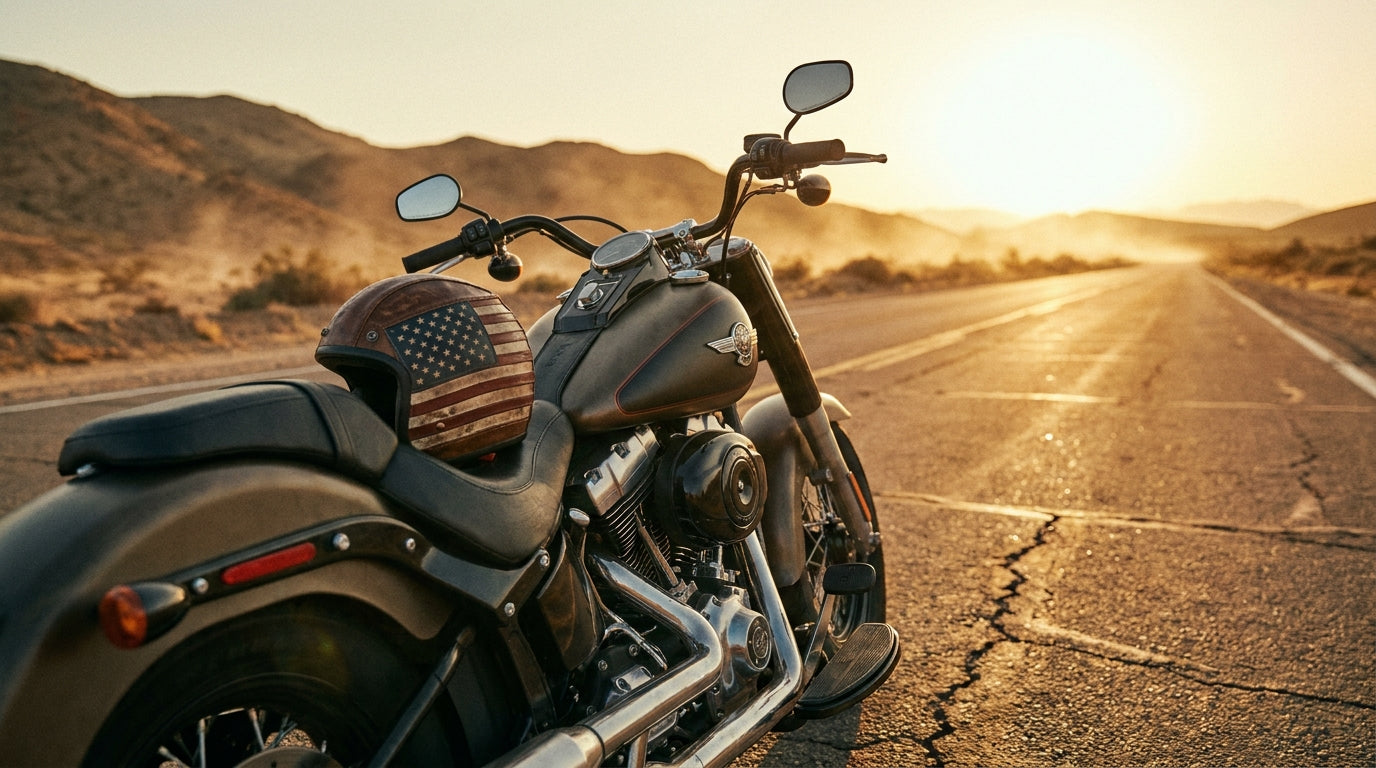
You just dropped serious money on a helmet. It protects your head, fits right, passed DOT certification. But it looks like every other black half-shell on the road. A motorcycle helmet cover fixes that in about 30 seconds, and you can swap styles faster than you change your boots.
This guide covers the most popular helmet cover styles riders search for right now, from character designs to custom fits. You will know exactly what fits your helmet type, what materials hold up at highway speed, and which mistakes send covers flying off at 60 mph.
What a Motorcycle Helmet Cover Actually Does
A helmet cover is a stretchy fabric shell that wraps around the outside of your helmet. Most are made from spandex-blend material with an elastic hem that grips the bottom edge of your shell. They slip on and off in seconds. No tools, no adhesive, no permanent changes to your gear.
The practical benefits go beyond looks. A helmet cover blocks UV exposure that yellows and cracks your helmet's clear coat over time. It adds a thin layer of weather protection. And it lets you match your helmet to different bikes, outfits, or moods without owning five helmets.
Most covers fit standard half-shell and open-face helmets in the 21 to 24 inch circumference range. Full-face covers exist but need a more precise fit because of the chin bar. Weight is minimal, typically under 3 ounces for a spandex cover. At highway speeds, a well-fitted cover adds zero noticeable drag.
Character and Funny Motorcycle Helmet Covers
This is the biggest category by far. Character helmet covers turn your lid into a conversation piece at every gas station and stoplight. The most searched styles right now show exactly what riders want.
Bunny helmet covers lead the pack with roughly 586 monthly impressions in Google Search. These typically feature plush ears on top with a fabric face wrap. Some versions add whiskers or floppy ears that move in the wind, which makes for solid rally photos.
Stitch helmet covers (the blue alien from Lilo and Stitch) run a close second. The better versions sculpt Stitch's face and ears in 3D foam under the fabric, not just a flat printed image. That 3D structure is what separates a cover that looks good in person from one that only works in product photos.
Toothless helmet covers turn your half-shell into the Night Fury dragon from How to Train Your Dragon. These already sit near position 2 on Google search results. The best versions include 3D-molded ear fins that hold shape at 60 mph.
Pokemon and Cookie Monster helmet covers round out the character top five. Pikachu and Gengar versions are the most popular Pokemon picks, while the Cookie Monster design works particularly well on round open-face shells.
The funny motorcycle helmet covers category overlaps with characters. Shark jaws, mohawks, cat ears, and "brain exposed" designs all pull consistent search traffic. The fuzzy motorcycle helmet cover sub-style, with soft plush finishes, adds a tactile element that photographs well and stands out at rallies.
Prices for character covers typically run $15 to $35. Materials range from thin polyester prints (cheaper, fade faster) to structured spandex with foam inserts that hold their shape at speed and last longer. Look for double-stitched seams and reinforced ear attachments. Those details separate a cover that lasts two seasons from one that shreds on the first highway ride.
Custom Motorcycle Helmet Covers
Custom motorcycle helmet covers let you put your club patch, riding group logo, or personal design on your lid. Several vendors offer dye-sublimation printing on spandex shells, which means your design is baked into the fabric rather than screen-printed on top. Dye-sub prints survive UV exposure and rain far better than surface prints.
For MC and riding club members, custom covers solve a real problem. Getting a helmet airbrushed costs $200 to $500 and is permanent. A custom printed cover costs $25 to $60, and you can switch between your club design and a plain lid for commuting.
The process is straightforward: send a vector file or high-resolution image, pick your helmet size, and most shops ship within 7 to 10 business days. Some vendors offer mockup previews before production, so you see the design on a helmet shape before it ships.
If you ride with a group that coordinates gear for rallies or charity rides, ordering 10 or more covers usually drops the per-unit price to the $18 to $22 range. That is cheaper than matching t-shirts and far more visible on the road.
How to Find the Right Fit for Your Helmet Cover
Fit is the single biggest factor in whether your motorcycle helmet cover stays on at speed or peels off on the highway. Here is what matters.
Measure your helmet, not your head. Wrap a flexible tape around the widest point of the outer shell. Most half-shell helmets measure 22 to 24 inches around the circumference. Full-face helmets run 24 to 27 inches including the chin bar.
Elastic hem quality matters more than fabric. A cover with a tight elastic band that grips under the helmet's lip will stay put at 80 mph. A loose elastic or drawstring design works fine for parking lot shows but fails at speed. Look for at least 1/4 inch wide elastic sewn into a channeled hem.
Visor cutouts need to match. Half-shell covers should have a clean front edge that tucks under or aligns with your visor's snap points. If the cover bunches under the visor, it can block your peripheral vision on the left side.
Fit by Helmet Type
| Helmet Type | Cover Fit Difficulty | Key Measurement | Typical Price |
|---|---|---|---|
| Half-shell / shorty | Easy | 21-23 in circumference | $12-25 |
| Open-face / 3/4 | Medium | 22-24 in, clear ear area | $15-30 |
| Full-face | Hard | 24-27 in, chin bar clearance | $20-40 |
| Modular / flip-up | Hardest | Varies by position | $25-45 |
If you ride a modular helmet, test the cover with the chin bar both up and down. Many covers that fit a modular in the closed position bunch or snag when you flip the chin bar up at a stop.
Cool Motorcycle Helmet Covers Beyond Characters
Not every rider wants Pikachu on their head. The cool motorcycle helmets crowd tends toward designs that add edge without going full cartoon. Carbon fiber prints, matte black skull wraps, flames, and military camo patterns all sit in this category.
Reflective helmet covers are a practical choice for night riders. 3M Scotchlite reflective fabric bounces headlight beams back to drivers behind you. A reflective cover over a dark helmet dramatically increases your visibility from the rear, where most motorcycle accidents originate. The NHTSA reports that roughly 40% of fatal motorcycle crashes involve a rear or side-impact collision, and a reflective cover adds a layer of passive safety.
Seasonal covers are gaining traction too. Santa hat covers in December, American flag wraps for July rallies, and blaze orange covers for riders who pass through hunting areas during fall. Having three or four covers in rotation keeps your look fresh and gives you an excuse to match your motorcycle face mask to your lid.
5 Common Helmet Cover Mistakes
1. Buying without measuring the shell. "One size fits all" covers stretch to fit a range, but that range matters. A cover sized for a full-face won't grip a half-shell. It will flap like a flag at anything over 40 mph.
2. Ignoring wind drag on 3D attachments. Covers with protruding ears, mohawks, or horns create drag. Flat character covers add negligible wind resistance. If your 3D dinosaur spines catch 70 mph wind, they will either rip off or create a head-buffeting effect you will feel after 20 minutes.
3. Blocking helmet vents. Some covers seal off top vents on helmets designed for airflow. The Shoei RF-1400 has 6 intake and 4 exhaust vents. A cover that blocks even half of those changes the thermal experience significantly. Check whether the cover has mesh panels or vent cutouts that align with your helmet's ventilation.
4. Skipping UV-resistant printing. Printed covers fade fast in direct sun. Covers with UV-resistant dye-sublimation printing keep their color for 2 to 3 seasons. Cheap screen prints start ghosting within weeks of daily riding.
5. Machine washing with heat. Most spandex covers can be machine washed on cold and air dried. Hot water and dryer heat shrink the elastic hem and distort foam inserts. Once the elastic loses tension, the cover will not stay on at speed. Hand wash if the elastic is already borderline.
Where to Start Shopping
Motorcycle helmet covers are one of the easiest ways to customize your look without committing to a paint job or buying a second helmet. Whether you want a character cover that draws questions at every light or a clean custom design for your riding crew, the key is getting the right fit for your shell type and riding speed.
If you are shopping for helmet covers, the ALR helmet covers collection has character, funny, and custom-fit styles sorted by helmet type. Pair a solid cover with one of the skull balaclavas and you have got a full look that costs less than a tank of gas.

No comments yet. Be the first rider to weigh in.