
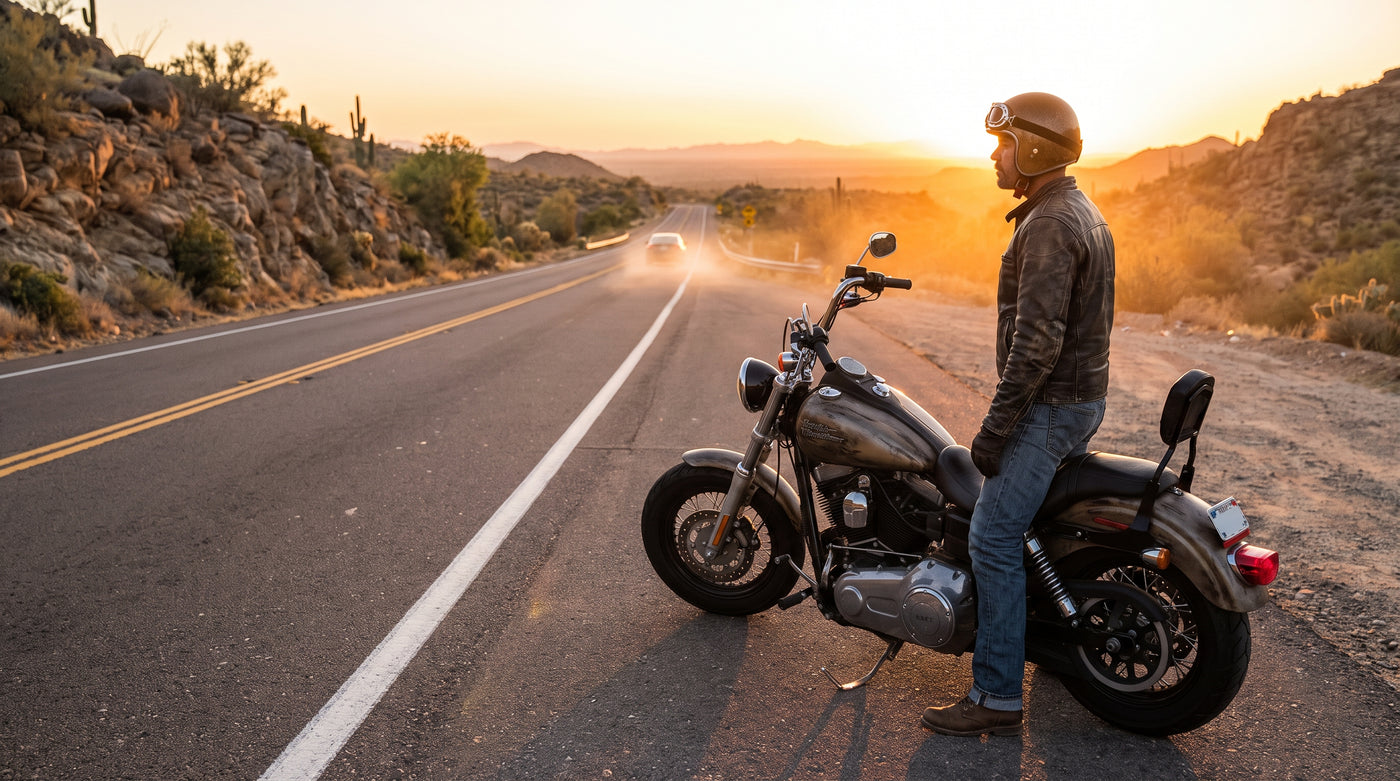
A lot of riders searching for classic biker helmets end up with a novelty shell that would not survive a parking lot tip-over. The style is not the problem. The problem is that roughly half the helmets marketed as "classic" carry no DOT certification at all. They photograph well, look like real riding gear, and offer the impact protection of a baseball cap. Knowing the difference before you spend $80 to $200 saves you from buying a costume piece when you need actual head protection on the road.
This guide covers every classic biker helmet style on the market, from half shells and open-face 3/4 lids to retro full-face options. You will learn which classic biker helmets carry real DOT certification, which shell materials protect on impact, and how to match the right type to your bike and riding without sacrificing the old-school look you want.
What Counts as a Classic Biker Helmet
The term gets used loosely. In the helmet world, "classic" usually means one of three things: a shape that mirrors helmets from the 1940s through the 1970s, a finish that skips modern graphics for solid colors or matte black, or a low-profile fit that hugs the head tighter than bulky adventure helmets.
The Bell 500, first produced in 1962, is the template most brands are still copying. That original design used a round fiberglass shell, minimal padding, and a plain snap visor. Modern versions keep the silhouette but add EPS foam impact lining, DOT certification, and removable moisture-wicking liners. The outside looks like a 1960s helmet. The inside protects like one built in 2026.
Classic helmets also tend to run lighter than their modern sport counterparts. Where a Shoei RF-1400 weighs 3.4 pounds, a classic open-face like the Biltwell Bonanza comes in at 2.1 pounds. That weight difference adds up on long rides where neck fatigue becomes a real factor, especially for riders over 50 who feel every extra ounce after two hours in the saddle.
Color and finish are part of it too. Most classic biker helmets come in solid matte black, gloss black, flat olive, or flat bronze. You will not see neon graphics or racing stripes. The understated finish is what ties the helmet to the rest of the rider's gear, from leather jackets to engineer boots and saddlebags. That visual consistency is half the reason riders choose a classic shell over a modern sport lid.
Classic Half Shell Helmets
The half shell is the most common classic biker helmet style. It covers the crown of your head and nothing else. No ear coverage, no chin bar, no face shield. For cruiser riders on Harley Softails and Indian Scouts, the half shell delivers the look with minimal weight and maximum airflow.
A DOT-rated classic half shell typically weighs 1.8 to 2.2 pounds, making it one of the lightest certified options you can buy. The key spec to check is shell material. Entry-level half shells use injection-molded ABS plastic. ABS works, but it is thicker and heavier at the same protection level compared to fiberglass. Better half shells use fiberglass composite, which absorbs impact energy more efficiently at lower weight. The Biltwell Bonanza, one of the most popular classic helmets on the market, uses a fiberglass shell at just 2.1 pounds.
The low-profile fit is what separates a classic half shell from a mushroom-top novelty helmet. Classic half shells sit close to the skull and do not extend past the temple line. If a helmet makes your head look twice its normal size, the fit is wrong or the shell does not match your head shape. Most classic half shells run in the $70 to $150 range depending on shell material and finish.

Classic Open-Face and 3/4 Helmets
An open-face helmet covers the crown, ears, and back of the head while leaving the face exposed. This is the original Bell 500 design that defined "classic" for an entire generation of riders. The 3/4 style gives roughly three times the coverage area of a half shell while keeping the open feel that cruiser and cafe racer riders prefer.
Weight ranges from 2.2 to 2.8 pounds depending on shell construction. Fiberglass open-face helmets cost $20 to $40 more than ABS versions but last longer and spread impact force over a wider area. For riders who plan to wear the helmet daily for years, fiberglass pays for itself.
The snap visor is the signature accessory for this style. Most classic open-face helmets use a three-snap mounting system at the brow line. Peak visors shade the eyes without the bulk of a full face shield. Bubble visors curve outward from the face and offer better wind protection for riders who skip goggles. Both types are interchangeable on most three-snap helmets, so you can switch based on the ride. For a full breakdown of what to look for, the leather motorcycle helmets guide covers fit and materials in more detail.

Classic Biker Helmets with Goggles
Before face shields existed, every motorcyclist wore goggles. That combination, an open-face or half shell paired with separate riding goggles, is still the most recognizable classic biker setup on the road. It also happens to be practical. Goggles seal against the face independently from the helmet, which means better dust and wind protection than a snap-on visor alone.
Modern riding goggles use anti-fog polycarbonate lenses with UV protection. A quality pair provides at least 180 degrees of peripheral vision, matching DOT's minimum requirement for helmet visors. For a classic biker helmet setup, look for goggles with foam-sealed edges and an adjustable elastic strap wide enough to sit in the helmet's brow groove without sliding upward at speed.
A solid pair of motorcycle goggles runs $25 to $55. The combination of a $120 classic open-face helmet and $40 goggles gives you a complete riding setup for under $200 that looks period-correct and actually protects your face from road debris at highway speeds. For riders who want photochromic lenses that darken in sunlight and clear at dusk, expect to spend $45 to $65, but you avoid carrying two pairs.

Classic Full-Face Helmets with Retro Styling
Full-face helmets and "classic" did not always belong in the same sentence. The full-face design only became common in the 1970s, about a decade after the open-face became the standard. But several manufacturers now build full-face helmets with retro silhouettes and vintage-inspired graphics that look period-correct while delivering modern chin-bar protection.
The Biltwell Lane Splitter is the benchmark retro full-face. It uses a fiberglass shell with a flat face shield and a profile that reads more 1975 than 2026. At 3.1 pounds, it weighs about a pound more than a classic half shell but covers the entire face and jaw. That added weight buys a serious jump in protection. Full-face helmets reduce facial injuries by roughly 45 percent compared to open-face designs, based on crash analysis from the Dietmar Otte study of over 2,000 motorcycle accidents.
The trade-off is heat. Full-face helmets run warmer than open styles, especially below 40 mph where airflow through the vents is limited. In summer, expect to sweat more than you would in a half shell. If you ride primarily in traffic or cold weather, a retro full-face makes the most sense. If you ride warm-weather cruiser runs at moderate speed, the open-face or half shell is more comfortable. The full-face motorcycle helmets guide covers more options if this style interests you.

Classic Biker Helmet Comparison by Style
Each classic helmet style fits a different kind of rider and riding condition. Here is how they stack up:
| Style | Shell Material | Weight | Coverage | DOT Rated | Best For |
|---|---|---|---|---|---|
| Half shell | ABS or fiberglass | 1.8 to 2.2 lbs | Crown only | Yes (most) | Short cruiser rides, warm weather |
| Open-face (3/4) | Fiberglass | 2.2 to 2.8 lbs | Crown, ears, back | Yes | Cafe racers, touring, daily riding |
| Full-face retro | Fiberglass | 3.0 to 3.5 lbs | Full head and chin | Yes | Highway, traffic, cold or wet weather |
| German-style novelty | Thin ABS | 1.4 to 1.7 lbs | Crown only | Rarely | Shows, slow parade rides (often non-DOT) |
The German-style novelty helmet deserves a specific warning. These thin, low-profile shells are popular at rallies and bike shows. Most carry no DOT certification. The ones that do tend to weigh more than they look because the shell needs enough material to pass impact tests. If the helmet weighs under 1.5 pounds and costs under $40, it is almost certainly uncertified, regardless of any sticker on the back.
For most riders shopping for classic biker helmets, the open-face 3/4 design hits the best balance. It looks right on a cruiser or chopper, weighs under 3 pounds, and provides ear and back-of-head coverage that a half shell lacks entirely. Add a pair of goggles for wind protection and you have a complete setup that looks like 1965 but protects like 2026.
5 Mistakes Riders Make When Buying Classic Biker Helmets
- Trusting a DOT sticker without checking the manufacturer. Counterfeit DOT stickers are common on imported novelty helmets. A legitimate DOT label includes the manufacturer name, model number, and FMVSS 218 reference. If the sticker just says "DOT" with no additional details, treat it as suspect and check the brand's website for certification documentation.
- Buying the wrong shell size for their head shape. Classic helmets come in round oval, intermediate oval, and long oval profiles. Most American riders have an intermediate oval head shape. A round-oval helmet on an intermediate-oval head creates painful pressure points at the temples. No amount of break-in will fix a shape mismatch.
- Skipping the retention test. Put the helmet on, fasten the chin strap, and grab the rear edge. Push forward and up. If the helmet rolls off or shifts more than an inch, it is too large. A classic half shell should feel snug enough that it wrinkles the skin on your forehead slightly when pushed forward.
- Choosing style over ventilation for daily riding. A matte black classic half shell looks sharp sitting on the shelf, but if you ride every day in 90-degree heat, a helmet with zero vents turns into a sweat box. Some classic-style helmets add discreet internal vent channels that move air across the crown without changing the exterior look.
- Ignoring replacement timing. DOT recommends replacing any helmet after 5 years, even without a crash. The EPS foam liner degrades from sweat, UV exposure, and road vibration over time. A classic half shell from 2020 may still look fine on the outside and be past its effective protection window on the inside.
If you are shopping for a classic biker helmet with real DOT protection and the low-profile look cruiser riders want, the cool motorcycle helmets collection has tested picks across half shell, open-face, and retro full-face styles. Every helmet ships with verified DOT certification and free returns, so you can check the fit at home before you commit.


No comments yet. Be the first rider to weigh in.