
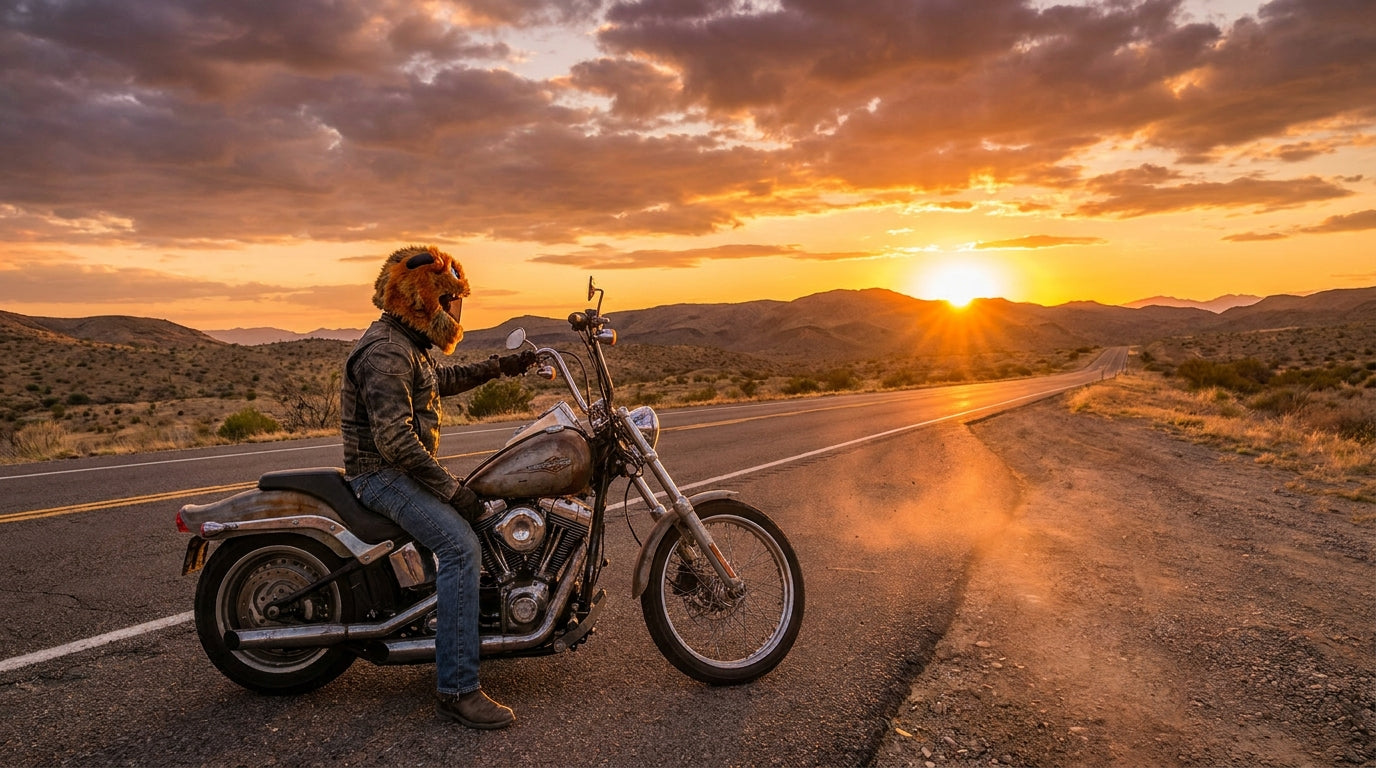
A guy rolls into Sturgis on a matte black Street Glide, and every phone in the parking lot points at his helmet. Not because of the bike. Because his lid is wrapped in bright orange faux fur with a 6-inch mohawk running down the crown. A fuzzy motorcycle helmet cover turns any standard DOT shell into a conversation starter, and they cost less than a tank of gas. But not every plush cover stays put at highway speed, and some materials fall apart after two rides in the rain.
This guide breaks down what a fuzzy motorcycle helmet cover actually is, which materials hold up, how to size one for your specific shell, and which plush styles are worth buying in 2026. Whether you want a full faux fur wrap, cat ears, or a mohawk spike strip, you will know exactly what to look for before you spend a dollar.
What a Fuzzy Motorcycle Helmet Cover Actually Is
A fuzzy helmet cover is a slip-on shell made from synthetic plush, faux fur, or fleece that stretches over the outside of a standard motorcycle helmet. It does not replace the helmet. The DOT or ECE-rated shell underneath still does all the protective work. The cover is purely cosmetic, adding texture, color, and personality without modifying the helmet's safety structure.
Most covers use an elastic hem sewn around the bottom edge. You pull the cover over the helmet like a fitted sheet over a mattress, and the elastic grips the rim. Better designs add a chin strap loop or drawstring at the base for extra hold. The cover sits directly on the helmet's outer shell, adding roughly 5 to 10mm of thickness and 2 to 4 ounces of weight. On a 3-pound half-shell, that is negligible. On a 4.5-pound full-face, you will not notice it at all.
One thing to know before buying: a fuzzy cover slightly increases wind drag. At city speeds under 35 mph, the difference is zero. Above 55 mph, the faux fur catches air and can create a mild buffeting sensation, similar to riding with a slightly loose visor. Most riders who use plush covers treat them as rally gear, show gear, or around-town gear rather than daily highway commuters.

Fuzzy Motorcycle Helmet Cover Materials Compared
The material determines how the cover looks after 10 rides versus one. Here is what each fabric does well and where it fails.
Acrylic faux fur is the most common material on budget covers priced between $12 and $25. It looks great out of the package, with a dense pile height around 15 to 25mm. The problem is matting. After 3 to 5 rides in wind, the fibers clump together and lose their fluffy texture. Rain accelerates the matting. Some riders brush the fur back with a pet slicker brush after each ride, which helps but adds maintenance.
Polyester plush is shorter pile, typically 5 to 12mm, and resists matting better than acrylic. It dries faster after rain, holds dye color longer, and costs about the same. The tradeoff is that polyester plush looks more like a stuffed animal than a fur coat. For character-themed covers like bears, cats, or cartoon faces, polyester plush is the standard choice.
Nylon-blend fleece is the most durable option. It does not mat, dries in under an hour, and handles machine washing without falling apart. The look is less dramatic than faux fur, with a smooth texture instead of a shaggy one. Fleece covers work best for mohawk spikes and color-block designs rather than full-coverage fur looks.
| Material | Pile Height | Matting | Washable | Price Range | Best For |
|---|---|---|---|---|---|
| Acrylic faux fur | 15 to 25mm | High | Hand wash only | $12 to $25 | Full fur coverage, rally shows |
| Polyester plush | 5 to 12mm | Low | Machine wash cold | $10 to $20 | Character covers, animal ears |
| Nylon-blend fleece | 2 to 5mm | None | Machine wash warm | $15 to $30 | Mohawks, color blocks, daily use |
How to Size a Fuzzy Helmet Cover for Your Shell
Helmet covers are not one-size-fits-all, despite what many product listings claim. A cover designed for a half-shell DOT beanie will not stretch over a full-face Shoei RF-1400. Most covers come in two or three size categories: half-shell, three-quarter (open face), and full-face.
The critical measurement is helmet circumference at the widest point of the outer shell. A typical half-shell helmet measures 24 to 26 inches around. A full-face sits between 27 and 30 inches. If the cover's elastic hem is sewn for a 25-inch circumference and your full-face measures 29 inches, the cover will stretch too tight, pull away from the surface, and fly off at 40 mph.
Here is the sizing rule: measure your helmet with a flexible tape at the widest point (usually just above the visor line on a full-face, or the widest part of the crown on a half-shell). Match that number to the cover's listed size range. If you sit between two sizes, go one size up. A slightly loose cover that you can tighten with a drawstring beats a too-tight cover that pops off mid-ride.
One more fit detail: if your helmet has a rear spoiler, vent scoops, or a built-in sun visor housing, those protrusions can prevent a snug fit. Covers with a drawstring closure handle irregular shapes better than pure-elastic designs. If your helmet has a large rear spoiler like the Scorpion EXO-R1 Air, look for covers specifically listed as "full-face compatible with spoiler."

Popular Fuzzy Motorcycle Helmet Styles Worth Considering
Full faux fur wraps cover the entire helmet in shaggy synthetic fur. Colors range from natural tones like brown and black to neon pink, electric blue, and rainbow tie-dye. These are the loudest option and the most popular at rallies like Sturgis, Daytona Bike Week, and Thunder Beach. Expect to pay $15 to $30 for a quality full-wrap with elastic plus drawstring closure.
Mohawk spike strips attach to the helmet's center ridge with adhesive-backed velcro or a suction-cup rail. The mohawk itself is usually 4 to 8 inches tall and made from nylon-blend fleece or stiffened acrylic. Some come with removable inserts so you can swap colors. A decent mohawk strip runs $8 to $18. The velcro-mount versions are easier to remove than adhesive types, which can leave residue on the shell.
Animal ear covers add cat ears, bear ears, devil horns, or bunny ears to the top of the helmet. Most use a strap-and-clip system that wraps under the helmet's chin bar or rear edge. These are popular with women riders and with anyone who wants a playful look without covering the entire shell. Prices range from $6 for basic clip-on ears to $25 for a full plush animal head cover with ears, eyes, and a nose sculpted into the design.
Character and novelty covers turn the helmet into a cartoon face, skull, or pop culture reference. Pikachu, Stitch, and sock monkey are the top sellers online. These use polyester plush over a foam-structured frame that holds the character's shape. Quality varies wildly. The good ones have reinforced stitching and a snug elastic fit. The bad ones flap in the wind and shed stuffing after a few rides. Check reviews for photos taken after 5 or more rides, not just out-of-the-box shots.
Will a Fuzzy Cover Affect Your Helmet's Safety?
The short answer: no, as long as you do it right. A slip-on fuzzy cover does not modify the helmet's EPS liner, outer shell, or chin bar. The cover sits on the outside surface only. No drilling, no adhesive on structural components, no changes to impact absorption. DOT and ECE certifications apply to the helmet itself, and a textile cover over the shell does not void them.
Two safety points to keep in mind. First, do not cover your visor or eye port. Any cover that blocks peripheral vision or obstructs the face shield is a hazard, not just a style choice. Quality covers have cutouts for the visor and face opening. Second, bright-colored fuzzy covers actually improve visibility. A neon green faux fur helmet is easier for a car driver to spot than a matte black shell, especially at dusk. The NHTSA recommends high-visibility gear for motorcyclists, and a bright fuzzy cover counts.
The one exception: avoid attaching anything to the helmet with adhesive that contacts the EPS foam liner inside. Some riders glue mohawk strips directly to the shell, and certain industrial adhesives (cyanoacrylate, epoxy) can chemically degrade polycarbonate or fiberglass shells over time. Stick with velcro-mount or elastic-fit covers, and skip the permanent glue.

5 Mistakes Riders Make with Fuzzy Helmet Covers
1. Buying a "universal fit" cover for a full-face helmet. Most universal covers are sized for half-shells and three-quarter helmets with a 24 to 26 inch circumference. A full-face Shoei, Arai, or AGV often measures 28 to 30 inches. The cover stretches past its elastic limit, loses grip, and flies off on the highway. Always check the listed size range against your helmet's actual circumference.
2. Riding at highway speed with a loose-fitting cover. A cover that fits fine at 30 mph can balloon and peel back at 65 mph. Wind gets under the leading edge, inflates the fur, and the elastic cannot hold. If you plan to ride above 45 mph with a fuzzy cover, use one with a drawstring or chin strap loop, not just elastic. Pull the drawstring snug before every ride.
3. Machine-washing an acrylic faux fur cover. Acrylic fur mats permanently in a washing machine, even on a gentle cycle. The agitation tangles the fibers into clumps that no amount of brushing fixes. Hand wash in cold water with mild soap, then air dry. Polyester plush and nylon fleece covers handle machine washing fine on cold, gentle cycle.
4. Leaving the cover on during rain without checking the material. Acrylic faux fur absorbs water like a sponge. A soaked fur cover adds 4 to 6 ounces of water weight, sags, and takes hours to dry. Polyester plush sheds water faster but still needs drying. If rain is likely, either pull the cover off and stow it in a saddlebag or tail bag, or use a nylon fleece cover that dries in under an hour.
5. Using permanent adhesive to attach a mohawk or ears. Super glue and epoxy bond hard to helmet shells, but they also make removal nearly impossible without damaging the clear coat or paint. Worse, certain adhesives chemically attack polycarbonate shells. Use velcro strips with removable adhesive backing, or choose covers that attach with elastic and clips.
Where to Start If You Want a Fuzzy Helmet Cover
For most riders, a polyester plush or nylon fleece cover is the practical pick. It holds up longer than acrylic fur, handles occasional rain, and washes easily. Pick a style that matches how you ride. Full fur wraps for rallies and shows. Mohawk strips for daily personality. Animal ears or character covers for fun runs and group rides.
Measure your helmet before you order. Match the circumference to the cover's size chart. Choose a cover with a drawstring or chin strap loop if you ride above 45 mph. And skip the permanent adhesive entirely.
If you are looking for helmet covers that actually stay put, the collection has options for half-shell, open face, and full-face lids. And for riders who want a solid DOT helmet to put a cover on, the helmet collection has shells that pair well with any plush cover you choose.


No comments yet. Be the first rider to weigh in.