
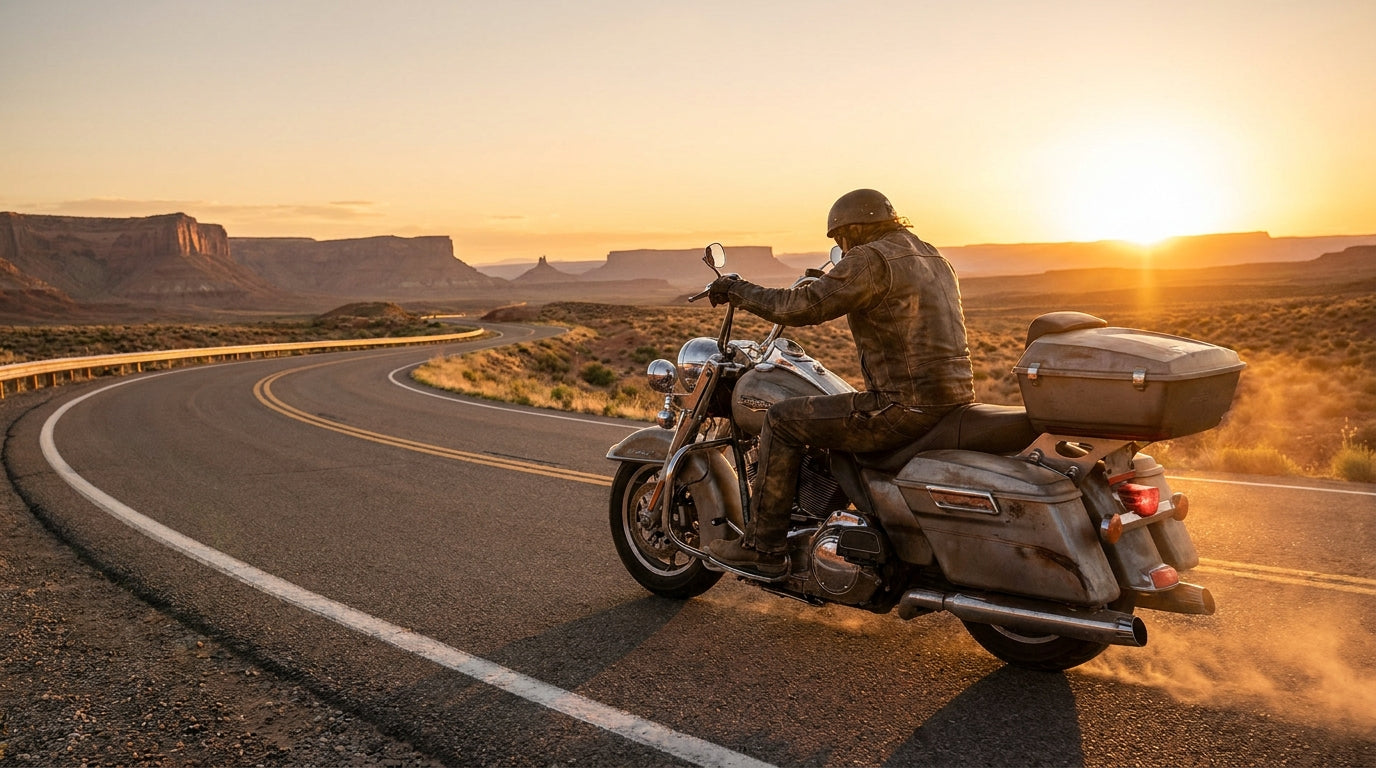
Your bike sits outside overnight. You walk out in the morning and it's gone. No broken glass, no trail, no witnesses. According to the NICB, over 52,000 motorcycles were reported stolen in the United States in 2022 alone, and the recovery rate hovers around 40%. A motorcycle alarm is one of the cheapest, fastest ways to make a thief pick someone else's ride instead of yours.

This guide breaks down every type of motorcycle alarm system worth considering: disc lock alarms, standalone units with remotes, GPS trackers, and full wired systems. You'll see real sound levels, actual prices, and what each type does and does not protect against.
How a Motorcycle Alarm System Works
Every motorcycle alarm runs on the same basic principle: a motion sensor or tilt sensor detects unauthorized movement, and a siren blasts loud enough to scare the thief and alert you or anyone nearby.
Most modern units use a piezoelectric vibration sensor that triggers when the bike moves, tilts, or gets bumped hard enough. The cheapest alarms just scream. Better ones send a signal to a remote key fob in your pocket. The best ones include GPS tracking, so you can find your bike even if the thief manages to muffle the alarm and load it onto a trailer.
The three main categories are disc lock alarms (lock plus alarm in one compact unit), standalone alarm boxes with remotes, and full hardwired systems wired into your bike's electrical harness. Each has real tradeoffs in convenience, volume, and actual theft protection. A fourth option, the GPS tracker, doesn't make noise at all but solves the recovery problem that sirens can't.
Types of Motorcycle Alarms Compared
Here's how the major motorcycle alarm system types stack up. A Scorpio SR-i900 hardwired system runs around $400 and includes two-way paging up to a mile away. A disc lock alarm like the Abus Granit Detecto SmartX sits at $120 to $180. A standalone battery-powered alarm with a wireless remote, like the ALR 113dB unit, comes in under $35. Each does a different job, and the right pick depends on how you park and ride.
| Alarm Type | Sound Level | Price Range | Installs In | Best For |
|---|---|---|---|---|
| Disc Lock Alarm | 100-110 dB | $25-$180 | 10 seconds | Street parking, daily commute |
| Standalone Remote Alarm | 100-125 dB | $20-$60 | 2-5 minutes | Budget protection, multi-bike households |
| GPS Tracker with Alert | Silent | $30-$100 | 3-5 minutes | Theft recovery, stealth tracking |
| Hardwired System | 110-125 dB | $150-$500 | 1-2 hours | Permanent install, two-way paging |
The takeaway: no single motorcycle alarm type covers everything. A disc lock alarm is the easiest daily carry. A GPS tracker helps you recover a stolen bike. A hardwired system gives you the most features but takes real installation work. Most experienced riders layer two types for solid coverage.
Motorcycle Alarm Disc Locks: The Most Popular Option
A disc lock alarm clamps onto your brake rotor and doubles as both a physical lock and a motion-triggered siren. It's the single most popular motorcycle alarm type because it takes zero installation, fits in a tank bag or jacket pocket, and works on any bike with a disc brake.
When shopping for one, look for a hardened steel pin 10mm or thicker. The Kryptonite New York Fahgettaboudit disc lock uses a 14mm pin that resists bolt cutters far longer than the 7mm pins found on budget models. You also want a decibel rating of at least 110 dB and a weatherproof housing rated IP54 or higher so rain doesn't kill it.
One important habit: always use a reminder cable. More riders damage their own rotors by forgetting the disc lock is on and rolling the bike forward than thieves do by cutting one off. A bright orange cable from the lock to your handlebar grip eliminates the risk. These run about $3 to $8 and save you a $200 rotor replacement.
ALR's motorcycle alarm disc lock packs a 110 dB siren, hardened steel construction, and comes with a carry pouch. It's a solid daily-use option that won't empty your wallet.

GPS Trackers: Find Your Bike After It's Gone
A siren makes noise. A GPS tracker tells you exactly where your bike is sitting. These two solve different problems, and the smartest setup uses both.
A magnetic GPS tracker hides under the seat or inside a fairing panel. When someone rolls your bike onto a trailer at 3 AM (a common tactic used by organized theft rings), the alarm might not trigger until the bike tilts off the kickstand, and by then the thief is already half a mile down the road. The GPS tracker keeps pinging your phone with a live location so you can direct police to the exact spot.
Some GPS trackers run off a SIM card and require a monthly subscription of $5 to $15 for cellular data. Others use Bluetooth mesh networks or have a built-in SIM with no recurring fee. Before you buy, check whether the monthly cost makes sense compared to a one-time-payment tracker.
For anti-theft topics like this, a hidden GPS tracker is the piece most riders skip and then regret after a theft. A $40 tracker can mean the difference between recovering your $8,000 bike and filing an insurance claim. If you ride a bike worth protecting, it belongs in your security setup.
Standalone Motorcycle Alarm Units with Remote
These are battery-powered alarm boxes that you strap, velcro, or zip-tie to the frame or under the seat. When the vibration sensor triggers, the siren fires and a signal goes to a wireless key-fob remote in your pocket. You hear the alert, hit the fob, and know someone is messing with your bike.
The advantage over a disc lock alarm is raw volume. A standalone unit can pack a bigger speaker and push 113 to 125 dB. For reference, 113 dB is louder than a chainsaw at full throttle and roughly as loud as standing 15 feet from the speakers at a live rock concert. That's enough to wake up a full apartment building and send most thieves sprinting in the other direction.
The disadvantage: a standalone alarm doesn't physically lock anything. If the thief is bold enough to ignore the noise or rip the unit off, there's no metal stopping the wheel from rolling. Pair it with a heavy-duty chain lock or disc lock for a two-layer setup that covers both noise and physical resistance.
The ALR 113dB Waterproof Remote Alarm runs on a replaceable battery, handles rain and road grime, and costs under $35. For riders who want loud protection without a complicated install, it's a strong starting point.
What Sound Level Actually Deters a Thief
Alarm manufacturers love to print big decibel numbers on the box. Here's what those numbers actually mean on a dark street at 2 AM.
- 100 dB: About as loud as a gas lawnmower. Audible from 50 feet away, but easy to ignore in a city with background traffic noise. Budget motorcycle alarm disc locks often land here.
- 110 dB: Pain threshold for most people. Standing next to a 110 dB siren is physically uncomfortable. Most name-brand disc lock alarms like the Abus Detecto and Oxford Boss hit this range. Enough for a residential street.
- 120+ dB: Louder than a thunderclap at close range. The Gorilla 9100 motorcycle alarm system hits 122 dB. At this level, it hurts to be within arm's reach of the bike, and neighbors three houses away will hear it clearly.
The sweet spot for most riders is 110 dB or higher. Below that, a determined thief wearing earplugs can power through the noise long enough to load the bike. The ALR 113 dB alarm sits right in the "you physically cannot ignore this" zone, which is where you want to be.
5 Common Motorcycle Alarm Mistakes
These come up over and over on rider forums and each one gives thieves an easier night.
- Relying on the alarm alone. An alarm buys you time, usually 30 to 90 seconds of panic and noise. If the bike isn't also physically locked to something immovable (a ground anchor, a post, a heavy chain), a two-person crew can lift it into a van before anyone reacts.
- Mounting the alarm where it's easy to grab. If a thief can yank the unit off the bike in five seconds, the siren stops. Mount it somewhere enclosed or hard to access: under the seat, behind a fairing panel, or zip-tied deep inside the frame.
- Setting sensitivity too high. A too-sensitive motorcycle alarm goes off every time a truck rumbles past or a strong gust hits the bike. Your neighbors learn to ignore it. Adjust sensitivity so it triggers on real contact or tilt, not road vibration. Most units have a sensitivity dial or DIP switch for this.
- Skipping the disc lock reminder cable. Riders damage their own rotors by rolling forward with the lock still on. This happens far more often than actual theft attempts. A bright orange cable from the lock to the handlebar costs $3 and eliminates the problem entirely.
- No GPS backup. An alarm is a deterrent. GPS tracking is a recovery tool. NICB data shows motorcycles without tracking devices have a recovery rate under 40%. A hidden tracker changes those odds significantly, especially in metro areas where professional theft rings operate out of chop shops.
Putting It All Together: Layered Motorcycle Security
The most effective setup isn't one expensive alarm. It's three affordable layers working together: a disc lock alarm on the front rotor for physical and audible deterrence, a chain lock through the swingarm anchored to a ground bolt or heavy post, and a hidden GPS tracker for recovery if layers one and two fail.
Total cost for a solid three-layer setup runs roughly $90 to $140. That's less than most insurance deductibles and a fraction of what a stolen motorcycle costs you in lost riding time, paperwork, and higher premiums for years afterward.
If you're shopping for motorcycle alarm disc locks, standalone alarms, or GPS trackers, the ALR motorcycle alarm collection has the hardware. For a deep look at physical locks, the motorcycle disc lock guide covers what to look for in pins, shackles, and steel grades.



No comments yet. Be the first rider to weigh in.