
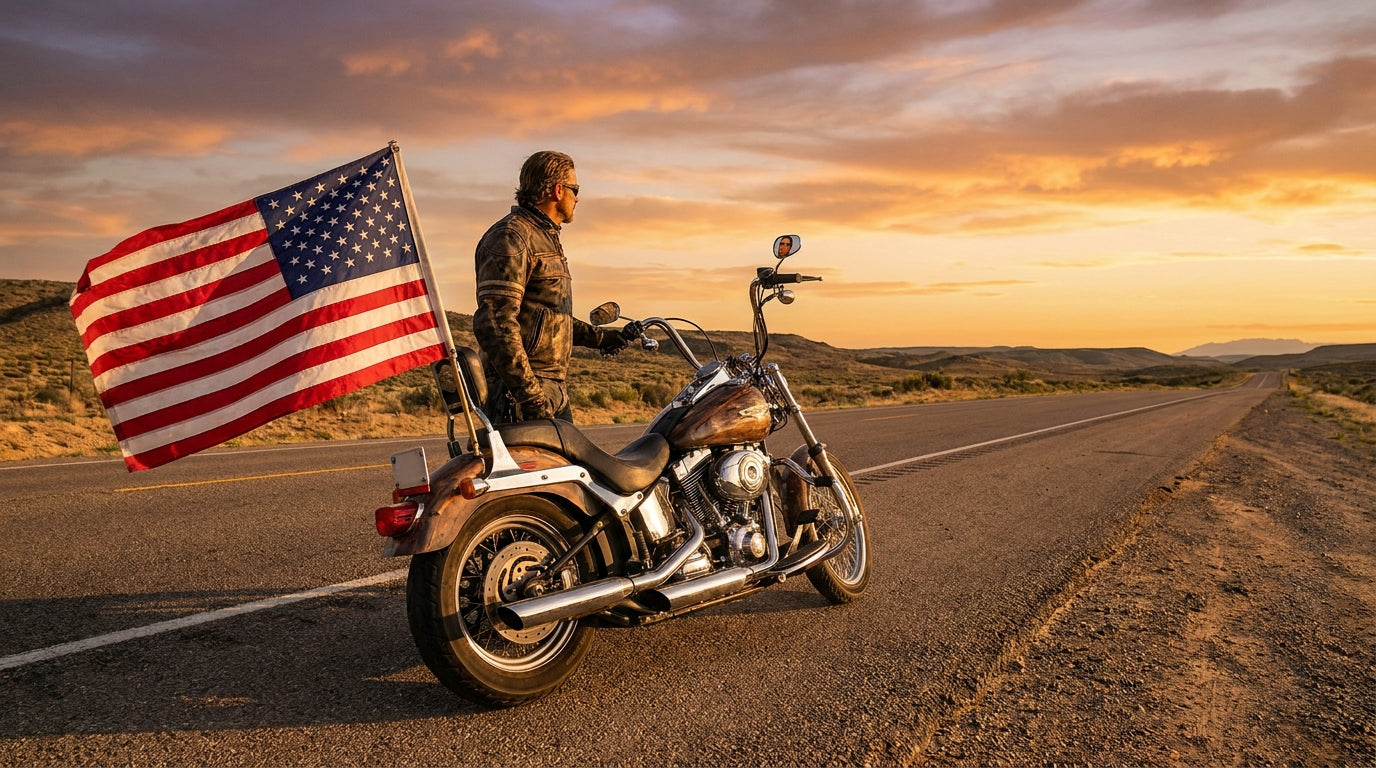
A rider bolts a six-dollar flag kit to his sissy bar on a Saturday morning, hits the interstate at 70 mph, and watches a $3 polyester flag shred into ribbons before the first exit. The pole bends sideways, the bracket rattles loose, and the whole setup ends up in a truck bed at the next rest stop. Motorcycle flag mounts look simple, but cheap materials and sloppy installation account for most of the failures riders complain about online.
This guide covers how motorcycle flag mounts actually work, what pole length and bracket style to pick for your bike, how to install one properly, and which setups hold up at highway speed. By the end you will know which flag size fits which mount, what material resists wind fatigue, and how to avoid the three mistakes that ruin most flag kits within a month.
How a Motorcycle Flag Mount Works
A flag mount has three parts: the bracket, the pole, and the flag. The bracket clamps to the bike, the pole slides into the bracket socket, and the flag attaches to the pole with sewn sleeves, clips, or grommets. Simple in concept, but every part matters.
The bracket is the weak link in most kits. Budget brackets use thin stamped aluminum with a single bolt. A quality bracket uses 304 stainless steel or 6061 aluminum with two to four bolts and a rubber-lined clamp that grips without scratching chrome. Pro Pad, one of the largest motorcycle flag mount manufacturers in the U.S., makes brackets with a 1/2-inch diameter socket and a stainless thumbscrew. Their standard touring bracket fits 1/2-inch to 1-inch round tube and bolts to luggage racks, sissy bars, or antenna mounts.
The pole is usually 3/8-inch or 1/2-inch fiberglass or stainless steel, ranging from 9 inches to 18 inches tall. A taller pole gives the flag more visibility but creates more wind drag. Most riders find 13 inches is the sweet spot: tall enough to clear saddlebag lids, short enough to keep flutter manageable at 75 mph.

Types of Motorcycle Flag Mount Brackets
Not every bracket fits every bike. The mounting point determines which bracket style you need.
Luggage Rack Mounts
These clamp to the horizontal tubes of a rear luggage rack. Most use a U-bolt or saddle clamp with rubber inserts to protect the chrome. This is the most common mounting location for touring bikes like the Harley-Davidson Road King or Indian Chieftain. The rack mount keeps the flag above the trunk line and clear of passenger helmets. Standard rack tube diameter is 1/2 inch to 5/8 inch.
Sissy Bar Mounts
A sissy bar bracket clamps vertically to the backrest upright. The flag sits behind the passenger seat and is visible from both sides. The main limitation: sissy bar diameter varies from 3/8 inch on lighter bikes to 1 inch on heavy cruisers. Measure your bar before buying. A bracket designed for 1/2-inch bar will wobble on a 3/4-inch tube and will not clamp at all on a 1-inch tube.
License Plate Mounts
These bolt directly to the license plate frame or the rear fender using existing bolt holes. No clamp needed. The flag sits at fender height, which is lower than a rack mount. Some states require the license plate to remain unobstructed, so position the mount to one side of the plate and check your local regulations. A standard M8 bolt (8mm) fits most U.S. license plate holes.
Antenna-Style Mounts
A few kits replace the stock radio antenna with a flag pole adapter. This works well on Harley baggers with the factory antenna mount on the rear fender. The advantage: zero drilling, zero clamps, and the pole threads into an existing base. The downside: limited to bikes with a threaded antenna mount, and the flag sits lower than a rack-mounted setup.
Which Flag Size Fits a Motorcycle Flag Mount
Car flags and porch flags are too big for a bike. They catch too much wind, stress the bracket, and obstruct the rider's rear view. The standard motorcycle flag size is 6 by 9 inches. Some riders use 10 by 15 inches for rallies and parades, but anything above that creates serious drag above 50 mph.
| Flag Size | Best For | Max Speed | Wind Load |
|---|---|---|---|
| 6 x 9 in | Highway cruising, daily rides | 85+ mph | Low |
| 10 x 15 in | Rallies, parades, group rides | 55 to 65 mph | Moderate |
| 12 x 18 in | Trikes and sidecar rigs | 45 mph | High |
| Standard porch (3 x 5 ft) | Never for a motorcycle | N/A | Dangerous |
A 6 x 9 inch nylon flag weighs about 0.8 ounces and generates roughly 2 to 3 pounds of drag force at 70 mph. A 10 x 15 inch flag jumps to 6 to 8 pounds of drag. That force transfers directly into the bracket and mounting point. Double-layered nylon handles UV and rain better than single-ply polyester, which fades and frays within a few weeks of daily highway use.

How to Install a Motorcycle Flag Mount
Installation takes 10 to 20 minutes with basic hand tools. Here is the process for the most common setup: a luggage rack clamp mount.
Step 1: Choose the mounting side. Right side is the most common for American flag displays. U.S. flag code recommends the flag be on the rider's right (the motorcycle's right side when sitting on it), which places it on the observer's left, the position of honor.
Step 2: Open the clamp and wrap it around the luggage rack tube where you want the flag. Position it so the pole will clear the trunk lid, turn signals, and any passenger grab handles. Leave at least 3 inches between the pole socket and the nearest obstacle.
Step 3: Tighten the clamp bolts evenly. If the bracket has rubber inserts, make sure they sit flat against the tube. Torque to hand-tight plus a quarter turn. Over-tightening crushes the rubber and can dent chrome-plated tubes.
Step 4: Slide the pole into the bracket socket. Most poles have a thumbscrew or a spring-loaded detent that locks the pole at the correct height. Set the height, lock it, and give the pole a firm side-to-side pull. If it flexes more than an inch at the tip, the bracket is too loose or the socket fit is sloppy.
Step 5: Attach the flag to the pole. Sleeve-style flags slide over the pole from the top. Grommet-style flags use small clips or zip ties at two points along the pole. Sleeve attachment is quieter and looks cleaner. Grommets allow the flag to flap more freely, which is louder and wears faster.
Best Motorcycle Flag Mount Kits Compared
| Kit | Mount Type | Pole | Flag Included | Price |
|---|---|---|---|---|
| Pro Pad RFM-RDSB | Luggage rack / sissy bar | 13 in stainless | 6 x 9 in nylon | $30 to $45 |
| Kuryakyn 4233 | Luggage rack clamp | 13 in chrome steel | 6 x 9 in polyester | $25 to $35 |
| Fly Flag Only FMK-01 | License plate bolt | 9 in fiberglass | 6 x 9 in nylon | $15 to $22 |
| Harley OEM 61400412 | Antenna base adapter | 15 in stainless | Sold separately | $40 to $55 |
| Generic Amazon kit | Universal clamp | 10 in aluminum | 6 x 9 in polyester | $8 to $15 |
The Pro Pad RFM-RDSB is the kit most riders end up recommending after trying two or three cheaper options first. The stainless pole does not rust, the bracket fits 1/2-inch to 1-inch tubes, and the included nylon flag survives months of daily riding. At $30 to $45 it costs three times what a generic Amazon kit runs, but it lasts five to ten times longer. The Kuryakyn 4233 is a solid mid-range option for Harley touring models with factory luggage racks.
Generic Amazon kits under $15 work for a single rally weekend. The thin aluminum poles bend in crosswinds above 60 mph, the clamp hardware strips easily, and the polyester flags fade noticeably after two weeks of sun exposure. For occasional parade use they are fine. For a permanent install, spend the extra $20.

5 Mistakes Riders Make with Motorcycle Flag Mounts
1. Using a flag that is too large. A 12 x 18 inch flag on a standard 13-inch pole at highway speed pulls hard enough to loosen a single-bolt clamp bracket within 50 miles. Stick to 6 x 9 inches for anything above 55 mph.
2. Mounting on the left side for an American flag. U.S. flag code places the American flag on the right side of the vehicle (from the rider's perspective). Many riders default to the left because it is easier to reach. If you are displaying the Stars and Stripes, right side is the correct side.
3. Skipping thread-lock on mounting bolts. Motorcycle vibration works bolts loose. A drop of blue Loctite 242 on each bracket bolt adds 10 seconds to installation and prevents the bracket from rattling free 500 miles later. Do not use red Loctite, that is permanent and requires heat to remove.
4. Not checking flag condition regularly. Nylon flags last 90 to 120 days of daily highway riding before the edges start fraying. A frayed flag looks worse than no flag at all. Inspect the flag every oil change and replace it when the fly edge (the free end) shows visible threads pulling loose.
5. Forgetting clearance for the passenger. A flag pole mounted too close to the passenger seat can poke a rider in the back of the head at every stop. Leave at least 4 inches of horizontal clearance between the pole tip and the nearest point a passenger's helmet reaches.
What Flag Material Holds Up Best on a Motorcycle
Nylon is the standard for motorcycle flags. It is lightweight, dries fast, holds color well, and resists mildew. A quality two-ply nylon flag rated for outdoor use lasts 90 to 120 days of daily highway riding. Annin Flagmakers, the oldest flag manufacturer in the U.S. (founded in 1847), rates their nylon motorcycle flags for 90 days of continuous outdoor display.
Polyester is cheaper and slightly heavier. It holds color longer than nylon in direct sun, but it does not dry as fast and tends to stiffen in cold weather. Single-ply polyester flags from generic suppliers fray at the edges within 2 to 3 weeks of daily riding. If you go polyester, look for double-stitched hems and reinforced grommets.
Some riders use leather or canvas flags for a custom look. These materials handle wind well at lower speeds (under 45 mph) but are too heavy and rigid for highway use. A leather flag on a 13-inch pole at 70 mph creates enough drag to stress even a heavy-duty stainless bracket.
For permanent highway setups, double-layered nylon in a 6 x 9 inch cut is the material that holds up best over time. Budget $8 to $12 per replacement flag and plan to swap it every three to four months for a flag that always looks sharp.
Whether you ride with a flag on every ride or just for rally weekends, the right mount setup makes the difference between a clean look and a shredded mess on the shoulder of I-95. If you are building out your bike's look with accessories, the biker accessories collection has gear that pairs well with a freshly mounted flag. And for riders who want to add some attitude to their ride, biker helmet stickers are another way to personalize without permanent modifications.

No comments yet. Be the first rider to weigh in.