
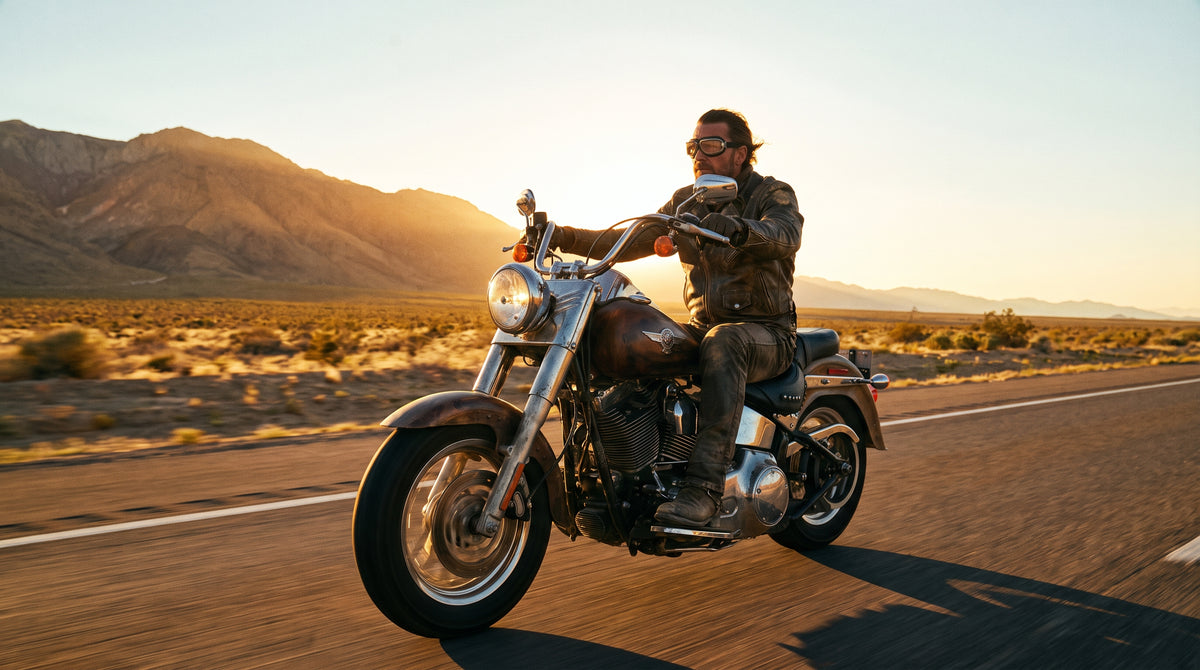
Riding at 60 mph without eye protection feels fine for about ten minutes. Then a grain of sand, a junebug, or a gust of crosswind dust hits your eye at full speed. A single particle at highway velocity can scratch your cornea badly enough to blur your vision for days. Regular sunglasses from the gas station will not save you. They slip off under a helmet strap, fog up at the first red light, and let wind pour in from every angle.
Motorcycle glasses are built for this exact problem. The right pair seals out wind and debris, stays locked on your face under a helmet, and gives you the right lens tint for the light you are riding in. This guide covers every motorcycle glasses lens type, explains when foam gaskets beat wraparound frames, and helps you match glasses to your helmet. Whether you ride with an open face, a half shell, or a full face lid, you will know which pair to grab before your next ride.
Why Motorcycle Glasses Are Different from Regular Sunglasses
The biggest difference is impact resistance. Motorcycle glasses that meet the ANSI Z87.1 standard can take a quarter-inch steel ball dropped from 50 inches without cracking. Regular fashion sunglasses have no impact rating at all. A kicked-up rock on the highway would shatter them right into your eye.
Beyond impact protection, motorcycle glasses use wraparound or foam-gasketed frames to block wind entry. Wind dries your eyes fast. At 55 mph, the airstream against unprotected eyes can cause reflex tearing in under 30 seconds. That is not a comfort issue. It is a visibility issue. Tears blur your vision right when you need it most.
Motorcycle glasses also sit tighter against your face. The temple arms are thinner and flatter so they slide under helmet padding without creating pressure points. Try wearing chunky lifestyle frames under a Shoei RF-1400 and you will feel the difference in about five minutes. Motorcycle-specific temples stay under 4mm thick, which fits between the helmet padding and your skull without pain.

Motorcycle Glasses Lens Types Explained
Picking the right lens matters more than the frame. Here is what each type does and when it works best.
Clear Lenses
Clear lenses transmit about 90% of visible light. They are the only safe option for night riding and work well in heavy overcast. Look for anti-fog coating on the inside surface. Without it, a clear lens fogs up almost immediately when you stop at a light after a cold ride. Some brands apply a permanent hydrophobic treatment, while cheaper models rely on a removable anti-fog film.
Smoke and Gray Tinted Lenses
Standard smoke lenses cut light transmission to about 15-20%, which is ideal for bright midday sun. Gray tint preserves true color perception, so traffic lights and brake lights look accurate. This is the most popular motorcycle lens tint for daytime cruising. If you only own one pair of motorcycle glasses, gray smoke is the safe default.
Amber and Yellow Lenses
Amber lenses boost contrast by filtering blue light. They transmit around 65-75% of visible light, which makes them solid choices for dawn, dusk, and overcast conditions. Road imperfections and potholes pop out more against gray pavement. Yellow lenses work similarly but lean brighter, and some riders swear by them for foggy morning rides along the coast.
Photochromic (Transition) Lenses
Photochromic lenses darken automatically in UV light and clear up in shade. Modern photochromic motorcycle lenses from brands like Bobster transition in about 15-20 seconds. Older versions took over a minute, which meant riding into a tunnel left you temporarily blinded. If you ride through mixed conditions, from sunny highways into tree-covered back roads, photochromic is the most practical single-pair option.

Wind Protection: Foam Gaskets vs. Wraparound Frames
Wind is the biggest comfort killer on a motorcycle. Motorcycle glasses handle it in two ways, and the better choice depends on your helmet.
Foam-Gasketed Glasses
Foam gaskets line the inside rim of the lens frame with closed-cell foam. This creates a near-complete seal around your eye socket. The Bobster Renegade, for example, uses triple-layer foam: a moisture-wicking fleece layer against your skin, a comfort layer in the middle, and a structural layer against the frame. Foam-gasketed glasses are the best option for open-face and half-helmet riders who catch the full force of the wind.
The tradeoff is ventilation. Foam seals trap heat, which increases fog risk in humid weather. If you ride in the Southeast in summer, look for glasses with removable foam panels so you can strip them off in stop-and-go traffic and snap them back on before hitting the highway.
Wraparound Frames
Wraparound frames use curved lenses that extend past the sides of your eyes. They block wind from the sides without any foam touching your face. This makes them cooler, lighter, and more comfortable for long rides in warm weather. Wraparound frames work well under full-face helmets where the chin bar already blocks most frontal wind.
The gap between a wraparound lens and your cheekbone is the weak point. Dust and small insects can still sneak in at speed. For highway riding with a half helmet, foam-gasketed glasses are the safer pick every time.

How to Match Motorcycle Glasses to Your Helmet Type
Your helmet dictates how much wind your glasses need to handle. Picking glasses without thinking about your lid is one of the most common mistakes riders make. Here is how to match them correctly.
| Helmet Type | Wind Exposure | Best Glasses Style | Key Feature to Look For |
|---|---|---|---|
| Half helmet / skull cap | Full face and side wind | Foam-gasketed | Complete seal around eyes |
| Open face / 3/4 | Full face wind, some side coverage | Foam-gasketed | Foam seal plus flat temples |
| Full face with visor up | Moderate, top and side only | Wraparound | Low profile, no pressure under padding |
| Modular / flip-up | Varies by chin bar position | Either style | Thin temples that fit closed or open |
Temple thickness is the detail most riders overlook. Thick temple arms create painful pressure under helmet cheek pads after 30 minutes. Measure the space between your cheek pad and your temple bone before ordering. Most motorcycle-specific glasses keep temples under 4mm wide, while regular sunglasses run 6-8mm. The motorcycle goggles guide covers strap-based alternatives if glasses just do not fit your particular helmet shape.

Best Motorcycle Glasses for Night Riding
Night riding demands maximum light transmission. The minimum safe threshold for night riding lenses is 80% visible light transmission (VLT). Anything darker and you lose the ability to spot road hazards in time. This is not the place to compromise.
Clear lenses with anti-reflective coating are the gold standard for night rides. AR coating cuts glare from oncoming headlights by reducing internal lens reflections. Without it, bright LED headlights create a halo effect that makes it hard to judge distance. A good AR-coated clear lens makes oncoming traffic less painful without reducing your own vision.
Yellow-tinted "night driving" lenses are popular but controversial. They do increase contrast, which helps you spot lane markings and road edges. But they also reduce total light transmission to about 70-75%, which technically drops you below the recommended night threshold. On well-lit urban roads, yellow lenses work fine. On dark rural highways with no streetlights, stick with clear.
If you ride both day and night on the same trip, photochromic lenses save you from carrying a second pair. They need UV light to darken, so they stay mostly clear under artificial street lighting. That is actually the correct behavior. You want maximum light at night, and the lens delivers it automatically.
Motorcycle Glasses vs. Goggles: When Each One Wins
Glasses and motorcycle goggles solve the same core problem, but each works better in specific situations. Here is a direct comparison.
| Feature | Motorcycle Glasses | Motorcycle Goggles |
|---|---|---|
| Wind seal | Good (foam-gasketed) to moderate (wraparound) | Excellent (full rubber seal) |
| Weight | 25-40 grams typical | 80-150 grams typical |
| Off-bike use | Look normal, wear into a restaurant | Bulky, not practical off-bike |
| Prescription friendly | Easy with Rx inserts or custom lenses | OTG models exist but add bulk |
| Fog resistance | Moderate, depends on coating | Better due to larger air volume |
| Best for | Cruising, commuting, mixed use | Open-face riding, bobbers, cold weather |
| Price range | $15 to $80 | $20 to $120 |
For riders who wear prescription lenses, glasses win easily. Most biker sunglasses and riding glasses accept prescription inserts or can be ordered with Rx lenses. Goggles require OTG (over-the-glasses) frames, which add bulk and create a second surface that fogs where the goggle lens meets your prescription frame.
For riders on bobbers, choppers, or vintage bikes without windshields, goggles give the best wind protection. The full seal around your eye socket blocks everything. But if you need to pop into a store or gas station mid-ride, glasses let you walk in without looking like a World War I pilot.

5 Common Motorcycle Glasses Mistakes
1. Wearing non-impact-rated lenses on the highway
Fashion sunglasses shatter on impact. Motorcycle glasses should meet ANSI Z87.1 at minimum. A gravel truck throws rocks at random and you get zero warning. If your glasses do not have an impact rating stamped on the lens or frame, they are not motorcycle glasses.
2. Using dark lenses for dawn or dusk rides
Smoke lenses cut light transmission to 15%. Riding at dusk with that much tint is like wearing sunglasses indoors. You lose the ability to spot pedestrians and road hazards quickly enough to react. Swap to clear or amber once the sun drops below the tree line.
3. Skipping anti-fog coating in humid climates
Every stop sign and red light becomes a fog event without anti-fog treatment. Saliva hacks and dish soap tricks wear off in 20 minutes. Spend the extra $5-10 for a factory anti-fog coating or a pinlock-style insert that actually lasts.
4. Picking glasses too wide for your helmet
Glasses that look great off the bike may press painfully into your temples once the helmet goes on. Always try motorcycle glasses with your helmet on before committing. If the temples leave red marks after ten minutes, the frame is too wide for that helmet.
5. Ignoring UV protection behind dark tint
Not all tinted lenses block UV rays. Dark tint without UV filtering actually makes things worse. Your pupils dilate behind the dark lens, letting in more unfiltered UV radiation. Look for lenses marked UV400, which blocks 99.9% of UVA and UVB. This is non-negotiable for any riding glasses.
Find the Right Motorcycle Glasses for Your Ride
The right motorcycle glasses come down to three choices: lens tint for your light conditions, frame style for your helmet type, and impact rating for highway safety. Get those three right and you will ride more comfortably, see more clearly, and protect your eyes from the one rock you did not see coming.
If you are shopping for a pair, the motorcycle glasses and sunglasses collection has round, retro, and riding styles with UV400 protection. Filter by lens type and you will find the right match in a few clicks.


No comments yet. Be the first rider to weigh in.