
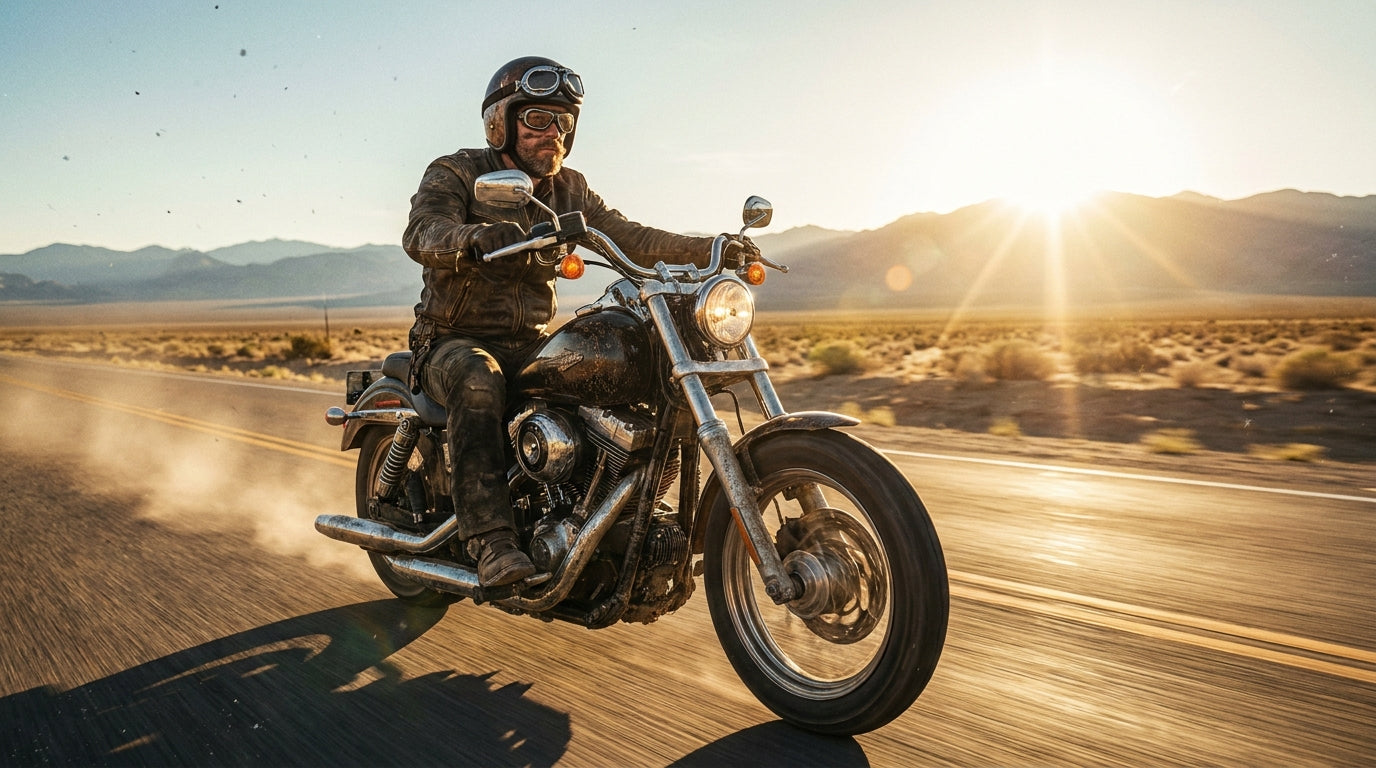
A rider buys a $12 pair of motorcycle goggles off a marketplace listing. They look great in the photo. Twenty minutes into the first ride, the lenses fog up at every stoplight, wind leaks in from the nose bridge, and the elastic strap slips off the back of the helmet above 45 mph. Those goggles end up in a drawer before the second ride.
This guide covers how to pick motorcycle goggles that actually work at speed. You will know which lens tints match which riding conditions, how to fit goggles to your specific helmet shape, and which styles hold up over thousands of miles without fogging, leaking, or falling apart.
Why Motorcycle Goggles Still Matter in 2026
Full-face helmets with built-in visors dominate the sport and touring segments. But in the cruiser, cafe racer, and bobber world, open-face and half-shell helmets outsell full-face models by a wide margin. The National Highway Traffic Safety Administration (NHTSA) reports that roughly 36% of motorcyclists in the U.S. wear half helmets or no helmet at all, and a large portion of three-quarter helmet users ride without a face shield. For all of these riders, goggles are the primary form of eye protection.
Wind, dust, gravel spray, and insects at highway speed can cause serious eye injury or temporary blindness. Every U.S. state except three requires some form of eye protection while riding. Goggles seal around the eye socket instead of just covering the front like flat sunglasses, which means they block crosswind from the sides and bottom. That seal is what separates riding goggles from regular eyewear.
If you ride an open-face helmet on anything faster than a parking lot, goggles are not optional. They are required gear.

Motorcycle Goggle Styles Explained
Motorcycle goggles fall into four main categories. Each serves a different riding style, and the construction differs enough that picking the wrong type means poor fit or limited visibility.
Aviator Goggles
Aviator goggles have oversized round or teardrop-shaped lenses with a padded leather or foam frame. The look comes straight from early 20th-century aviation and pairs naturally with cafe racers and vintage builds. Biltwell's Moto 2.0 is one of the most popular aviator-style motorcycle goggles on the market. It uses a flexible frame that conforms to different face shapes and fits most open-face helmets. The lens width on the Moto 2.0 measures roughly 160mm across, which covers a wide field of view without excessive bulk.
For a deeper look at aviator options, the aviator goggles guide breaks down fit and lens choices in detail.
Vintage and Retro Goggles
Vintage goggles use a smaller, rounder lens with chrome or brass-tone frames and often feature a leather or suede nose piece. They sit closer to the face than aviator styles and tend to weigh less. The 100% Barstow is a well-known example. It ships with both a clear and a smoke lens, uses a silicone-backed strap that grips helmet shells, and costs between $80 and $120 depending on the colorway.
For a full breakdown of vintage options, check our vintage motorcycle goggles guide.
OTG (Over-the-Glasses) Goggles
OTG goggles have an oversized frame cavity designed to fit over prescription eyeglasses. The foam padding sits further from the face to create clearance for frames underneath. If you wear prescription glasses and ride with an open-face helmet, OTG goggles solve the problem of needing both correction and wind protection in one piece. Most OTG motorcycle goggles use a wider nose bridge and taller lens to accommodate glasses up to 140mm wide.
Sport and Motocross Goggles
Sport goggles use a flexible TPU frame, triple-layer face foam, and wide tear-off-compatible lenses. They are built for dirt and motocross riding where mud, roost, and sweat are constant problems. Brands like Oakley (Airbrake MX, around $180) and 100% (Racecraft 2, around $75) dominate this category. These goggles pair with motocross helmets that have a chin bar and visor peak, not with open-face cruiser lids. If you ride street, sport goggles generally look and fit wrong on a three-quarter shell.
Lens Tints and When to Use Each One
The lens tint determines how much visible light reaches your eyes, measured as VLT (visible light transmission). Picking the right tint for your typical riding conditions matters more than most riders realize.
- Clear (80-90% VLT): Best for night riding, overcast days, and dawn/dusk commutes. Lets in maximum light. The baseline lens every rider should own.
- Smoke/Dark Gray (10-20% VLT): Cuts glare on bright sunny days. Not safe for tunnel riding or dusk. A 15% VLT smoke lens works well for midday summer highway runs.
- Amber/Yellow (40-60% VLT): Increases contrast in flat light conditions like fog, early morning, and overcast skies. Sharpens road detail without darkening the overall view. This is the tint most experienced riders keep as their daily driver.
- Photochromic (adjustable, 20-80% VLT): Transitions from light to dark based on UV exposure. Convenient for rides that span changing light conditions. The tradeoff is a higher price point, usually $40 to $80 more than a fixed-tint lens, and slower transition speed in cold weather.
If you can only buy one extra lens, get amber. It works in the widest range of real riding conditions.
How to Fit Motorcycle Goggles to Your Helmet
A goggle that fits your face but fights your helmet is useless at speed. The strap, the frame seal, and the nose bridge all need to work together with the specific helmet you ride in.
Strap width and grip. The goggle strap needs to sit in the channel or flat zone at the back of the helmet shell. Straps narrower than 25mm (1 inch) tend to roll, bunch, and lose tension. Look for straps with silicone grip strips on the inside surface. These grip the helmet shell and prevent the goggles from shifting forward when wind hits your face at speed.
Frame seal. Press the goggles against your face without the strap. The foam padding should create a continuous seal around your eye sockets with no gaps at the nose, temples, or brow. If you feel air coming through while holding the goggles in place, they will leak badly at highway speed. The most common leak point is the nose bridge, especially on riders with a narrower nose.
Compatibility check. Put on your helmet first, then slide the goggles over the top and settle them into position. The strap should catch the rear channel naturally without having to tug it over ridges or vents. If the strap rides up over a ridge and the goggles pull away from your face, that helmet and goggle combination does not work. Try a different strap length or a different goggle brand that sits lower on the face.

Anti-Fog Solutions That Actually Work
Fogging is the single biggest complaint riders have with motorcycle goggles. It happens when warm, moist air from your face meets a cold lens surface. The moisture condenses into tiny droplets that scatter light and kill visibility. At a stoplight in 40-degree weather, a single-pane goggle lens can fog completely in under 30 seconds.
Double-pane lenses are the most effective anti-fog solution. They work like double-pane windows: the air gap between the two layers insulates the inner lens from the cold outer surface, keeping it above the dew point. Most premium motorcycle goggles from brands like 100% and Smith use double-pane or dual-vented lenses for exactly this reason.
Anti-fog coatings help on single-pane lenses but wear off over time. A fresh hydrophilic coating forces moisture to spread into a thin, transparent film instead of forming droplets. Cat Crap (yes, that is the actual brand name) and Fog-X are the two most commonly used anti-fog treatments. Reapply every few rides for consistent results.
Ventilation ports along the top and bottom of the goggle frame allow moist air to escape. More vents generally means less fogging but also more wind entry. For cold-weather riding, look for goggles with adjustable vents you can close at highway speed and open at stoplights.
Motorcycle Goggles Compared
| Style | Best For | Lens Width | OTG-Friendly | Price Range |
|---|---|---|---|---|
| Aviator | Cafe racers, cruisers | 150-165mm | Some models | $25 to $80 |
| Vintage/Retro | Classic builds, shows | 130-150mm | Rarely | $40 to $120 |
| OTG (Over-the-Glasses) | Prescription wearers | 155-170mm | Yes | $30 to $70 |
| Sport/Motocross | Dirt, off-road, track | 160-180mm | Most models | $45 to $200 |
For street riders on open-face helmets, aviator and vintage goggles cover the widest range of use cases. OTG goggles solve a specific need for glasses wearers. Sport goggles belong on dirt bikes and motocross setups, not cruiser builds.
4 Mistakes Riders Make Buying Motorcycle Goggles
1. Buying goggles without checking helmet compatibility. A goggle strap that cannot sit in your helmet's rear channel will slide, shift, and pull the goggles off your face above 50 mph. Always test the goggle-to-helmet fit before your first ride. If the strap bunches against a vent or ridge, try a different brand or strap length.
2. Using sunglasses instead of sealed goggles. Flat sunglasses, even wraparound models, leave gaps at the top, bottom, and sides. Wind, dust, and insects enter through those gaps at speed. A June bug hitting an exposed eye at 55 mph is not a minor inconvenience. It can cause a reflexive flinch that sends your bike off line. Sealed goggles with face foam block side entry completely.
3. Ignoring anti-fog before the first cold ride. Single-pane goggles with no anti-fog treatment will fog at the first stoplight in temperatures below 50 degrees Fahrenheit. By the time you realize it, you are riding half-blind through an intersection. Apply an anti-fog treatment before the lens fogs for the first time. Once micro-scratches form from wiping a fogged lens with a glove, anti-fog coatings stop adhering properly.
4. Picking a dark tint as the only lens. A smoke lens at 15% VLT is great for noon in July. It is dangerous at dusk, in tunnels, or on overcast winter mornings. If you ride in varying light conditions, get goggles that ship with a spare clear or amber lens, or invest in a photochromic pair that adjusts automatically.
Finding the Right Motorcycle Goggles for Your Setup
The right pair of motorcycle goggles depends on three things: your helmet type, your typical riding conditions, and whether you need to fit prescription glasses underneath. Start with the helmet. If it has a smooth rear channel and an open face, aviator or vintage goggles are the natural fit. If you need glasses clearance, go OTG. If you ride dirt, go sport.
Then pick the right lens for your light conditions. Amber for mixed light. Clear for night and low light. Smoke for pure sunshine. A good pair of goggles with the right lens and a proper helmet fit will last for years of daily riding without replacement.
If you are shopping for a pair, the motorcycle goggles collection is where I would start. Every pair there ships from a real warehouse with rider support behind it.

No comments yet. Be the first rider to weigh in.