
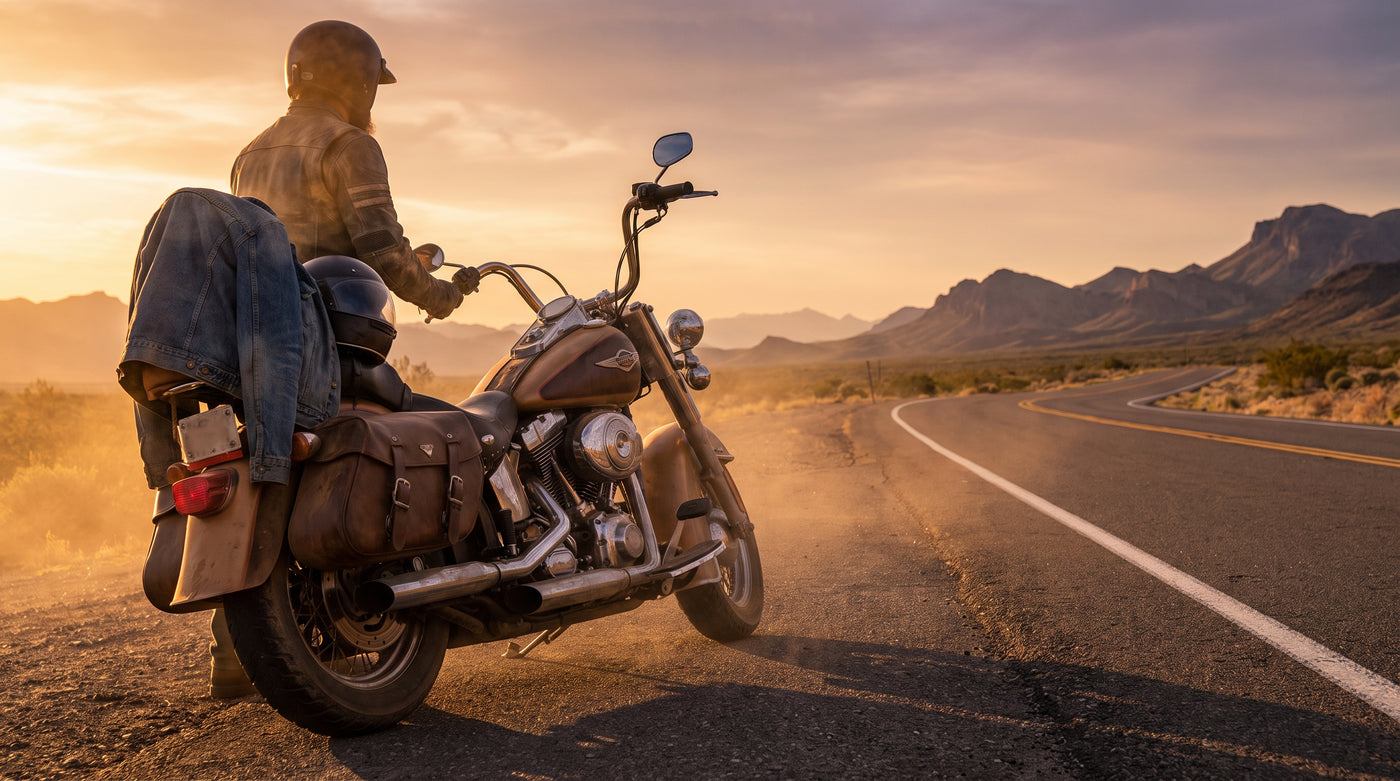
A 30 mph lowside on bare asphalt removes skin faster than a belt sander. Road rash treatment runs $5,000 to $20,000 in the U.S., and that is before the bone fractures. The right motorcycle protective gear turns a bad day into a story you tell at a bar, not a hospital bill you pay for a year.
This guide covers every piece of motorcycle protective gear you should own, with real specs, real products, and the specific details that separate gear built for riding from costume pieces sold on marketplaces. If you ride, even once a month, this list is the minimum.
Helmets: The One Piece You Cannot Skip
NHTSA data from 2023 shows helmets are 37% effective at preventing motorcycle fatalities. A DOT-certified full face helmet absorbs impacts up to roughly 250 g (the deceleration threshold DOT tests to), while a novelty lid with no certification absorbs almost nothing.
Full face helmets protect the chin, which takes 35% of impacts in a crash according to the Dietmar Otte study. Half shells leave that entire zone exposed. For street riding, a full face or modular helmet with a DOT sticker (not just a "DOT style" sticker, the real FMVSS 218 certification) is the baseline.
Weight matters for neck fatigue on long rides. A Shoei RF-1400 weighs about 3.2 lbs in size medium. Budget helmets from unknown brands often hit 4+ lbs because they use cheaper, heavier shell materials like basic ABS instead of composite fiberglass or polycarbonate blends.
If you want a helmet that passes DOT and still has character, full face motorcycle helmets from quality brands balance safety certification with style that does not look like a traffic cone.

Motorcycle Jackets: Leather vs Textile and What Matters
A good motorcycle jacket does two jobs: abrasion resistance and armor placement. Cowhide leather at 1.2 mm thickness slides for roughly 4 to 6 seconds on asphalt before wearing through. Most textile jackets rated for riding use 600D to 1000D Cordura, which handles about 2 to 4 seconds of slide time depending on weave density.
The real difference is in the armor. CE Level 1 armor absorbs impacts below 35 kN of transmitted force. CE Level 2 (what you want) keeps transmitted force under 20 kN. Some jackets ship with foam pads that carry no CE rating at all. Those are comfort padding, not protective gear.
Check three armor zones: shoulders, elbows, and back. Most jackets include shoulder and elbow armor but ship with a foam back pad. A separate CE Level 2 back protector (D3O or Forcefield make good standalone options) costs $50 to $80 and covers the largest skin surface on your torso.
For leather jackets built for actual riding and not just the look, men's motorcycle leather jackets with proper stitching and armor pockets are the starting point.

Motorcycle Gloves: Why Your Hands Need Real Protection
Hands hit the pavement first in almost every fall. It is a reflex. Without gloves, you lose skin on your palms immediately, and a broken scaphoid bone (the small wrist bone behind the thumb) can take 12 weeks to heal, sometimes requiring surgery.
A proper motorcycle glove has a hard knuckle protector (TPU or carbon fiber), double or triple stitched seams, and a palm slider or extra leather on the heel of the hand. Goatskin leather is more supple than cowhide, giving better throttle feel while still providing solid abrasion protection. Good riding gloves weigh between 150 g and 250 g per pair.
Summer riders often switch to perforated or fingerless motorcycle gloves, which trade some protection for airflow. Perforated full-finger gloves are the better compromise. They keep all five fingers covered while letting air through. For cold-weather riding, insulated gloves with a waterproof membrane add bulk but keep your fingers from going numb at 40 degrees.

Motorcycle Boots: Ankle Protection Most Riders Ignore
The ankle joint has almost no natural padding. A lowside at any speed can snap the lateral malleolus (the bony knob on the outside of your ankle) or shred the skin over it. Motorcycle boots need three features: ankle armor or reinforcement, a non-slip oil-resistant sole, and a shift pad or reinforced toe box.
Height matters for protection. A boot that covers at least 8 inches above the sole protects the ankle and lower shin. Engineer-style boots with a steel shank add torsional rigidity, meaning the boot resists twisting forces that break ankles.
Sole stiffness is the detail most riders miss. A soft-soled fashion boot flexes when you put your foot down at a stop, giving you no platform stability. A Vibram or Goodyear-welted sole with a defined heel keeps your foot planted. Good motorcycle boots weigh 2 to 3 lbs per boot depending on height and materials.
For boots actually built to ride in, leather motorcycle boots with reinforced ankles and proper soles are what you want.

Motorcycle Protective Gear Set: What Goes Under or Over the Jacket
Armored base layers and riding pants round out a full motorcycle protective gear set. CE-rated armored shirts (brands like Forcefield, Knox, and Leatt make dedicated ones) sit under a regular jacket and add back, chest, shoulder, and elbow armor in a single garment. A Forcefield Pro Shirt X-V 2 weighs around 690 g and carries CE Level 2 ratings across all zones.
Riding pants are the most skipped piece in any rider's kit. About 47% of motorcycle injuries affect the legs (MAIDS European accident study), yet most riders wear jeans. Single-layer riding jeans with Dyneema fiber woven in offer roughly 4 seconds of slide time and look like normal denim. Dedicated textile overpants with knee and hip armor are bulkier but offer the highest protection.
Knee armor (either built into pants or worn separately as pads) should cover the kneecap and extend slightly below. Hip armor protects the greater trochanter, the bony point of the hip that hits the ground in a side impact. A full armor set covering both zones adds less than a pound to what you are wearing but covers the two most common lower-body injury points.
Visibility Gear: The Protection Nobody Thinks About
Most motorcycle crashes involving another vehicle happen because the driver did not see the rider. A University of Auckland study found that wearing a white helmet reduced crash risk by 24% compared to a black one. High-visibility vests or jackets with reflective panels show up in headlights from over 500 feet away, compared to roughly 100 feet for a plain black jacket.
You do not need to look like a traffic marshal. A reflective vest that slips over your jacket at night and comes off during the day costs $15 to $30. Reflective tape strips on your helmet, boots, or saddlebags work at night without changing your daytime look at all. Some riders add LED accent strips to their bikes, but nothing beats gear-level visibility because it moves with your body.
Motorcycle Protective Gear Comparison Table
| Gear Piece | Key Spec | Price Range | Crash Protection | Skip Risk |
|---|---|---|---|---|
| Full Face Helmet (DOT) | FMVSS 218, ~3.2 lbs | $150 - $600 | Head/chin/face | Fatal head injury |
| Leather Jacket (1.2 mm+) | CE Level 2 armor | $200 - $700 | Torso/arms/back | Road rash, fractures |
| Riding Gloves (hard knuckle) | TPU/carbon knuckle | $40 - $180 | Hands/wrists | Broken scaphoid, palm burns |
| Motorcycle Boots (8"+ height) | Ankle reinforce, stiff sole | $100 - $350 | Ankles/feet/shins | Ankle fracture |
| Riding Pants (Dyneema/armor) | CE knee + hip armor | $80 - $400 | Legs/knees/hips | Leg burns, hip fracture |
| Back Protector (standalone) | CE Level 2, under 20 kN | $50 - $120 | Spine | Spinal compression |
Best Motorcycle Protective Gear for Track vs Street
Track riding demands higher specs because speeds are higher and you are leaning at angles that multiply slide distance. Track suits are one-piece leather (1.3 mm+ cowhide or kangaroo), with CE Level 2 armor in all zones, a speed hump behind the neck, and knee sliders. A quality one-piece track suit from brands like Alpinestars, Dainese, or RST runs $800 to $2,000.
Street riders do not need a full race suit for commuting or weekend rides. A well-fitted jacket with CE Level 2 shoulder and elbow armor, a standalone back protector, armored gloves, boots that cover the ankle, and riding pants or armored jeans cover the protection needs for road speeds. The total cost for a full street setup runs $500 to $1,500 depending on brand and materials.
One detail that applies to both: fit. Loose gear shifts in a crash, exposing the skin underneath. Armor that slides off the shoulder or knee during impact does nothing. Gear should fit snug in the riding position (slightly forward lean, arms out), not standing upright in a store.
5 Common Motorcycle Protective Gear Mistakes
1. Buying a novelty helmet and calling it "DOT." A novelty helmet with a stick-on DOT sticker weighs under 2 lbs and has no internal EPS foam. It will not absorb impact energy. Real DOT helmets weigh 3+ lbs because the foam liner that saves your head has mass. If it feels like wearing a baseball cap, it is not protecting you.
2. Wearing a leather jacket with no armor. Leather resists abrasion, but it does nothing against blunt impact. A naked leather jacket lets your shoulder or elbow absorb the full force of hitting pavement. Without CE armor inserts, the jacket is a fashion piece, not protective gear.
3. Riding in work boots or sneakers. Construction boots have ankle support but no shift pad, no oil-resistant sole designed for pegs, and they are not built for the lateral forces of a bike going down. Sneakers offer zero ankle protection. A dedicated motorcycle boot costs less than the ER visit for a broken ankle.
4. Skipping gloves on short rides. "I'm just going around the block" is how most lowsides happen. Parking lots, driveways, and neighborhood streets have sand, oil, and gravel. Your hands will hit the ground whether you ride 2 miles or 200.
5. Ignoring the legs entirely. Riders who gear up top to bottom but wear regular jeans are protecting half their body. Knees and hips contact the road in a slide, and denim wears through in under a second at 30 mph. Even a pair of armored riding jeans closes this gap without making you look like you are wearing body armor to the grocery store.
Getting the right motorcycle protective gear is not about spending the most. It is about covering every contact zone with something rated to take a hit. If you are building your kit or upgrading worn-out pieces, motorcycle protective gear from brands that test to CE standards is where to start.

No comments yet. Be the first rider to weigh in.