
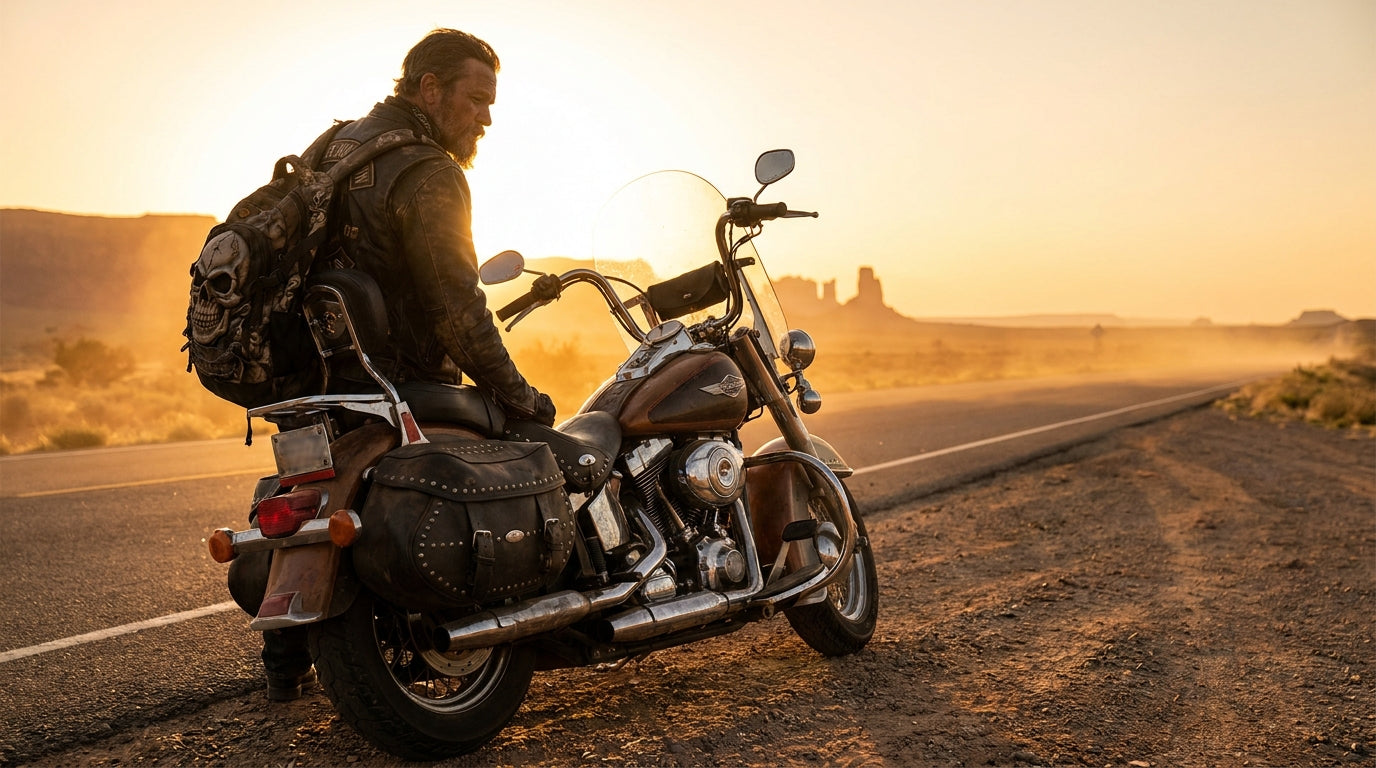
You pull up to a meetup and two riders are wearing the same generic black backpack from a department store. Nothing wrong with it. It carries stuff. But it says nothing. A skull backpack, on the other hand, says something before you even take your helmet off. It is the kind of gear that gets a nod from strangers in a parking lot.
This guide covers every type of skull backpack worth considering, from 3D molded designs to leather options and lightweight nylon. You will learn what separates the good ones from the ones that fall apart after three rides, and which style fits your actual use case.
Why Skull Backpacks Have Taken Over Biker Style
Skull imagery has been part of motorcycle culture for decades, but skull backpacks hit a different note. They are not just patches or stickers on a plain bag. The best ones use molded PU leather or embossed panels that give the skull a three-dimensional shape you can actually feel with your hand.
The trend picked up speed around 2019 when brands started using thermoformed EVA foam to create rigid skull faces on the front panel. That technique, borrowed from hard-shell luggage manufacturing, lets designers sculpt deep eye sockets and jawlines without adding much weight. A typical 3D skull backpack weighs between 1.8 and 2.4 lbs empty, roughly the same as a standard daypack.
Riders gravitate toward these for the same reason they choose a skull helmet or a set of skull rings: it is a visual shorthand for the culture. It works on the bike, at a rally, or walking into a bar after a long ride.

3D Skull Backpacks: What Makes the Molded Designs Different
A flat printed skull on nylon looks fine from five feet away. Up close, it is just ink on fabric. A 3D skull backpack uses a rigid front shell, usually made from thermoformed PU leather over an EVA foam core, so the skull literally protrudes from the surface. The depth on a well-made one runs about 2 to 3 inches from the base panel to the tip of the nose or brow ridge.
This construction does two things. First, it protects whatever is inside the front pocket. The hard shell acts like armor for sunglasses, a phone, or small electronics. Second, it holds its shape whether the bag is stuffed full or nearly empty. Cheap printed bags sag and crumple the moment you remove the contents.
Look for models where the skull shell is riveted or stitched to the bag body at multiple anchor points, not just glued. Glued shells peel after UV exposure and rain cycles. Riveted shells stay put for years. The ALR 3D Skull Backpack Hoodie, for example, uses reinforced stitching around the entire skull perimeter, and the hoodie attachment doubles as a rain cover for the top zipper.
Capacity and Fit
Most 3D skull backpacks fall in the 15 to 25 liter range. That is enough for a rain layer, wallet, phone, small tools, and maybe a water bottle in a side pocket. The rigid front panel eats into about 2 to 3 liters of internal space compared to a soft bag of the same outer dimensions, so keep that in mind if you need to carry a laptop. Anything over 15 inches diagonal will be tight.
Strap width matters more on a motorcycle than it does walking around a city. Look for straps at least 2 inches wide with a sternum clip. A chest strap keeps the bag from shifting when you lean into turns, and wider straps spread the weight so nothing digs into your shoulders under a jacket.
Black Skull Backpack: The Versatile Option
A black skull backpack is the most popular choice for a reason. It matches everything, it does not show road grime the way lighter colors do, and it works off the bike without drawing stares from people who are not into the culture.
The all-black versions typically come in two finishes: matte and gloss. Matte PU leather hides scratches better and looks less flashy under direct sunlight. Gloss finishes pop more in photos and at night when headlights catch the surface, but they show every fingerprint and scuff.
If you ride in rain regularly, matte is the better call. Water beads and rolls off matte PU without leaving visible spots. Gloss develops water marks that need wiping. Neither finish is truly waterproof at the seams, so a rain cover or a dry bag liner is still smart for electronics.
Black also works if you pair the backpack with a different bag style for different rides. A black skull backpack for day trips, a sling bag or leg bag for quick errand runs. The colors never clash.
Leather Skull Backpacks vs Synthetic: Which Holds Up
Real leather skull backpacks exist, but they are rare and expensive. Most of what you see marketed as "leather" is PU (polyurethane) leather, which is a synthetic material with a leather-like texture. That is not necessarily a bad thing for a riding bag.
Here is why. Genuine cowhide leather weighs about 1.5 to 2 oz per square foot. A full backpack panel in real leather adds roughly a pound of extra weight and absorbs water unless treated with a conditioner every few months. PU leather weighs about half that, repels water on its own, and costs a fraction of the price.
The tradeoff is longevity. Well-maintained full-grain leather lasts 10 to 20 years. PU leather typically starts peeling or cracking after 3 to 5 years of heavy use, especially in hot climates where UV exposure accelerates breakdown. If you ride year-round in Arizona or Florida, real leather may justify the higher price. For weekend riders in moderate climates, PU is the practical pick.

A Quick Materials Comparison
| Feature | PU Leather | Full-Grain Leather | Nylon (Cordura) |
|---|---|---|---|
| Weight (per sq ft) | 0.7-1 oz | 1.5-2 oz | 0.5-0.8 oz |
| Water resistance | Good (surface) | Low (needs treatment) | Good (with DWR coating) |
| Lifespan | 3-5 years | 10-20 years | 5-8 years |
| UV resistance | Moderate | Excellent (with care) | Excellent |
| Price range | $40-$150 | $150-$400+ | $30-$120 |
| 3D skull molding | Common | Rare (too stiff) | Rare (too soft) |
Skull Backpack vs Other Biker Bag Styles
A backpack is not always the right call. It depends on how far you ride, what you carry, and whether you want your gear on your body or on the bike.
For all-day rides where you need to carry a change of clothes, tools, a first aid kit, and snacks, a skull backpack with 20+ liters of space is hard to beat. Nothing else you wear on your body holds that much without restricting your arms.
For short rides under an hour, a sling bag or crossbody bag is less bulk and easier to swing around to your front at a gas station. You do not have to take it off to grab your wallet. The Sling Bag for Men from ALR runs about $54.97 and fits a phone, wallet, keys, and a flat water bottle.
For riders who hate anything on their back, a leg bag straps to your thigh and stays out of the way completely. The weight sits low, which some riders prefer for balance. Skull-themed leg bags like the Steampunk Skull Leather Thigh Bag run about $89.95 and hold enough for the essentials.
The bottom line: pick the skull backpack for longer rides or heavier loads. Pick a sling or leg bag for quick trips where speed and access matter more than capacity.
What to Check Before You Buy a Skull Backpack
Five things separate a skull backpack that lasts from one that ends up in a closet after two months.
- Zipper quality. YKK or SBS zippers are the standard worth paying for. Unbranded zippers jam, corrode, and break teeth. Check whether the main compartment uses a #8 or larger zipper. Anything smaller than #5 is too fragile for daily use.
- Strap attachment points. The straps should connect to the bag body with reinforced webbing or bar-tack stitching, not just sewn to the outer fabric. Pull hard on them in the store or when the package arrives. If there is any give at the seam, send it back.
- Interior lining. A bag with no lining means the raw seams and adhesive are exposed to your gear. That adhesive breaks down and leaves sticky residue on clothes and electronics. Lined interiors cost more but keep the bag clean inside for years.
- Back panel padding. At least 10mm of foam with a mesh cover. Riding generates heat and sweat, and a flat unpadded back panel turns into a wet towel after 30 minutes in summer. Mesh channels let air move, and foam absorbs road vibration.
- Reflective elements. Not every skull backpack has them, but the ones with reflective stitching or a reflective skull accent are worth the extra cost. You are visible from behind on a night ride without needing to add stick-on reflectors.
5 Common Mistakes When Buying a Skull Backpack
1. Buying based on looks alone. The coolest skull design in the world is useless if the bag sags on your back, digs into your shoulders, or does not fit under a rain jacket. Always check dimensions and strap adjustability before anything else.
2. Ignoring weight distribution. A backpack that sits too high rides up against your helmet when you check your blind spot. One that sits too low pulls your shoulders backward and causes fatigue. The bottom of the bag should rest at your belt line, not lower.
3. Skipping the sternum strap. Some cheaper skull backpacks leave this out to save a few cents. On a motorcycle, a sternum strap is not optional. Without it, the shoulder straps slide outward every time you lean, and the bag shifts. Look for one that includes it, or buy an aftermarket clip-on strap for about $8.
4. Choosing the biggest size available. A 35-liter backpack on a motorcycle catches wind like a sail. The drag at highway speed is noticeable above 25 liters. Unless you are touring and genuinely need the space, 15 to 22 liters is the sweet spot for daily riding.
5. Not checking the return policy. Skull backpacks vary wildly in sizing, fit, and quality between brands. A bag that looks great online might sit awkwardly on your frame. Buy from stores that accept returns on opened products. American Legend Rider, for example, offers a satisfaction guarantee, so you can try the fit without the risk.
How to Pick the Right Skull Backpack for Your Rides
If you mostly ride short distances and want a bag that doubles as a street-style accessory, go with a compact 3D skull backpack in the 15 to 18 liter range. The rigid front shell keeps its shape in a locker or hung on a hook, and the smaller size does not fight you in wind.
If you commute on a motorcycle and need to carry a laptop, lunch, and a change of clothes, look for a skull backpack with a padded laptop sleeve and at least 20 liters. Make sure it has side compression straps so you can cinch it down on lighter days.
For rally and event riders, the skull backpack is as much a costume piece as it is functional. The wilder the 3D sculpting, the better. Glow-in-the-dark accents, LED-lit eye sockets, and hoodie attachments all exist and all get attention at Sturgis or Daytona.
Whatever you pick, fit it over your riding jacket before you commit. A bag that fits perfectly over a t-shirt might not clear the collar or shoulder armor of a textile or leather jacket. That five-minute test saves a return.
If you are shopping for one, the biker bags collection at ALR has skull-themed backpacks and other styles worth checking out.



No comments yet. Be the first rider to weigh in.