
Most riders buy one bag and try to make it work for everything. A tank bag gets crammed with tools for a weekend trip. A leg pack gets stuffed until it bounces against the knee at every stoplight. A saddlebag set goes on a bike that only ever does 20-minute commutes. The wrong biker bag for the job does not just look awkward. It shifts at speed, blocks controls, or breaks a zipper within two months. Picking from the right biker bags for your riding style saves money and frustration.
This guide covers every type of biker bag riders actually use, from saddlebags to leg packs to slings. Each section breaks down the capacity, weight, mounting style, and what kind of riding it fits best. By the end, you will know exactly which biker bags match your bike and your rides.
Saddlebags: The Standard for Touring and Long Rides
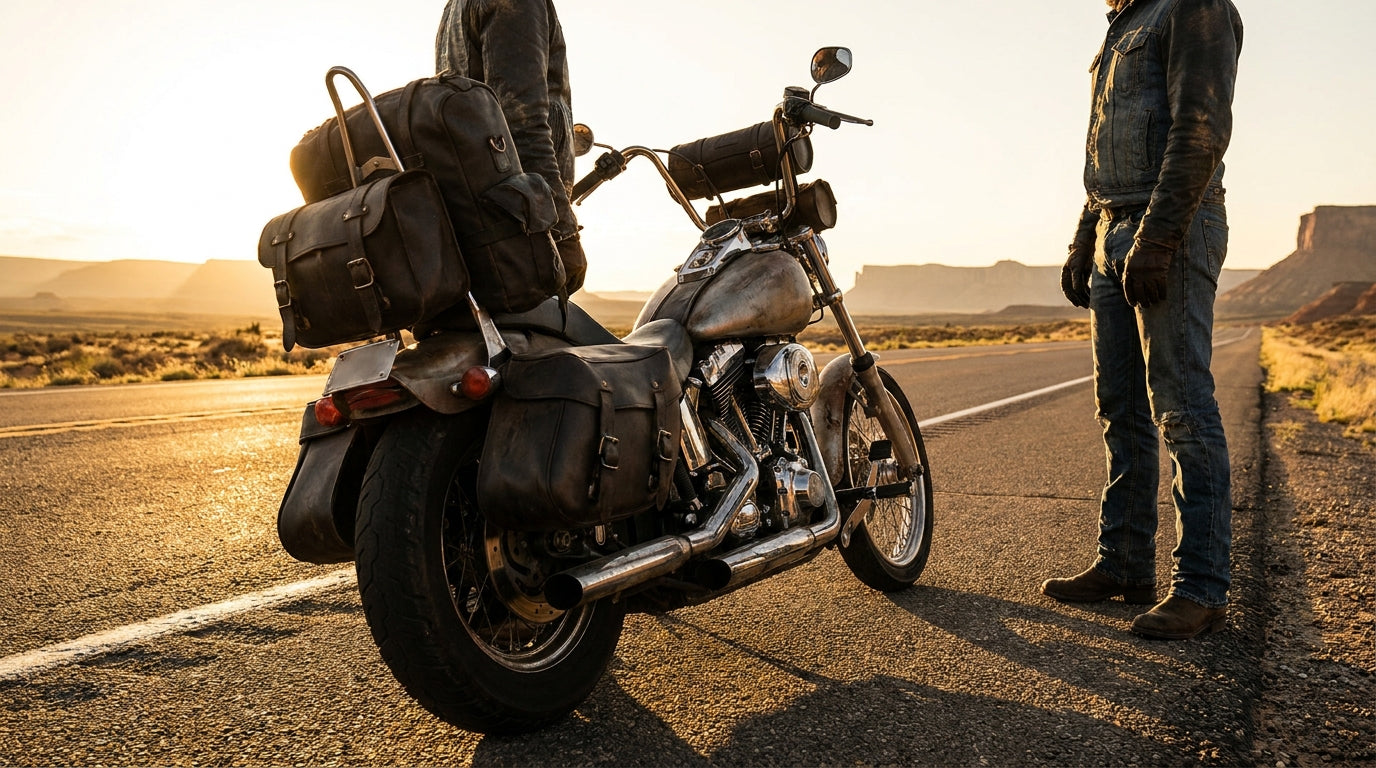
Saddlebags mount to the rear fender or frame behind the seat and distribute weight evenly on both sides of the bike. A standard pair of hard-shell saddlebags holds 15 to 25 liters per side and weighs roughly 12 to 18 lbs combined when empty. That is enough room for a rain suit, a change of clothes, basic tools, and a water bottle on each side.
Hard-shell saddlebags (fiberglass or ABS plastic) lock shut and resist rain, dust, and road debris. Leather throw-over saddlebags weigh less and install faster (just drape them over the seat), but they need rain covers in wet weather and lack a built-in lock. For cruisers and touring bikes, hard-shell bags are the default. For bobbers and cafe racers with narrow rear ends, a single leather swing-arm bag avoids the bulk of a full pair.
Weight balance is the main thing to watch. Loading 20 lbs on one side and 5 lbs on the other makes the bike pull noticeably in turns. Keep the heavy items (tools, bottles) split evenly, and pack soft items (clothes, gloves) on top so nothing shifts mid-ride. Most riders figure this out the hard way on the first overnight trip when the bike feels wrong through every left-hand curve.

Leg Bags and Drop Leg Packs
A drop leg bag straps around the waist and upper thigh, putting a small pouch right at hand level. Capacity runs from 1 to 3 liters, with most holding a phone, wallet, keys, and maybe a multi-tool. Total weight loaded: about half a pound to 1.5 lbs. It sits low on the body, creates almost zero wind drag, and does not touch the seat or tank.
The Velcro-and-buckle harness system holds the bag tight against the leg so it does not swing or rotate. Good ones use two thigh straps plus a waist belt. Budget bags with only one thigh strap tend to slide sideways, especially on sport bikes where the rider leans forward. A bag that rotates to the inside of the thigh interferes with shifting on the left side.
Leg bags shine for riders who carry almost nothing and want hands-free access at gas stops. The thigh bag guide covers fit, strap adjustment, and the specific models that stay put at highway speed. If you carry more than a phone and wallet, a hip bag or sling bag gives you more room without the thigh-heat problem that leg bags create in summer riding above 85 degrees Fahrenheit.
Sling Bags and Crossbody Bags for Riders
A sling bag crosses the chest with a single padded strap, sitting on the front or side of the torso. Capacity ranges from 3 to 8 liters. A loaded sling bag weighs 1.5 to 3 lbs total. The big advantage over a backpack: you can swing it to the front at a stoplight and grab your phone or wallet without unstrapping anything.
Strap width matters more than brand name. Straps under 1.5 inches cut into the shoulder after 20 minutes at highway speed. The 2-inch to 2.5-inch sweet spot, with padding that runs at least 10 inches along the shoulder, is what separates motorcycle-grade sling bags from fashion-market slings that look identical in photos but fail on the road.
For riders who need a compact carry that works both on the bike and walking around after the ride, a crossbody motorcycle bag is the most versatile option in the biker bags lineup. The sling bag buying guide goes deeper into stabilizer straps, waterproofing, and specific picks by riding style.

Hip Bags and Waist Packs
Hip bags (also called waist packs or fanny packs) clip around the waist and sit on the hip or lower back. Capacity: 1 to 4 liters. Weight loaded: about 0.5 to 1.5 lbs. They create the lowest profile of any body-worn biker bag and work well under a leather jacket without adding visible bulk.
The best motorcycle hip bags use a wide 2-inch waistband that distributes weight across the hips instead of concentrating it on a narrow belt. A bag that weighs 1 lb on a 1-inch strap feels heavier than a 2 lb bag on a 3-inch strap. Comfort is about force per square inch, not total weight. Quick-release magnetic buckles let you clip the bag on and off with gloves, which matters more than riders expect until they try fumbling with a small plastic clip wearing winter gauntlets.
Hip bags work best for quick-grab items: phone, wallet, keys, toll money. If you need to carry a rain layer or small camera, step up to a sling bag. The hip bag guide breaks down strap types, materials, and tested picks that stay secure at speed.

Tank Bags: Magnetic Mount for Navigation and Gear
A tank bag sits on top of the fuel tank, held by magnets, suction cups, or a strap harness. Capacity runs from 5 liters (compact map pouches) up to 25 liters (expandable touring bags). The Cortech Super 2.0 tank bag, for example, expands from 14 to 18 liters with a single zipper pull. That kind of expandability makes tank bags the most flexible option for riders who switch between daily commuting and weekend trips on the same bike.
Magnetic mounts grip bare metal tanks instantly. No installation, no tools. Lift the bag off at your destination and carry it by the handle. The catch: magnetic mounts do not work on plastic-covered tanks (most sport bikes and modern adventure bikes). Strap-mount or suction-cup versions handle those, but they take 2 to 3 minutes to attach and remove. If your tank is steel (tap it with a key and listen for a metallic ring), magnets are the way to go.
The clear-top map window doubles as a phone holder for GPS navigation. That feature alone makes tank bags popular with touring riders who do not want to mount a phone on the handlebars where vibration damages the camera sensor over time. Apple published a support document in 2021 confirming that motorcycle vibrations can degrade iPhone camera performance, so keeping the phone off the bars is a real consideration.

Sissy Bar Bags and Rear Seat Rolls
A sissy bar bag straps to the passenger backrest and stacks gear vertically behind the rider. Capacity ranges from 15 to 35 liters for a standard roll bag, which is roughly the same as a carry-on daypack. This is the budget-friendly alternative to hard saddlebags for overnight trips, because a sissy bar bag costs $40 to $80 while a hard saddlebag pair runs $200 to $600.
Roll-top dry bags cinch down to compress the load and keep rain out through the sealed top. The weak point is the mounting system. Cheap sissy bar bags use thin nylon straps that stretch under highway wind, letting the bag shift and slap against the fender. Quality options use ratchet straps or buckle-lock attachment points that hold firm at 80 mph. Check the strap width and connection hardware before buying, not just the bag itself.
For solo riders with no passenger seat, a rear seat roll bag works the same way but straps directly to the seat. Most hold 10 to 20 liters and sit low enough to stay aerodynamic. They are a strong choice for riders who want trip-level capacity without permanently mounting saddlebags on a bike that is mostly used for daily rides.
Biker Bag Comparison: Size, Weight and Best Use
| Bag Type | Capacity | Weight (empty) | Mount | Best For |
|---|---|---|---|---|
| Saddlebags (hard) | 15-25 L per side | 12-18 lbs/pair | Frame/fender | Touring, overnight trips |
| Saddlebags (leather) | 8-15 L per side | 5-10 lbs/pair | Throw-over seat | Cruiser style, light touring |
| Leg/thigh bag | 1-3 L | 0.3-0.8 lbs | Waist + thigh straps | Phone, wallet, keys only |
| Sling/crossbody bag | 3-8 L | 0.5-1.2 lbs | Shoulder strap | Commuting, day rides |
| Hip/waist bag | 1-4 L | 0.3-0.7 lbs | Waist belt | Quick-grab essentials |
| Tank bag | 5-25 L | 1-3 lbs | Magnets/straps/suction | Navigation, variable loads |
| Sissy bar/seat roll | 10-35 L | 1-3 lbs | Sissy bar/seat straps | Weekend trips, budget touring |
5 Mistakes Riders Make When Choosing Biker Bags
- Buying the biggest bag available. A half-empty 25-liter sling bag catches wind, bounces at speed, and looks sloppy. The contents rattle and shift, pulling the bag off-center. Buy for what you actually carry on a typical ride, not the maximum you might someday need.
- Ignoring the mounting system. A $60 saddlebag held by $3 nylon straps will shift, bounce, and eventually contact the rear wheel. The mounting hardware is what keeps the bag in place at 70 mph, not the bag itself. Check strap width, buckle quality, and attachment points before anything else.
- Using one bag type for every ride. A tank bag is great for touring but awkward for a 10-minute grocery run. A leg bag is perfect for daily commuting but useless on an overnight trip. Experienced riders own two or three bag types and swap based on the ride. A sling bag for daily, saddlebags for trips, and a hip bag for quick errands covers 95% of situations.
- Forgetting about waterproofing. Getting caught in a 20-minute rainstorm soaks everything in a bag without sealed zippers or a rain cover. Leather bags without treatment absorb water. Nylon bags with open-tooth zippers leak along every seam. A DWR coating or a $10 roll-top rain cover saves your phone, wallet, and anything else that cannot get wet.
- Loading one side heavier than the other. This applies specifically to saddlebags. A 15 lb difference between left and right makes the bike pull noticeably in turns and changes braking distance. Split heavy items evenly. If you are packing a tool kit, put half the tools in each bag.
If you are looking for biker bags built for real riding, not fashion-first pieces that fall apart after two road trips, the motorcycle bags collection is where to start. Every bag ships with free returns so you can test the fit and strap quality before committing.
No comments yet. Be the first rider to weigh in.