
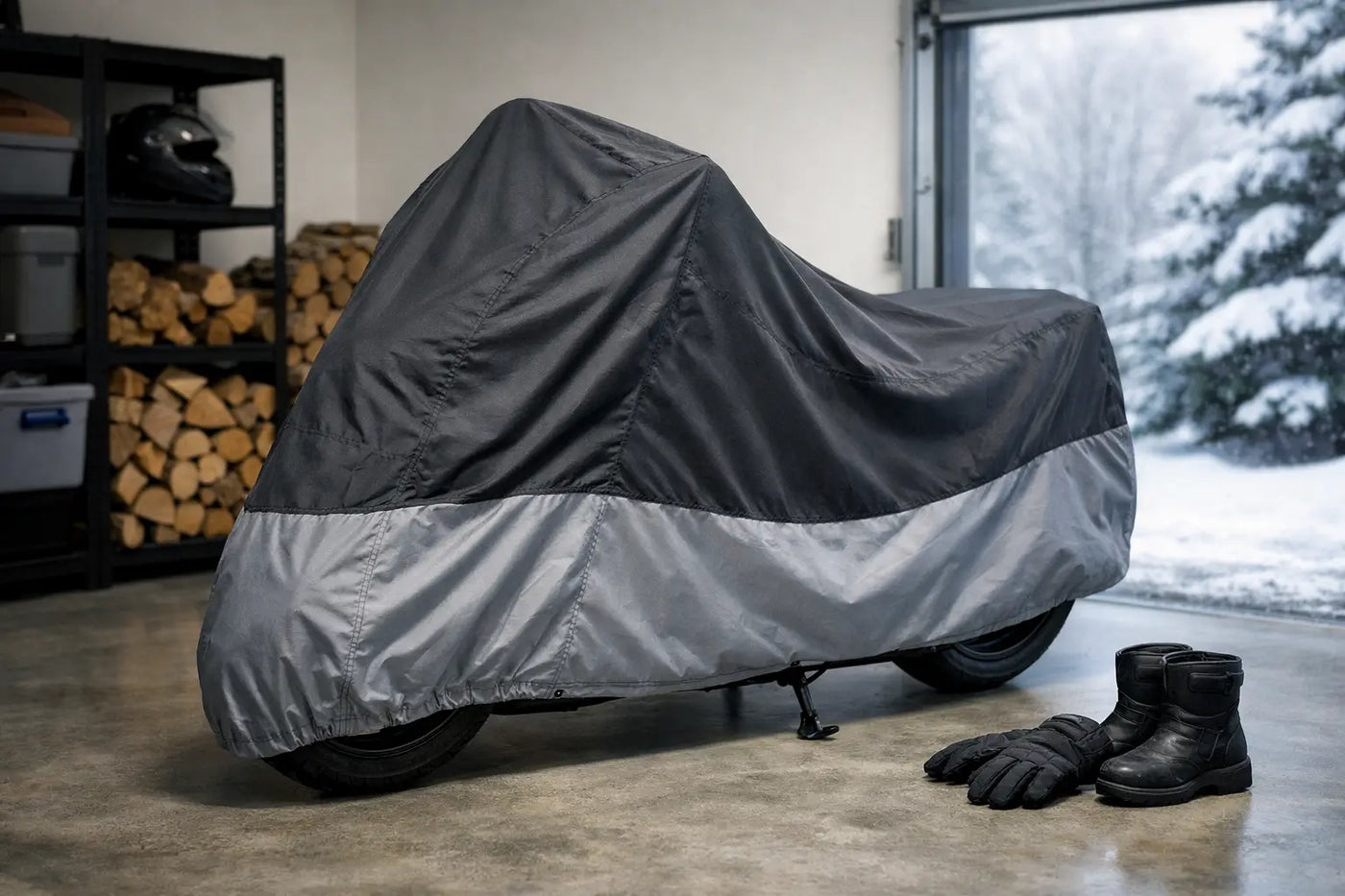
Cold weather does not ruin motorcycles - neglect does. The wrong motorcycle cover for winter storage can trap moisture, rub paint, crack in the cold, and leave your bike looking rough before spring even shows up. If your ride is going to sit for weeks or months, the cover matters a lot more than most riders think.
A winter cover is not just a dust sheet with a marketing label slapped on it. It is the last line of defense between your bike and condensation, garage grime, freezing temps, and outdoor abuse. Whether you park a cruiser in a shed, a touring bike in a garage, or a street machine outside under hard weather, choosing the right cover comes down to fit, material, ventilation, and how your bike will actually be stored.
What a motorcycle cover for winter storage needs to do
Winter storage protection is a different job than day-to-day parking. A quick cover for a bike parked overnight at work is built for convenience. A motorcycle cover for winter storage needs to handle long idle periods without turning into a moisture trap.
That means the material has to block dust, dirt, and water without sealing in condensation. It also needs enough durability to deal with cold-weather stiffness. Cheap covers often feel fine out of the box, then split at stress points or wear through where mirrors, bars, or hard edges press against the fabric.
Soft inner lining matters more than riders expect, especially if the bike is clean and detailed before storage. A rough interior can create fine scratches over time, particularly if the cover shifts from drafts or repeated adjustment. If your bike has a windshield, trunk, sissy bar, antenna, or bags, the shape of the cover matters just as much as the material.
Indoor and outdoor storage are not the same fight
If your bike lives in a clean, dry garage all winter, you do not need the heaviest waterproof shell on the market. In fact, overbuilding can backfire. A fully sealed outdoor-style cover in a garage can hold moisture against the bike if the temperature changes and condensation forms underneath.
Indoor winter storage usually calls for a breathable cover that keeps dust off, protects from accidental bumps, and prevents garage debris from settling into paint, chrome, and controls. The goal is clean protection, not weather warfare.
Outdoor storage is another story. Snow, freezing rain, UV exposure, wind, and temperature swings put real pressure on the cover. For outdoor use, you want a weather-resistant shell, reinforced seams, strong grommets or strap points, and some ventilation so trapped moisture has a way out. If the cover cannot stay secure in the wind, it is not doing the job.
Fit matters more than most riders realize
A loose cover looks harmless, but it can flap in the wind, wear against paint, and let weather push in from the bottom. A cover that is too tight creates its own problems. It strains seams, presses hard against protruding parts, and may not fully protect wheels, lower bodywork, or bags.
The best fit is bike-specific or at least close to your motorcycle style. Cruisers, touring bikes, baggers, sport bikes, and dual sports all carry their bulk differently. A touring model with a tall windshield and saddlebags needs a lot more shape than a stripped-down bobber.
If your bike has accessories, buy for the bike as it sits now, not the stock version from the factory brochure. Storage season is not when you want to force a small cover over a loaded-up machine and hope the stitching holds.
Material choices and what they actually mean
Cover descriptions are full of buzzwords, but riders should focus on how the fabric performs in cold weather. Polyester is common because it is light, affordable, and reasonably weather resistant. Heavier denier fabrics generally hold up better, though thickness alone does not guarantee quality.
Water resistance is good. Total plastic-like sealing is not always good. A solid winter cover should repel outside moisture while still allowing heat and condensation to escape. That balance is what keeps mildew, corrosion, and stale dampness from building under the cover.
Fleece or soft-lined panels are a plus around windshields and painted surfaces, but they should not come at the expense of breathability. Some ultra-cheap covers have thin shells and rough inner surfaces, which is a bad combination for long-term storage. They fail fast and can leave you with more cleanup than protection.
Cold resistance matters too. Some bargain covers get brittle when temperatures drop, especially around stitched areas and elastic hems. If you store outside in northern states or deal with real freeze-thaw cycles, durability in low temps is worth paying for.
Ventilation is not optional
One of the biggest winter storage mistakes is thinking a tighter, less breathable cover automatically protects better. Bikes sweat. Garages change temperature. Outdoor air shifts from cold nights to sunny afternoons. Moisture happens.
Without vents or breathable construction, that moisture gets trapped. That can haze chrome, encourage rust on exposed hardware, and leave a stale film on surfaces you thought were protected. A good cover lets the bike breathe while still blocking the worst of the weather.
This matters even more if you put the bike away after a final wash or after riding in cold air. If there is any hidden moisture around seams, engine fins, or under the seat area, a non-breathable cover can make that problem linger all winter.
Features worth paying for
Not every premium feature is just marketing fluff. A few details make a real difference during winter storage.
Heat shield panels are useful if you sometimes cover the bike before it is fully cooled, though it is still smarter to wait. Reinforced grommets and underbody straps help keep the cover anchored during wind. Elastic hems improve fit and reduce fabric movement. Reflective panels are more useful for outdoor storage where visibility matters.
Locking ports can be a smart add-on if the bike is stored outside or in a shared area. They will not replace a serious lock, but they can work with your security setup and keep the cover in place. Double-stitched seams and reinforced stress areas are also worth watching for, especially on larger bikes.
What is not worth much is a pile of flashy claims with no specifics. If a cover sounds tough but gives you no real information about material weight, venting, or fit range, it is probably leaning on hype.
Common winter cover mistakes
A lot of cover problems start before the cover ever goes on the bike. Storing a dirty motorcycle under a cover all winter lets grime, bug residue, road salt, and moisture sit against surfaces for months. That is how small issues turn into corrosion, staining, and finish damage.
Another mistake is covering a bike that is still warm. Heat rising into a cold cover can create condensation underneath. Give the bike time to cool and dry first.
Some riders also assume any waterproof cover works for every storage setup. It depends. Outdoor storage needs more weather defense. Indoor storage needs more breathability. Buying the wrong style for the environment is one of the fastest ways to get poor results.
And then there is the bargain-bin trap. A very cheap cover can work for short-term use, but winter storage is a longer test. Weak seams, poor fit, and low-grade fabric usually show their true colors before spring.
How to choose the right cover for your bike
Start with where the motorcycle will spend winter. If it is indoors in a dry garage, choose a breathable indoor or indoor-outdoor cover with a soft finish and close fit. If it is outdoors, step up to a heavier weather-resistant cover with vents, secure straps, and reinforced construction.
Next, look at your bike’s size and setup. Windshield, fairing, luggage, sissy bar, crash bars, and custom accessories all affect fit. A cover that barely fits in mild weather is not the one you want stretched over the bike for three frozen months.
Then think about your climate. Dry cold in one region is different from wet snow and ice in another. Riders in damp areas should put extra priority on ventilation and mildew resistance. Riders in windy areas should care more about tie-down security and abrasion control.
If you want one cover that can pull double duty through the year, an indoor-outdoor model can make sense, but there is always a trade-off. Dedicated indoor covers usually breathe better. Dedicated outdoor covers usually protect harder. The best pick depends on how your bike lives most of the time.
The cover works best when the storage prep is right
Even the best cover cannot fix bad winter prep. Wash and dry the bike fully before covering it. Make sure moisture is gone from hard-to-reach spots. If the bike is stored outside, a cover should be part of a bigger protection plan that includes a smart location, stable footing, and solid security.
It also helps to check the bike once in a while during storage. Lift the cover, inspect for moisture, and make sure nothing has shifted. Long-term storage should not mean total neglect.
American riders put real money, time, and pride into their machines. A winter cover is not the most exciting piece of gear you will buy, but it can save your paint, chrome, controls, and seat from a season of unnecessary damage. Pick one built for your storage conditions, not just the lowest price on the screen, and your bike will be ready to fire back up when the cold finally breaks.


No comments yet. Be the first rider to weigh in.