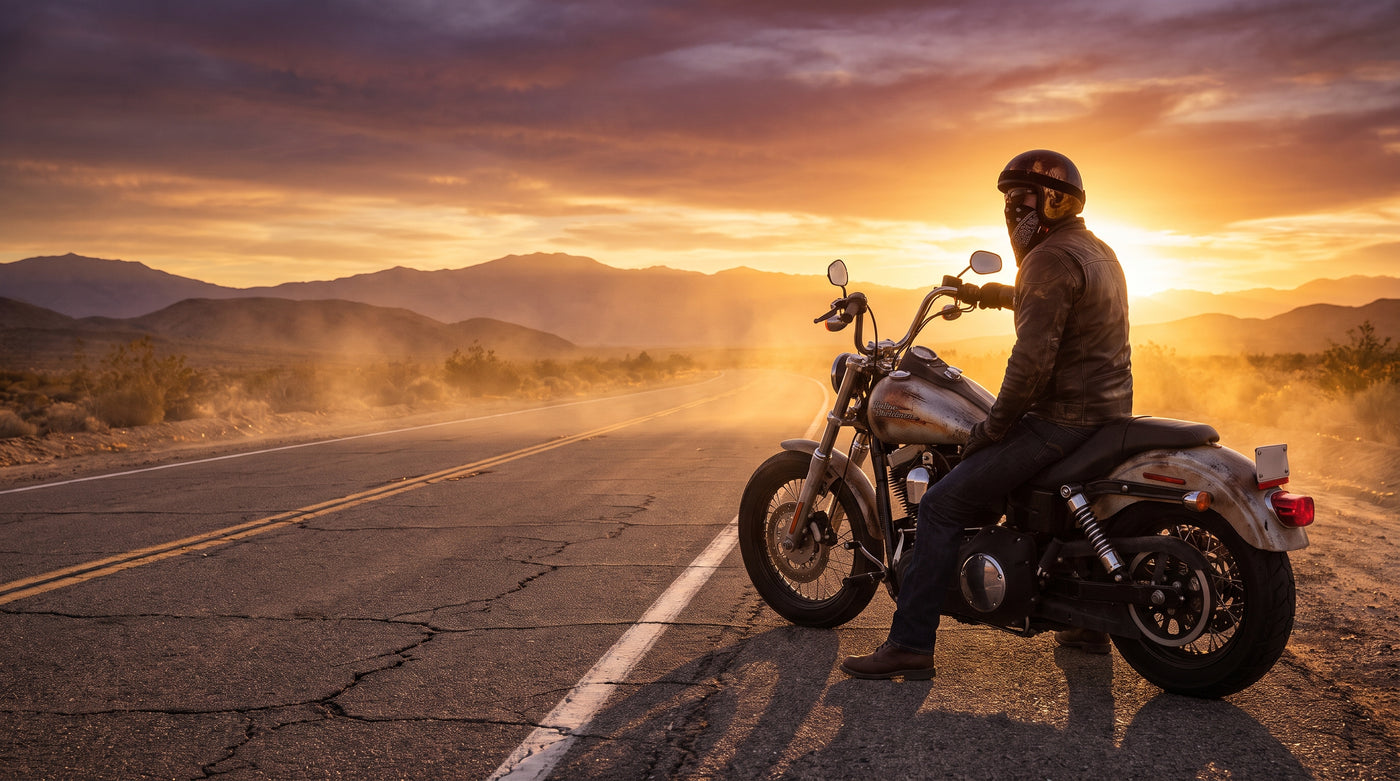
You pull out of the garage at dawn and a June bug hits you square in the lip at 55 mph. Or it is January, 28 degrees, and your face goes numb two miles into the ride. A good motorcycle mask fixes both problems. The hard part is picking the right one, because the mask that saves you in December will suffocate you in July.
This guide breaks down every major motorcycle mask type by material, coverage, breathability, and how well it fits under a helmet. You will know exactly which style works for your conditions and which ones waste your money. Every recommendation here is based on real rider use, not spec-sheet hype.
Neoprene Half-Face Masks: The Default for Three-Season Riding
The neoprene half-face mask is the most common motorcycle mask on the road, and for good reason. It covers your nose to your chin, blocks wind and bugs, and breathes well enough for warm-weather cruising. Most run between 2mm and 3mm thick, weigh about 2 ounces, and cost $8 to $18.
The closure is usually hook-and-loop (Velcro) at the back of the head. Good ones sit flush against your cheekbones without pinching your ears. Cheap ones have stiff seams that dig in after 30 minutes.
Neoprene works best in the 40 to 75 degree range. Below 40, it lets too much cold air through. Above 75, it traps heat and you start sweating under the material. For summer rides, look for perforated neoprene with laser-cut ventilation holes along the mouth area. Those small holes make a real difference on a 90-degree day.
This style pairs naturally with half-shell and 3/4 helmets. Under a full-face helmet, it adds minimal bulk, but the Velcro strap can bunch at the back of your neck. If you ride a cruiser, a touring bike, or anything with an upright riding position, a neoprene half-face is probably your starting point.

Full-Face Motorcycle Masks for Cold Weather and Dust
A full-face motorcycle mask covers everything from the top of your head down to your neck. Most are made from a polyester-fleece blend with a thermal lining that traps heat around your cheeks and jaw. They work best below 40 degrees, where a half-face mask starts to fail.
The key spec is the material weight. Thin polyester masks (around 200 GSM) handle 30 to 40 degree rides. Heavier fleece-lined versions (300+ GSM) keep you comfortable down to about 15 degrees before you need a heated collar or liner. If you ride in the Midwest or Northeast through winter, the thicker version pays for itself on the first cold morning.
Dust and trail riders use full-face masks for a different reason: coverage. Off-road riding kicks up gravel, sand, and dirt that a half-face mask misses. A full-face mask with a sealed nose bridge keeps particulates out of your sinuses. Some riders in Arizona and Nevada wear them year-round for that reason alone.
Helmet fit matters here. A thick full-face mask adds 1 to 2 millimeters to your head circumference, which can make a snug full-face helmet feel uncomfortably tight. If your helmet is already borderline on fit, try a thinner 200 GSM mask or size up the helmet. Do not force it.

Skull Motorcycle Masks That Actually Hold Up
Skull-print motorcycle masks are the most popular style in the biker world. You will find them on cruiser riders, rally goers, and anyone who wants their face gear to match their attitude. The design is simple: a neoprene or polyester half-face mask with a printed skull jaw on the front.
Quality varies wildly. The best skull masks use sublimation printing, where the ink is heat-bonded into the fabric fibers. This method survives 50+ machine washes without cracking, peeling, or fading. Cheap masks use screen printing or heat transfers that start flaking after a few weeks of regular use.
Beyond looks, a skull motorcycle mask works exactly like any other neoprene half-face. Same 2 to 3mm thickness, same wind and bug protection, same hook-and-loop closure. The difference is cosmetic, so spend your money on print quality and seam construction rather than a brand name.
If you want to see what we mean by print quality, our skull face mask guide breaks down the details. The short version: look for UV-resistant sublimation ink and double-stitched edges. Those two features separate a mask that lasts from one that falls apart.

Balaclava Motorcycle Masks for Winter and Long Hauls
A balaclava covers your entire head, face, and neck in one piece. It pulls on like a sock, sits flat under any helmet style, and eliminates the gap between your mask and your collar that lets cold air sneak in on highway rides.
There are two categories worth knowing. Thin moisture-wicking balaclavas (usually a CoolMax or polyester-spandex blend) weigh about 1.5 ounces and work in temperatures from 50 to 80 degrees. They keep sweat from running into your eyes and stop your helmet liner from soaking through on hot days. Thick thermal balaclavas (fleece-lined, 3 to 4 ounces) are built for 15 to 45 degree riding. They trap a layer of warm air around your head without the bulk of a scarf or neck gaiter.
Fit is everything with a balaclava. Too loose and it bunches under your helmet, creating pressure points on your temples. Too tight and it restricts blood flow around your ears. The right balaclava should feel snug but not compressive, like a fitted beanie. Most brands run slightly small, so if you are between sizes, go up.
For skull-print balaclava options, our balaclava buying guide covers the best picks. It is the same sublimation printing that works on half-face masks, just wrapped around your whole head.

Motorcycle Masks with Goggles: When to Combine
Some riders pair a half-face mask with motorcycle goggles for a full-coverage setup without wearing a full-face helmet. This combo is popular with bobber and chopper riders who want open-air riding with eye and face protection.
The setup works well when the mask and goggles are designed together. Look for goggles with a flexible silicone or foam seal that sits over the top edge of the mask, not under it. If the goggles press the mask into the bridge of your nose, you will get a pressure point that becomes painful after 20 minutes.
Padded motorcycle goggles with UV400 lenses run $12 to $30. The padding should be closed-cell foam, not the open-cell sponge type that soaks up sweat and rain. Closed-cell foam seals out wind and dries fast. For amber or clear lens options, check the motorcycle goggles collection at ALR.
One tip: if you wear prescription glasses under your goggles, get an OTG (Over The Glasses) frame. Standard goggles crush your glasses into your temples, and no amount of adjusting fixes it. OTG frames have a wider cavity and a notched nose bridge to sit over your frames without pressure.

How to Wear a Motorcycle Mask Under Your Helmet
Getting a mask to sit right under a helmet is not complicated, but riders make it harder than it needs to be. Here is what works.
Pull the mask on first, all the way up to the bridge of your nose. Smooth out any folds or wrinkles, especially around the ears. Every wrinkle becomes a pressure point once the helmet compresses it against your skin. Then put the helmet on as you normally would, front first, then pull it down over the back of your head.
For balaclava-style masks, tuck the neck portion into your jacket collar before putting the helmet on. This prevents wind from blowing up under the back of the helmet and ballooning the mask.
A properly fitted mask adds less than 1mm to your head circumference. If your helmet suddenly feels tight with a mask, the mask is too thick for that helmet. Switch to a thinner material, or consider going up a half size on the helmet. Never ride with a helmet that squeezes your temples. That pressure kills your focus and leads to headaches within an hour.
Motorcycle Mask Comparison: Which Type Fits Which Ride
| Type | Coverage | Best For | Breathability | Price Range |
|---|---|---|---|---|
| Neoprene Half-Face | Nose to chin | 3-season cruising | High | $8 - $18 |
| Full-Face Thermal | Head + neck | Winter, dusty trails | Low | $12 - $25 |
| Skull Neoprene | Nose to chin | Cruiser styling | Medium-High | $10 - $20 |
| Balaclava | Full head + neck | Winter long hauls | Low-Medium | $10 - $22 |
| Bandana / Tube | Chin to neck | Warm weather, casual | Very High | $5 - $12 |
5 Motorcycle Mask Mistakes That Cost You Comfort
1. Buying one-size-fits-all without checking ear coverage. Most "universal" masks are cut for an average male face. If your head runs large or small, the ear loops either dig in or slide off. Measure your head circumference and check the sizing chart. A 2-centimeter difference in strap length changes everything.
2. Using a thick mask under a tight full-face helmet. A 3mm neoprene mask plus a snug-fit helmet equals temple pressure, fogging, and headaches. If your helmet is already a close fit, switch to a 1mm polyester mask or a thin balaclava. Save the thick neoprene for open-face helmets.
3. Wearing cotton in the rain. Cotton absorbs water, stays wet, and makes your face cold and clammy. Neoprene and polyester shed water. If you ride in the Pacific Northwest or anywhere with surprise rain, avoid cotton masks entirely. Synthetic materials dry in minutes while riding.
4. Ignoring the nose bridge seal. A mask with a loose nose bridge lets air shoot straight up into your glasses or visor, fogging them instantly. Look for masks with a molded aluminum or plastic nose clip that pinches to your bridge. This one detail is the difference between a clear visor and a dangerous whiteout at 60 mph.
5. Washing in hot water. Neoprene warps and loses its stretch in hot water. Wash masks in cold water, air dry, and never put them in the dryer. A well-maintained neoprene mask holds its shape for two to three years. A heat-damaged one goes baggy after a month.
Picking the Right Motorcycle Mask for Your Ride
The right motorcycle mask depends on three things: your riding temperature, your helmet type, and how much coverage you want. For spring-through-fall cruising on a half-shell, a neoprene half-face mask handles 90% of conditions. For winter rides or dusty trails, a thermal balaclava or full-face mask keeps you covered. Skull prints add style without sacrificing function, as long as the print quality is solid.
If you are looking for one that will not fall apart after two rides, the motorcycle face masks collection at American Legend Rider has every style listed above. Skull neoprenes, cold-weather balaclavas, and everything in between. All ship from the U.S., so you are not waiting six weeks on a mystery package from overseas.

No comments yet. Be the first rider to weigh in.