
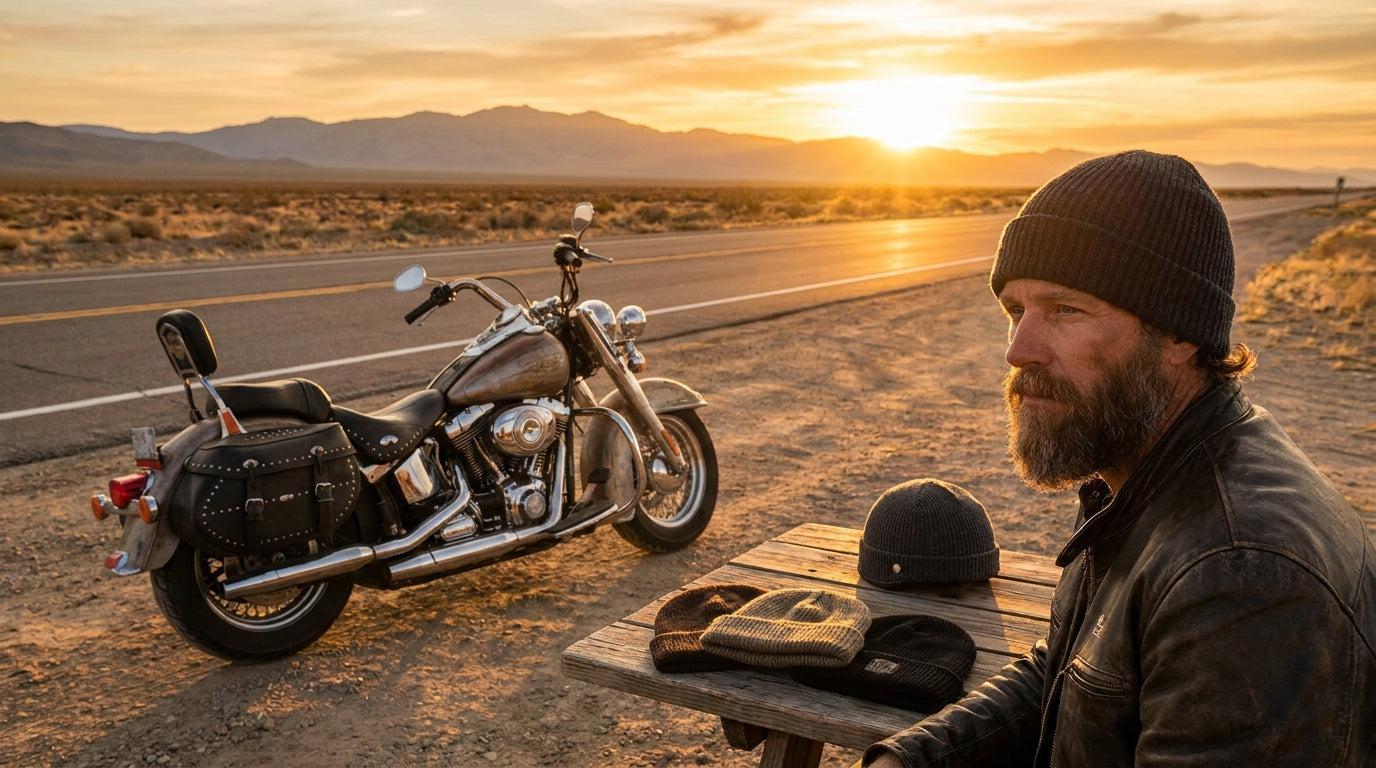
Most riders grab whatever knit cap is in the closet, pull it on, and head out. By mile 20, the stitching itches under the helmet liner, sweat soaks through the acrylic, and the cap bunches behind the ears hard enough to create a pressure headache. A biker beanie is not a regular knit cap. The right one sits flat, wicks moisture, and works with your helmet instead of fighting it.
This guide covers the two types of biker beanies riders actually use: knit caps designed for under-helmet wear and low-profile beanie helmets with DOT approval. You will know which materials hold up, which styles fit under which helmets, and what mistakes to avoid before you spend anything.
What Counts as a Biker Beanie
The term "biker beanie" covers two different products, and mixing them up is the fastest way to buy the wrong thing.
The first is a knit biker beanie hat. This is a close-fitting cap made from cotton, merino wool, or synthetic moisture-wicking fabric. Riders wear it under a helmet for warmth, sweat management, or to keep a helmet liner clean between washes. A good one weighs under 2 oz and adds less than 2mm of thickness under the helmet padding. The Buff Heavyweight Merino Wool cap is one of the more popular options in this category, retailing for around $28.
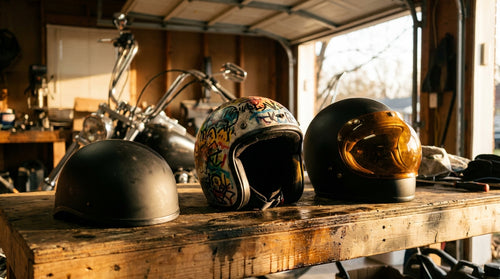
The second is a beanie helmet. This is a DOT-approved half-shell helmet with an ultra-low profile that sits close to the skull, looking almost like a thick beanie from a distance. These run 2 to 3 inches of shell height and weigh between 1.5 and 2.2 lbs depending on size. They pass the same FMVSS 218 impact test as any other DOT-certified helmet. The skull cap motorcycle helmet guide covers this category in more detail.
Both show up when you search for "biker beanies" or "motorcycle beanie," so this guide covers both.

Biker Beanie Hats for Cold Weather Riding
A knit biker beanie hat does three jobs on a cold ride: insulates the head, absorbs sweat before it drips into your eyes, and prevents the helmet's EPS liner from soaking up oils and salt from your scalp. That third benefit alone extends helmet liner life by 2 to 3 seasons if you wear a cap on every ride.
Material matters more than brand. Merino wool (18.5-micron fiber or finer) regulates temperature in both cold and mild conditions, dries faster than cotton, and resists odor for multiple rides between washes. Synthetic moisture-wicking blends (polyester/spandex) dry even faster but tend to hold odor after 2 or 3 wears. Cotton is the worst choice for riding. It absorbs sweat, stays wet, and drops your head temperature once you stop moving. A cotton beanie at 40 degrees feels fine at 60 mph. Stop for gas and your head goes cold in about 90 seconds.
Thickness is the other variable. Anything over 3mm creates pressure points under a snug helmet. Look for "helmet liner" or "skull cap" beanies specifically marketed for motorcycle use. These are cut shorter than street beanies (no fold-over cuff) and use flatlock seams that sit flush instead of ridged seams that press into the scalp under helmet padding.
Color and style are personal, but dark colors hide sweat stains better than light ones after a long ride. Black and charcoal are the most common biker beanie colors for this reason. Some riders prefer a reflective stripe or a high-visibility panel for night riding, especially on the back of the head where it sits below the helmet rim and stays visible to drivers approaching from behind. A subtle reflective thread woven into the knit adds visibility without changing the look in daylight.
Beanie Helmets: The DOT-Approved Low-Profile Option
Beanie helmets sit at the far end of the minimalist spectrum. The shell covers only the top of the skull, leaving the face, ears, and back of the neck exposed. Riders who prefer this style want the legal minimum of protection with the least visual bulk. Every state with a helmet law requires DOT certification at minimum, and beanie helmets that carry a DOT sticker meet FMVSS 218 the same as any other half-shell.
The key spec is shell height. A standard half-helmet shell sits 3 to 4 inches above the ear line. A beanie helmet shell sits 2 to 2.5 inches. That difference of roughly one inch changes the look dramatically, making the helmet appear almost like a thick cap from across a parking lot. The Daytona Skull Cap is one of the most recognizable beanie helmets on the market, weighing around 1.8 lbs in a medium shell.
The trade-off is coverage area. Less shell means less impact protection on the sides and rear of the skull. A beanie helmet passes the DOT drop test on the crown, but the lower temples and the base of the skull get no hard-shell coverage. Riders who want more protection without going full face should look at three-quarter (3/4) helmets, which extend the shell down past the ears.
One common question from searches: are beanie helmets DOT approved? Yes, if they carry the DOT sticker on the back. The DOT certification applies to the impact-absorbing liner and the outer shell thickness, not the shell height or shape. A beanie helmet with a DOT sticker has passed the same FMVSS 218 drop test standards as a full-size half helmet.

How to Wear a Motorcycle Beanie Under a Helmet
Fit under a helmet is where most biker beanies fail. The helmet was sized for your bare head (or with a thin liner). Adding a thick beanie changes the fit in three ways: it pushes the helmet higher on your forehead, increases pressure on the temples, and can shift the helmet backward if the cap material is slippery.
The fix is straightforward. Size up one shell if you plan to always ride with a beanie, or pick a beanie cut specifically for under-helmet use with a thickness under 2mm. Pull the beanie on first, then put the helmet on from front to back. The beanie should sit flat against the scalp with no wrinkles or folds. If you can feel a seam pressing into your forehead after 10 minutes, the beanie's construction is wrong for helmet use.
Ear coverage matters in cold weather. Some biker beanies extend below the ear line with a thin panel that tucks into the helmet padding. Others stop above the ears, which leaves them exposed to wind on open-face or half-shell helmets. If you ride below 45 degrees Fahrenheit, an ear-covering design prevents the sharp ache that cold wind creates in the outer ear canal after about 15 minutes of highway riding. The biker clothing guide covers other cold-weather layering pieces that pair with a riding beanie.
Helmet type also affects the beanie you need. A full-face helmet seals around the chin and cheeks, so a simple crown-only beanie works fine. A half-shell helmet leaves the ears, face, and neck open, which means you get more benefit from a beanie that extends down over the ears and upper neck. For three-quarter helmets, the ear panel of the beanie needs to be thin enough to tuck under the helmet's cheek padding without creating a gap between the pad and your face. Test the combination before a long ride. Five minutes in the driveway reveals fit problems that would take an hour to notice mentally on the highway.
Biker Beanie Materials That Actually Last
Not all biker beanies survive more than one season. Here is what holds up and what does not.
| Material | Warmth | Moisture Handling | Odor Resistance | Lifespan | Price Range |
|---|---|---|---|---|---|
| Merino Wool (18.5 micron) | Excellent | Wicks and dries | High (natural antimicrobial) | 3-5 seasons | $22-$38 |
| Polyester/Spandex Blend | Good | Fast wicking | Low (holds odor) | 2-3 seasons | $10-$20 |
| Cotton | Fair | Absorbs, stays wet | None | 1 season | $8-$15 |
| Silk | Good | Wicks well | Medium | 2-3 seasons | $18-$30 |
| CoolMax Fabric | Moderate | Best wicking | Low | 2-3 seasons | $12-$22 |
Merino is the clear winner for riders who value comfort per dollar over time. The upfront cost is higher, but one $30 merino biker beanie outlasts two or three $12 polyester caps and never develops a permanent gym-bag smell. For hot-weather rides where warmth is not the goal, a CoolMax or thin polyester cap works as a sweat barrier without adding heat.

Biker Beanie Styles at a Glance
Biker beanies come in a few distinct formats. Here is how the main styles compare so you can match the right one to your riding conditions and helmet type.
| Style | Type | Best Helmet Pairing | Warmth | Wind Block | Price |
|---|---|---|---|---|---|
| Cuffless Skull Cap | Knit cap | Any helmet | Moderate | Low | $10-$20 |
| Merino Liner Beanie | Knit cap | Full face, 3/4 | High | Medium | $22-$38 |
| Ear-Flap Beanie | Knit cap | Half shell, open face | High | Medium | $15-$30 |
| DOT Beanie Helmet | Helmet | Standalone | None (shell only) | None | $45-$120 |
| Moisture-Wicking Liner | Synthetic cap | Any helmet | Low | Low | $8-$18 |
If you ride year-round, the best setup is a merino liner beanie for cold months and a thin CoolMax cap for summer. Pair either with your existing helmet. If you are shopping for a low-profile helmet that looks like a beanie, the DOT beanie helmet is a separate purchase and replaces your helmet entirely.
5 Mistakes Riders Make with Biker Beanies
- Wearing a cotton beanie in cold weather. Cotton holds up to 27 times its weight in water. On a 40-degree ride, a sweat-soaked cotton cap drops your head temperature fast enough to cause a headache and reduce focus. Merino or synthetic blends dry while you ride and keep your head at a stable temperature.
- Choosing a street beanie with a fold-over cuff. The cuff creates a thick band across the forehead that presses against the helmet's front padding. After 30 minutes, that pressure becomes a real distraction. Motorcycle-specific beanies are cut without a cuff and use flatlock seams for exactly this reason.
- Buying a beanie helmet without checking the DOT sticker. Some ultra-thin novelty helmets look like beanie helmets but carry no DOT certification. They are sold as "novelty" items and offer minimal actual impact protection. Always flip the helmet over and look for the DOT sticker on the back before buying. The skull cap helmet guide shows exactly what markings to check.
- Using a beanie as a substitute for a balaclava. A biker beanie covers the top of the head and sometimes the ears. It does not cover the face, neck, or chin. In temperatures below 35 degrees, you need a balaclava or a neck gaiter in addition to the beanie. A beanie alone leaves too much skin exposed to wind at speed. The motorcycle masks guide covers full face and neck protection options.
- Not washing the beanie between rides. A beanie worn under a helmet collects sweat, oils, and dead skin cells on every ride. That buildup transfers to the helmet liner and accelerates foam breakdown. Wash your riding beanie every 3 to 5 rides in cold water. Machine wash works fine for both merino and synthetics. Air dry only to preserve the fabric's stretch.
If you are looking for a low-profile helmet that sits close to the skull without the bulk of a standard half-shell, the skull helmets collection has DOT-certified options built for riders who want minimal coverage done right.

No comments yet. Be the first rider to weigh in.