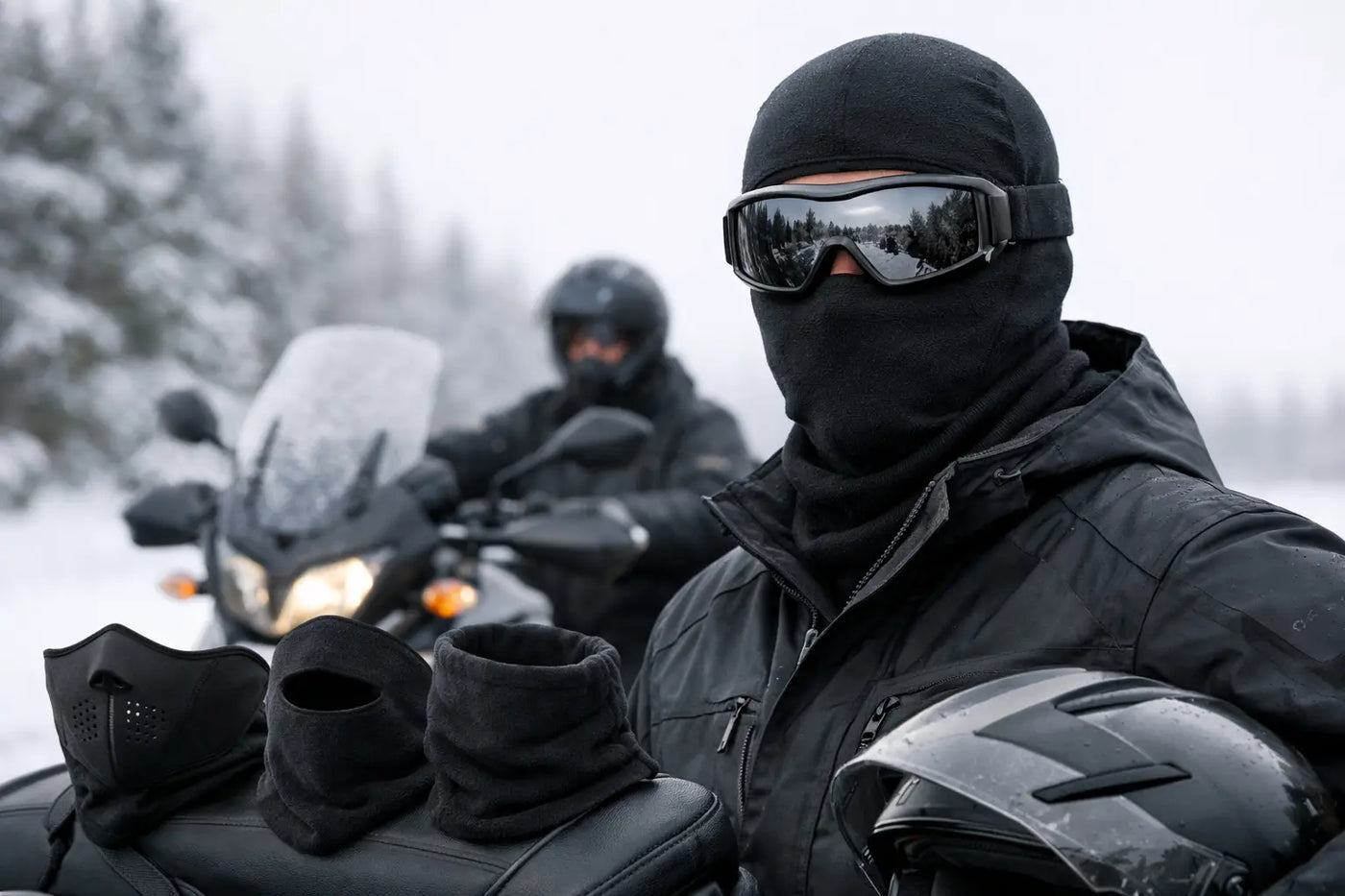
Cold air hits different at 60 mph. What feels brisk in a parking lot turns brutal once wind starts cutting across your cheeks, nose, and neck. A good cold weather motorcycle face mask is not just another layer - it is the piece that keeps a winter ride from turning into a numb, distracted grind.
The trick is choosing one that works on the bike, not just one that looks warm in a product photo. Riders need real wind protection, clean helmet fit, steady breathing, and enough coverage to keep the cold from slipping down the collar. If your face mask bunches up, traps moisture, or leaves gaps at the neck, it is going to annoy you long before the ride is over.
What a cold weather motorcycle face mask actually needs to do
A cold weather motorcycle face mask has one job on paper - keep your face warm. On the road, it has several. It needs to block wind, manage moisture from breathing, sit flat under a helmet, and stay in place when you turn your head or zip up your jacket.
That balance matters because the warmest mask is not always the best riding mask. Thick fleece feels great off the bike, but under a full-face helmet it can create pressure points and make the fit too tight. On the other hand, a thin stretchy layer may feel comfortable at first, then let cold air slice right through it once you are moving.
The best option usually lands in the middle. You want enough insulation for cold mornings and highway speeds, but not so much bulk that your helmet fit gets messed up. Riders who spend time on cruisers, touring bikes, and daily commutes in colder states usually benefit most from a mask with a wind-blocking front panel and a more breathable stretch fabric around the sides and back.
Materials matter more than most riders think
If you have ever bought winter gear based on looks alone, you already know the lesson. Fabric decides whether a mask feels road-ready or ends up stuffed in a saddlebag after one ride.
Fleece, neoprene, and thermal blends
Fleece is soft, warm, and comfortable against the skin. It works well for low-speed riding, short commutes, and very cold conditions when used with the right helmet setup. The downside is bulk and moisture. If you breathe heavily into fleece, it can get damp and stay damp.
Neoprene blocks wind better and gives solid structure around the face. It is a strong choice when you want protection from cold air and road spray, but it can feel less breathable. Some riders love neoprene in harsh wind. Others hate the trapped feeling, especially on longer runs.
Thermal synthetic blends are often the smart middle ground. They usually combine stretch, insulation, and faster drying performance. For a lot of riders, this is where the best cold weather motorcycle face mask options live. They fit under helmets better than heavy fleece and breathe better than thick neoprene-only designs.
Merino and moisture control
Merino wool blends deserve attention too. They regulate temperature well and resist odor better than many synthetics. The trade-off is price and, in some cases, durability if the fabric is very lightweight. Still, for riders doing long days in changing temps, merino blend masks can feel a lot better over time than cheaper materials.
Fit under the helmet is where good gear wins
A face mask can have great specs and still fail if it does not work with your helmet. That is where a lot of winter gear goes wrong.
If the mask creates pressure on the nose, cheeks, or ears, you will feel it fast. If it shifts while putting on your helmet, you will spend too much time yanking it back into place. And if it changes helmet fit too much, that is a safety and comfort problem.
Look for flat seams, stretch panels, and a low-profile design around the crown and jaw. Full-face helmet riders usually want smooth coverage that seals around the neck without adding too much thickness at the temples. Open-face and half-helmet riders can get away with more material up front, but wind exposure is higher, so coverage becomes even more important.
A lot depends on your setup. If your helmet already fits snug, skip anything overly padded. If you ride with more open airflow, a slightly heavier front panel may be worth it.
Full face, half face, or balaclava style?
Not every rider needs the same cut. The right style depends on your bike, your helmet, your local weather, and how much cold you are actually dealing with.
A half face mask covers the nose, mouth, and sometimes part of the cheeks. It is solid for riders who want easier on-and-off use and less material under the helmet. It also works well when paired with a high-collar jacket or neck gaiter. The weak point is neck coverage. If there is a gap, cold air finds it.
A full balaclava style gives more complete coverage over the head, face, chin, and neck. For serious cold, this is often the better call. It seals the system better and reduces exposed skin. The downside is heat buildup when temps rise or when you stop moving.
Modular designs split the difference. Some let you drop the mouth section, some convert into a neck gaiter, and some are built with hinged panels. These are useful if your rides start freezing and warm up later. The convenience is real, but more moving parts can also mean more shifting under the helmet.
Breathability is not optional
Cold-weather riders usually focus on warmth first, but breathing comfort can make or break a mask. If your breath gets trapped, your face gets damp. Once moisture sits against the skin in cold air, warmth drops fast.
A smart cold weather motorcycle face mask uses venting, perforation near the mouth, or moisture-wicking fabric to reduce that problem. Some masks direct breath downward, which helps limit fogging if you wear glasses or a shield. That feature matters more than most riders expect.
If you ride in truly cold conditions, some moisture buildup is still going to happen. The key is limiting it, not pretending it will disappear. Riders who do longer winter miles should lean toward designs that dry quickly and do not feel clammy after repeated use.
Neck coverage is the difference between decent and dialed-in
A face mask that stops at the chin is only doing part of the job. Wind gets down the collar fast, especially on highway runs. Once your neck is exposed, the rest of your upper body starts losing heat.
That is why longer bib-style coverage works so well for winter riding. It overlaps with your jacket collar and helps close the gap where cold air usually sneaks in. This kind of coverage also keeps the mask from riding up as you move.
It is not the flashiest feature, but it is one of the most practical. Riders chasing warmth should pay as much attention to lower coverage as they do to the front face panel.
When heavier is better - and when it is not
There is a time for max warmth and a time for less bulk. If you are riding in deep winter, early mornings, or open stretches with steady wind, a heavier insulated mask makes sense. The extra protection pays off when exposure is constant.
But if your riding includes stop-and-go traffic, shorter trips, or changing temperatures through the day, a lighter thermal mask is often the better buy. Overheating can be just as annoying as freezing, especially when you pull into traffic lights or fuel stops.
This is where honest buying beats hype. The best mask is not the thickest one. It is the one that matches how and where you ride.
What riders should avoid
Cheap masks usually fail in familiar ways. They slip down the nose, soak up breath, lose shape after washing, or create a weird helmet pressure point that gets worse with every mile. A face mask that looks aggressive but cannot handle wind or moisture is just costume gear.
Watch out for rough seams, weak stitching, and one-layer fabric marketed as winter-ready with no real wind barrier. Also be careful with masks that cover well but restrict breathing too much. Warmth is good. Fighting for airflow is not.
If you ride often, buy for road use, not just cold-weather style. Durable build, stable fit, and comfort under a helmet matter more than gimmicks.
Choosing the right cold weather motorcycle face mask for your ride
If you ride mostly short distances around town, a lighter thermal or half-mask setup may be enough, especially with a windshield and a solid jacket collar. If you run highway miles, commute before sunrise, or ride through late fall into winter, step up to a full-coverage mask with neck protection and a true wind-blocking panel.
For riders who want gear that looks as tough as it works, style still counts. There is nothing wrong with wanting skull graphics, blackout finishes, or a meaner cut as long as the gear performs. That is the whole point - road-ready function with biker attitude still intact. Stores like American Legend Rider make sense for that reason. Riders can shop practical gear without ending up with generic outdoor wear that misses the culture completely.
A cold ride does not have to be a miserable one. Get the fit right, choose materials that can handle wind and breath, and make sure your neck coverage is not an afterthought. When your face stays warm and your gear stays put, you stop thinking about the cold and get back to what matters - the ride ahead.
No comments yet. Be the first rider to weigh in.