
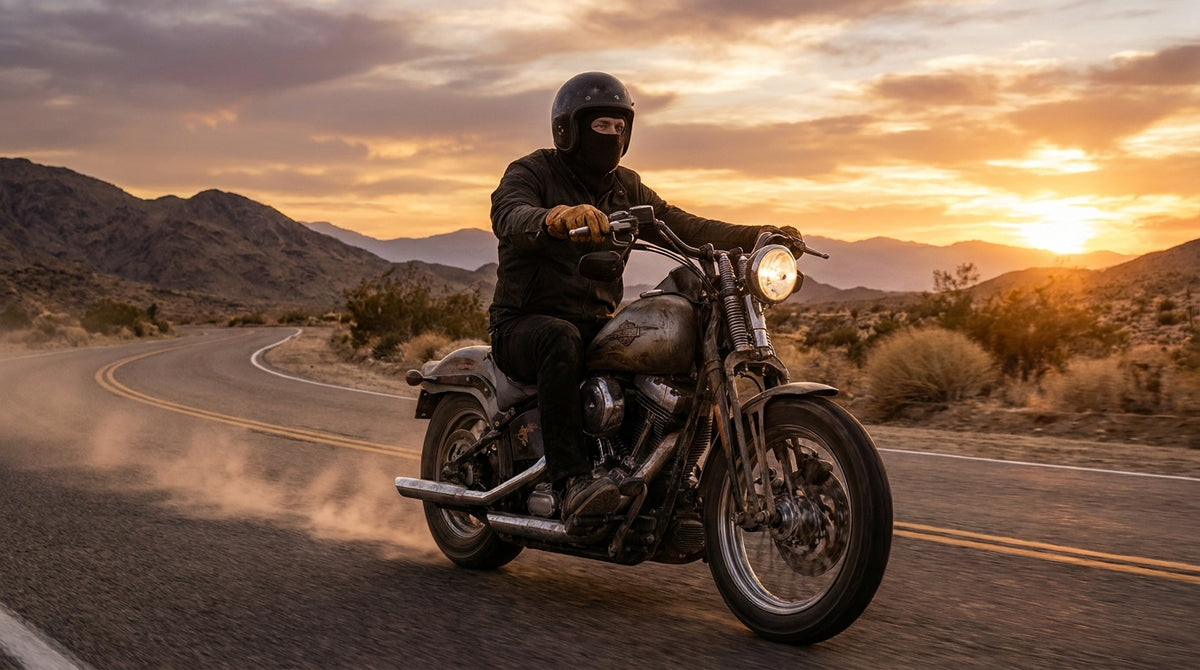
Most riders buy a mask for the cold and then discover the real problem at the first gas stop: the seam sits under the chin bar, the helmet will not seat, and the whole thing bunches up behind the ears. A full face balaclava fixes that only if the cut and the fabric weight are right for your helmet. Get those two wrong and you have a $25 piece of fabric you never wear again.
This guide covers 9 full face balaclavas that actually sit flat under a lid, from a $14.95 MultiCam cover to a $29.95 full coverage hood. You will know which fabric to pick for 40F versus 90F, how to check fit before you ride, and the five mistakes that make riders give up on a balaclava full face mask for good.
What a full face balaclava actually covers
A balaclava is a one-piece hood. It covers the head, ears, neck and most of the face, with an opening for the eyes and usually a second opening at the mouth. That is the difference between it and a neck gaiter, which is an open tube that stops at the jaw.
"Full face" means the nose and mouth are enclosed rather than left open. On the ALR balaclavas collection the full face cuts run from a single eye port, like the Balaclava Full Face Coverage at $29.95, to a hinged mouth panel you can drop for a drink without pulling the whole hood off.
Three things it does on a bike:
- Blocks wind at the collar. At 65 mph, air forcing its way up under a helmet is the main reason your neck gets cold before your hands do.
- Keeps liner sweat off your helmet. A helmet liner absorbs oil and salt. A balaclava takes that hit instead and goes in the wash.
- Cuts helmet noise. A thin layer over the ears knocks down the turbulence whistle, though it is no substitute for plugs.
The 9 best full face balaclavas for riders
Ordered by what they are for, not by price. Every price here is the current live ALR price.
1. Balaclava Full Face Coverage, $29.95
The most enclosed cut in the lineup. Single eye port, no mouth opening, so there is no seam to catch on a chin bar. This is the one for 35F to 50F commutes in a full face helmet. The tradeoff is breath routing: with no mouth vent you need a helmet with a working chin vent or your shield will fog.

2. Windproof Winter Balaclava with Thermal Lining, $25.97
A windproof shell face panel over a thermal lining. The lined panel sits across the cheeks and nose, which is where wind chill actually bites, and the back of the head stays thinner so it does not add bulk under the shell. Best pick if your ride starts below 40F.
3. Skull Balaclava Full Face Mask, $24.95
The skull print version, and the most popular full face cut ALR sells. Mid weight polyester, so it works down to roughly 50F and doubles as a ski mask. If you want the look without a winter weight fabric, this is the one. We go deeper on prints and fit in the skull balaclava guide.
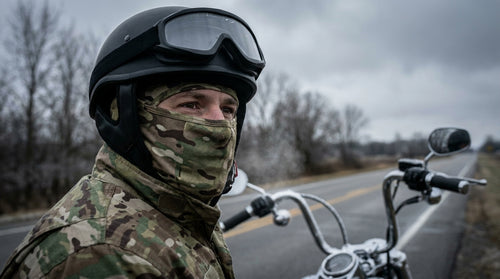
4. Black MultiCam Balaclava Full Face Mask, $22.95
Two layer construction with a reinforced nose bridge. The nose bridge matters more than it sounds: it is the panel that stops the fabric collapsing against your nostrils when you breathe hard in traffic. Comes in scorpion black if you want pattern without a bright print.

5. Motorcycle Face Mask Balaclava, Breathable Lycra, $29.95
Lycra blend, four way stretch, unisex. The stretch is the point. A Lycra hood pulls flat against the skull instead of folding, which is what you want under a tight fitting helmet where 3mm of extra bulk changes the fit. Thin enough for 60F to 80F riding.
6. Breathable Summer Helmet Liner, $26.95
Built as a liner first and a face mask second. Perforated panels at the mouth and ears, which is the difference between a summer balaclava and a winter one that you sweat through by mile ten. Pair it with riding goggles on an open face helmet and you have full coverage without the heat.

7. Camo Balaclava Winter Fleece, $24.45
Fleece lined, camo shell. Fleece is the warmest fabric in this list and also the bulkiest, so size up your helmet check before you commit. Good for riders in the 25F to 40F range who are not doing 300 mile days.

8. ALR Thermal Fleece Balaclava, $22.95
The plain thermal fleece option, no print, no pattern. If you want one balaclava that works under a half helmet and also walks into a coffee shop without looking tactical, this is it. Same fleece bulk caveat as the camo.
9. Quick Drying Motorcycle Full Face Cover, $19.45
The budget pick that is still worth owning. Quick dry synthetic, so you can rinse it at a motel sink and ride in it the next morning. At $19.45 it is the one to buy as a spare, and a spare is not optional: a balaclava you wore for three hours is wet.
If $19.45 is still more than you want to spend on a backup, the MultiCam Full Face Mask Cover in pure black runs $14.95 and uses the same two layer build as pick number four in a plainer finish.
Fabric: fleece vs Lycra vs ice silk
Fabric decides the temperature range, and almost every returned balaclava is a fabric mistake rather than a size mistake. Here is how the four fabrics ALR stocks actually behave.
| Fabric | Works at | Bulk under helmet | Watch out for |
|---|---|---|---|
| Fleece | 25F to 45F | High | Can push a snug helmet a half size tight |
| Windproof shell + thermal lining | 35F to 55F | Medium | Shell panel is stiff until broken in |
| Lycra / polyester blend | 55F to 80F | Low | No wind blocking, it only cuts the chill |
| Ice silk / quick dry | 75F to 95F | Lowest | Thin fabric pills if you wash it hot |
Two balaclavas cover a full year in most of the US: one fleece or thermal lined for anything under 50F, one Lycra or ice silk above it. Buying a single mid weight hood and trying to stretch it across both ends is why riders end up with a drawer full of masks they do not use.
One more note on sun. The ice silk cooling gaiter at $19.95 is rated for UV protection, and a full face balaclava under a half helmet is the only thing that keeps the strip of neck below your ears from burning on a long summer day.
Will it fit under your helmet?
This is where the balaclava full face mask either works or goes in a drawer. Four checks, all of them before you ride.
- Seat the helmet, then move your jaw. If the mouth opening slides off your lips when you talk, the hood is too big. The face panel should stay put when the helmet is on, because the helmet is what holds it in place.
- Check the chin bar seam. On a full face helmet, run a finger where the chin bar meets your jaw. Fabric bunched there will press into your chin at highway speed and feel like a hot spot after 40 minutes.
- Pull the neck down inside your jacket collar. Outside the collar it funnels air straight in. Inside the collar it seals. Most riders get this backwards on the first try.
- Breathe through your nose with the shield down for 60 seconds. Fog on the shield in a still garage means fog on the road. Either the nose bridge is loose or you need a cut with a mouth vent.
Sizing itself is simpler than it looks. Most of these are one size with four way stretch and fit a head circumference of roughly 21 to 24 inches. If you wear an XL helmet or run a thick fleece, pick the Lycra cuts over the fleece ones so the shell still seats.
Full face balaclava vs gaiter vs ski mask
These three get used interchangeably and they are not the same thing. "Balaclava vs gaiter" is one of the most searched rider questions, so here is the honest breakdown.
| Full face balaclava | Neck gaiter | Ski mask | |
|---|---|---|---|
| Covers head and ears | Yes | No | Usually |
| Seals at the collar | Yes | Partly | Yes |
| Fits under a helmet | Yes, by design | Yes | Often too bulky |
| Can drop it mid ride | No | Yes | No |
| ALR price range | $14.95 to $29.95 | $19.95 | $24.95 and up |
Short version: a gaiter is for a rider who wants to pull it down at every stop, a full face balaclava is for a rider who puts the helmet on once and takes it off at the destination. A ski mask is cut for a goggle strap and an open helmet shell, which is why it bunches under a street lid. We compared all three in more detail in balaclava vs gaiter vs half mask.
5 mistakes riders make with a full face balaclava
- Buying fleece for a summer bike. Fleece at 85F turns into a sweat sponge, and a wet hood under a helmet chafes the jawline raw in about an hour. Why it fails: fleece is built to trap air, which is the opposite of what you want above 75F.
- Wearing it over the jacket collar. Looks neater, performs worse. Air hits the chest, runs up the open gap and empties into the helmet. The $25 mask does nothing.
- Skipping the spare. One balaclava means riding in yesterday's sweat on day two of a trip. At $19.45 for the quick dry cut there is no reason to own only one.
- Washing it hot. Hot water and a dryer kill the elastic in a Lycra blend in about ten cycles. Cold wash, hang dry, and a $29.95 hood lasts three seasons instead of one.
- Treating it as protection. A balaclava is a comfort and wind layer. It carries no abrasion rating and no DOT standard. The helmet does the protecting, and a cheap no name helmet with a great balaclava under it is still a cheap no name helmet.
Where the quality difference actually shows up
Face masks are the easiest category in motorcycle gear to fake, because a hood with no safety rating can be sewn anywhere for a dollar. The parts that separate a mask worth $24.95 from a three pack of marketplace junk are the parts you cannot see in a photo.
- Flatlock seams. A raised overlock seam running across the forehead is a pressure point under a helmet. Flatlock lies flush.
- A reinforced nose bridge. Without it the fabric sucks into your nostrils on every inhale, which is the single most common complaint about cheap full face cuts.
- Honest fabric weight. Marketplace listings call everything thermal. A real thermal lining has a stated weight and a windproof face panel you can feel.
That is the ALR position across the board: real materials, DOT rated helmets, gear built to be bought once. A balaclava is a small purchase, but it is the layer touching your skin for every mile of a cold ride, and the $10 you save on a no name hood comes straight back out of your comfort.
If you are shopping for one, the full face balaclava collection is where I would start. Pick a thermal lined cut if your riding season runs into November, a Lycra or ice silk cut if it does not, and buy the $19.45 quick dry as the spare either way. For the rest of the cold weather kit, the cold weather mask guide covers what pairs with it.
No comments yet. Be the first rider to weigh in.