
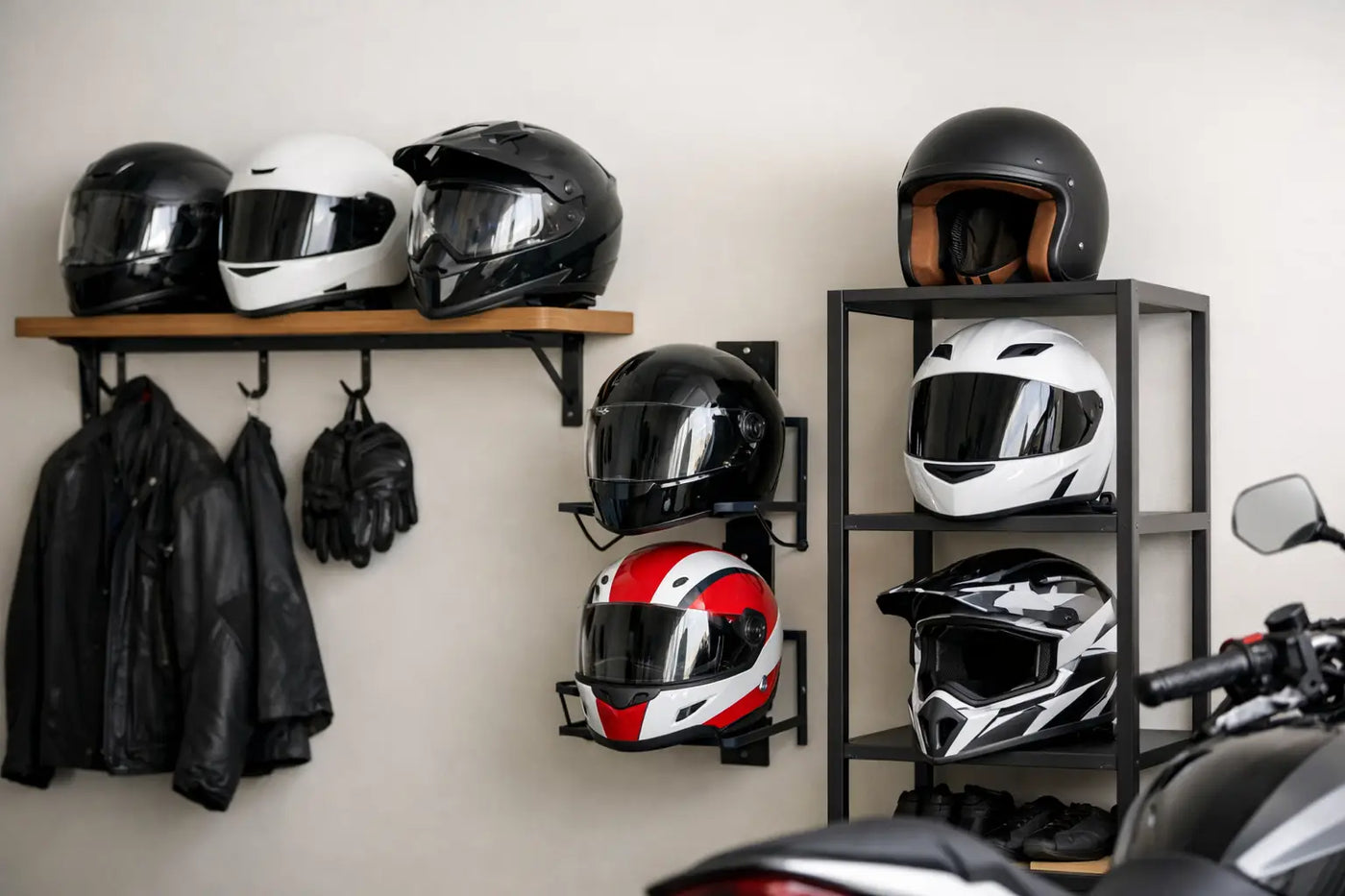
A helmet tossed on a workbench, balanced on a bike seat, or buried under jackets is a fast way to scratch the shell, crush the liner, and turn good gear into beat-up gear. If you need a real helmet storage solutions example, the answer depends on where you ride, how many helmets you own, and whether your setup needs to look clean in the house or just work hard in the garage.
Why helmet storage matters more than most riders think
A helmet is not just another piece of gear you can shove anywhere. The shell takes hits from drops and hard surfaces. The liner can absorb sweat, dust, and garage grime. Face shields get scratched by almost nothing. That means bad storage is not just messy - it can shorten the life of expensive gear.
Good storage does three jobs at once. It protects the helmet shape, keeps the inside cleaner between rides, and makes your grab-and-go routine faster. If your helmet, gloves, and jacket are always in the same place, you waste less time hunting for gear and more time getting wheels down.
There is also the style factor. A clean row of helmets on a wall rack or a solid garage shelf looks a whole lot better than gear piled in a corner. For a lot of riders, storage is part function and part statement.
A practical helmet storage solutions example by space
The best helmet storage solutions example is not one universal setup. An apartment rider with one full-face helmet needs something very different from a two-bike household with modular, half, and passenger helmets stacked up everywhere.
Wall-mounted helmet racks
For most riders, wall storage is the strongest all-around move. A wall rack gets the helmet off the floor, keeps it visible, and turns dead wall space into working space. This setup works especially well in garages, mudrooms, gear rooms, and entryways.
The main advantage is efficiency. You can hang the helmet at eye level, keep your gloves underneath, and mount a small shelf above for keys, sunglasses, and your comms charger. It feels organized without taking up floor space.
The trade-off is placement. If the rack sits in direct sunlight, near a heater, or in a damp garage corner, you are solving one problem and creating another. Heat and moisture are not your friends. Pick a dry, shaded spot with decent airflow.
Open shelves for quick access
A shelf system works well if you own multiple helmets or want a cleaner display. Open cubbies or wide shelves let you store full-face, modular, and half helmets without stressing straps or balancing them awkwardly.
This is a strong option for riders who rotate gear by season or bike type. One shelf can hold your daily rider, another can hold a passenger helmet, and another can keep a backup lid ready for road trips. It is simple, fast, and easy to scale.
The downside is dust. Open shelving looks sharp, but helmets sitting out in a garage will collect dirt faster than you think. If your storage area is dusty, you may want helmet bags or soft covers even on a shelf setup.
Helmet hooks and hangers
Hooks are the budget play. They are cheap, easy to install, and better than dropping your helmet on a bench. For tight spaces, they can absolutely get the job done.
But this is where details matter. Hanging a helmet by its strap for long periods is convenient, but not every rider loves it as a long-term method. A wide, helmet-shaped hanger or cradle is usually a better call than a narrow hook that puts all the pressure in one spot. If you go with hooks, choose heavy-duty hardware and avoid anything flimsy.
Cabinet or locker storage
If you want gear hidden, cabinets and lockers are the cleanest answer. This is especially useful inside the house, in shared spaces, or in a garage where dust, pets, and clutter are a constant fight.
A cabinet keeps helmets cleaner and protects them from accidental bumps. It also helps if your riding gear collection keeps growing and you want a more controlled setup. Add ventilation or leave a little airflow space if you store helmets after a ride. Locking away a sweaty helmet in a sealed box is a good way to trap odor.
Helmet bags for travel and backup storage
A helmet bag is not a full storage system on its own, but it is a smart add-on. If you carry a spare helmet, travel to rallies, or store seasonal gear, a padded bag protects the finish from scratches and keeps dust off.
This works best paired with another setup. Bag the helmet, then place it on a shelf or in a cabinet. On its own, a helmet bag tossed into a closet can still lead to the helmet getting crushed by heavier gear.
What a strong home setup looks like
If you want one helmet storage solutions example that fits most American riders, here is the sweet spot: a wall rack mounted in a dry garage or entry area, a shelf above it, and a small tray or bin underneath for gloves, glasses, and ear protection.
That setup wins because it handles the full routine. Your helmet stays protected and easy to grab. Your small essentials stop wandering off. Your gear looks like it belongs to somebody who actually rides, not somebody who piles everything wherever it lands.
If you have more than one rider in the house, duplicate the station instead of cramming everything together. Separate hooks, separate shelves, separate bins. Shared storage sounds efficient until one person is digging through the other rider's gear every weekend.
How to choose the right storage for your riding life
Start with your space. Apartment riders usually need vertical storage or a compact shelf near the door. Garage riders have more flexibility, but they also deal with more dust, heat swings, and clutter.
Then think about helmet type. Full-face and modular helmets need more room and benefit from sturdier support. Half helmets are easier to stash, but they still need protection from scratches and dirt. If you run tinted or mirrored shields, careful storage matters even more.
Usage matters too. Daily riders need convenience first. Weekend riders may care more about long-term protection. If you ride in all weather, airflow becomes a bigger deal because damp liners need time to breathe.
And be honest about your habits. If you know you will never zip a helmet into a bag after every ride, skip the high-maintenance solution. The best setup is the one you will actually use every single time.
Common storage mistakes that wreck good gear
The biggest mistake is leaving a helmet on the motorcycle. It looks convenient, but it exposes your gear to heat, sun, theft, dust, and accidental drops. Another bad move is storing a helmet on the floor, where it gets kicked, stepped around, or knocked over by tools and boots.
Riders also underestimate moisture. Putting away a damp helmet in a closed trunk, tote, or cabinet can lead to odor and breakdown over time. Let it air out first. Even premium gear needs a chance to dry.
One more mistake is overcrowding. If your shelf is jammed with helmets, gloves, cleaners, and random garage junk, it is not really storage. It is just a neater pile. Give the helmet enough room that you can set it down and pick it up without scraping it against something else.
Small upgrades that make storage work harder
Good storage gets even better with a few practical add-ons. A soft helmet liner cover helps with dust. A visor pouch protects extra shields. A boot tray underneath the rack keeps floor grime under control. Even a simple LED light over your gear station can make early-morning rides easier.
This is also where style can come into play. A black steel rack, wood shelf, and clean hardware can give your setup a hard-edged garage feel without looking sloppy. That matters if your gear room doubles as your workshop or hangout space.
For riders building out a full station, pairing helmet storage with jacket hooks, glove bins, and bag storage creates a real system instead of a one-item fix. That is usually the smarter buy in the long run. One organized zone beats five random storage spots spread across the house.
The right helmet storage solutions example is the one you use
There is no tough-guy bonus for treating expensive gear like it is disposable. The right helmet storage solutions example is simple: keep it off the floor, away from heat and moisture, and in a spot that matches how you actually ride. Build a setup that protects your lid, cuts the clutter, and keeps your gear road-ready every time you reach for it.
If your current system is a chair in the corner or a shelf full of chaos, fix that first. Clean gear, protected gear, and ready-to-roll gear always beats replacing a helmet before you should have to.

No comments yet. Be the first rider to weigh in.