
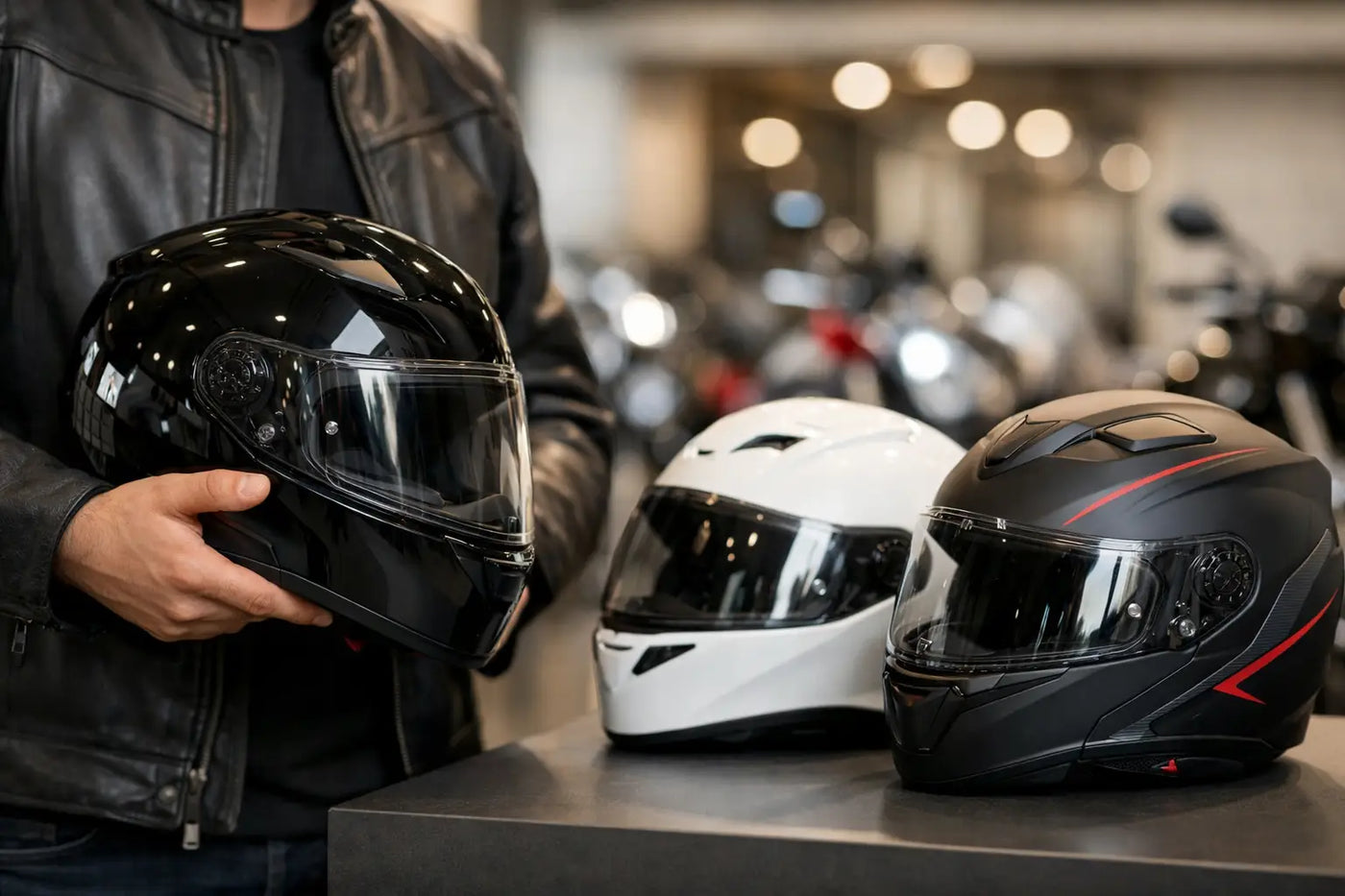
A bad helmet tells on itself fast. It pinches your forehead, lifts at speed, howls in the wind, or leaves you second-guessing every mile. If you're figuring out how to choose motorcycle helmet gear that actually protects you and feels right on the road, the answer is not grabbing the first shell that looks tough. Fit, certification, riding style, and helmet shape matter more than flashy graphics every single time.
How to choose motorcycle helmet without getting burned
A helmet is not just another piece of biker gear. It is the one item you do not want to gamble on. Riders usually shop by looks first, then regret it later when the helmet turns every ride into a headache. The smart move is to start with protection and fit, then lock in the style that matches your machine and your road attitude.
Price matters, sure, but cheap and solid are not always the same thing. A higher price can get you better liners, less wind noise, stronger ventilation, and lower weight. Still, some mid-range helmets punch above their class. The point is to buy for your actual ride, not for a fantasy version of it.
Start with the right helmet type
The first call is simple - what kind of riding do you actually do? A full-face helmet gives you the most coverage. That makes it the go-to choice for highway riders, commuters, sport riders, and anyone who wants maximum face and chin protection. If you spend real time at speed, full-face is usually the strongest play.
A modular helmet splits the difference. It gives you full-face protection when closed, but the front flips up for gas stops, short breaks, or easier conversation. That convenience is real, especially for touring riders, but modular helmets are often heavier than standard full-face lids.
Open-face helmets give you more airflow and a classic look that works well on cruisers and around-town rides. The trade-off is obvious - less coverage for your face and chin. Half helmets strip it down even further. Some riders love that freedom, but you are giving up a lot of protection in exchange.
If you ride dirt, adventure, or mixed terrain, off-road and ADV helmets deserve their own category. Those are built with different ventilation, peak design, and goggle compatibility. They are not always the best tool for long highway pavement miles.
Safety ratings are not optional
If you want to know how to choose motorcycle helmet protection the right way, start by checking certification before anything else. In the US, DOT certification is the legal baseline for street use. If a helmet does not meet DOT standards, keep moving.
You may also see ECE and Snell ratings. ECE is widely respected and common on quality street helmets. Snell is more demanding in certain impact testing areas and often shows up in racing-focused gear. None of these labels magically make one helmet perfect for everybody, but a properly certified helmet is the floor, not the ceiling.
Also, buy from a real retailer, not some mystery seller moving bargain-bin shells with questionable tags. Counterfeit or sketchy helmets are not where you save money.
Fit is where most riders get it wrong
A helmet can have great ratings and still be the wrong choice if it does not fit your head. A proper fit should feel snug all around without creating sharp pressure points. It should not slide around when you shake your head, and it should not lift too easily from the back.
Too loose is bad news because the helmet can shift during a crash. Too tight is not tough - it is just miserable. If it leaves hot spots on your forehead after a few minutes, that is not a break-in issue. That is a bad fit.
Head shape matters more than a lot of riders realize. Some helmets fit rounder heads better. Others are built for intermediate oval or long oval head shapes. If one brand feels wrong and another feels right in the same size, that is usually why.
The cheek pads should press firmly against your cheeks, especially in a full-face helmet, but they should not feel like they are crushing your jaw. When the helmet is fastened, try moving it side to side and up and down. Your skin should move with the liner. If the helmet shifts independently, it is too loose.
Measure first, then trust the fit
Use a soft tape measure around the widest part of your head, usually about an inch above your eyebrows. That gives you a starting size. Then compare that measurement to the specific brand's size chart, because sizing is not universal across every manufacturer.
This is where riders waste money online. A large in one helmet can fit like a medium in another. If you are between sizes, the better option often depends on shell shape and interior padding. A slightly snug helmet can break in a bit. A loose helmet almost never becomes a secure one.
If you wear glasses, factor that in too. Some helmets work better with eyewear channels. If you plan to use a balaclava or communication system, account for that before you buy.
Weight, noise, and comfort matter on long rides
A helmet can look mean and still wear you out after an hour. Heavy lids put more strain on your neck, especially on longer highway runs or if you ride in a more upright cruiser position where wind catches you harder. Lighter materials usually cost more, but the comfort payoff is real.
Wind noise is another factor riders ignore until it is too late. A poorly sealed helmet can roar at speed. That gets old fast. Better aerodynamics, tighter visor seals, and cleaner shell design can make a major difference. Even then, noise levels depend on your bike, windshield setup, and riding position. What works great on one machine may sound rough on another.
Ventilation also matters more than you think. If you ride in hot states or spend long hours in the saddle, airflow can make the difference between a solid ride and a miserable one. More vents are not automatically better if they whistle or leak, but a well-vented helmet earns its keep.
Shield options and visibility
A clear, wide field of view is not a luxury. It is part of staying alive in traffic. Look for a helmet that gives you good peripheral vision and a shield system that is easy to operate with gloves on.
Some riders want an internal drop-down sun visor for convenience. Others prefer swapping shields or running sunglasses under the helmet. Neither is wrong. It depends on how and where you ride. If you do a lot of sunrise, sunset, or all-day riding, quick light management is a real benefit.
Anti-fog performance is worth paying attention to if you ride in cold weather, rain, or shoulder seasons. A shield that fogs up every stoplight becomes a safety problem, not just an annoyance.
Match the helmet to your bike and riding style
This is where function and style meet. A stripped cruiser rider may want the clean profile of an open-face or full-face helmet with a darker, more aggressive look. A long-distance touring rider may care more about weight, quiet, and speaker cutouts. A city commuter might prioritize visibility, ease of use, and ventilation.
Your helmet should match the miles you actually ride. If most of your time is spent on highways, pick protection and comfort over nostalgia. If you mostly roll local roads at lower speeds, you may accept different trade-offs. Just be honest about your habits.
Looks still matter. Riders want gear that fits their identity, and there is nothing wrong with that. Just do not let paint, graphics, or skull-heavy attitude talk you into a bad shell with a worse fit.
When budget matters, spend smart
Not every rider wants to throw premium money at a helmet, and that is fair. You can still get solid protection without going top shelf. The key is knowing where not to cut corners. Certification, fit, retention system, and basic build quality come first.
What usually separates budget from premium is refinement. More expensive helmets often give you lower weight, better interior materials, stronger ventilation design, less wind noise, and nicer shield mechanisms. Those things matter, especially if you ride often, but not every rider needs top-tier race tech.
If you are building your kit from scratch, it makes sense to buy the best helmet you can reasonably afford, then build out the rest of your gear around it. Road-tested protection is never a throwaway purchase.
Replace it when it is time
Helmets do not last forever. If you crash in one, replace it. Even if the outer shell looks fine, the impact liner may have done its job and absorbed damage you cannot see.
Age matters too. Materials break down from sweat, heat, UV exposure, and everyday wear. If the liner is getting loose, the straps are worn, or the fit has changed, it is time to stop pretending and shop for a new one. Buying fresh gear from a trusted source is a smarter move than hanging onto an old helmet just because it still looks decent on a shelf.
A good helmet should feel like part of the ride, not something you fight with every mile. Get the fit right, buy for the roads you really ride, and choose protection before hype. If you do that, the style comes easy after.


No comments yet. Be the first rider to weigh in.