
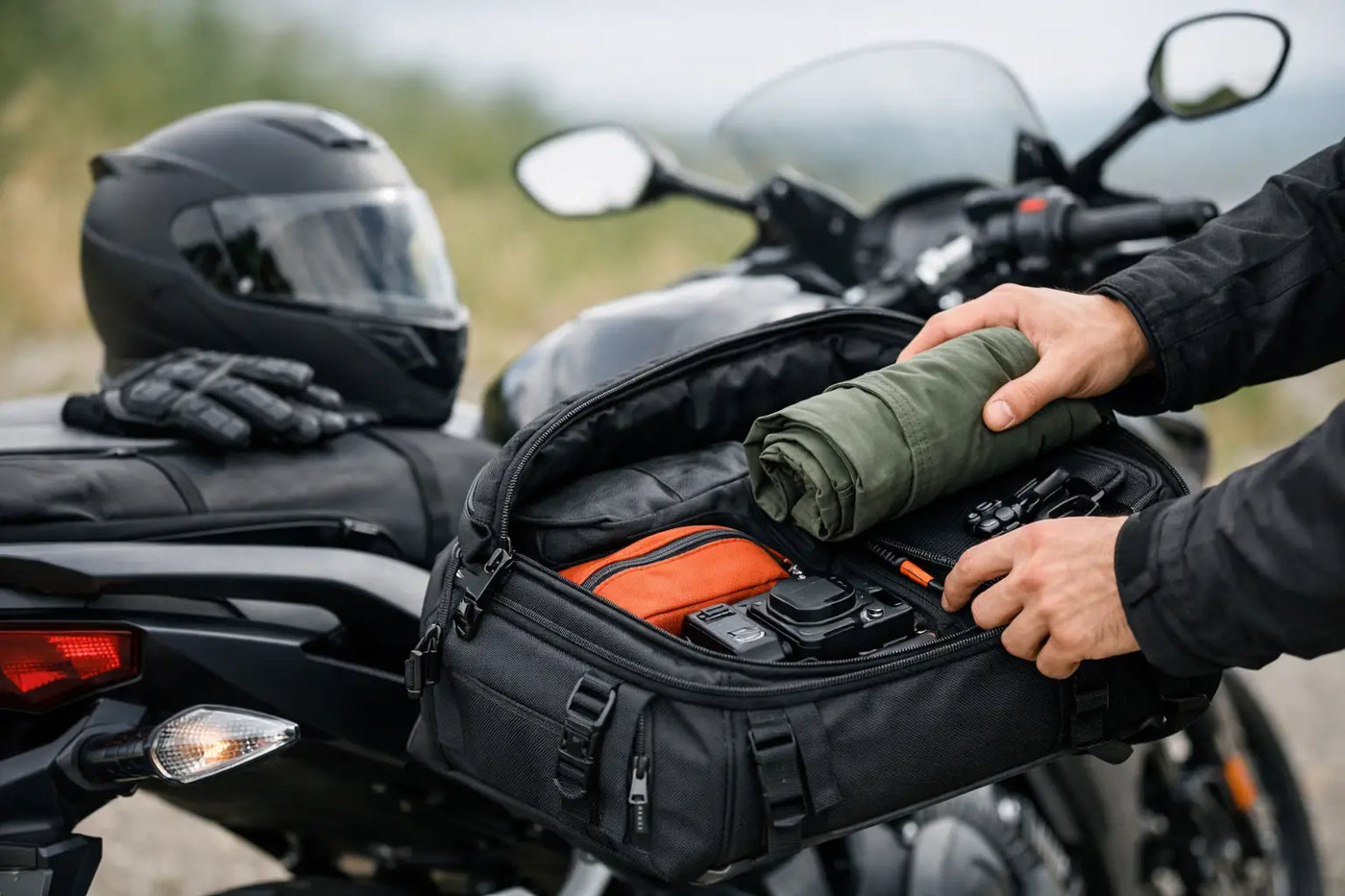
A tail bag packed wrong will remind you fast. You feel it in the first few miles - the bike gets a little sloppy, the bag shifts under braking, and the one thing you need ends up buried under everything else. If you're figuring out how to pack a motorcycle tail bag, the goal is simple: keep the bike balanced, keep your gear dry, and keep your must-have items easy to grab without tearing the whole bag apart on the side of the road.
A good tail bag can carry a lot, but it is not a black hole for random gear. The smartest pack jobs come down to weight, access, and weather. Get those three right, and your ride feels cleaner from the first stoplight to the last gas stop.
Start with what the bike can handle
Before you pack anything, look at your setup honestly. A tail bag sits high and rearward, which means every extra pound has more effect than weight carried lower on the bike. That's why overpacking a tail bag feels worse than stuffing the same load into saddlebags.
Check the bag's size, your rear seat or rack space, and how solidly it mounts. If the bag can wiggle before you load it, it will move even more once it's full. Cinch every strap down first, then pack to the bag, not to your wish list.
This is also where rider type matters. A commuter packing lunch, rain gear, and a charger has a different job than someone heading out for a two-day ride with tools, layers, and overnight basics. The method stays the same, but the loadout changes.
How to pack a motorcycle tail bag for balance
The heaviest items should sit low, centered, and as far forward in the bag as possible. That keeps the weight closer to the bike's center and reduces the top-heavy feeling that can show up in corners or quick lane changes. If you throw heavy gear at the top or toward the rear edge, the bike can feel vague and unsettled.
Think about it like this: tools, tire repair kits, compact locks, and dense electronics go at the bottom. Lighter gear like gloves, neck gaiters, extra shirts, or a compact rain shell can sit above or around the heavy stuff. Soft items also help fill dead space and stop the load from shifting.
You do not need to cram the bag rock hard. In fact, that usually makes access worse and can put stress on zippers. You want a tight, stable load, not a bag swollen to the breaking point.
Pack by priority, not by category
A lot of riders make the same mistake. They pack everything neatly by item type, then realize the most-used gear is trapped under the least-used gear. Tail bag packing works better when you think in layers of access.
The first layer should hold the stuff you may need without warning. That usually means rain gear, an extra visor wipe, earplugs, registration copies if you carry them there, and maybe a charging cable or power bank. The next layer can hold things you might need at a stop, like snacks, water, a hat, or an extra base layer. The bottom layer is for the gear you hope you won't need until the end of the day, like tools, repair gear, and backup items.
That approach matters more than perfect organization. On the road, fast access beats pretty packing.
What should go in a motorcycle tail bag
For most day rides, a tail bag should cover problems, weather, and comfort. That means a basic tire repair kit, a compact tool roll, rain gear, a spare pair of gloves if conditions might change, a phone charger, and a few personal items. If you're riding longer, add a clean shirt, socks, and whatever small essentials you need for the night.
What should stay out? Bulky, awkward, or fragile items that do not handle vibration well. A tail bag is also not the best place for loose heavy objects unless they are secured inside smaller pouches. If metal gear is bouncing around in there, it can wear through liners, damage electronics, and make the whole load unstable.
A simple fix is to use smaller internal bags or packing cubes. One for tools, one for electronics, one for personal gear. You are not trying to make it fancy. You are trying to keep the load from turning into a yard sale every time you unzip the bag.
Weatherproofing matters more than most riders admit
A lot of riders trust the label too much. Water-resistant is not waterproof, and even a solid tail bag can let in moisture through zippers and seams after a long ride in ugly weather. If it absolutely must stay dry, protect it twice.
Put electronics, documents, and spare clothes inside dry bags or heavy-duty zip pouches before they go into the tail bag. That gives you a second line of defense if the weather turns bad or the bag takes spray from the rear tire. It also makes unloading faster when you reach a hotel, campsite, or garage.
If your bag comes with a rain cover, keep that cover somewhere easy to reach. Do not bury it under half your gear. If rain shows up, you want it in seconds, not after a full roadside unpack.
How to avoid the sloppy, shifting load
Movement is the enemy. If the bag shifts, your confidence drops. If the contents shift inside the bag, the bike can feel inconsistent, especially during braking or quick transitions.
Fill empty space with soft gear so the load stays compressed. Tighten internal straps if your bag has them. After the bag is packed, close it and shake it with both hands. If you hear clunking or feel weight rolling around, repack it.
Then do one more check on the bike itself. Make sure the bag does not interfere with your seating position, passenger space if needed, turn signals, or exhaust clearance. On some bikes, a poorly placed tail bag can creep backward or sag toward hot parts. That is not a small issue.
The best packing setup for day rides vs weekend trips
For a day ride, keep it lean. Overpacking on a short run just makes the bike heavier and your stops slower. Carry the problem-solvers first, then a few comfort items. If the weather is stable and you know your route, you can strip it down even further.
For a weekend trip, the tail bag should carry your essentials, not your whole garage. This is where discipline pays off. Pack one change of clothes, one set of weather gear, basic tools, charging gear, and personal items. If you need more than that, it may be time to split the load with saddlebags or a backpack, though backpacks come with their own comfort trade-offs on longer rides.
The best setup depends on the bike and the rider. A cruiser with extra storage gives you more room to spread weight around. A stripped-down bike demands a tighter plan. There is no tough-guy prize for carrying too much in the wrong place.
Small details that make a big difference
Use the outer pockets for truly small, frequently needed items only. If you stuff them with heavy gear, they can throw off the bag's shape and make zippers work harder. Keep those pockets for things like a visor cloth, wallet, chapstick, or gate pass.
Keep anything valuable out of sight when parked. A tail bag is convenient, but convenience cuts both ways. If you are stepping away from the bike, either take key items with you or use a bag with lockable zipper pulls and secure mounting.
It also helps to build a repeatable packing routine. Put the same kinds of items in the same places every ride. That way, when you need something fast, your hand goes right to it. Riders who do this waste less time at stops and forget fewer essentials.
If you are shopping for road-ready luggage, American Legend Rider offers motorcycle bags and riding gear built for riders who want function without giving up style. The right bag helps, but smart packing is what makes it earn its keep.
How to pack a motorcycle tail bag without overthinking it
Keep the heavy stuff low and forward. Keep the essentials near the top. Waterproof what matters. Eliminate empty space so nothing shifts. Then test the bag before you roll out.
That last part matters. Load the bike, sit on it, and take a short ride around the block if the setup is new. A bag that looks perfect in the garage can feel different once you're braking, turning, and hitting rough pavement. Better to fix it before the highway does it for you.
A well-packed tail bag should disappear into the ride. You should not be thinking about it every mile. Pack it right once, build your routine, and every run after that gets smoother.

No comments yet. Be the first rider to weigh in.