
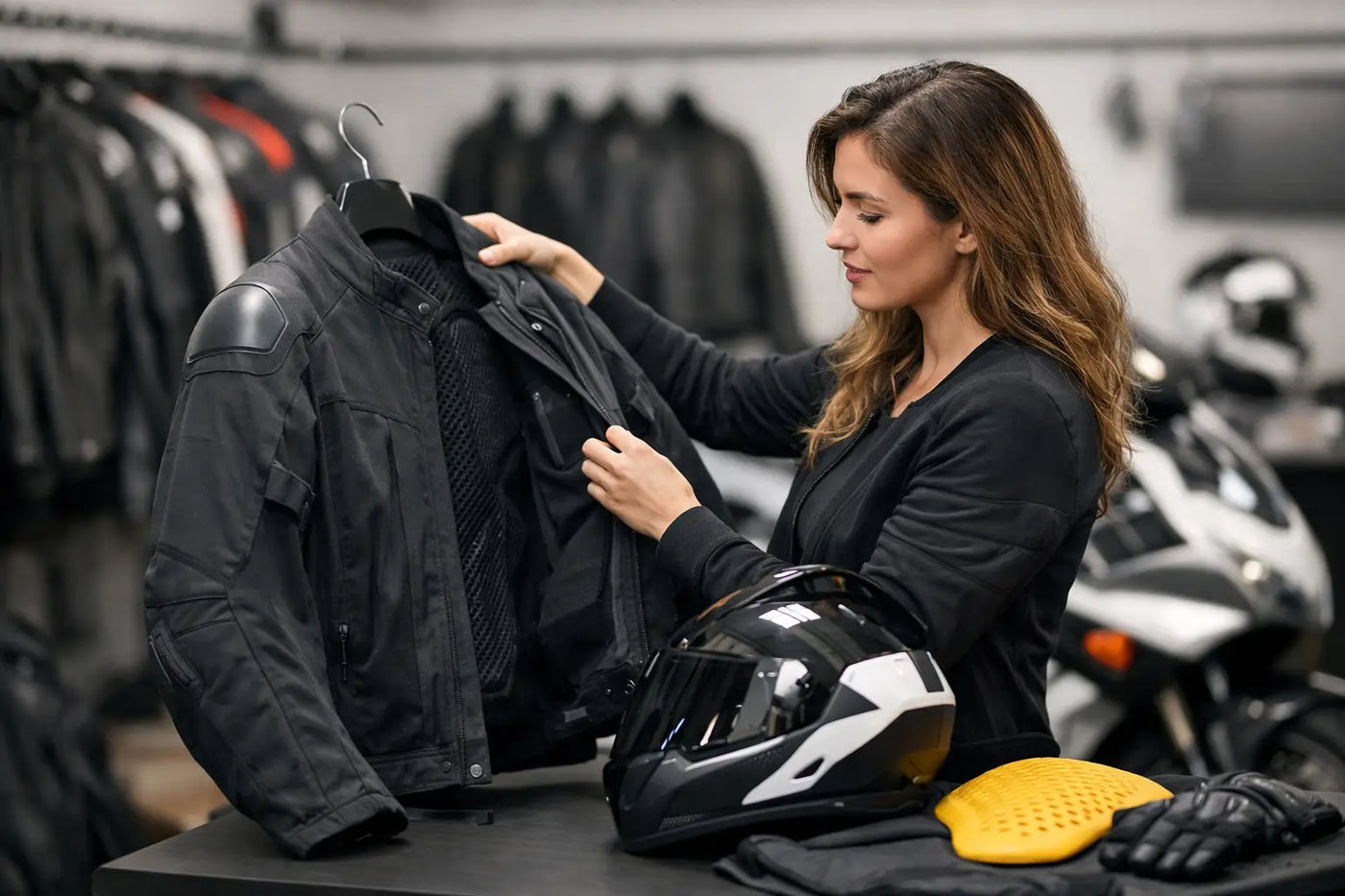
A jacket can look mean on the rack and still fail you the second you throw a leg over the bike. That is where a lot of riders get burned. A women's armored motorcycle jacket is not just about style, and it is definitely not just a smaller version of a men's cut. If the fit is off, the armor shifts. If the material is weak, the road wins.
For women who ride, the right jacket has to do three jobs at once. It needs to protect on impact, hold up against abrasion, and feel good enough to wear for real miles. If it pinches at the shoulders, bunches at the waist, or rides up every time you lean forward, it will not matter how tough the marketing sounds.
What a women's armored motorcycle jacket should actually do
At the base level, a women's armored motorcycle jacket needs built-in impact protection in the shoulders and elbows. Many strong options also include a back protector or at least a pocket for one. That armor should sit where it belongs when you are in a riding position, not when you are standing in front of a mirror.
Abrasion resistance matters just as much. Leather still has a loyal following for a reason. It is tough, proven, and built for riders who want that classic road look with real protection behind it. Textile jackets have come a long way too, especially for riders who want lighter weight, more airflow, weather resistance, or a lower price point.
Then there is visibility, weather coverage, ventilation, storage, cuff closure, collar comfort, liner setup, and all the little details that decide whether you love the jacket or leave it hanging in the garage. A good jacket handles the ride. A bad one becomes one more thing you fight all day.
Fit comes first in a women's armored motorcycle jacket
This is where smart riders separate good gear from wasted money. Armor only works right when it stays in place. That means the jacket has to fit your shoulders, chest, waist, and arms without turning into a straightjacket.
Women riders usually deal with a wider range of fit issues than men because body shapes vary more from brand to brand sizing. Some jackets are cut for an athletic build. Others make more room through the bust and hips. Some run short for cruiser riders who like a cleaner silhouette. Others are longer and better for more aggressive riding positions.
The best move is to judge fit from the bike, not the fitting room. Reach forward like you are on the bars. Bend your elbows. Check where the shoulder armor lands. Make sure the elbow armor still covers the point of the elbow when your arms are bent. If the jacket pulls across the back or lifts too high at the waist, keep looking.
A snug fit is good. A restrictive fit is not. You want enough room for a base layer or hoodie if you ride in cooler weather, but not so much room that the armor floats around. It depends on how and where you ride. A city commuter may want lighter layering and easy movement. A highway rider putting in longer miles may want a more secure, locked-in feel.
Leather or textile depends on your ride
There is no tough-guy answer that works for everyone. Leather jackets still earn respect because they offer excellent abrasion resistance, long-term durability, and a timeless biker look that never needs explaining. For cruiser riders, club-style riders, and anyone who wants that heavy-duty road presence, leather keeps winning.
The trade-off is weight, heat, and less flexibility in changing weather. A leather jacket in peak summer traffic can get brutal fast unless it is built with perforation or venting.
Textile jackets shine when versatility matters more. They are often lighter, easier to break in, and packed with practical features like zip-out liners, waterproof membranes, intake vents, and more adjustment points. For touring, commuting, and mixed-weather riding, textile often makes more sense.
The trade-off there is feel and, sometimes, image. Some riders simply prefer the look and confidence of leather. Others want function first and do not care what tradition says. Neither choice is wrong. The right choice matches your bike, your climate, and your riding habits.
Armor matters more than branding
A sharp logo does not protect your shoulder. Good armor placement and quality construction do. At minimum, look for CE-rated armor in the shoulders and elbows. A back protector is a strong upgrade if it is not already included.
You also want to look at the armor itself. Is it low-profile and flexible, or stiff and bulky? Does it sit flat and stay put? Some riders want softer armor for comfort on long rides. Others prefer a more structured feel. There is no perfect answer, but there is a bad one - armor that feels so awkward you stop wearing the jacket.
Check the seams too. Reinforced stitching in key zones matters. So do sturdy zippers and closures that do not feel cheap in the hand. If the shell material is strong but the build quality is weak, the jacket is still a gamble.
Weather and season can make or break the jacket
A lot of riders buy with their eyes and regret it by the second season. That black leather jacket may look killer in October and sit untouched in July. That ultra-light mesh option may feel great in Arizona and leave you cold everywhere else.
If you ride in one season, buy for that season. If you ride most of the year, versatility matters more. Removable liners, zippered vents, and adjustable cuffs can stretch one jacket across a lot more miles. Waterproofing is useful, but there is always a trade-off. Fully waterproof jackets can run hotter. Highly ventilated jackets usually give up some weather protection.
This is where being honest helps. If you mostly do short local rides in warm weather, heavy four-season gear may be overkill. If you ride through changing conditions, spending more for adaptability usually pays off.
Style still counts, but it cannot carry the whole load
Let us be real. Riders care how gear looks. A jacket is part protection, part identity. That does not make style shallow. It just means the jacket has to hit both sides - road function and rider attitude.
Some women want a clean black leather look with minimal branding. Some want quilted panels, a sharper fashion cut, or hardware that leans custom. Some prefer a no-nonsense textile jacket that looks built for the job and nothing else. The point is not to ignore style. The point is to stop letting style outrank protection and fit.
A jacket that looks great but feels wrong will stay in the closet. A jacket that protects well but matches your riding style is the one you will keep reaching for.
Small details separate a decent jacket from a great one
This is usually where buyer satisfaction is won or lost. Check the cuffs. If they are hard to close with gloves on, that gets old fast. Check the collar. If it rubs your neck raw, you will notice every mile. Look at the pockets and vents. Make sure they are placed where they are useful, not just added for sales copy.
Connection zippers are worth considering if you wear riding pants. A jacket-to-pants connection can help keep coverage in place during a slide. Reflective hits are another feature some riders overlook until they are riding after dark and wish they had them.
If concealment storage, reinforced inner pockets, or biker-specific styling matter to you, shop for those features on purpose. The right gear should fit your riding life, not force you into someone else's idea of it.
Where riders usually get it wrong
The most common mistake is buying too loose because it feels comfortable standing still. The second is buying too cheap and expecting premium protection. The third is buying for looks first and function second.
A better approach is simple. Start with fit and armor. Then decide on leather or textile. Then narrow by season, riding type, and style. If you shop that way, you are a lot less likely to end up with a jacket that looks tough and rides weak.
At American Legend Rider, that mindset matters because riders are not shopping for costume pieces. They want gear that holds up, looks right, and earns its place on the road.
The right jacket should make you feel ready before the engine even fires. Not dressed up. Not boxed in. Just protected, dialed in, and set to ride your way.

No comments yet. Be the first rider to weigh in.