
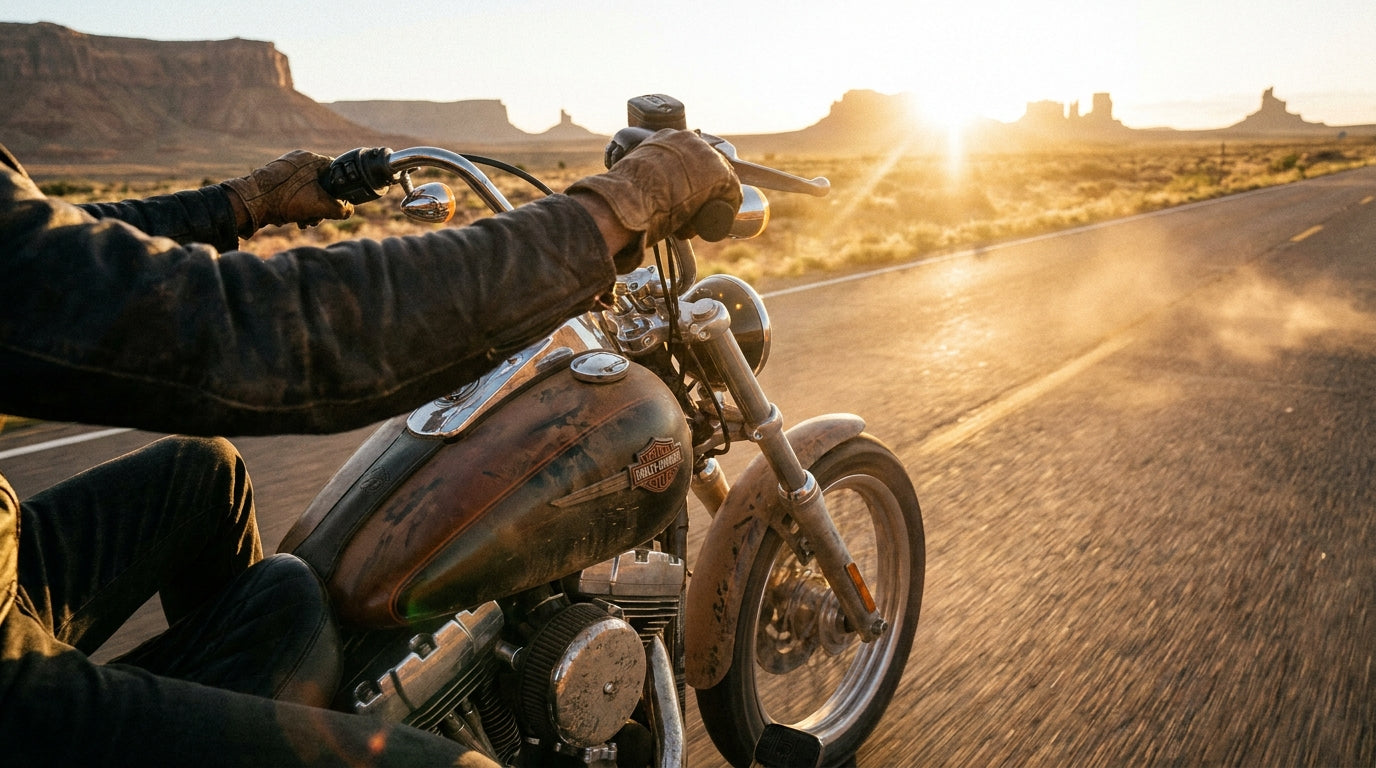
Most riders spend weeks picking a helmet and days choosing a jacket, then grab motorcycle gloves as an afterthought at the checkout counter. That is backwards. Your hands hit the ground first in roughly 80% of motorcycle crashes, according to the Hurt Report data. The wrong gloves, or no gloves at all, can mean broken knuckles and torn-up palms that keep you off the bike for months.
The right pair of leather motorcycle gloves protects your grip, your bones, and your comfort on every ride. This guide covers how to pick leather motorcycle gloves that fit correctly, how to break them in without damaging the hide, and which styles match different riding situations. You will also get a side-by-side comparison of full-finger vs fingerless designs, plus the five most common buying mistakes that waste money.
Why Leather Beats Textile for Motorcycle Gloves
Cowhide leather scores roughly 3.5 seconds of abrasion resistance at highway speed in Cambridge testing, while most nylon and polyester textiles last only 0.8 to 1.2 seconds. That gap determines how much skin you keep when your palm slides across asphalt at 45 mph.
Leather also molds to your hand shape over time. After 500 to 600 miles of riding, a well-made cowhide glove fits like a second skin. Textile stays the same from day one to day 300, which sounds fine until you realize that "the same" usually means slightly loose in the fingers and sloppy around the wrist.
The trade-off is maintenance. Leather dries out without occasional conditioning, and it takes longer to dry after getting soaked. But for grip, abrasion resistance, and long-term fit, leather motorcycle gloves win the matchup for riders who do mostly fair-weather cruising, commuting, or touring.
Cowhide vs Goatskin
Most motorcycle leather gloves use cowhide, but goatskin is gaining ground. Goatskin weighs about 20% less at the same thickness and breaks in faster. It also stays softer through temperature swings. The downside is durability. Cowhide outlasts goatskin by roughly a full season of heavy use. If you ride 10,000-plus miles a year, cowhide is the better investment. For lighter use, goatskin's comfort advantage matters more.
How to Size Leather Motorcycle Gloves
Sizing is where most online glove purchases go wrong. Leather runs tighter than textile when new, then stretches 5 to 10% after break-in. If a new leather glove feels perfectly comfortable on day one, it will be floppy within a month.
Here is the measurement that matters most: wrap a tape measure around your dominant hand just below the knuckles, palm flat, fingers together. A hand circumference of 8.5 inches typically maps to a size Medium in most brands. But sizing varies between manufacturers, so always check the specific chart before ordering.
The handlebar test works best for in-person fitting. Close your fist around a grip or broomstick. The leather should feel snug with zero bunching in the palm. Your fingertips should touch the ends of the glove fingers without folding over. Even a quarter-inch of extra length in the fingers causes the material to roll under your grip. That kills throttle control and creates fatigue after an hour of riding.
If you land between two sizes, go with the smaller one. The leather will stretch to your hand within a few hundred miles. Textile will not.
For a deeper look at how protective gear should sit on the body, including hands and wrists, check out our motorcycle armor placement guide.
Breaking In New Leather Motorcycle Gloves
A stiff pair of new cowhide gloves needs 300 to 500 miles before the leather softens and the seams settle into place. You can speed this process up, but skip the internet tricks involving soaking them in water. Waterlogging leather breaks down the fibers and causes surface cracks within weeks.
The right approach:
- Apply a thin coat of leather conditioner (Lexol or Bickmore Bick 4 both work well) the night before your first ride. Let it absorb fully overnight.
- Wear the gloves around the house for 30 to 60 minutes. Flex your fingers, grip objects, make fists. This starts shaping the palm to your hand before you hit the road.
- Ride in dry conditions for the first few outings. Heat from your hands plus the natural flexing motion softens the leather faster than any shortcut.
- After roughly 200 miles, apply another light coat of conditioner. The leather is shaped by now but still needs moisture to stay flexible.
One technique that speeds break-in without any risk: wear thin liner gloves inside the leather for the first 100 miles. The extra friction from the liner accelerates the stretch in the finger channels and palm area.
Avoid leather softening sprays that contain silicone. They make the surface slippery, which defeats the purpose of a riding glove that needs to grip controls.
Full-Finger vs Fingerless Leather Gloves
This is one of the most common debates in the cruiser and chopper crowd. Both styles have a place, but the protection gap is real. Here is how they compare:
| Feature | Full-Finger Leather | Fingerless Leather |
|---|---|---|
| Abrasion protection | Full coverage including fingertips | Palm and knuckle only |
| Airflow | Moderate (depends on perforation) | Excellent, open fingers vent heat |
| Throttle feel | Good after break-in | Excellent from day one |
| Touch screen use | Requires conductive fingertips | Works naturally |
| Crash protection | High | Low to moderate |
| Best for | Touring, highway, cold weather | Short cruises, city, warm weather |
| Price range (quality cowhide) | $40 to $120 | $25 to $70 |
Full-finger gloves are the safer choice for any ride over 30 minutes or at highway speed. Fingerless leather gloves work well for short local rides where airflow matters more than full slide protection. A quality fingerless pair still covers your palms and knuckles, which is the most common impact zone in a low-speed drop.
For riders who prefer the fingerless look but want extra protection, hard knuckle armor panels add crash resistance without changing the classic style. Some leather motorcycle gloves now come with molded knuckle shells built into an otherwise traditional cut.
Best Leather Motorcycle Gloves by Riding Style
Leather motorcycle gloves are not one-size-fits-all when it comes to riding discipline. The right pair depends on where and how you ride. Here is what works for each type.
Cruiser and Chopper Riders
Classic short-cuff cowhide or goatskin, usually unlined for a warm-weather feel. Look for gel palm padding and a simple wrist snap closure. The Biltwell Borrego is a strong example at under $60, made from goatskin with hidden knuckle padding in a clean retro design. Most quality cruiser gloves run $45 to $85.
Touring Riders
Gauntlet-style gloves with a long cuff, cinch strap, and waterproof liner. The extended cuff prevents wind and rain from blowing up your jacket sleeves at speed. Gloves with a Hipora or similar waterproof membrane add rain protection without the bulk of rubber-coated fabric. Budget $70 to $130 for a solid touring leather glove that will last multiple seasons.
Sport and Street Riders
Pre-curved finger construction, hard knuckle protectors, and double-stitched palm reinforcement define this category. The Alpinestars SP-8 v3 is a well-known option at around $100, combining full-grain leather with synthetic reinforcement at the palm heel. Sport gloves prioritize impact absorption and grip at high lean angles where your knuckles can brush the tarmac.
Cafe Racer and Retro Riders
Short-cuff perforated leather, typically in brown or tan, with minimal visible armor. The look is clean and vintage, but the best options still include hidden knuckle padding underneath. Goatskin works especially well here because it develops a patina faster than cowhide, adding to the worn-in aesthetic that cafe racer riders want.
Knuckle Protection and Safety Features Worth Paying For
The knuckles and palm heel absorb the worst damage in a slide. Here are the protection features that actually matter in leather motorcycle gloves, and which ones you can skip.
Worth the Money
- Hard knuckle protectors. Carbon fiber or thermoplastic inserts rated CE Level 1 absorb roughly 35% more impact force than foam padding alone. Knox SPS knuckle inserts are the most common upgrade in mid-range gloves.
- Double or triple-stitched seams. Single-stitch gloves split at the finger base during slides. External seams provide the strongest construction because the thread sits outside the leather panel overlap.
- Reinforced palm heel. A second layer of leather or a Clarino synthetic patch at the palm heel protects the scaphoid bone. This is the most commonly fractured bone in motorcycle hand injuries, and a single layer of leather is not enough to prevent it at speed.
Nice but Not Critical
- Touchscreen fingertips. Convenient for GPS use, but the conductive layer wears out well before the glove does. Easier to pull off one glove when you need your phone.
- Visor wipe on the index finger. Helpful in rain, but a small rubber strip sewn on at home works just as well.
Skip It
- "Flame resistant" marketing on standard riding gloves. Unless you ride a top-fuel dragster, this adds cost without relevant protection for street riding.
- Excessive studs and metal hardware. Raised studs catch on controls and create pressure points inside the glove. They look tough but work against you on the bike.
5 Common Mistakes When Buying Motorcycle Leather Gloves
- Buying too large. The most frequent error. Riders pick a comfortable fit on day one and end up with floppy gloves after break-in. Leather stretches 5 to 10%. Start snug and trust the process.
- Ignoring cuff length for the ride type. Short-cuff gloves on a touring bike let cold air blast up your sleeves at 70 mph. Match cuff length to your riding position and typical speed.
- Choosing price over protection. A $15 pair from a no-name marketplace seller might use split-grain or bonded leather, which has less than half the abrasion resistance of full-grain cowhide. The gap between a $15 glove and a $50 glove is real and measurable. One protects you, the other is a costume.
- Never conditioning the leather. Leather is skin. Without moisture, it cracks and stiffens. A $5 bottle of Lexol applied every 3 to 4 months doubles the lifespan of any good glove.
- Using work gloves or fashion gloves for riding. General-purpose leather gloves lack reinforced seams, palm padding, and wrist retention. A fashion glove will slide right off your hand in a low-speed tip-over because it has no secure wrist closure.
If you are building out a full riding kit, our biker vest sizing guide covers how to get the right fit across all your leather gear.
Choosing the Right Pair for the Long Haul
The right leather motorcycle gloves should fit tight when new, soften within a few hundred miles, and protect your hands for years of riding. Whether you go full-finger for highway protection or fingerless for short cruises, genuine leather outperforms synthetic fabric in durability, grip, and long-term comfort.
Quality matters more than brand name here. Look for full-grain cowhide or goatskin, double-stitched seams, and hard knuckle protection. Avoid no-name marketplace gloves with unknown materials and no safety rating. One solid pair at $50 to $80 outlasts three cheap pairs and actually protects your hands when it counts.
If you are ready to find your pair, the leather motorcycle gloves at American Legend Rider is where to start. Real leather, real protection, built for actual riding.


No comments yet. Be the first rider to weigh in.