
A biker vest that looks mean on the hanger can turn into a bad buy the second you zip it over a hoodie and hit the bars. Too tight, and it binds across your chest and shoulders. Too loose, and it flaps in the wind, rides up in the seat, and hangs sloppy. If you're wondering how to size biker vest options the right way, the answer starts with how you actually ride, what you wear under it, and what kind of cut you're buying.
How to Size Biker Vest Without Guesswork
The biggest mistake riders make is buying a vest like it's a T-shirt. A biker vest has a job to do. It needs to sit right over your chest, leave room through the shoulders, stay comfortable in the saddle, and still look clean off the bike. That means the right size is not always the one you wear in casual clothes.
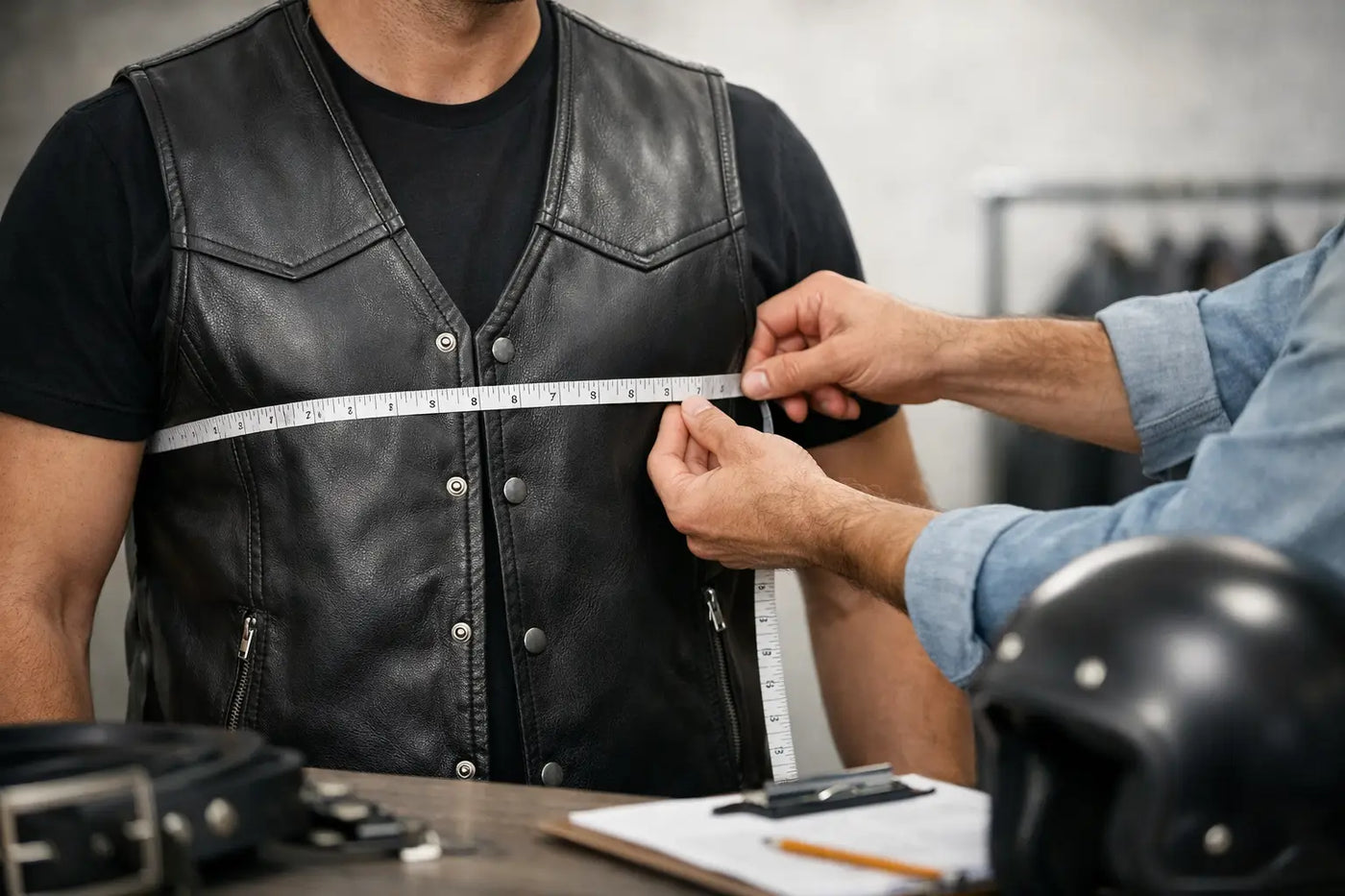
Start with your chest measurement. Wrap a soft tape around the fullest part of your chest, keep it level under your arms, and measure over a shirt you would normally wear under the vest. If you plan to layer over a hoodie, thermal, or riding flannel, measure with that on. That one step saves a lot of returns.
Your chest number matters more than your usual tagged size. Brands vary, especially across leather vests, denim cuts, club vests, and concealed-carry styles. One brand's XL can fit like another brand's large, so the tape measure beats guessing every time.
The chest fit comes first
A good biker vest should feel close, not restrictive. You want enough room to move your arms freely and reach the bars without the vest digging into your armpits or pulling across your back. If the front strains when snapped or zipped, it's too small. If the armholes gap wide and the body hangs like a poncho, it's too big.
For most riders, the sweet spot is a fit that follows your torso without squeezing it. You should be able to wear a base layer or light shirt comfortably. If your normal setup includes thicker layers, size for that reality, not for how it fits in front of the mirror in a tank top.
Back length matters more than people think
A vest can fit your chest and still feel wrong on the bike if the length is off. Too short, and it can look boxy and ride up when you're seated. Too long, and it bunches against the seat or beltline. Club-style vests usually sit around the belt area, while some traditional cuts run a little longer.
When trying a vest on, sit down like you're on your bike. Reach forward. If the vest jams up under your chin or pushes into your stomach, the cut may be wrong for your build even if the size seems close.
Measure for the Ride, Not Just the Look
Plenty of riders want a clean, fitted look, especially with leather or a club vest. Nothing wrong with that. But there is always a trade-off between a showroom fit and a road-ready fit.
If you ride in warm weather with only a T-shirt underneath, a close fit works fine. If you ride across seasons and throw a hoodie or flannel under your vest, you need more room. A vest that fits perfect over a tee can become useless in fall.
This is where your riding style matters. Cruiser riders who wear heavier layers may want a little extra room. Riders buying a vest mainly for rallies, events, or casual wear may prefer a trimmer cut. Neither is wrong. The right size depends on how you're going to use it.
Leather vs. denim sizing
Leather and denim do not behave the same way. Leather usually starts stiffer and may break in over time, but that doesn't mean you should buy it painfully tight. Break-in softens the feel. It does not magically fix a vest that is a full size too small.
Denim tends to have a more forgiving feel right away, but the cut still matters. Some denim vests sit looser through the body, while others are built with a more tailored shape. If you're between sizes, leather often pushes riders toward sizing up for layering and mobility, while denim may let you stay closer to your measured fit. Always check the cut before assuming the fabric tells the whole story.
Concealed-carry and utility vests need room
A concealed-carry biker vest is not just a style piece. Extra pockets, heavier lining, and carry compartments can affect how it fits. If you plan to actually use those pockets, especially inside carry pockets, don't size too aggressively. A super-tight fit can make pocket access awkward and print the shape of what's inside.
The same goes for utility-heavy vests with multiple inner pockets or thicker construction. More features can mean more bulk. Keep enough room for comfort and function.
How a Biker Vest Should Fit on Your Body
A solid fit shows up in a few obvious ways. The shoulder line should sit naturally without pulling. The front should close without strain. The armholes should allow movement without exposing half your side. The hem should land in a spot that works seated and standing.
If you're wearing the vest open most of the time, you still should not buy one that is oversized just because it won't be fastened often. An open vest that is too large can still shift, flap, and look off-balance. Open or closed, the frame of the vest should still match your torso.
Signs your vest is too small
You'll feel tightness across the chest and upper back first. Snaps may pull, the zipper may look stressed, and reaching forward may feel restricted. On the road, a too-small vest gets annoying fast. It can dig into your ribs when seated and make layering impossible.
Signs your vest is too big
The body will hang loose, the shoulders may droop, and the armholes can look oversized. Extra material may bunch when you sit or catch more wind at speed. Some riders size up thinking they need room for patches, but patches do not require a baggy fit. A vest can carry patches and still fit clean.
Sizing for Patches, Layers, and Club Style
If you plan to add patches, especially a large back patch, start with a vest that has enough flat space on the back panel. That is more about panel design than about going up a size. A larger vest does not always give you a better patch layout if the seams, yokes, or side details interrupt the placement.
Layering is a different story. If you wear your vest over a hoodie, armored shirt, or heavier flannel, build that into your sizing decision. The smartest move is to try or measure with your thickest normal layer. Not your winter coat. Not your thinnest tee. Your real riding setup.
Club-style cuts often run more fitted and cleaner through the front. Traditional side-lace or roomier cuts can offer a little more give. Again, it depends on the look you want and the conditions you ride in.
What to Check Before You Buy
Before you pull the trigger, look at the size chart for that exact vest, not just the brand as a whole. Compare your chest measurement to the chart, then think honestly about layering. If the product notes mention a slim fit, size up if you're between sizes or prefer room. If it says relaxed fit, your normal measured size may be enough.
Pay attention to closure style too. Zip-front vests can feel more structured across the chest. Snap-front styles may feel a little more forgiving depending on the cut. Side laces can offer some adjustment, but they are not a fix for buying the wrong size.
If you're buying online, measure twice and buy once. At American Legend Rider, that approach makes more sense than chasing your usual shirt size and hoping for the best.
How to Size Biker Vest for Men and Women
The basic rule stays the same - chest first, real riding layers second, cut third. But body shape changes how that fit feels. Men's vests often have straighter cuts through the torso. Women's vests may be shaped more through the waist and bust. Because of that, tagged size alone means even less.
For women riders especially, the bust and waist balance matters. A vest that fits the chest but pinches at the waist is still the wrong fit. For men with broader shoulders or a thicker midsection, chest size may not tell the whole story either. If you have an athletic build, a tapered vest may feel tight up top. If you carry more through the stomach, length and front closure become bigger factors.
That is why the best fit is always the one that works on your body in your riding position. Not what the label says. Not what you usually wear in a hoodie.
A biker vest should feel like part of your setup, not something you fight with every time you gear up. Get the measurements right, leave room for how you actually ride, and choose a cut that matches your build. When the fit is right, the vest looks better, feels better, and earns its place every time you throw a leg over the bike.


No comments yet. Be the first rider to weigh in.