
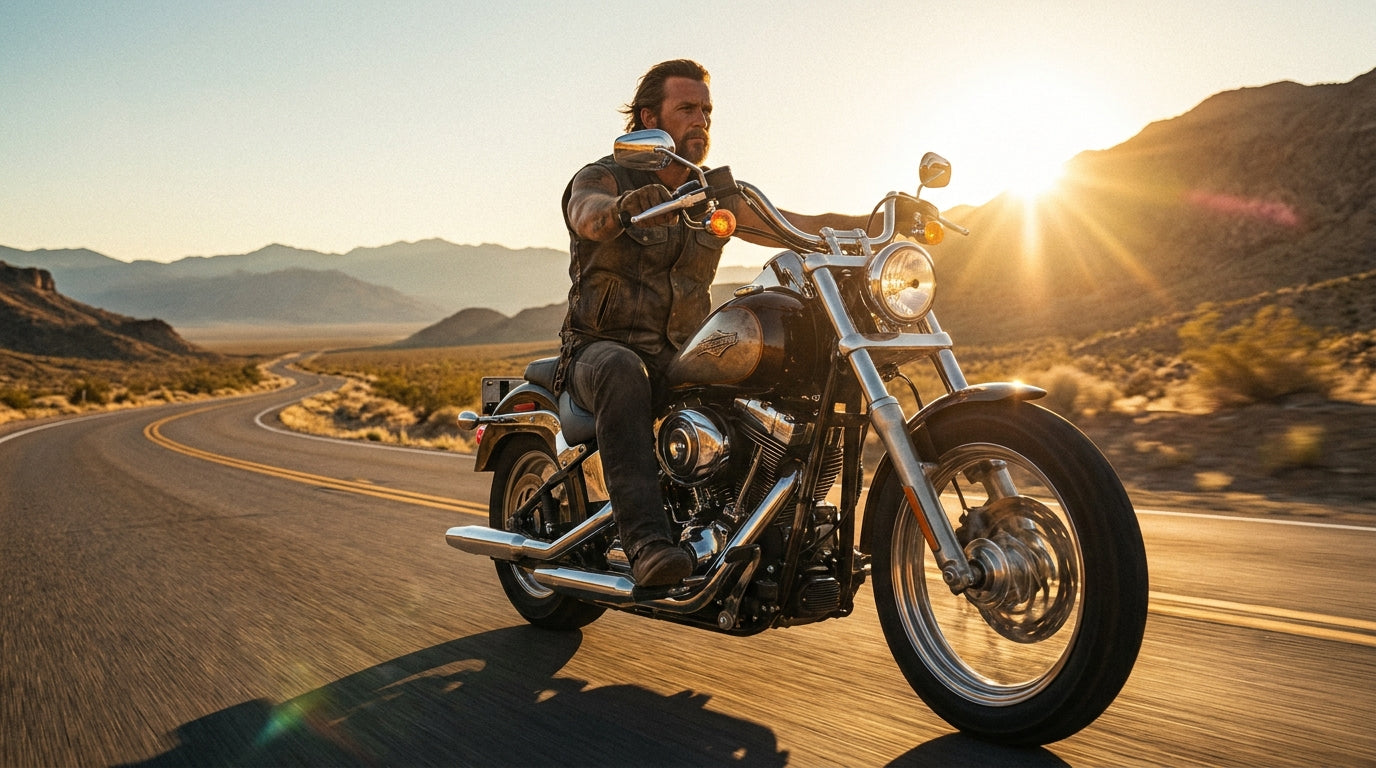
Pick up a bonded leather vest at a swap meet, wear it three times, and watch the surface peel like a bad sunburn. That peeling is polyurethane coating separating from ground leather fiber, and it is the fastest way to waste $60. A vest made from genuine full-grain cowhide develops a patina over time and gets better looking with every ride. Knowing the difference before you buy saves money and frustration.
A leather motorcycle vest is one of the few pieces of gear that looks better with age, but only if the leather is real. This guide covers how to identify real leather from bonded, the types of hide, sizing for a riding fit, conceal carry pocket options, and what separates a $90 vest from a $300 one. Every section has specific names, numbers, and details so you know exactly what to look for before spending.
Why Leather Beats Denim for a Motorcycle Vest
Denim motorcycle vests are popular because they are cheap, light, and easy to customize. An 8 oz denim vest weighs about 12 ounces and costs $30 to $60. The problem is durability. Highway wind at 70 mph creates constant stress on seams and fabric. After one or two full seasons of regular riding, the shoulder seams on a denim vest start fraying, the armholes stretch out, and the snap closures pull through the weave.
A leather vest made from 1.0 mm cowhide weighs 24 to 32 ounces, roughly double the denim weight, but it handles wind, rain, and road grime without breaking down. The natural fiber structure of cowhide resists tearing at stress points. Leather also holds patches better than denim because the needle creates a clean hole that grips thread tightly. Denim frays around stitch lines, especially after washing. For riders who own both a denim motorcycle vest and a leather one, the denim works for rallies and casual rides. The leather is for the road.
Most leather vests from established brands like First Manufacturing, Event Leather, or Milwaukee Leather come with a 1.0 mm to 1.2 mm cowhide shell. At this thickness, the vest blocks wind effectively on the highway without adding bulk under a jacket. That wind-blocking ability matters more than riders expect, especially on cooler evening rides where a denim vest lets cold air straight through.

Types of Leather Used in Motorcycle Vests
Three types of hide account for nearly all motorcycle vests on the market. Each has a specific trade-off between weight, durability, and feel.
| Hide Type | Thickness | Weight (size L) | Feel | Best For |
|---|---|---|---|---|
| Cowhide | 1.0 to 1.2 mm | 1.5 to 2 lbs | Firm, structured | Club riding, highway, all-purpose |
| Buffalo/Bison | 1.2 to 1.4 mm | 2 to 2.5 lbs | Rugged, textured grain | Heavy-duty riding, extreme weather |
| Goatskin | 0.6 to 0.8 mm | 0.8 to 1.2 lbs | Soft, supple, drapes well | Warm weather, casual riding |
Cowhide is the industry standard for motorcycle vests. It offers the best balance of structure, durability, and price. Most club-style vests use cowhide between 1.0 and 1.2 mm. At this thickness, the vest holds its shape on the hanger, stands up to years of patch sewing and removal, and develops a deep patina over time. Milwaukee Leather and First Manufacturing both use full-grain cowhide across their main vest lines.
Buffalo hide is thicker and has a more pronounced grain pattern. The texture gives it a rugged look that some riders prefer over smooth cowhide. Buffalo vests are heavier, which means more wind resistance but also less comfort in hot weather. These work best for riders in cooler climates or those who want maximum durability and do not mind the extra weight.
Goatskin is the lightest option. It drapes more like a heavy shirt than a structured vest, making it comfortable for all-day wear in warm weather. The trade-off is less wind blocking and a shorter lifespan under heavy use. Goatskin vests work well for riders who want leather for style and moderate protection without the weight of cowhide. A goatskin vest from a brand like Milwaukee typically weighs under a pound in a size large.
Real Leather vs Bonded Leather: How to Tell Before You Buy
Bonded leather is the biggest problem in motorcycle gear shopping. It contains less than 20% real leather fiber, ground up and glued to a polyester backing with polyurethane coating on top. When new, bonded leather looks and feels close to real leather. After 6 to 12 months of UV exposure and body heat, the polyurethane layer cracks and peels. Once peeling starts, the vest is done. No repair fixes it.
Three tests separate real leather from bonded before you hand over money.
- Edge test. Look at the cut edge of the leather. Real leather shows rough, uneven fibers. Bonded leather shows a smooth, layered edge where the coating meets the backing.
- Water test. Place a small drop of water on the surface. Real leather absorbs the water slowly over several seconds. Bonded leather repels it because of the polyurethane coating.
- Smell test. Real leather has a rich, earthy scent. Bonded leather smells like chemicals or plastic, especially when new.
One label to watch out for: "genuine leather." Despite sounding trustworthy, genuine leather is the lowest grade of real leather. It is made from the inner splits of the hide after the top grain is removed. Genuine leather is real, but it lacks the durability and aging quality of full-grain or top-grain leather. For a motorcycle vest that sees regular use, full-grain cowhide is the right material. It costs more, typically $120 to $250 for a vest, but it will outlast three bonded vests easily.

How a Leather Motorcycle Vest Should Fit
A riding vest fits differently than a fashion vest. The goal is a fit that sits flat against the body when seated on the bike, does not bunch at the sides, and keeps gear pockets in position. Here is what to check.
Chest. Zip or snap the vest closed over a t-shirt. You should be able to slide two fingers between the vest front and your chest without straining. Tighter than that restricts breathing on long rides. Looser than that lets the vest flap in the wind above 50 mph. Most leather vest sizing follows chest measurement in inches. A rider with a 42-inch chest should try a 42 first, not jump to a 44 for extra room.
Shoulders. The shoulder seam should sit right at the edge of your shoulder bone. If it hangs past the shoulder, the vest is too large and will shift when you move your arms for turns or signals. If it rides up toward the neck, it is too narrow and will restrict arm movement. Shoulder fit is the hardest part to correct after purchase, so get this right before cutting any tags.
Length. The bottom hem should cover your belt line completely when you are seated on the bike. A vest that rides up above the waist exposes the lower back to wind and sun. Most men's leather vests run 24 to 28 inches from shoulder to hem depending on size. If you are between sizes, go up one and use side laces to bring in the waist.
Side adjustment. Most motorcycle vests include side laces, buckles, or snap tabs for fine-tuning the fit around the midsection. Side laces are the most adjustable, offering 2 to 4 inches of play in either direction. Solid-panel vests without any adjustment rely entirely on exact sizing, which makes returns more likely if the fit is even slightly off.
Conceal Carry Pockets and Other Features
Concealed carry motorcycle vests have interior pockets designed to hold a firearm securely while riding. The most common layout uses two interior panels, one on each side, with gun pockets measuring 9 to 10 inches deep and 6 to 7 inches wide. This size accommodates compact and subcompact handguns like a Glock 19 or Smith and Wesson M&P Shield. Full-size handguns may print through the leather depending on hide thickness.
Features to check in a conceal carry vest:
- Reinforced pocket lining. The interior pocket should have a stiffened lining that keeps the holster shape and prevents the outline from showing through the leather.
- Ambidextrous design. Quality conceal carry vests include pockets on both sides so left-handed and right-handed riders can draw from the same vest.
- Secure closure. A snap or magnetic flap over the pocket opening keeps the firearm in place during riding and prevents it from shifting during hard leans or stops.
Beyond conceal carry, other features worth checking include interior document pockets for registration and insurance cards, exterior chest pockets with snap or zipper closure, and a back panel large enough for motorcycle vest patches. A standard three-piece patch set (top rocker, center logo, bottom rocker) requires a back panel measuring at least 14 by 16 inches of clean, uninterrupted leather.

5 Common Mistakes When Buying a Leather Motorcycle Vest
1. Buying bonded leather thinking it is real. Bonded leather vests dominate Amazon and marketplace listings because they look similar in photos and cost $30 to $50 less than real leather. The savings disappear when the surface starts peeling 6 months later. Always check the product listing for "full-grain" or "top-grain" cowhide. If it says "bonded," "man-made," or just "leather" with no grade specified, skip it.
2. Sizing too loose for comfort. Riders who size up for extra room at a fitting end up with a vest that flaps in the wind and shifts on every turn. The vest should feel snug, not tight, when snapped closed with a t-shirt underneath. Side laces handle the minor adjustments. A vest that is one full size too large cannot be fixed with laces alone, and the shoulder seams will never sit right.
3. Ignoring the back panel for patches. Riders who plan to join a club or add a large back patch later need a back panel with clean, uninterrupted leather. Vests with decorative stitching, embroidery, or seams across the back make patch placement difficult. That can force a rider to buy a second vest when they need patch space. If there is any chance you will add patches, buy a clean-back club-cut vest from the start.
4. Skipping side adjustment entirely. A solid-panel vest with no laces, buckles, or straps relies on exact sizing every time you wear it. Weight changes, layering in cold weather, and different riding positions all affect fit. Side laces give 2 to 4 inches of adjustment and let the same vest work across seasons. Buckles and snap tabs offer less range but look cleaner.
5. Paying fashion-brand prices for motorcycle use. A leather vest from a fashion brand like All Saints or John Varvatos can run $400 to $800. These vests typically use thin leather at 0.5 to 0.7 mm, lack wind protection features, and are not designed for highway riding. A motorcycle-specific vest from Milwaukee Leather or Event Leather uses thicker hide, includes riding features like conceal carry pockets and side laces, and costs $90 to $250. For actual road use, the riding vest is the better buy every time.
Where to Start Shopping for a Leather Motorcycle Vest
Start with the hide type. If you ride highway regularly, cowhide at 1.0 mm or thicker is the standard choice. If you need something lighter for summer, goatskin works. Check the product listing for the leather grade before anything else. Full-grain is the best. Top-grain is solid. "Genuine leather" is the lowest real grade, and bonded is not real leather at all.
For fit, measure your chest with a tape measure over a t-shirt and order your exact size. Use side laces or buckles for fine-tuning after it arrives. If you need conceal carry, look for reinforced interior pockets on both sides with snap or magnetic closures.
If you are building out your biker clothing kit and want a vest that holds up ride after ride, the ALR leather vest collection is a good starting point. One vest in real cowhide will outlast three in bonded, and it will look better every year you own it.
No comments yet. Be the first rider to weigh in.