
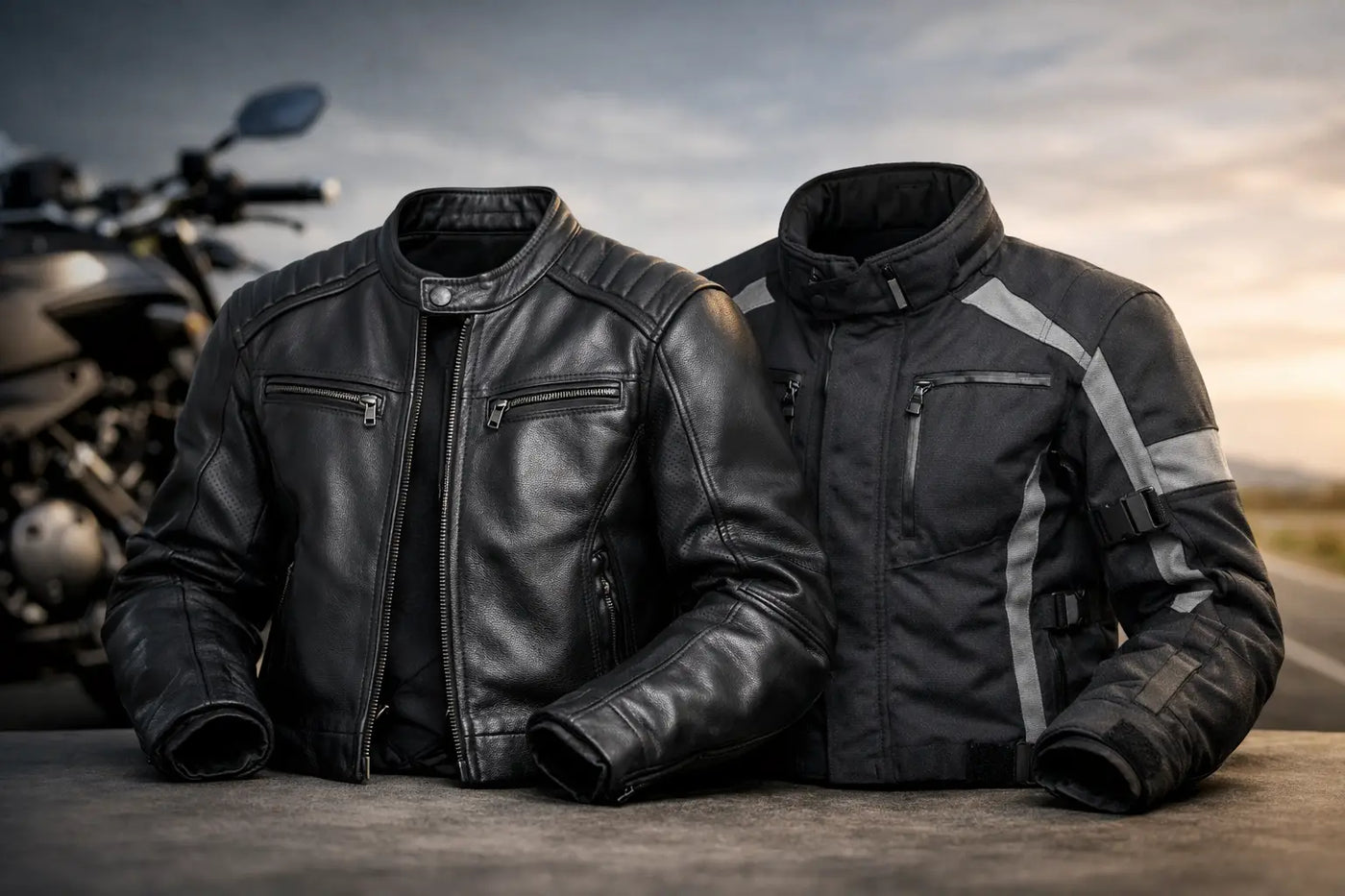
The wrong jacket gets real obvious about 40 minutes into a ride. Maybe you're baking at a stoplight in July, maybe cold rain starts cutting through your sleeves, or maybe the fit just never feels right once you're tucked in and moving. That is why the leather vs textile motorcycle jacket debate matters - not as a style argument, but as a road decision that affects comfort, protection, and how often you actually want to wear your gear.
For most riders, there is no one-size-fits-all winner. The right call depends on where you ride, what you ride, how often you ride, and whether you need one jacket to do everything or a few jackets for different conditions. Leather still owns a big piece of motorcycle culture for a reason. Textile keeps winning riders over for its range, weather flexibility, and everyday practicality. If you're choosing between them, here's the straight answer.
Leather vs textile motorcycle jacket: the real difference
At the core, leather jackets are built around abrasion resistance, structure, and classic biker style. Textile jackets are built around versatility, climate control, and feature-heavy performance. Both can be protective. Both can be comfortable. Both can look good. But they get there in very different ways.
Leather has a natural toughness that riders trust, especially for street and highway use. A quality leather jacket feels substantial, blocks wind well, and tends to mold to your body over time. It also carries that unmistakable road look that never really goes out of style.
Textile leans more technical. It usually comes with vents, removable liners, waterproof membranes, armor pockets, reflective panels, and adjustment points. It is often the easier choice for commuters, touring riders, and anyone dealing with changing weather. If your day starts cold, warms up by noon, and ends in rain, textile usually makes life easier.
Protection: where leather still hits hard
If your top concern is abrasion resistance, leather is still the benchmark in a lot of riders' minds. There is a reason race suits and plenty of performance-focused jackets still rely on leather. Good leather handles sliding forces well and gives a dense, confidence-inspiring feel that many riders prefer.
That said, protection is not just about shell material. Armor matters. Stitching matters. Fit matters. A jacket that is made from premium material but fits loose at the shoulders and elbows may not protect as well as a properly fitted textile jacket with quality CE-rated armor in the right places.
Modern textile jackets have come a long way. High-denier fabrics, reinforced impact zones, and abrasion-resistant panels make many of them serious protective gear, not just lightweight outerwear. For urban riding, commuting, and general street use, a well-built textile jacket can offer excellent protection. It just may not deliver the same old-school confidence some riders feel the second they throw on heavy leather.
Comfort and climate: textile usually wins the long game
This is where a lot of riders settle the argument fast. If you ride in heat, humidity, or mixed conditions, textile often pulls ahead.
Most textile motorcycle jackets are designed with weather in mind. You get zip vents across the chest and back, thermal liners for cold mornings, and water-resistant or waterproof layers for surprise storms. That flexibility makes textile easier to live with if you ride year-round or rack up miles in different states and seasons.
Leather is excellent at blocking wind, which makes it great in cooler weather and at highway speed. But in peak summer, especially in stop-and-go traffic, leather can get hot fast unless it is heavily perforated. Even then, it usually will not match the airflow of a good mesh or vented textile jacket.
There is also weight. Leather often feels heavier and stiffer, especially before break-in. Some riders love that solid, armored feel. Others want something lighter for everyday wear, especially on shorter rides or city commutes.
Weather resistance and maintenance
Rain changes the conversation.
Textile jackets are generally better if wet weather is part of your regular riding life. Many are built specifically to handle it, either with integrated waterproof construction or removable rain liners. They also dry faster and usually require less maintenance after a soaked ride.
Leather can handle some weather, but it needs care. If it gets drenched often and isn't maintained properly, it can stiffen, lose finish, or wear unevenly. Leather also usually needs conditioning to stay in good shape, especially if you ride in harsh sun, dry climates, or regular rain.
That doesn't mean leather is fragile. Far from it. It just asks more from you. If you like gear that builds character with age and you're willing to maintain it, leather gives a lot back. If you want lower-fuss performance, textile is the easier road companion.
Fit, style, and how you actually ride
A jacket is only good if you wear it. That's where personal style matters more than some riders want to admit.
Leather carries attitude. It fits the cruiser world, the club-style look, the stripped-down road image, and the timeless American biker silhouette. For many riders, that matters. The jacket is not just gear. It is part of the identity. If you want that hard-edged look in the saddle and off the bike, leather makes a strong case every time.
Textile is more utilitarian. It usually looks more technical, more modern, and sometimes less tied to classic biker style. For ADV, sport-touring, commuting, and practical all-weather use, that's no problem. In fact, many riders prefer it. But if your gear has to hit both road function and classic biker culture, leather often wins on style alone.
Fit also varies. Leather tends to break in and shape itself to you. Textile tends to give you more adjustment from day one with straps, gussets, and stretch panels. If you layer up often, textile is usually more forgiving. If you want a close, locked-in fit that gets better over time, leather has a different kind of appeal.
Price: upfront cost vs long-term value
Price is not as simple as leather expensive, textile cheap. There are entry-level leather jackets that are affordable, and there are premium textile jackets loaded with features that cost serious money.
Still, in broad terms, leather often asks for more upfront if you want high quality. The trade-off is longevity. A solid leather jacket can last for years and still look better with age if you treat it right.
Textile gives you more feature value faster. At many price points, you can get waterproofing, armor, vents, liners, and storage that would cost more in leather. For riders watching budget while still needing practical protection and weather range, textile often feels like the smarter buy.
If you only want one jacket, textile may deliver more day-to-day value. If you already know you want that classic road look and heavy-duty feel, leather can still be worth every dollar.
Who should choose leather?
Leather makes the most sense for riders who prioritize abrasion resistance, wind blocking, timeless biker style, and a substantial feel on the bike. It is especially strong for cruiser riders, fair-weather riders, and anyone who wants gear that works on the road and still looks right at the gas stop, rally, or bar-and-shield crowd meetup.
It also suits riders who don't mind some upkeep and are willing to break in a jacket over time. If you like gear with character and you want your jacket to feel like part of your riding identity, leather hits that mark better than almost anything else.
Who should choose textile?
Textile is the better fit for riders dealing with changing weather, long-distance trips, commuting, and broad seasonal use. If practicality is your first priority, textile is hard to beat. It is easier to layer, easier to vent, easier to dry out, and often easier on the wallet.
It is also a smart call for riders who want one jacket to cover the most situations. Cold morning, warm afternoon, possible rain on the way home - that is textile territory.
The best answer for a lot of riders
Truth is, plenty of experienced riders end up with both. Leather for cool-weather rides, weekend cruising, and that classic road presence. Textile for commuting, touring, and ugly forecasts. That setup costs more, but it covers more miles with less compromise.
If you're buying your first serious jacket and can only choose one, be honest about your riding habits, not your fantasy rides. If most of your miles are in mixed weather and daily traffic, textile is probably the smarter move. If your riding is more about open-road weekends, cooler temps, and classic biker style, leather may feel right the second you zip it up.
And if you want to compare road-ready options without bouncing between generic gear shops, American Legend Rider carries motorcycle jackets built for riders who care about protection, durability, and style that actually belongs in biker culture.
The best jacket is the one you'll wear every ride, in the conditions you actually face, with zero regrets once the miles start stacking up.

No comments yet. Be the first rider to weigh in.