
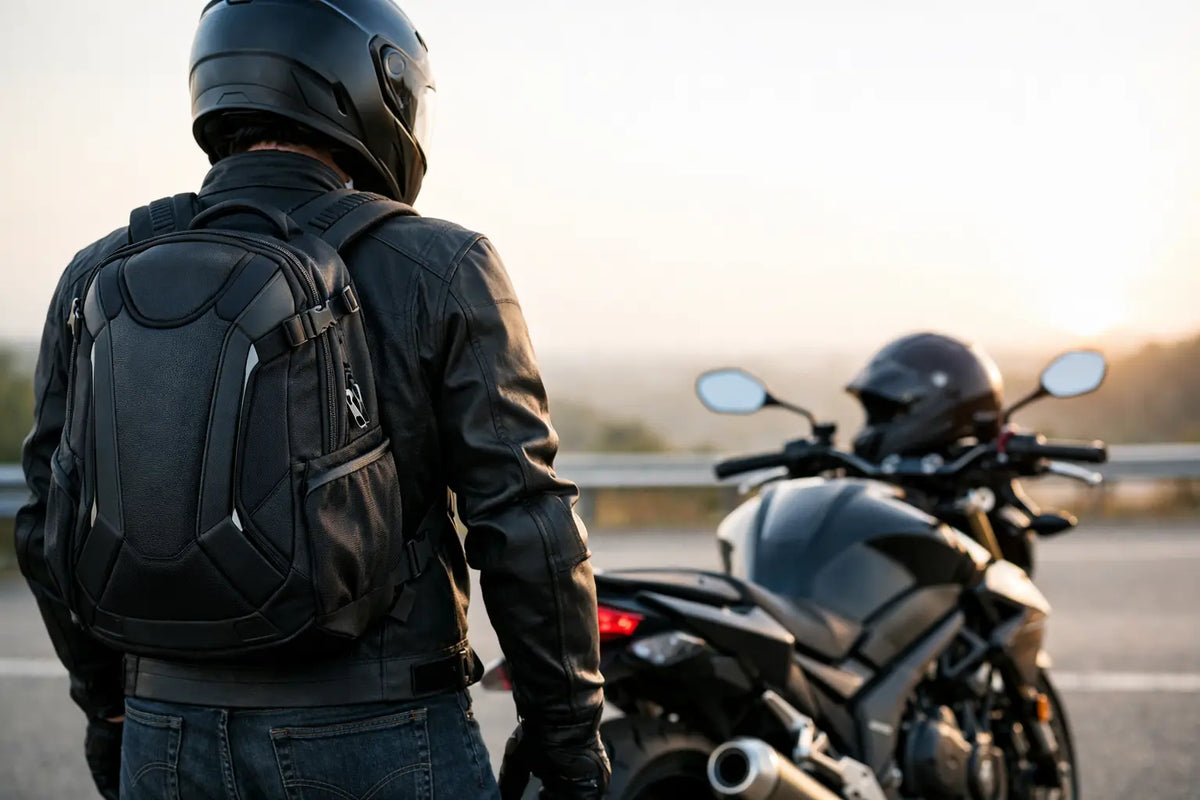
A bad backpack will tell on itself before you hit the second exit. The straps start pulling, the bag shifts in crosswind, your back turns into a sweat trap, and suddenly that cheap carry setup feels like a mistake. That is why a real motorcycle backpack review has to go beyond looks. Riders need a bag that stays planted, carries clean, and holds up when the road gets rough.
A backpack for riding is not the same thing as a backpack for school, the gym, or airport lines. On a motorcycle, weight distribution matters more. Wind resistance matters more. Water resistance matters more. Even zipper placement matters more when you are gloved up and trying to grab something fast at a gas stop. If the bag is built right, you barely think about it. If it is built wrong, you feel it every mile.
Motorcycle backpack review - the features that actually count
The first thing to look at is stability. A motorcycle backpack should sit close to the body and stay there. Loose, floppy bags catch wind and shift around at speed. That movement gets annoying fast, but more than that, it can wear you down on longer rides. A sternum strap helps a lot. A waist strap can help even more, especially if you carry heavier gear or spend real time on the highway.
Shape matters too. A streamlined profile cuts down on drag and feels better at speed. Big boxy packs may offer more room, but that extra bulk can turn into a problem on a bike. There is always a trade-off between storage and ride comfort. If you are commuting with a laptop, lunch, and rain layer, you need enough capacity. If you are out for a short rip across town, a leaner bag usually feels better.
Material is where a lot of buyers get fooled. Tough-looking fabric is not always road-ready fabric. What you want is abrasion-resistant construction, reinforced stitching, and zippers that do not feel cheap. Water resistance is another big one. Not every rider needs a fully waterproof bag, but every rider needs some level of weather protection. A light drizzle is one thing. A hard rain at 60 mph is another.
Then there is comfort. Padded shoulder straps help, but they are not the whole story. Back panel design matters just as much. Some bags trap heat and feel swampy in warm weather. Others use channel padding or mesh to move some air. Nothing makes a backpack disappear completely in July heat, but better ventilation can make the ride a lot less miserable.
What separates a riding backpack from a regular backpack
A regular backpack can work in a pinch, but it is usually a compromise. Most are made for walking, not wind pressure. They tend to sit looser, bounce more, and offer less support. The pockets may be fine for everyday use, but they are often laid out in ways that make no sense when you are riding and stopping on the go.
A purpose-built motorcycle bag usually has a more aerodynamic shape, stronger harness design, and better weather handling. Some also include helmet carriers, hidden rain covers, reflective details, or dedicated compartments for electronics and tools. Those features are not gimmicks if you actually ride with them. They solve real problems.
That said, not every rider needs every feature. If you only ride local in good weather, you may be fine with a simpler bag. If you commute daily, lane split, ride in mixed conditions, or carry expensive gear, the quality jump is worth it. It depends on how often you ride, what you carry, and how much hassle you are willing to put up with.
Capacity: bigger is not always better
Most riders shop backpacks by size first, and that makes sense. But going too big is one of the easiest ways to end up with a bag you hate using. A huge pack sounds practical until it sits high, catches wind, and tempts you to overload it.
For everyday riding, the sweet spot is usually in the small-to-mid range. Enough room for your basics, but not so much room that the bag becomes a sail. If you carry a laptop, layers, gloves, and a few extras, mid-size works well. If you are using it for day trips or carrying camera gear, you may need more space, but then compression straps become critical. Extra room is only useful if the load can still be tightened down.
Organization matters almost as much as raw volume. One big open compartment can swallow a lot of gear, but smaller pockets make daily use easier. A secure spot for keys, wallet, phone, and paperwork keeps you from digging around every time you stop. Riders who carry sunglasses, chargers, or a compact tool kit will appreciate that fast.
Fit and comfort on long rides
The best-looking bag in the world is worthless if it beats you up after an hour. Fit is personal, but there are a few things that almost always help. Wide shoulder straps spread the load better. An adjustable sternum strap keeps the pack from drifting. A low-profile shape keeps it from pressing weirdly into your jacket collar or helmet when you tuck slightly into the wind.
Weight distribution is the part many riders ignore until they regret it. Heavy items should sit close to your back, not hanging away from it. The farther weight sits from your body, the more tiring the ride gets. That matters on a cruiser, a sport bike, a touring setup, pretty much anything. A well-packed backpack can feel 30 percent lighter than a sloppy one.
If you wear armored jackets, test fit matters even more. Some backpacks feel fine over a T-shirt and terrible over real riding gear. Bulkier jackets can change how the straps sit and where the bag rests. What feels great in the garage may not feel great once you are layered up and moving.
Weather protection in a real-world motorcycle backpack review
Rain protection is one of those features riders underestimate until they get caught out. Water-resistant fabric and coated zippers are good. Fully waterproof construction is better if you ride in all conditions. But waterproof bags often trade some flexibility and breathability for that protection.
So what is the right call? If you commute daily or tour in unpredictable weather, lean toward serious water protection. If you mostly ride fair-weather weekends, strong water resistance is usually enough. A separate rain cover can work, but it is one more thing to deal with, and loose covers are not always ideal in high wind.
Also pay attention to the bottom of the bag. That area takes abuse from wet pavement, dirty floors, and being dropped at fuel stops. Reinforced base panels help with durability and keep the bag from soaking through from below.
Storage for the way riders actually use it
The right motorcycle backpack is not just about carrying stuff. It is about carrying the right stuff without making access a pain. That means quick-access pockets that are easy to reach off the bike, secure internal sleeves for electronics, and enough separation that your gear does not get mashed together.
Commuters usually need laptop space, charger storage, and room for a change of clothes or lunch. Day riders might care more about sunglasses, a light layer, water, and basic tools. Riders headed to rallies or long weekends need more flexibility, especially if they are packing personal items off the bike too. That is where expandable designs or modular storage can earn their keep.
Still, more compartments are not always better. Too many little pockets can turn a bag into clutter. Good organization feels intuitive. You know where things are without thinking about it.
Style matters too - just not more than function
Let us be honest. Riders care how gear looks. A backpack is part of the setup, and it should match the bike, the jacket, and the rider. Clean black bags, tactical styles, hard-edged designs, and skull-driven details all have their place. There is nothing wrong with choosing a bag that looks mean.
But style should follow function, not replace it. A bag with killer attitude and weak stitching is still a bad buy. The best options give you both - road-ready build and a look that fits your ride. That balance is where smart shoppers win.
If you are shopping at a rider-focused store like American Legend Rider, that mix of utility and biker identity is easier to find than it is in generic outdoor gear shops. You want gear made for the road, not gear that just borrows the look.
Final call on this motorcycle backpack review
If you want a backpack that earns its spot on your ride, focus on four things first: stability, comfort, weather protection, and usable storage. Everything else comes after that. A bag that stays tight at speed, rides well over your jacket, keeps your gear dry, and does not fight you at every stop is worth the money.
Buy for the miles you actually ride, not the fantasy version of your setup. The right backpack should work hard, look right, and disappear into the ride once you buckle in and roll out.

No comments yet. Be the first rider to weigh in.