
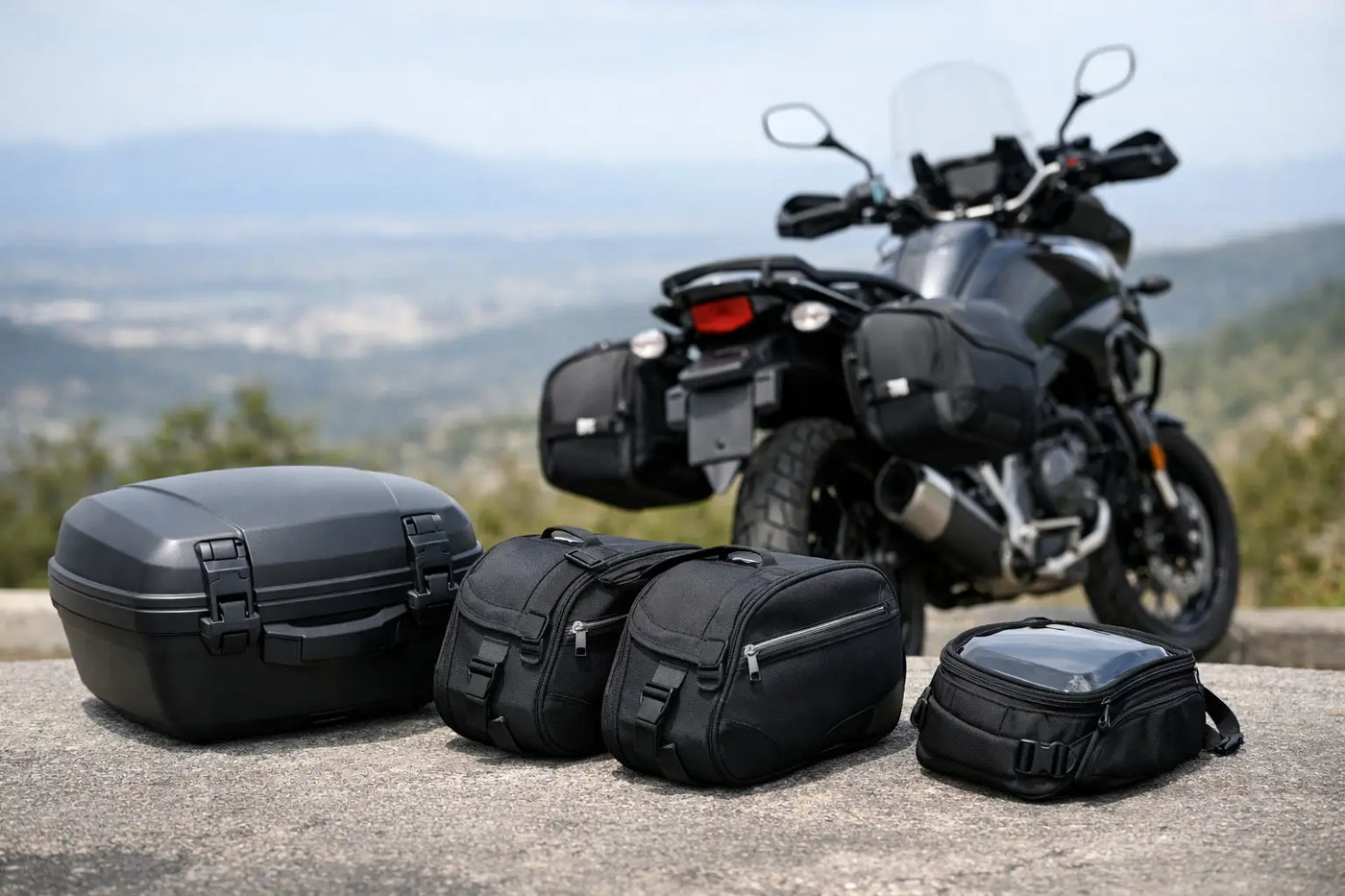
You feel it fast when a bag is the wrong size. Too small, and you’re strapping extra gear anywhere it will hang on. Too big, and the bike looks bloated, the load shifts, and every stop turns into a fight with buckles and dead space. This motorcycle bag sizing guide cuts through that mess and helps you choose a bag that fits your bike, your load, and the way you actually ride.
A lot of riders buy by looks first. Nothing wrong with wanting a bag that matches the bike and your style. But size is what decides whether that bag works on a Tuesday commute, a weekend run, or a full road trip. The right bag should carry what you need without crowding the seat, blocking your legs, or throwing off the ride.
What motorcycle bag size really means
Bag sizing usually starts with liters, but that number only tells part of the story. A 20-liter tail bag and a 20-liter sissy bar bag can feel completely different once mounted. Shape matters. Width matters. How the bag opens matters. So does what you pack.
If you carry compact items like gloves, a rain layer, and a tool roll, you can get away with less volume. If you pack bulkier gear like boots, cold-weather layers, camera gear, or camping equipment, you’ll fill the same number of liters a lot faster. That’s why a smart motorcycle bag sizing guide always goes beyond capacity and looks at real-world use.
The other piece is the bike itself. A cruiser with a sissy bar, wide rear fender, and solid mounting options can handle larger luggage without looking out of place. A sport bike or smaller standard usually needs a tighter profile. Even if a bag technically fits, it may not fit right.
Motorcycle bag sizing guide by ride type
The easiest way to size a motorcycle bag is to start with how long you ride and what you carry.
Daily commute and short city rides
For everyday use, most riders do well with a 10 to 20-liter bag. That gives you room for the basics - wallet, gloves, phone, sunglasses, a light layer, maybe a lunch or a small lock. If you carry a tablet, paperwork, or a compact rain shell, that size range still works.
This is where smaller tail bags, compact saddlebags, and slim backpacks shine. You want enough capacity to stay practical without adding bulk you don’t need. Oversizing a commuter bag usually means more flop, more wind drag, and more junk you never use.
Day trips and weekend runs
For one- to two-day rides, 20 to 40 liters is the sweet spot for a lot of riders. That range holds a change of clothes, toiletries, extra layers, chargers, and the little gear that stacks up fast once you’re off the bike for the night.
This is also where expandability starts to matter. A bag that runs lean for the ride out and expands when you pick up souvenirs, extra water, or cold-weather gear gives you more flexibility. If your load changes from ride to ride, expandable bags can save you from buying too big.
Long weekends and touring
Once you’re packing for multiple days, most riders need 40 to 70 liters or more, depending on whether they stay in hotels or camp. Touring setups often combine saddlebags with a tail bag, sissy bar bag, or luggage roll.
At this stage, the question is not just total volume. It’s weight distribution. One giant bag can hold a lot, but splitting gear across two or three points often rides better and makes packing easier. Heavy items should stay low and close to the bike’s center. Bulky but light items can go higher.
Match the bag to the bike
A bag can have the right capacity and still be wrong for the machine. Fit and proportions matter.
Cruisers and touring bikes
Cruisers usually have the easiest time with larger saddlebags, throw-over bags, and sissy bar bags. The visual style works with bigger luggage, and the bike geometry often gives you more room to mount it cleanly. Riders on baggers and touring rigs can go even bigger, especially for long-haul use.
Still, don’t assume bigger is always better. If the bag hangs too low near the exhaust or pushes too far inward toward the wheel, you’ve got a problem. Clearance beats capacity every time.
Sport bikes and naked bikes
These bikes reward a tighter setup. Tail bags and compact tank bags usually make more sense than oversized side luggage. A wide bag can interfere with your leg position, body movement, or passenger seat area.
For aggressive riding positions, keep the profile low and secure. A smaller bag that stays planted is better than a larger one that shifts under braking or catches wind.
Adventure and dual-sport bikes
ADV and dual-sport riders need room, but they also need durability and balance. Soft panniers, dry bags, and modular luggage systems are common because they take abuse better and adapt to different trip lengths.
Here, sizing depends on terrain as much as trip duration. If you’re riding rough roads or trails, a narrower setup is usually smarter than maxing out width. Extra capacity sounds good in the garage. On a technical section, it can feel like dead weight hanging off both sides.
Measure before you buy
A real motorcycle bag sizing guide should tell you to grab a tape measure before you spend a dollar. Product dimensions matter more than photos.
Measure the available width, height, and depth where the bag will sit. Check exhaust clearance, suspension travel, turn signal location, and passenger space. If you’re looking at saddlebags, make sure they won’t sag into the wheel or rest against hot pipes. If you’re shopping for a tail bag, check whether it will crowd your riding position or block access to what’s under the seat.
Pay attention to mounting points too. A bag may be the right size, but if your bike doesn’t offer secure anchor locations, that fit won’t hold up on the road. Straps need solid attachment points. Racks need compatible dimensions. Quick-release systems need the right hardware.
Capacity isn’t the same as usable space
One of the biggest sizing mistakes is trusting the listed volume without thinking about how the interior is laid out. Wide openings, structured walls, and smart compartments make a bag feel bigger in use. Narrow openings, odd shapes, and floppy construction can make a bag feel smaller than the number on the tag.
If you carry rigid gear, interior dimensions matter a lot. A bag might be rated for enough volume but still not fit your laptop, boots, camera case, or full-size rain suit the way you need it to. Soft items pack easier. Hard-edged gear exposes bad sizing fast.
External pockets can also reduce the need to size up. If your main compartment stays reserved for larger items and the small stuff has a place of its own, you use the bag more efficiently.
Common sizing mistakes riders make
A lot of riders buy for the biggest trip they might take once a year instead of the rides they actually do every month. That usually leads to oversized luggage, loose packing, and a setup that feels clumsy for daily use. If your riding is mostly short-haul with the occasional weekend trip, a medium bag plus a small add-on piece often makes more sense than one giant bag.
Another mistake is forgetting the load after the ride. If you need to carry the bag into a hotel, office, or rally stop, size affects convenience. A huge bag may fit everything, but if it’s awkward off the bike, you’ll feel that every time you unclip it.
Then there’s style over function. Riders want a clean look, and that’s part of the culture. But if the bag only looks right when it’s half empty or strapped down like a wrestling match, it’s not the right size.
How to choose the right size the first time
Start with your core load, not your fantasy load. Lay out what you carry on a normal ride, then what you add for a weekend, then what you’d pack for a longer trip. That gives you a real baseline.
Next, think in layers. If one bag can handle 80 percent of your riding and you can add a second compact piece when needed, that setup is often better than going oversized year-round. Flexibility beats excess.
Finally, buy for stability as much as storage. The best-fitting motorcycle bag is not the one that holds the most. It’s the one that stays secure, clears the bike properly, and carries your gear without turning your ride into dead weight and drag. That’s the kind of setup riders keep.
If you’re shopping with that mindset, American Legend Rider’s bag selection makes more sense too. You’re not just picking a style. You’re building a loadout that works when the road gets long and the miles stop being casual.
A good bag should disappear once it’s mounted. It should carry the load, hold its shape, and let you focus on the ride instead of babysitting your gear. Get the size right, and everything else starts riding smoother.

No comments yet. Be the first rider to weigh in.