
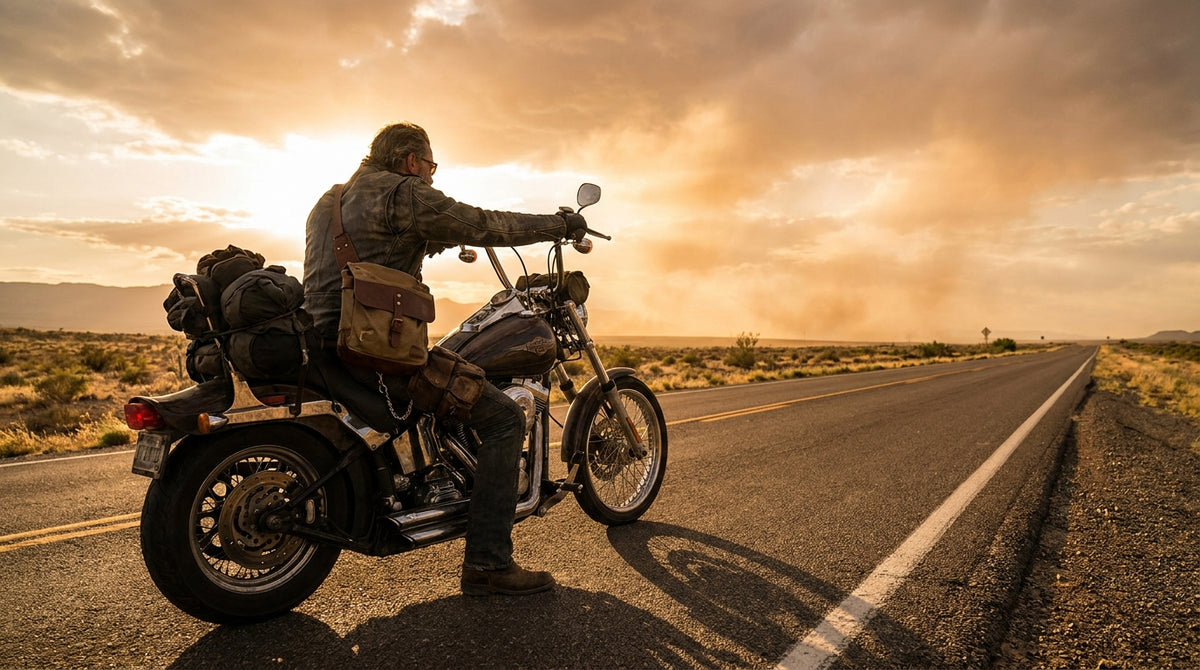
A rider heading out on an ADV trip stuffs phone, wallet, keys, snacks, and a charger into jacket pockets. Every pocket bulges. The zipper on the left chest pocket pops open at 55 mph, and the phone skips across asphalt. A motorcycle chest bag prevents this by putting daily carry items in one secure, front-mounted pack that sits flat on the torso and opens with one hand, even at a gas stop.
This guide covers what makes a motorcycle chest bag different from a crossbody or standard sling, which styles work for different riding positions, and what materials actually matter. You will learn the difference between a $30 bag that fails in six months and a $70 bag that lasts for years. By the end, you will know what to buy and which common mistakes to avoid.
What Is a Motorcycle Chest Bag and Why Riders Use One
A motorcycle chest bag mounts on the front of the torso, usually between the collarbone and the belly button. Most use a dual-strap mount system that wraps over both shoulders and clips at the back or sides. Some use a single diagonal strap with a stabilizer, similar to a sling bag but positioned on the chest instead of the hip.
The Kriega Kube 5 is a good reference point for what a dedicated chest bag looks like. It holds 5 liters, weighs 320 grams, and sits centered on the sternum using Kriega's QUAD-lock strap system. The bag stays pinned to the chest even at triple-digit speeds because both shoulders share the load and no single strap can shift.
Riders choose a chest bag for motorcycle riding for three reasons. First, front access. Reaching a phone, toll pass, or snack takes one hand and two seconds. A backpack requires pulling it off entirely. Second, weight distribution. A chest bag puts mass on the front of the body, which balances out a hydration pack or tool roll on the back. Third, it clears the rear seat for a passenger or tail bag, something a backpack cannot do.

Motorcycle Chest Bag Styles Compared
Not every chest bag works for every type of riding. The style you need depends on your riding position and what you carry. Here is how the main types stack up.
| Style | Capacity | Best For | Mounting | Wind Profile | Price Range |
|---|---|---|---|---|---|
| Dual-Strap Chest Pack | 3-8L | Sport, ADV, touring | Dual shoulder straps | Very low | $40-$120 |
| Sling-Style Chest Bag | 5-12L | Cruiser, commuter | Single diagonal strap | Low-medium | $25-$80 |
| Tactical / MOLLE Chest Rig | 4-10L | ADV, dual-sport | H-strap rig with MOLLE | Low | $30-$90 |
| Vest-Integrated Chest Bag | 2-5L | Short rides, urban | Built into vest | None | $50-$150 |
Dual-strap chest packs are the most stable option at speed. Two shoulder straps distribute weight evenly, and the bag body sits flat against the sternum. Kriega, Enduristan, and Giant Loop all make dual-strap chest packs designed specifically for motorcycle use. This style pairs well with a backpack because the strap system routes under backpack straps without interference.
Sling-style chest bags use a single diagonal strap and can swing from back to front. They offer more capacity than a dual-strap pack, typically 5 to 12 liters, but they shift more at highway speed because one shoulder carries all the load. If you ride mostly under 50 mph or make frequent stops, a sling-style works fine. For sustained highway riding, a dual-strap is more stable. The motorcycle sling bag guide covers this format in detail.
Tactical chest rigs use an H-strap rig with MOLLE webbing on the front panel. Riders attach extra pouches, a radio, or a multitool holder to the MOLLE grid. These are popular with ADV riders who want quick access to tools without digging through a main compartment. The 5.11 Tactical Skyweight Utility Chest Pack is one example that holds 6 liters and includes built-in organizer slots.
Vest-integrated chest bags are built into a riding vest or a lightweight shell. The bag pocket sits on the chest and zips open for access. Capacity is limited, usually 2 to 5 liters, but the bag cannot shift or bounce because it is part of the garment itself. This works for urban riders who carry only a phone, wallet, and keys.

Materials and Waterproofing for Chest Bags
The material of a chest bag determines how long it lasts and whether your gear survives a surprise downpour.
1000D Cordura nylon is the baseline for any bag meant for motorcycle use. It resists abrasion from rubbing against jacket zippers and armor, and it holds its shape after thousands of miles. A Cordura chest bag typically lasts 3 to 5 years of daily riding before the fabric shows serious wear. Most bags in the $40 to $80 range use Cordura or a similar ballistic nylon weave.
For full waterproofing, look for welded TPU construction or a PVC-coated shell with taped seams. The Kriega Kube uses a 420D nylon body with a waterproof zip, and it keeps contents dry in sustained rain. Brands that use roll-top closures with welded seams, like Enduristan, go a step further and eliminate zipper leaks entirely. The trade-off is access speed. A roll-top takes 5 to 8 seconds to open, compared to 1 to 2 seconds for a standard zipper.
Avoid bags with exposed metal zippers if you ride in wet or coastal conditions. Salt air and rain corrode cheap zipper teeth within a few months. YKK Aquaguard or similar coated zippers resist corrosion and keep water out of the main compartment. If the product listing does not name the zipper brand, assume it is a no-name unit that will fail faster.
How to Fit a Motorcycle Chest Bag for Riding
A chest bag that fits right while standing may not fit right on the bike. Riding position changes everything about how straps load and where the bag sits.
Start by positioning the bag center at sternum height, roughly 2 to 3 inches below the collarbone. If the bag sits too high, it presses against the throat when you lean forward. If it sits too low, it drops onto the belly and interferes with tank clearance on sportbikes.
Tighten the straps until the bag sits flush against the chest with no gap. On a motorcycle, any slack lets the bag bounce during acceleration and braking. A good test: lean forward to your riding position and shake your shoulders side to side. If the bag swings more than half an inch, tighten the straps one more click.
Sport bike and ADV riders lean forward, so the bag should sit higher on the chest to stay clear of the tank. Cruiser riders sit upright or lean back slightly, so the bag can sit lower, closer to the belly button, without contact issues. Test the fit in your actual riding position before heading out.
If you wear a jacket with chest armor, fit the bag over the armor. Some chest packs, especially dual-strap types, press the armor plate into the sternum if worn underneath. Over the jacket, the armor panel sits between your body and the bag, which actually improves comfort by distributing pressure across a wider area.
One detail most riders overlook is strap width. A 1-inch strap digs into the shoulders on rides longer than an hour. A 2-inch padded strap spreads the load across a wider surface and stays comfortable over a full day of riding. If the bag you are considering does not list strap width in the specs, check photos or reviews. Thin straps are the single biggest comfort complaint in motorcycle chest bag reviews online, and it is the easiest problem to avoid by picking the right bag from the start.
Motorcycle Chest Bag vs Other Bag Types
A chest bag is one of several on-body carry options for riders. Here is how it compares to the alternatives.
| Bag Type | Capacity | Wind Drag | Front Access | Highway Stable | Clears Rear Seat |
|---|---|---|---|---|---|
| Chest Bag | 3-12L | Very low | Yes | Excellent | Yes |
| Crossbody / Sling | 5-20L | Low-medium | Yes (swing forward) | Good with stabilizer | Yes |
| Backpack | 15-40L | Medium-high | No | Fair | No |
| Tank Bag | 5-25L | None (on bike) | Yes (look down) | N/A | Yes |
| Hip / Leg Bag | 1-4L | Very low | Yes (side) | Excellent | Yes |
The chest bag's biggest advantage over a motorcycle crossbody bag is stability. A crossbody relies on a single strap, which means one shoulder carries all the weight and the bag can shift during hard leans. A dual-strap chest bag distributes weight across both shoulders and stays centered on the torso regardless of lean angle or speed.
Compared to a backpack, a chest bag gives up capacity but gains front access. A 25-liter backpack carries a laptop, rain gear, and lunch. A 5-liter chest bag carries a phone, wallet, keys, and a snack. If all you carry are daily essentials, the chest bag wins on convenience. If you carry a laptop or tools, a backpack or tank bag makes more sense.
Hip and leg bags are even smaller than chest bags, typically 1 to 4 liters. They work for phone-wallet-keys carry on short rides, but they sit on the leg and can interfere with knee movement on some bikes. A chest bag avoids leg interference entirely and offers slightly more room.

5 Mistakes Riders Make with Motorcycle Chest Bags
- Buying a fashion chest bag instead of a motorcycle-specific one. Streetwear chest bags use thin straps, decorative buckles, and lightweight fabric. At 60 mph, a fashion chest bag flaps, shifts, and creates a distraction. A motorcycle chest bag uses wider straps, a stabilizer system, and 1000D nylon or better. The price difference is usually $15 to $25 for a much better experience on the road.
- Wearing the bag too loose. A loose chest bag bounces with every bump and throttle change. After 30 minutes, the constant motion causes shoulder fatigue. Tighten the straps until the bag sits flush against the chest. Zero gap is the goal.
- Overloading a small chest pack. A 5-liter chest bag is designed for phone, wallet, keys, and maybe sunglasses. Stuffing in a water bottle and a rain jacket turns it into a dense brick that pulls the straps into both collarbones. If you regularly carry more than 3 lbs up front, size up to an 8 to 10 liter bag or move the extra weight to a tank bag.
- Ignoring waterproofing until the first rainstorm. Most nylon chest bags are water-resistant but not waterproof. A 20-minute ride in moderate rain soaks through the fabric and reaches your phone. Either buy a bag with welded seams and a waterproof zipper, or keep a $3 ziplock bag inside for your electronics.
- Skipping the fit test in riding position. A chest bag feels different standing up than it does hunched over handlebars. Always put on the bag, sit on the bike in your normal riding position, and check that the bag does not press into your throat, rest on the tank, or block your view of the gauges. Five minutes of fitting prevents an entire ride of discomfort.
If you are looking for a chest bag or any other style of motorcycle bag built for real riding, the motorcycle bags collection has options from compact chest packs to full saddlebag sets.


No comments yet. Be the first rider to weigh in.