
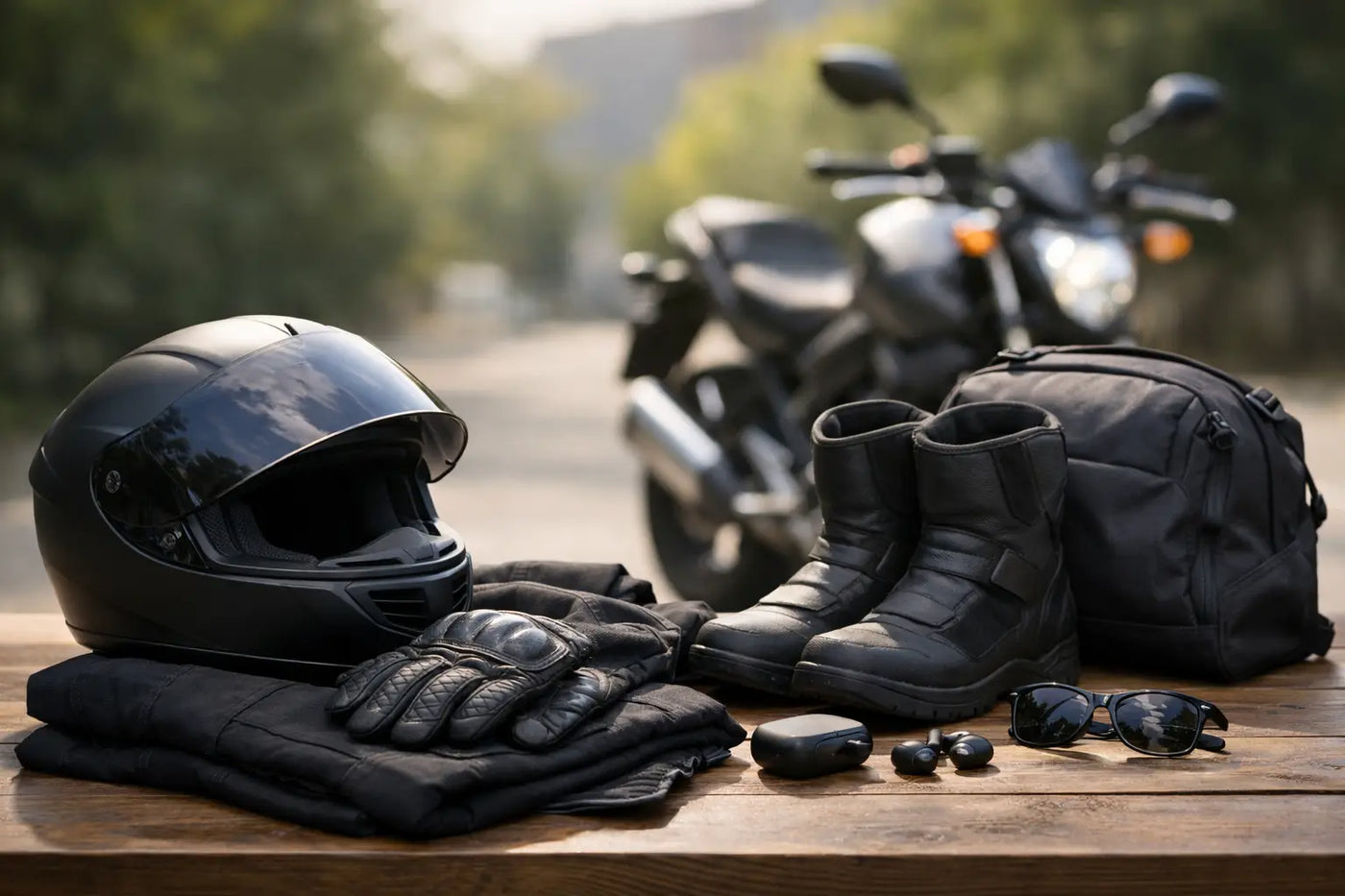
Rush-hour traffic will test your gear fast. A bad helmet fit, soaked gloves, fogged shield, or backpack shifting in crosswinds gets old before the first red light. A solid motorcycle commute gear checklist is not about loading yourself down with more stuff. It is about picking the right gear for the same ride you do over and over, in heat, cold, rain, and stop-and-go traffic.
Daily commuting is different from weekend miles. You need gear that works when you are half awake at 6:30 a.m., when the freeway turns into a parking lot, and when the forecast lies. The best setup balances protection, comfort, convenience, and just enough storage to keep your workday from starting irritated.
What a motorcycle commute gear checklist should actually cover
A real motorcycle commute gear checklist starts with impact protection, then moves to weather control, visibility, and carry solutions. That order matters. A sleek jacket that looks right but offers weak abrasion resistance is not a smart commuter buy. Neither is a race-focused setup that protects well but makes you hate every mile in city traffic.
Commuting gear needs to be easy to put on, easy to take off, and reliable five days a week. If a piece of gear is a hassle, most riders stop using it. That is where good intentions die. The right commute kit becomes automatic, which is exactly what you want when mornings are tight and your mind is already on the day ahead.
Helmet: the piece you cannot cheap out on
Your helmet is the first call, and for commuting, comfort matters almost as much as protection. You want a DOT-approved helmet at minimum, with fit locked in and pressure points nowhere in sight. If you wear it every day, weight, ventilation, and noise control matter more than they might on a shorter weekend blast.
A full-face helmet is the strongest all-around commuter choice for most riders. It gives you better protection from debris, weather, and road rash than lighter-coverage options. A modular helmet can make sense if you stop often or want easier on-off convenience, but some riders trade a little simplicity in fit and weight for that flexibility.
A clear shield is the safest default for low-light rides. If you leave home before sunrise or come back after dark, that matters. Anti-fog performance is not some luxury add-on for commuters either. It is the difference between staying focused and cracking your shield at every stoplight in cold weather.
Jacket and pants: built for impact, not just the look
Commuter outerwear has to do more than match the bike. Look for abrasion-resistant materials and armor in the shoulders, elbows, back, hips, and knees where it makes sense. Textile jackets and pants are often the practical win for commuters because they usually handle changing weather better and offer more ventilation and pockets.
Leather still earns respect, especially for abrasion resistance and classic biker attitude, but it is not always the easiest answer for hot weather, rain, or walking into the office. That does not make it wrong. It just means it depends on your route, climate, and tolerance for heavier gear.
If your commute includes big temperature swings, removable liners can help, but too many layers can turn daily use into a chore. Some riders are better off with a jacket designed for one main season and a separate rain layer rather than one piece trying to do everything badly.
Gloves: where commuters get lazy and regret it
A lot of riders underbuy gloves, then end up with numb fingers, weak grip, or no weather protection. For commuting, gloves need to cover three jobs well: impact and abrasion protection, control feel, and temperature management.
Knuckle protection and palm reinforcement are worth having, plain and simple. Beyond that, the choice depends on climate. Hot-weather gloves should flow air without feeling flimsy. Cold-weather gloves need insulation, but not so much bulk that they kill throttle and brake feel. Waterproof gloves sound ideal, but some run hot and stiff, so they are not always the best year-round answer.
If you ride in four seasons, one pair rarely does it all. Two solid pairs usually beat one compromised pair.
Boots matter more than most commuters admit
Sneakers are comfortable until they are not. A proper riding boot gives you ankle support, better crush resistance, and more grip when pavement is slick or uneven. For commuting, you do not always need a full race boot, but you do need something built for motorcycles, not just something black and rugged-looking.
The best commuter boots balance protection with walkability. That is the sweet spot. If you have to wear them all day or walk from a parking spot into work, overly stiff boots can become dead weight. On the other hand, if they feel exactly like casual shoes, you are probably giving up too much protection.
Water resistance is worth serious attention here. Wet feet can ruin your ride faster than almost anything.
Rain and cold layers: the gear that saves your week
A commuter who gets caught in bad weather without backup gear usually learns fast. Rain gear does not have to be fancy, but it does need to go on quickly and pack small. If it takes ten minutes to wrestle into it on the shoulder, you will hate it. Worse, you may skip it and ride soaked.
Cold-weather layers should keep you warm without bunching under your jacket and cutting mobility. Thin thermal base layers usually work better than piling on random sweatshirts. Neck gaiters, face masks, and wind-blocking mid-layers can do a lot of work without making your core armor fit weird.
This is one place where a bag really earns its keep. Stashable weather gear belongs on any serious motorcycle commute gear checklist because forecasts fail and seasons change midweek.
Visibility and road presence are part of the checklist
A blacked-out biker look has its place, but commuters ride around distracted drivers every single day. Better visibility is not about giving up style. It is about stacking odds in your favor.
Reflective panels, bright accent zones, helmet decals, or a high-visibility rain shell all help. You do not need to look like a traffic cone, but you do need to be seen in poor light, rain, and lane-clogged chaos. The more urban your route, the less this is optional.
Visibility also includes your bike-side setup. A clean visor, functioning lights, and mirrors adjusted for real traffic conditions belong in the same conversation, because commuter safety is a system, not one product.
Bags, pockets, and what you actually carry
The wrong carry setup can make a daily ride miserable. A backpack works for some riders, but heavy loads on your shoulders can wear you down fast and shift around at highway speed. If your commute is short and light, that may be fine. If you carry a laptop, lunch, extra layers, and tools, it gets old.
Tail bags, saddlebags, tank bags, and compact storage options usually make commuting easier because they move the weight off your body. The trade-off is bike fit and convenience. Some storage works great on cruisers, some fits better on touring or standard bikes, and some is more secure than others when parked.
At minimum, most commuters should have a secure spot for rain gear, registration, a charging cable, and a few daily essentials. If your gear has zero place to stash the basics, the whole setup starts falling apart.
The small stuff that makes a big difference
Commuters know the battle is often won by the gear nobody brags about. Earplugs cut fatigue on longer freeway runs. A face covering helps in cold air and dirty traffic. A pinlock-ready shield or anti-fog solution saves you from constant visor management. A compact disc lock or cover can matter if you park outside all day.
If you ride early or late, think about clear vision and hand comfort first. If you ride in high heat, think airflow and hydration. If your route is only fifteen minutes through city streets, your checklist may stay lean. If you are doing an hour each way at speed, comfort details become non-negotiable.
That is the key trade-off in every motorcycle commute gear checklist: buy for your real ride, not the fantasy ride. A stripped-down setup looks cool until weather, fatigue, or traffic exposes the weak spot.
Building your own motorcycle commute gear checklist
Start with helmet, jacket, gloves, pants, and boots. That is the foundation. Then add the pieces your route demands, whether that is rain protection, cold-weather layers, storage, visibility upgrades, or anti-fog gear.
Do not chase the cheapest option in every category. Daily-use gear gets punished harder than occasional ride gear, so durability pays off. At the same time, expensive does not always mean better for commuting. The right commuter gear is the stuff you will actually wear every day because it fits right, works in your climate, and does not fight you on the way to work.
That is the standard to aim for. Build your setup like a rider who has to show up tomorrow morning no matter what the sky looks like. If your gear can handle that, you are ready to roll.

No comments yet. Be the first rider to weigh in.