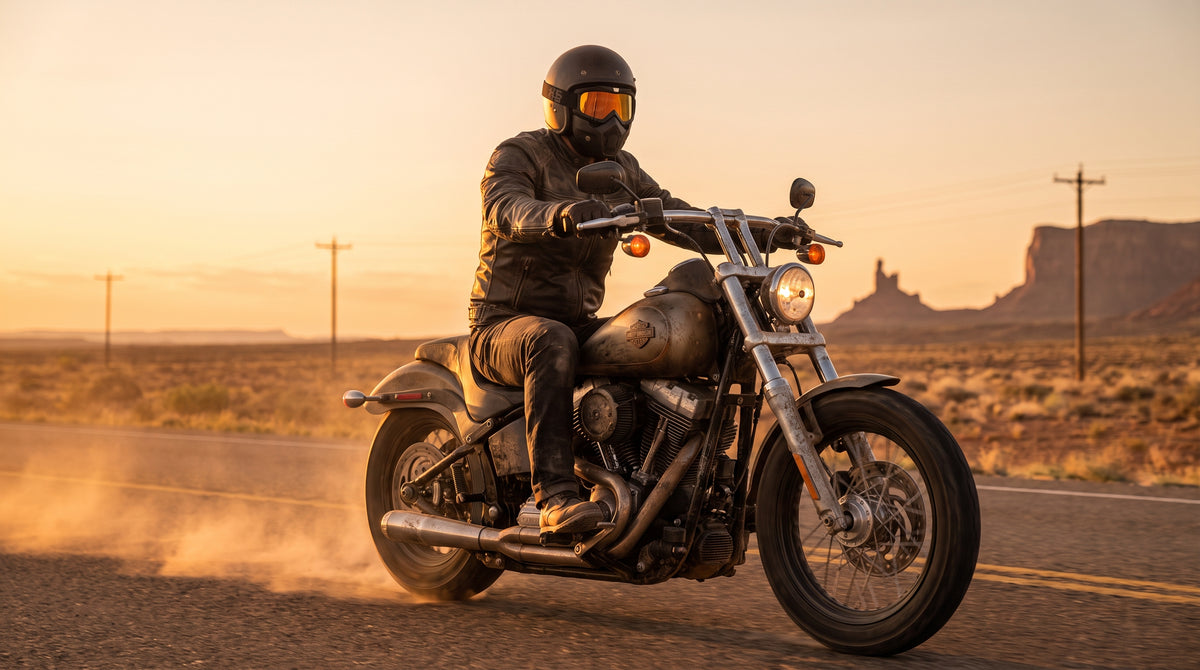
You pull onto the highway at 6 AM, and within five minutes your glasses fog up, the cold air cuts through your neck gap, and you are squinting through tears. That is the reality of riding without proper face protection. A motorcycle face mask with goggles solves three problems at once: wind, debris, and fog. The trick is finding a combo that actually stays clear above 40 mph.
This guide breaks down the best motorcycle face mask and goggle combos, what makes them fog-resistant, and which setups work for different riding styles. Every recommendation here comes from real product specs and rider feedback, not guesswork.
Why a Combined Face Mask and Goggles Setup Beats Separate Pieces
Wearing a standalone mask and separate goggles creates a gap right across the bridge of your nose. Warm breath rises through that gap, hits cold goggle lenses, and fogs them in seconds. A combined motorcycle mask with goggles eliminates that gap by sealing the breathing zone away from the lens area.
The Paulson A-TAC goggle system, used by military and motorcycle riders, proved this principle: sealed airflow channels reduce fogging by up to 70% compared to open-vent designs. Most quality motorcycle combos use a similar approach with one-way vents that push exhaled air downward instead of up into the lenses.
Beyond fog control, a one-piece setup saves time. No adjusting two separate straps, no mask sliding down while goggles stay put. You pull on one piece, buckle one strap, and ride. For commuters doing daily rides, that 30-second difference adds up fast.

What to Look for in a Motorcycle Goggle-Mask Combo
Not every mask-goggle combo is built the same. Here is what separates the ones that work from the ones collecting dust in your garage.
Lens Quality and Anti-Fog Coating
Polycarbonate lenses are the standard for impact resistance. Look for dual-pane (thermal) lenses or a factory anti-fog coating. Single-pane lenses fog faster because there is no insulating air layer between the cold outer surface and the warm inner surface. The Smith OTG goggle line uses dual-pane tech with a hydrophilic inner coating that absorbs moisture instead of letting it bead up.
Ventilation Design
Top vents should pull air across the inner lens surface. Bottom vents push exhaled moisture out. Avoid combos where all vents point inward. That just channels humid breath directly onto the lens.
Material and Fit
Neoprene masks seal better than cotton or mesh against wind. A 2mm-thick neoprene panel blocks wind down to about 32 degrees Fahrenheit without feeling suffocating. The nose bridge should have a moldable wire or foam strip, so you can pinch it tight around your nose and cut off that upward breath flow.
5 Best Motorcycle Face Mask and Goggle Combos for 2026
Here are five setups that riders keep coming back to. Each one handles a different riding scenario.
1. Skull Face Mask with Detachable Goggles
This is the most popular combo in the biker community, and for good reason. The skull print neoprene mask covers from the nose down to the neck, and the detachable tinted goggles snap onto the upper frame. You get full-face coverage with the option to pop the goggles off at a stop without removing the mask. The foam seal around the eye cups keeps wind and dust out at cruiser speeds up to 70 mph. Works best for open-face and half-helmet riders.
2. Clear-Lens Full-Coverage Goggle Mask
For night riding or overcast days, clear polycarbonate lenses are non-negotiable. This style wraps from forehead to chin in a single flexible frame. The key feature is the lower breathing vent, a series of small holes below the nose that direct exhaled air downward instead of onto the lens. Most clear-lens combos weigh under 4.2 oz, so neck fatigue is not an issue on longer rides.
3. Windproof Neoprene Mask with Integrated Goggles
Built for cold-weather riding, these use 3mm neoprene with fleece lining and permanently attached anti-fog goggles. The goggles sit flush against the mask, eliminating any gap. Temperature rating on most models goes down to about 20 degrees Fahrenheit before the neoprene stiffens. Riders in the Midwest and Northeast swear by these for fall and early spring commutes.

4. Balaclava with Built-In Goggle Frame
A full balaclava that covers head, neck, and face with a built-in goggle slot. The advantage here is zero exposed skin. The goggle frame is stitched into the fabric opening, so lenses sit snug against the balaclava edge. Particularly good under full-face helmets where a separate mask creates uncomfortable pressure points. Look for moisture-wicking polyester blends, not straight cotton, which traps sweat and freezes in cold air.
5. Vintage-Style Aviator Goggles with Mask Attachment
For the cafe racer and bobber crowd, aviator-style goggles with a snap-on leather or neoprene lower mask give that classic look without sacrificing function. The goggles typically use shatter-resistant glass or polycarbonate lenses with UV400 protection. The leather mask portion ages well and molds to your face shape over time. The EMGO brand has made this style since 1962, and their current models still use the same stainless steel hinge design.
Motorcycle Goggles and Face Mask Comparison Table
| Type | Best For | Fog Resistance | Temp Range | Weight |
|---|---|---|---|---|
| Skull mask + detachable goggles | Cruiser / open-face riders | Good (sealed foam) | 40-90 F | ~5 oz |
| Clear full-coverage goggle mask | Night riding, low-light | Very good (vented) | 35-85 F | ~4 oz |
| Neoprene + integrated goggles | Cold-weather commuting | Excellent (flush seal) | 20-60 F | ~6 oz |
| Balaclava + goggle frame | Full-face helmet, extreme cold | Good (depends on fit) | 10-50 F | ~3 oz |
| Aviator + snap mask | Cafe racer, bobber style | Moderate (open sides) | 45-80 F | ~7 oz |
How to Stop Motorcycle Goggles from Fogging with a Face Mask
Even the best combo will fog if you skip these basics.
- Pinch the nose wire tight. A 2mm gap across the nose bridge lets enough warm air through to fog any lens. Spend five seconds molding the wire before every ride.
- Apply anti-fog spray or wipes before each ride. Cat Crap (yes, that is the actual brand name) anti-fog balm costs about $8 and lasts 50+ applications. It works on both glass and polycarbonate.
- Do not wipe the inside of the lens with your glove. Glove fabric scratches the anti-fog coating. Use a microfiber cloth or just let the vents do their job.
- Crack open the top vent at stops. Idling at a red light produces the most fog because you are breathing hard with zero airflow. Pop the top vent or lift the goggles slightly until you start moving.
- Replace foam seals yearly. Compressed foam loses its seal and lets warm air seep in. Most manufacturers sell replacement foam kits for under $10.
Common Mistakes When Buying a Motorcycle Goggle-Mask Combo
These are the errors that lead to returns and one-star reviews.
- Buying tinted lenses for all-condition use. Tinted goggles are great in daylight but dangerous at dusk or night. If you ride at varying times, get a combo with interchangeable lenses or buy two sets.
- Choosing cotton masks over neoprene. Cotton absorbs moisture, sags when wet, and provides almost zero wind protection above 30 mph. Neoprene blocks wind and dries in minutes. The price difference is usually less than $5.
- Ignoring helmet compatibility. A thick goggle-mask combo under a tight full-face helmet creates painful pressure on the forehead and cheeks. Measure your helmet's interior clearance before buying. Half-helmets and open-face models work with nearly any combo; full-face riders should look for low-profile options.
- Skipping UV protection. Polycarbonate naturally blocks most UV, but cheap acrylic lenses do not. Prolonged UV exposure at highway speeds can cause photokeratitis, a sunburn on your corneas. Always check for UV400 or ANSI Z87.1 rating on the lens spec sheet.
Which Riders Need a Face Mask with Goggles?
Half-helmet and open-face helmet riders benefit the most. Without a chin bar and visor, your entire face is exposed to wind, bugs, road grit, and rain. A motorcycle face mask handles the lower half while goggles protect your eyes.
Full-face helmet riders generally do not need a separate goggle-mask combo since the visor handles protection. The exception is extreme cold, where a thin balaclava under the helmet stops cold air from seeping through chin vents.
Dirt bike and dual-sport riders use goggles with a face mask for off-road sections where a flip-up visor would get caked with mud. The goggle-mask combo lets you wipe the lens without removing your helmet.
If you are shopping for the right setup, the face mask and goggle combos at American Legend Rider are built for real riding conditions and tested by the community. For separate pieces, the motorcycle goggles collection has options for every style.

No comments yet. Be the first rider to weigh in.