
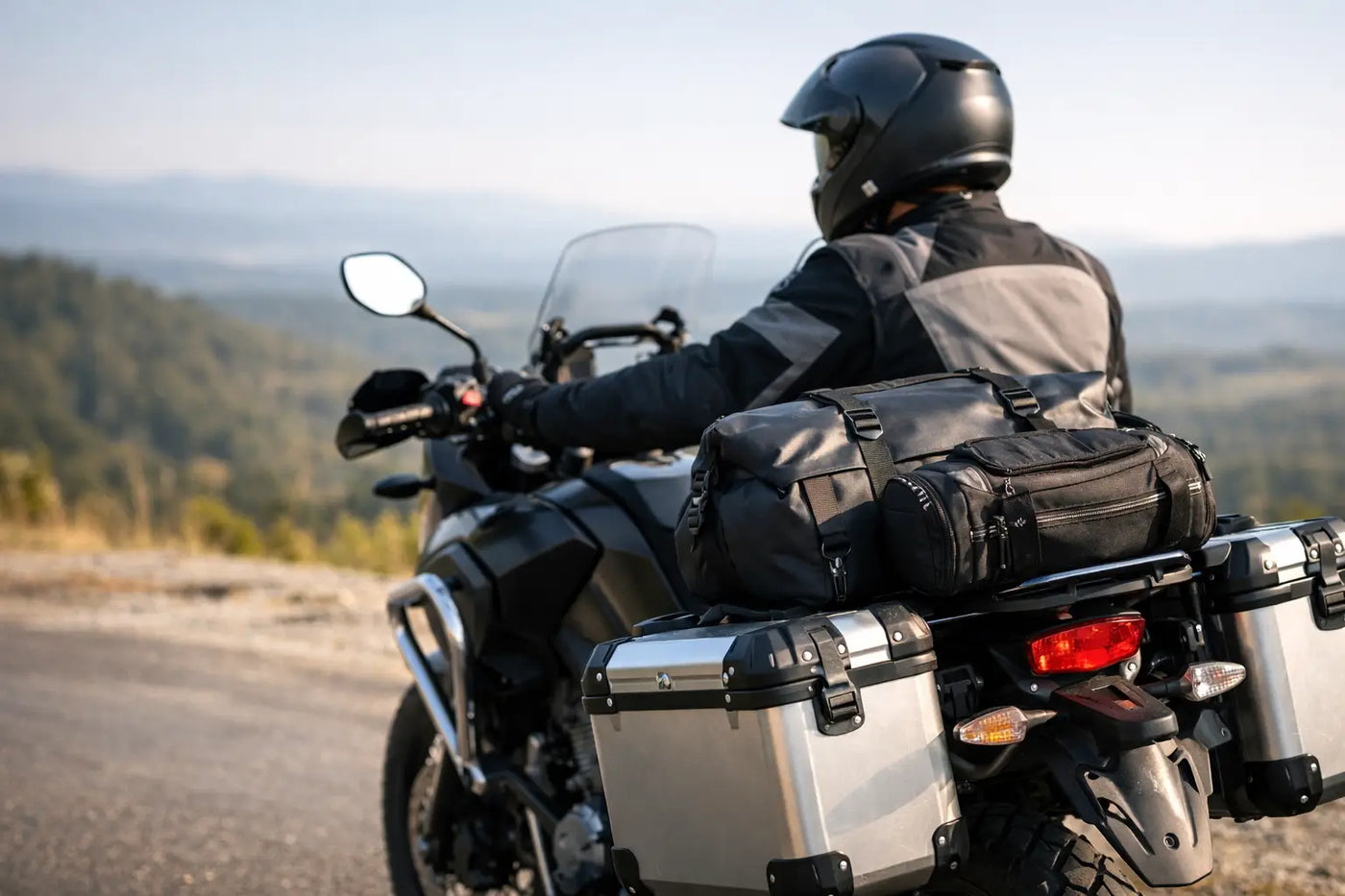
You feel bad luggage fast. It starts when a strap loosens at highway speed, a zipper gives up in the rain, or a bag shifts in a hard corner and reminds you that cheap gear gets expensive when the road turns rough. A solid motorcycle luggage guide is not about stuffing more junk on your bike. It is about carrying what you need without killing comfort, balance, or style.
The right setup depends on how you ride. A weekend cruiser heading to a local run needs something different than a rider knocking out three states in a day. A stripped-down bobber has different limits than a full dresser. That is where a smart luggage setup earns its keep - not just by holding gear, but by staying planted, keeping weight where it belongs, and matching the kind of miles you actually ride.
Motorcycle luggage guide basics
Most riders start by asking what bag is best. Wrong first question. The better question is where the weight should go on your bike and how often you need access to your gear. Once you answer that, the bag type gets a whole lot easier.
Saddlebags are the standard choice for a reason. They keep weight low and split it across both sides of the bike, which usually helps with stability. For cruisers, touring bikes, and many standard motorcycles, they are the closest thing to an all-around answer. Hard saddlebags give better security and weather protection, but they cost more and can look bulky on some builds. Soft saddlebags are lighter, easier on the wallet, and usually more flexible when you are fitting them to different bikes. The trade-off is less theft resistance and, depending on build quality, less protection in bad weather.
Tail bags work well when you want simple storage without side mounting. They sit on the passenger seat or rear rack and are especially useful for solo riders. A good one can carry clothes, tools, and daily essentials without changing the bike too much. The downside is access. If you need something while stopped at a gas station, digging through a packed tail bag can get old fast.
Tank bags are about convenience. They are perfect for items you want within reach - wallet, phone, shades, gloves, paperwork, a small charger. They are not usually your main storage unless you pack very light. On some bikes they fit beautifully. On others, they interfere with riding position or simply look wrong. Cruiser riders often skip them for that reason, while sport-touring and ADV riders tend to love them.
Backpacks are common, but they are not ideal for longer miles. They put weight on your body instead of the bike, which turns into shoulder and back fatigue quicker than many riders expect. Fine for short runs. Not the best move for all-day riding.
Choosing luggage by riding style
If your bike sees mostly bar hops, day rides, and local loops, you do not need a full touring setup. Slim saddlebags or a compact swingarm bag may be enough. This kind of luggage is about carrying the basics - a tool roll, extra layer, water, maybe a few personal items - while keeping the bike lean. A smaller setup also suits riders who care as much about the bike’s profile as storage volume.
If you do weekend trips, your needs jump fast. One overnight stay means clothes, toiletries, chargers, maybe rain gear, and space for whatever you peel off when the temperature changes. This is where medium saddlebags plus a tail bag make a strong combo. You get balance on the sides and expandable room on the back without turning the bike into a freight rig.
Long-distance touring is a different animal. Capacity matters, but organization matters more. You want a system that separates tools from clothes, wet gear from dry gear, and quick-access items from stuff you only touch at the hotel. Hard luggage starts making more sense here, especially if you park in public spaces or ride through mixed weather. If you tour often, paying more upfront can save a lot of aggravation.
For commuters, weather resistance and fast on-off design matter most. If you use your bike to get to work, a bag that takes two minutes to remove every morning becomes a problem. You want luggage that mounts clean, opens fast, and handles a laptop, lunch, and a light layer without a fight.
What matters more than bag size
A lot of riders buy by liters alone. Big mistake. Capacity is only one piece of the job.
Mounting security comes first. If the bag shifts, rubs, sags into the tire, or starts walking around at speed, nothing else matters. Soft bags need proper support on many bikes, especially around exhaust clearance and rear wheel safety. Hard bags need solid hardware and a clean fit. Always check how the bag sits when fully loaded, not just when empty in the garage.
Material quality matters next. Cheap fabric fades, weak stitching tears, and bargain zippers fail when you are tired, wet, and trying to close a bag on the side of the road. Look for reinforced panels, strong buckles, weather-resistant construction, and shape retention. A floppy bag with no structure may hold gear, but it usually packs worse and rides worse.
Then there is access. Top-loading bags are good for packing a lot. Wide-opening bags are better for finding things quickly. External pockets can be useful, but too many of them create clutter and tempt overpacking. Simple usually wins.
Weather protection is where riders often fool themselves. Water-resistant is not waterproof. If you ride through real rain, that difference becomes personal. Some soft bags need rain covers. Others use roll-top inner liners. Hard luggage generally does better here, but even then, seals and latches matter. If keeping gear dry is mission-critical, do not assume. Check the construction.
How to pack without hurting the ride
A good motorcycle luggage guide has to talk about weight, because bad packing can make a capable bike feel sloppy.
Keep heavy items low and centered whenever possible. Tools, locks, liquids, and spare parts should not ride high in a top bag if you can place them lower in saddlebags. The higher and farther back the weight sits, the more it can affect handling. You may feel it in slow turns, braking, and crosswinds.
Balance side-to-side weight closely. One overloaded saddlebag and one half-empty bag can make the bike feel off, especially at lower speeds. It does not need to be perfect to the ounce, but it should be close.
Pack in layers based on use. Stuff you need during the day goes on top or in outer compartments. Stuff you only need at night goes deep. Rain gear should never be buried under three days of clothes. Neither should your tire repair kit.
Leave some room. A crammed bag strains zippers, fights closure points, and makes repacking a headache. It also leaves no space for the small things you pick up along the way.
Matching luggage to the bike
Not every bag belongs on every motorcycle. A big touring trunk on a stripped cruiser can look out of place and feel like overkill. Tiny throw-over bags on a heavy tourer can leave you short on space before the trip even starts. The fit should respect both the machine and the ride.
Cruisers usually pair best with saddlebags, sissy bar bags, and compact tool or swingarm bags. The look stays classic, and the carrying position works with the bike’s geometry. Sport bikes often do better with tail bags and tank bags because side clearance and bodywork can limit saddlebag choices. Adventure and dual-sport riders have the most flexibility, but they also demand the most from luggage because the riding conditions are rougher.
Style matters too. Riders are not wrong for caring how luggage looks. This culture has always been about identity as much as utility. The smart move is finding gear that handles both. Clean lines, durable hardware, and road-ready construction beat gimmicks every time. At American Legend Rider, that balance between function and biker attitude is exactly the point.
When to spend more and when not to
If you ride a few local miles a month, you may not need premium touring cases with heavy hardware and locking systems. Mid-range soft luggage can do the job just fine if it mounts safely and holds up to regular use.
But if you ride hard, travel often, or leave your bike parked with gear attached, cutting corners gets risky. Better materials, stronger mounting, and improved weather protection are worth paying for when the bag becomes part of your routine. The more you depend on it, the less smart it is to gamble on the cheapest option.
The best luggage setup is not the biggest, flashiest, or most expensive one. It is the one that fits your bike, your miles, and your habits without getting in your way. Buy for the ride you actually do, not the fantasy trip you might take once. That is how your gear stays useful long after the promo tags are gone.
No comments yet. Be the first rider to weigh in.