
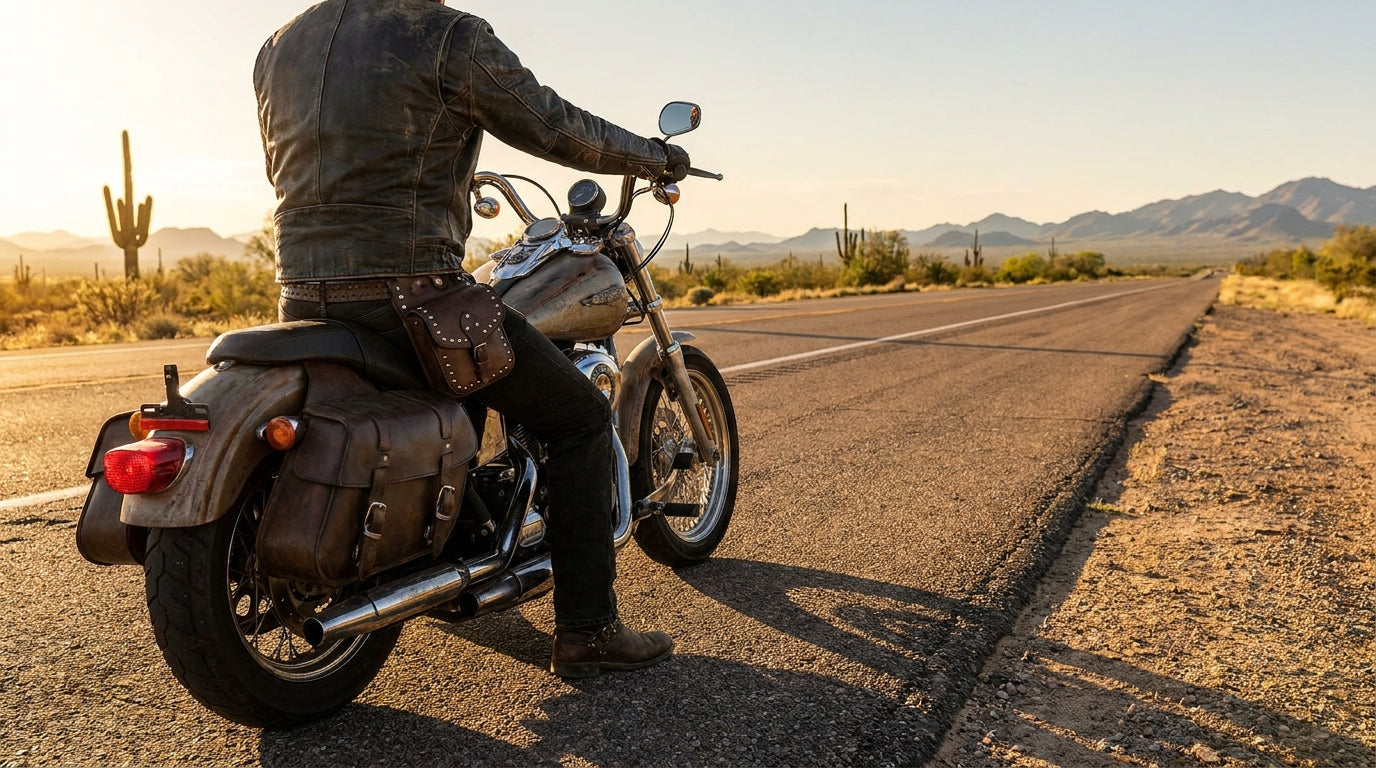
A regular handbag on a motorcycle lasts about one ride before you realize the mistake. The strap slips off your shoulder at 45 mph, the zipper flap catches wind and opens on its own, and every hard lean shifts the bag across your hip until it sits right where your elbow needs to be. A motorcycle purse solves these problems with body-hugging straps, secure closures, and a low-profile shape that stays put at speed. But most riders buy the wrong type for how they actually ride.
This guide breaks down the main motorcycle purse styles women riders use, the materials that hold up versus the ones that fall apart after one season, and the specific mistakes to avoid. You will know exactly what to look for before you spend anything.
What Makes a Motorcycle Purse Different
A motorcycle purse is not a fashion bag with a biker label. The differences are structural, and they matter at speed.
First, the strap system. A standard purse uses a single shoulder strap that slides freely. A motorcycle purse uses either a fixed hip strap that buckles around the waist and thigh, a crossbody strap with an adjustable chest stabilizer, or a sling design that wraps diagonally and cinches tight. The goal is zero movement at any speed. A bag that shifts even two inches at 60 mph creates a distraction that pulls your attention off the road.
Second, the closure. Magnetic snaps and open-top totes are fine for walking. On a bike, wind pressure at highway speed can pop a magnetic snap and send your phone flying. Motorcycle purses use YKK zippers, buckle flaps with snap-under closures, or double-closure systems that combine a zipper with a buckle flap over the top. The Harley-Davidson Women's Rally hip bag uses a magnetic snap backed by a zipper underneath, which is the kind of redundant closure that works.
Third, the profile. Motorcycle purses sit tight against the body with a depth under 3 inches. Anything bulkier catches wind, creates drag on one side, and throws off your center of balance during slow-speed maneuvers. The motorcycle hip bag guide covers profile dimensions in more detail.

Hip and Thigh Motorcycle Purses
Hip bags and thigh bags are the most popular motorcycle purse style for women riders, based on search data and rider forums. They strap around the waist and drop down onto the upper thigh, keeping the bag low and out of the way of your arms.
A good hip motorcycle purse weighs under 1 lb empty and holds the essentials: phone, wallet, keys, and a small repair tool or tire gauge. The typical capacity is 0.5 to 1.2 liters, roughly the size of a large water bottle. Anything bigger starts to bounce against your thigh on rough roads.
The leg strap is the critical feature. It wraps around the upper thigh and prevents the bag from riding up when you lean forward on the tank. Without it, a waist-only bag shifts to your belly every time you tuck into a turn. Look for an adjustable leg strap with a quick-release buckle so you can take the bag off without unbuckling the whole waist belt.
Material-wise, genuine leather hip bags run $45 to $120 and develop a patina over time that actually improves the look. Synthetic PU leather versions run $18 to $40 but start peeling at the edges after about 6 months of sun exposure and road vibration. If you ride year-round, the real leather option pays for itself in longevity. The biker bags comparison guide breaks down costs per season for each material.
Crossbody and Sling Motorcycle Purses
Crossbody bags sit on the opposite hip from the strap shoulder, distributing weight diagonally across the torso. For riders who want slightly more capacity than a hip bag (1.5 to 3 liters), a crossbody motorcycle purse is the next step up.
The strap needs a chest stabilizer clip or a non-slip backing material. Without it, the bag slides to your back during acceleration and swings to your front during braking. A 2-lb crossbody bag swinging forward under hard braking at 30 mph hits your forearm or tank with enough force to break your grip for a split second.
Sling bags are a variation that uses a wider, padded strap and sits higher on the back, between the shoulder blades. The advantage is airflow. A crossbody bag pressed against your chest on a 90-degree day traps heat and creates a sweat patch. A sling bag on the back lets air flow across your chest while keeping the bag secure. The motorcycle crossbody bag guide covers strap systems and secure mounting in detail.
One trade-off: crossbody and sling bags interfere with backpack use. If you also carry a full backpack on longer rides, a hip or thigh bag avoids the strap conflict entirely.

Motorcycle Purse Materials: What Holds Up
Material determines how long your motorcycle purse lasts and how it looks after a season of riding. Here is how the main options compare.
| Material | Weight (typical bag) | Water Resistance | Lifespan | Price Range | Best For |
|---|---|---|---|---|---|
| Full-Grain Cowhide Leather | 0.7-1.2 lbs | Good (wax-treated) | 5-10 years | $65-$150 | Daily riders |
| Top-Grain Leather | 0.5-0.9 lbs | Moderate | 3-5 years | $40-$90 | Weekend riders |
| PU (Faux) Leather | 0.3-0.6 lbs | Fair | 6-12 months | $15-$40 | Casual use only |
| Cordura Nylon (1000D) | 0.4-0.7 lbs | Excellent | 3-6 years | $30-$70 | All-weather riders |
| Canvas | 0.5-0.8 lbs | Poor | 1-2 years | $20-$45 | Light/short rides |
Full-grain cowhide is the gold standard for a biker purse. The leather is 1.0 to 1.2mm thick, resists abrasion from road debris, and develops character over time instead of deteriorating. A $90 full-grain leather motorcycle purse in year five looks better than a $25 PU leather bag in month three. The PU coating cracks, peels, and flakes once UV exposure and vibration break down the polyurethane topcoat.
For wet-climate riders, 1000-denier Cordura nylon is the practical choice. It sheds rain, dries fast, and resists tearing. It does not develop the same look as leather, but it will not crack or peel either. Some riders keep both: leather for dry-weather cruising and Cordura for rain-season commuting.
Skull and Gothic Biker Purse Styles
Skull-studded and gothic-inspired designs are a distinct subcategory of motorcycle purses. These feature stamped or riveted skull hardware, antique silver conchos, crossbones clasps, and dark-toned leather or faux-leather construction.
The key differentiator between a quality skull purse and a cheap novelty one is the hardware attachment. Quality bags use screw-back rivets or Chicago screws that pass through the leather and lock on the inside. Cheap bags use glue-on studs or press-in rivets that pop off after vibration loosens them. Shake the bag hard for 10 seconds. If anything rattles or shifts, the hardware will not survive a season of riding.
Gothic biker purses typically run $35 to $110 depending on whether the base material is genuine leather or PU. The skull and stud hardware adds $10 to $25 to the base price. Designs range from subtle (a single skull zipper pull) to full coverage (skull-embossed leather with stud borders). Popular size is 7 x 5 x 2.5 inches for a hip bag format, which fits a phone, cards, and keys without bulk. The motorcycle bags collection has both leather and skull-studded options.

How to Size a Motorcycle Purse
Sizing depends on how you ride and what you carry. Here is a practical breakdown.
For short rides under 30 miles where you carry only a phone, ID, and keys, a micro hip bag at 0.3 to 0.5 liters is enough. These are 5 x 4 x 1.5 inches and weigh under 6 oz. They disappear against your body at speed.
For day rides of 30 to 100 miles, a standard hip or crossbody bag at 1.0 to 2.0 liters handles a phone, wallet, sunscreen, lip balm, a small multi-tool, and tire plugs. The dimensions run about 8 x 6 x 2.5 inches.
For touring or all-day rides over 100 miles, a sling bag or larger crossbody at 2.5 to 4.0 liters adds room for a rain layer, snacks, a phone charger, and medications. Beyond 4 liters, you are better off with saddlebags or a tail bag instead of a body-worn purse. The weight and bulk of a 5+ liter bag on your hip or shoulder creates fatigue after 2 to 3 hours of continuous riding.
One practical sizing trick: load your current everyday carry into a ziplock bag and measure it. That gives you the minimum interior volume you need. Add 20% for padding and closure clearance. Most riders overestimate how much space they need and end up carrying a bag that is half empty, which adds unnecessary bulk and strap tension for no reason.
5 Mistakes Women Make Buying a Motorcycle Purse
- Buying a fashion crossbody and calling it a motorcycle bag. A regular crossbody bag has a thin strap, no stabilizer clip, and a magnetic snap closure. At 50 mph, the bag swings freely, the snap can pop open in gusting crosswinds, and the thin strap digs into your shoulder under the jacket. A purpose-built motorcycle purse uses a wider strap with non-slip backing and a zipper-plus-buckle closure that stays shut at any speed.
- Choosing PU leather for daily riding. PU leather looks fine in photos and costs a third of real leather. After about 6 months of sun, rain, and vibration, the polyurethane coating cracks and peels. The flaking material sticks to clothing and leaves white residue on dark riding pants. Genuine leather or Cordura nylon costs more upfront but survives 3 to 10 times longer.
- Ignoring the leg strap on a hip bag. A hip bag with only a waist belt rides up to your stomach every time you lean forward. The leg strap anchors the bag to your thigh and keeps it in position through turns, braking, and acceleration. Skip it and you will spend every stop light pulling the bag back down.
- Overpacking a small bag. A motorcycle purse stuffed to maximum capacity bulges outward 1 to 2 inches beyond its designed profile. That extra width catches wind, bounces on bumps, and puts stress on the zipper. Fill your bag to about 75% capacity. If you consistently need more room, size up to the next bag instead of forcing everything into a smaller one.
- Not testing the bag at speed before a long ride. Wear the bag around the house for 10 minutes. Then ride around the block at 30 mph. Then take it to highway speed for 5 minutes. Check whether the strap digs in, the bag shifts position, or the closure loosens. Finding these problems on a 200-mile ride means you are stuck adjusting it every 20 minutes for the rest of the trip.
If you are shopping for a motorcycle purse that handles real riding, the motorcycle bags collection has hip bags, crossbody styles, and leather options built for riders, not fashion displays.



No comments yet. Be the first rider to weigh in.