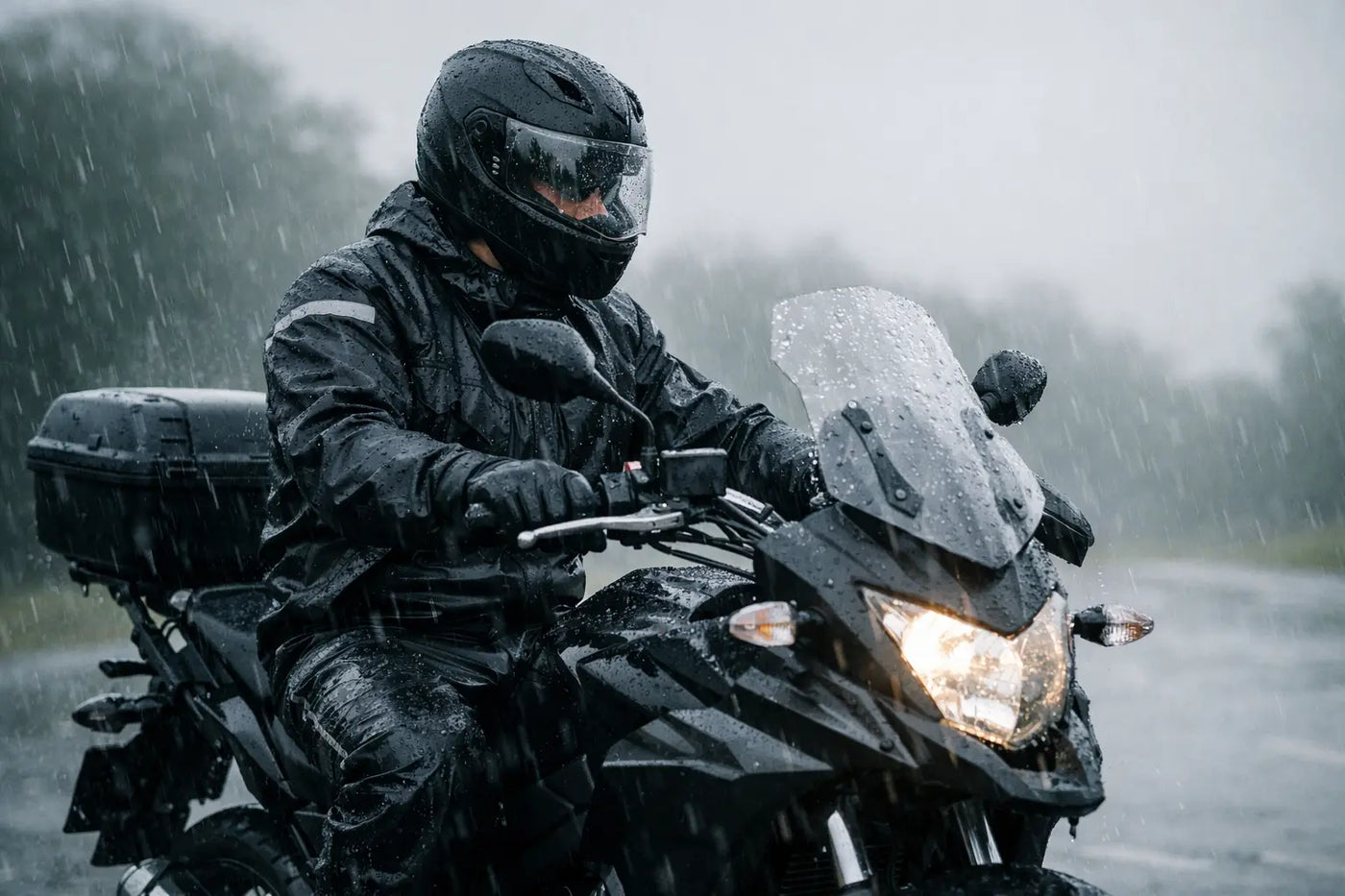
The storm usually starts the same way - a dark line on the horizon, a drop on the tank, then a hard slap of cold rain at highway speed. That is exactly when cheap gear quits on you. If you are shopping for motorcycle rain gear for men, the goal is not just staying dry for ten minutes. The goal is keeping control, staying warm enough to ride sharp, and getting where you are going without feeling like you rode through a car wash in a trash bag.
Good rain gear is working gear. It has to block water, cut wind, fit over your regular riding setup, and hold up when the weather turns mean. If it leaks at the zipper, balloons at speed, or traps sweat until you are soaked from the inside out, it is not road-ready no matter what the tag says.
What motorcycle rain gear for men needs to do
A lot of riders make the mistake of judging rain gear by one thing: whether water gets through. That matters, but it is only part of the fight. Rain on a motorcycle brings wind chill, reduced visibility, slippery controls, and fatigue. Gear that keeps rain out but rides stiff, flaps hard, or overheats you can still wear you down fast.
The best setup handles four jobs at once. It seals out water, blocks wind, gives you enough movement to work the bars and pegs, and stays visible in low light. If you ride a cruiser, touring bike, bagger, or commuter setup, those needs do not change. The style can vary, but the job stays the same.
Material makes a big difference here. PVC-backed rain suits can be highly waterproof and affordable, but they often run hotter and less breathable. Textile shells with waterproof membranes usually feel better on longer rides, though they cost more and can vary in real-world performance. If your rides are short and occasional, a basic over-suit may be enough. If you ride through full seasons, better fabrics and construction usually pay for themselves.
One-piece or two-piece rain gear?
This comes down to how you ride and how much hassle you are willing to put up with when the sky opens.
A one-piece rain suit gives you fewer entry points for water. That is the biggest advantage. There is no gap between jacket and pants, and that matters at speed when rain starts driving upward and sideways. One-piece suits also tend to be fast to throw on if you practice with them. The trade-off is convenience. Getting in and out of one on the side of the road is more of a chore, especially with boots on.
A two-piece setup is more flexible. You can wear just the jacket in light weather, just the pants over your riding jeans, or both when the storm gets serious. For many riders, that versatility wins. The weak point is the waist. If the jacket is short or the fit is loose, water can work its way in over time. A longer-cut jacket and a higher-rise pant help a lot.
If you are a long-haul rider, touring in changing weather, the two-piece setup often makes daily use easier. If you want maximum weather sealing for ugly conditions, one-piece deserves a hard look.
Fit matters more than most riders think
Rain gear should fit over your normal riding jacket, pants, boots, and gloves without turning you into a parachute. Too tight, and it binds at the shoulders, knees, or crotch. Too loose, and it flaps, catches wind, and can distract you when you need to stay locked in.
Look for adjustability at the cuffs, waist, ankles, and collar. Those zones matter because that is where water and wind like to sneak in. A good cuff closure that works with gauntlet gloves is worth more than flashy branding. So is an ankle opening wide enough to get over your boots without a wrestling match on wet pavement.
It also helps to think about your cold-weather layers. A fit that works over a T-shirt in July may not work over a hoodie or thermal base layer in October. Riders who use rain gear as a wind-blocking outer shell should size with that in mind.
The features that actually earn their keep
Some rain gear looks loaded with features but misses the basics. Others keep it simple and get the job done. The details that matter most are not complicated.
Sealed seams are non-negotiable. A waterproof fabric with bad seam construction is a leak waiting to happen. Storm flaps over front zippers also matter, because the zipper line takes a direct beating in rain.
Reflective panels deserve more respect than they get. Rain usually means dark clouds, road spray, and lower visibility. A little extra hit of reflectivity on the chest, arms, back, or lower legs can help drivers pick you up sooner.
Heat resistance is another feature riders forget until it is too late. On some bikes, loose pant legs can get too close to hot exhaust. If your setup runs hot near the lower leg, pay attention to reinforced panels or cut.
Pockets are nice, but only if they stay dry and do not bulk up the fit. Venting can help in warm rain, but it has to be designed carefully. More vents can mean more weak spots if construction is sloppy. This is one of those areas where it depends on your climate. In humid states, airflow matters a lot. In cold rain, sealing and wind protection matter more.
Don’t ignore gloves, boots, and the collar line
A lot of riders buy a jacket and pants, then wonder why they are still miserable in the rain. Water finds openings. It runs down your neck, into your sleeves, and straight into your boots if your setup leaves gaps.
Start with the collar. If it does not close snugly without chafing, rain will work down your chest and ruin the whole system. A tall storm collar or neck gaiter can make a major difference.
Gloves are another make-or-break piece. Wet hands lose warmth and grip fast. A waterproof glove with a gauntlet that works with your jacket sleeve is better than trying to tough it out. The overlap matters. Some riders prefer sleeves over the gauntlet in heavy rain, others tuck the sleeve inside depending on glove design. Test it before the ride, not during the storm.
Boot coverage matters just as much. Waterproof riding boots are ideal, but if you do not have them, rain over-boots can save the day. Just make sure they are secure enough for shifting and stops. Sloppy foot gear is a bad trade.
Cheap rain gear versus better-built gear
Every rider has a budget. Nothing wrong with that. But there is a real difference between budget gear that is a smart buy and cheap gear that is only cheap because it cuts corners.
An affordable rain suit can work well if you use it occasionally, carry it for emergencies, or ride short distances. For that use, simple waterproof construction and decent fit may be all you need. If you commute, tour, or ride through unpredictable weather often, stronger zippers, better seam sealing, tougher fabric, and more refined fit start to matter a lot more.
This is where value beats sticker price. Replacing a failed low-end suit every season is not a bargain. Better gear costs more up front, but it usually rides quieter, lasts longer, and keeps you more comfortable mile after mile. That matters when the weather goes from annoying to dangerous.
How to choose the right setup for your riding style
The best choice depends on how and where you ride.
If you are a weekend cruiser who mostly avoids storms, keep a packable two-piece rain set on the bike. You want fast coverage, easy storage, and enough room over your regular gear.
If you commute in all kinds of weather, focus on quick-entry design, strong closures, and comfort for repeated use. You will be putting it on in parking lots, at gas stations, and in a hurry.
If you tour or ride long distance, spend more attention on fatigue factors. Breathability, reduced flapping, sealed neck and cuffs, and all-day comfort matter more than shaving a few bucks off the price.
And if your style leans hard into blacked-out biker gear, that is fine, but do not sacrifice visibility completely. Tough-looking gear still needs to be seen in rain and road spray.
Care and storage can make or break performance
Rain gear gets abused. It gets stuffed into saddlebags, crammed under seats, and packed away wet. That shortens its life fast.
Let it dry fully before storing it long term. Dirt and road grime should be cleaned off based on the fabric type, because built-up grime can hurt waterproof performance over time. Check seams, cuffs, and zippers before the next ride. A small failure in the garage becomes a big problem on the highway.
It also pays to practice getting into your rain gear. That may sound basic, but doing it once at home beats fumbling with snaps and zippers while thunder rolls in and trucks throw spray across the shoulder.
The right motorcycle rain gear for men is not about looking pretty in a catalog. It is about staying sharp when the weather turns ugly, keeping your ride under control, and not letting a hard storm push you off the road before you are ready. If you want road-tested options built for real riders, American Legend Rider is worth a look. Buy the gear that can take a beating, because the forecast does not care how tough you think you are.

No comments yet. Be the first rider to weigh in.