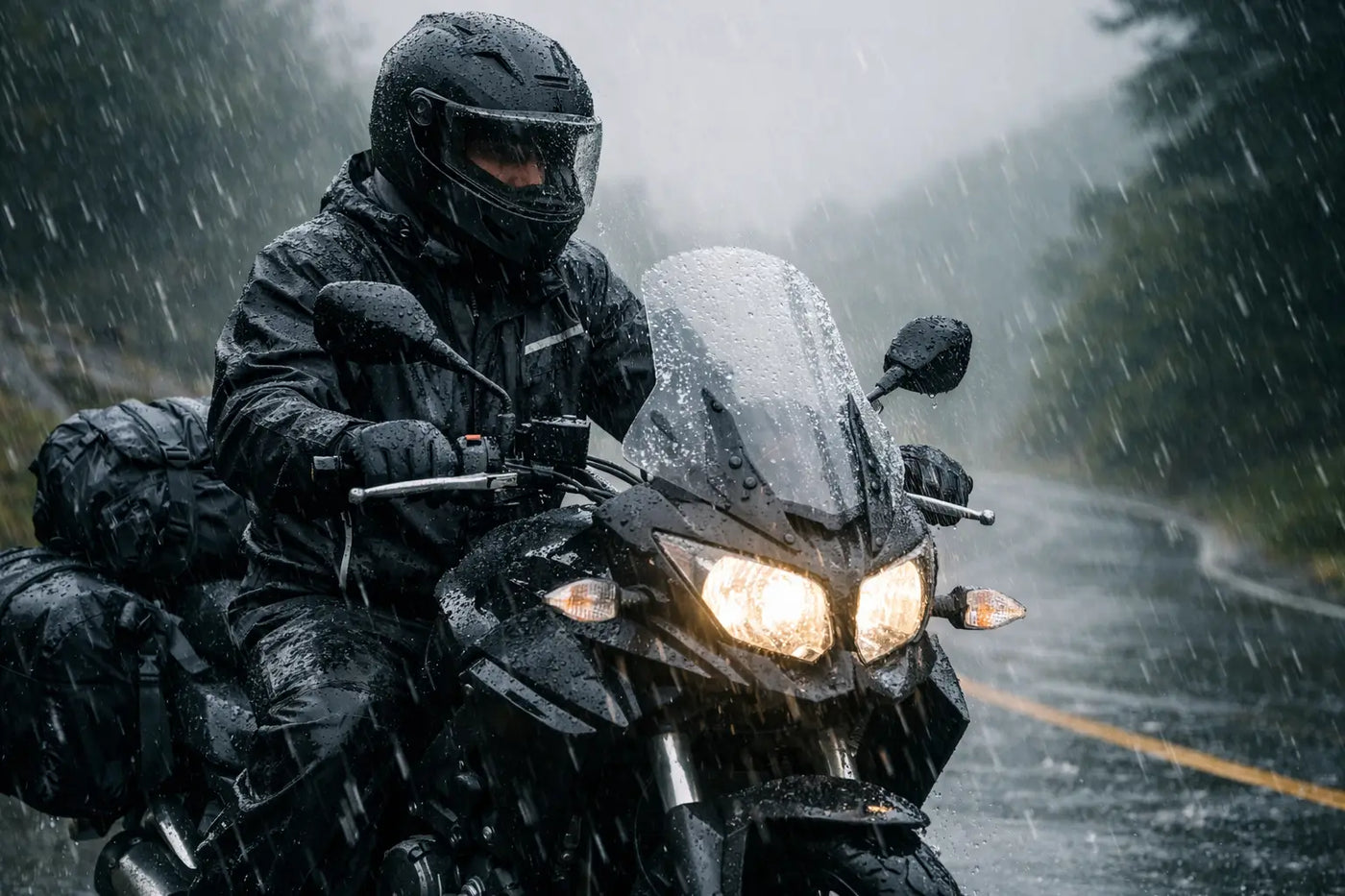
A dry ride can turn into a cold, miserable fight fast when the sky opens up at highway speed. A good motorcycle rain gear guide is not about looking pretty in a parking lot - it is about staying warm, visible, and sharp enough to keep making good decisions when the road gets slick.
Most riders learn this the hard way. Cheap rain gear flaps like a trash bag, leaks at the zipper, soaks through at the gloves, and leaves you shivering twenty miles later. Good gear does the opposite. It seals out water, cuts wind, packs down small, and goes on fast when the clouds start getting ugly.
What motorcycle rain gear actually needs to do
Rain gear has one job, but it is really handling four problems at once. It has to block water, stop wind, manage body heat, and keep you moving without distraction. If it fails at any one of those, your ride gets rough in a hurry.
Waterproofing sounds simple, but riding rain is different from standing in rain. At speed, water gets forced into weak seams, cheap zippers, loose cuffs, and the gap between your jacket and pants. That is why road-ready rain gear matters more than general outdoor rainwear. Motorcycle-specific gear is built for sitting posture, wind pressure, and exposure from every angle.
Breathability matters too, but this is where trade-offs show up. Heavy waterproof gear can keep rain out and still trap sweat inside. If you ride in hot southern states, that can leave you damp anyway. If you ride in colder climates, less ventilation may be worth it because staying warm matters more than airflow. The right choice depends on where and how you ride.
Start with the outer layer: jacket and pants
The heart of any motorcycle rain gear guide is the two-piece setup. For most riders, a waterproof jacket and rain pants give the best mix of coverage, flexibility, and packability.
A dedicated rain jacket should fit over your regular riding jacket without turning you into a parachute. Too tight and it binds your shoulders. Too loose and it catches wind, flaps hard, and wears you out. Look for a longer rear cut, adjustable cuffs, sealed seams, and a storm flap over the front zipper. Those details are not marketing fluff. They are the difference between getting through the ride dry or feeling the water push in around the chest and wrists.
Rain pants matter just as much, even though riders often cheap out here. Wet legs lead to cold legs, and cold legs make long miles miserable. Good rain pants should slide on over your riding jeans or armored pants without a wrestling match on the shoulder of the road. Full-length or long side zippers help a lot, especially if you are already wearing boots.
One-piece suits do have a place. If you ride long distances, commute daily, or regularly get hit with serious weather, a one-piece rain suit gives fewer leak points. The downside is convenience. They are slower to get on, bulkier to carry, and less flexible if only part of your setup needs coverage.
Gloves are where a lot of riders lose the fight
If your hands get soaked and numb, everything gets worse. Throttle control, brake feel, and simple comfort all start slipping. A lot of otherwise decent setups fail right here.
Waterproof motorcycle gloves need to do more than resist a drizzle. They should have a weatherproof membrane, a gauntlet long enough to overlap your jacket sleeve, and closure that actually stays put. Short-cuff gloves can work in light rain, but in steady weather they usually let water find a way in.
There is also the sleeve question, and it depends on the glove design. Some gloves work best under the jacket cuff, others over it. The key is making sure water does not funnel down your arm and collect inside. Test this before you need it on the road, not during a storm at a gas station.
If your current gloves are protective but not waterproof, over-gloves can be a smart backup. They are not as comfortable as true waterproof gloves, but they pack small and can save a ride.
Boots, boot covers, and the problem of soaked feet
Wet feet can ruin your mood faster than almost anything else on a ride. Water gets in from the top, through weak seams, or straight through non-waterproof materials. Once your socks are soaked, the cold settles in and stays there.
Waterproof riding boots are the strongest option if you often ride in bad weather. They offer the cleanest setup and the least hassle. The trade-off is that some waterproof boots run warmer and heavier than vented summer boots.
If you already have boots you like, waterproof boot covers are a solid second move. They are affordable, easy to stash, and useful for surprise weather. Just make sure they fit securely and do not interfere with controls. A sloppy boot cover that slips on the peg is not worth the risk.
Visibility matters more in the rain than style
Rain cuts contrast, fogs shields, and turns drivers even less attentive than usual. Dark gear might fit the biker look, but storms are not the time to disappear into the road.
High-visibility panels, reflective piping, and bright rain shells all help. That does not mean you need to dress like a construction cone every time a cloud rolls in. It means your rain layer should give drivers a better chance of seeing you through spray, glare, and low light.
This is one place where pride should not get in the way. Tough riders still need to be seen.
Fit is everything when the weather turns bad
Even premium rain gear can fail if the fit is wrong. Motorcycle rain gear has to work while you are seated, reaching, turning your head, and moving your feet on the controls. What feels fine standing upright in the garage can bunch up, pull tight, or expose skin once you are in riding position.
Try gear on over your normal riding setup. Check the wrists, collar, waist, crotch, and ankle openings. Those are the leak zones. Make sure you can still access pockets, adjust your helmet strap, and move freely without the material pulling across your shoulders or knees.
Also think about how fast you can get it on. Weather changes quickly. If your gear takes ten minutes of hopping around in a parking lot, you are less likely to use it when you should.
Cheap rain gear usually costs more later
Budget matters, and not every rider needs top-shelf touring gear. But there is a difference between good value and false economy.
The cheapest rain gear often fails at the seams, tears under stress, or leaks after a handful of rides. You save money upfront, then buy it again after the first serious storm. Mid-range gear usually gives the best return for most riders - solid waterproofing, decent durability, and enough comfort to use regularly.
If you ride only occasionally and mostly in fair weather, a packable backup set may be enough. If you commute, travel, or ride across seasons, it makes sense to spend more on gear that can take repeated use. At that point, better materials and construction are not luxuries. They are part of staying road-ready.
Build a rain setup that matches your riding
The right setup depends on your machine, your miles, and your weather. A weekend cruiser rider in Arizona does not need the same system as a daily highway commuter in the Pacific Northwest.
Short local rides may only call for a simple shell, waterproof gloves, and boot covers stashed in a saddlebag. Longer riders usually need a full system with reliable jacket and pant coverage, waterproof boots, and gear that can stay comfortable for hours. If you tour, packability matters. If you commute, speed and convenience matter more.
For riders who want one place to gear up without sorting through generic outdoor junk, American Legend Rider carries the kind of road-focused gear and riding essentials that actually make sense for motorcycle weather.
Don’t wait for the storm to test your setup
The smartest move is getting your rain gear sorted before you need it. Put it on at home. Sit on the bike. Check your range of motion. Spray it down if you want to know where the weak spots are. That little bit of prep beats learning about a bad zipper seal in the middle of a cold ride.
Bad weather does not care about your schedule, your route, or how close you are to home. The riders who handle rain best are not the ones with the most expensive setup. They are the ones who chose gear that fits right, works at speed, and is ready when the road turns against them.
Stay dry, stay visible, and keep your head in the ride.

No comments yet. Be the first rider to weigh in.