
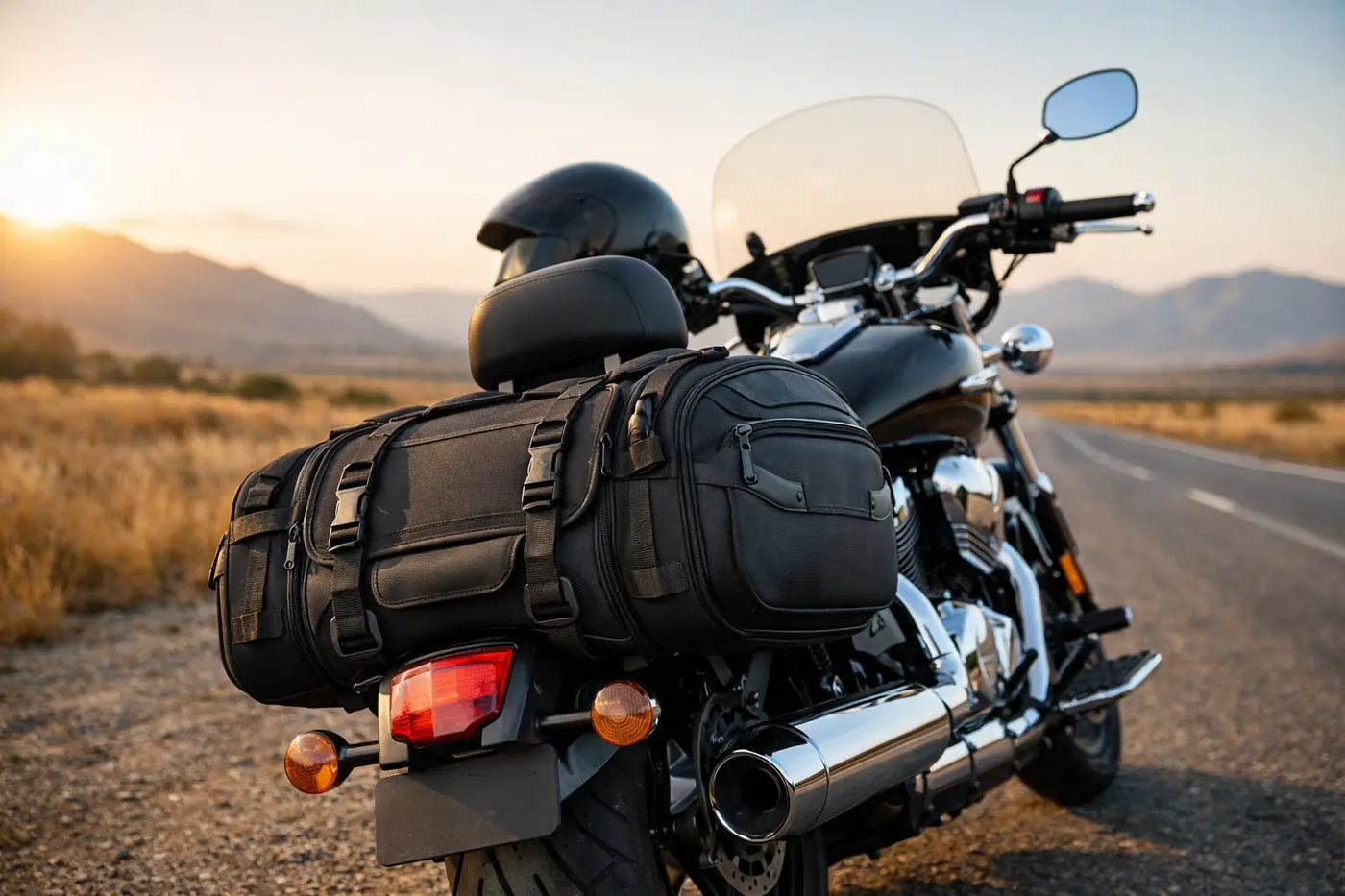
A weak bag shows its flaws fast. You feel it at highway speed when it starts to flap, sag, or rub your paint. You notice it at the gas stop when you have to dig for gloves, tools, or a rain layer. Good motorcycle saddlebags do the opposite - they stay put, carry what matters, and look right on the bike.
That is why this category deserves more thought than most riders give it. Saddlebags are not just extra storage. They change how your bike works day to day. The right setup makes commuting easier, road trips cleaner, and weekend rides less annoying. The wrong setup can mess with balance, clearance, and convenience every single time you throw a leg over.
What motorcycle saddlebags need to do
A solid set of motorcycle saddlebags has three jobs. First, it needs to carry enough gear without turning your bike into a clumsy pack mule. Second, it needs to hold up against wind, vibration, weather, and repeated use. Third, it needs to match the kind of riding you actually do, not the kind of riding you imagine once a year.
That last part is where a lot of bad buys happen. A rider with a daily cruiser may need quick access to sunglasses, a phone mount battery pack, and a light jacket. A touring rider might need room for tools, extra gloves, water, and overnight essentials. A bike-night rider may care just as much about the profile and finish as the cargo space. None of those priorities are wrong, but they lead to different bag choices.
Leather, synthetic, or hard-shell motorcycle saddlebags?
Material matters because it changes the look, lifespan, maintenance, and price.
Leather saddlebags still own the classic biker look. They fit naturally on cruisers, V-twins, and old-school builds. A good leather bag has presence. It can make a bike look more complete, more planted, and more serious. The trade-off is upkeep. Real leather needs care, and cheaper leather can dry out, crack, or lose shape if it gets punished by weather.
Synthetic bags are the practical workhorses. They are usually lighter, easier to clean, and more budget-friendly. Many modern synthetic options also handle rain better than lower-grade leather. If you ride often and care more about function than tradition, synthetic can be the smarter call. The downside is simple - some of them look cheap if the build quality is not there.
Hard saddlebags bring the most structure and usually the best security. They keep their shape, protect gear better, and often include locking systems. For touring and heavier-use riders, that is a serious advantage. But hard bags are less forgiving on fit, usually cost more, and can look out of place on certain stripped-down customs.
So what is best? It depends on your bike and your priorities. If style leads, leather has a strong case. If value and low maintenance matter most, synthetic is hard to beat. If protection and lockable storage top the list, hard bags make sense.
Fit comes before features
A bag can have all the right features and still be wrong if it does not fit the bike. This is where riders get burned.
Start with clearance. You need enough room from the exhaust, shocks, axle area, and rear wheel. A bag that sits too low or too close to heat is asking for trouble. Some bikes can run throw-over bags with little drama. Others need support brackets to keep everything stable and safe.
Then think about size in proportion to the bike. Oversized bags on a smaller cruiser can look awkward and affect handling. Tiny bags on a full-size touring bike may look clean but leave you carrying half your gear in a backpack. The right fit is not just about measurements. It is about visual balance and real use.
If you ride two-up, passenger space matters too. Some bags eat into foot room or make mounting the bike more annoying than it should be. A bag that works for solo riding may become a headache once a passenger is involved.
The features that actually matter on the road
Some product features sound great in a listing and barely matter once you are riding. Others make a real difference every week.
Weather resistance is one of the big ones. Even if you do not ride through storms on purpose, you will eventually get caught in rain, road spray, or overnight moisture. Water-resistant construction, solid lids or flaps, and decent closures matter more than flashy trim.
Closures are worth paying attention to. Buckle-style straps look right on many bikes, but they can be slower to open if you are grabbing gear often. Quick-release systems hidden under buckle covers give you the classic look without the hassle. Zippers are convenient, but they need to be strong and protected from weather. If the bag is frustrating to open at a fuel stop, you will feel that every ride.
Shape retention matters more than many riders expect. A sagging bag not only looks bad, it can shift, rub, and wear unevenly. Reinforced walls or internal structure help the bag keep its form, especially when it is only partly loaded.
Security is another it-depends category. If you mostly ride local and keep valuables on you, simple closures may be enough. If you tour, park in public places, or use your bike for regular errands, locking options start to matter a lot more.
Style still counts
Let us be honest - nobody wants ugly gear hanging off a good-looking bike. Motorcycle saddlebags are practical, but they are also part of the machine's identity.
A clean black leather setup with chrome accents hits differently on a cruiser than a boxy hard bag built for long-haul miles. Studded bags, conchos, skull details, and throwback shapes speak to a certain rider and a certain culture. Minimalist bags suit riders who want the bike to stay sleek. Bigger, bolder bags fit riders who want a road-ready stance with no apologies.
There is no neutral answer here. The right look depends on your build, your riding scene, and your taste. Just do not sacrifice function completely for looks. A bag that nails the style but fails on mounting, storage, or durability gets old fast.
How much storage do you really need?
Most riders should buy for 80 percent of their use, not the biggest possible trip they might take.
If you commute, moderate-capacity bags are usually enough. You need room for basics, not a mobile garage. If you do weekend runs or overnights, step up to something with enough structure to pack layers, tools, and small personal gear without stuffing everything to the limit.
For touring, capacity matters, but access matters just as much. Deep bags are great until your rain gear is buried under everything else. Wider openings, internal pockets, and smarter organization can beat raw volume.
That is one reason a broad selection matters. Riders shopping American Legend Rider are usually not looking for generic storage. They want gear that fits their bike, their style, and their budget without wasting time on junk.
When cheaper motorcycle saddlebags cost more
Everybody likes a deal. Nobody likes replacing a bag halfway through the season.
Budget saddlebags can be a smart buy if the core construction is there. Strong stitching, decent mounting hardware, reinforced backing, and weather-ready materials are what matter. But ultra-cheap bags often cut corners where it hurts most. Weak straps, thin walls, flimsy buckles, and poor shape retention show up fast once the miles stack up.
That does not mean the most expensive option is automatically the best. Sometimes you are paying for branding, extra trim, or features you will never use. The better move is to spend on durability and fit, then decide how much style detail you want on top.
The smart way to choose
Before you buy, think through your real-world ride. What do you carry every week? Do you leave the bike parked outside? Do you ride in mixed weather? Is your bike built for stripped-down looks or loaded miles? Do you care more about quick access, security, or old-school style?
Answer those questions first, and the right bag type usually becomes obvious. From there, it is about build quality, mounting confidence, and how the bag looks on your machine.
The best motorcycle saddlebags are not the biggest, flashiest, or most expensive. They are the ones that feel right every time you ride - steady on the road, useful at every stop, and tough enough to keep earning their place mile after mile.

No comments yet. Be the first rider to weigh in.