
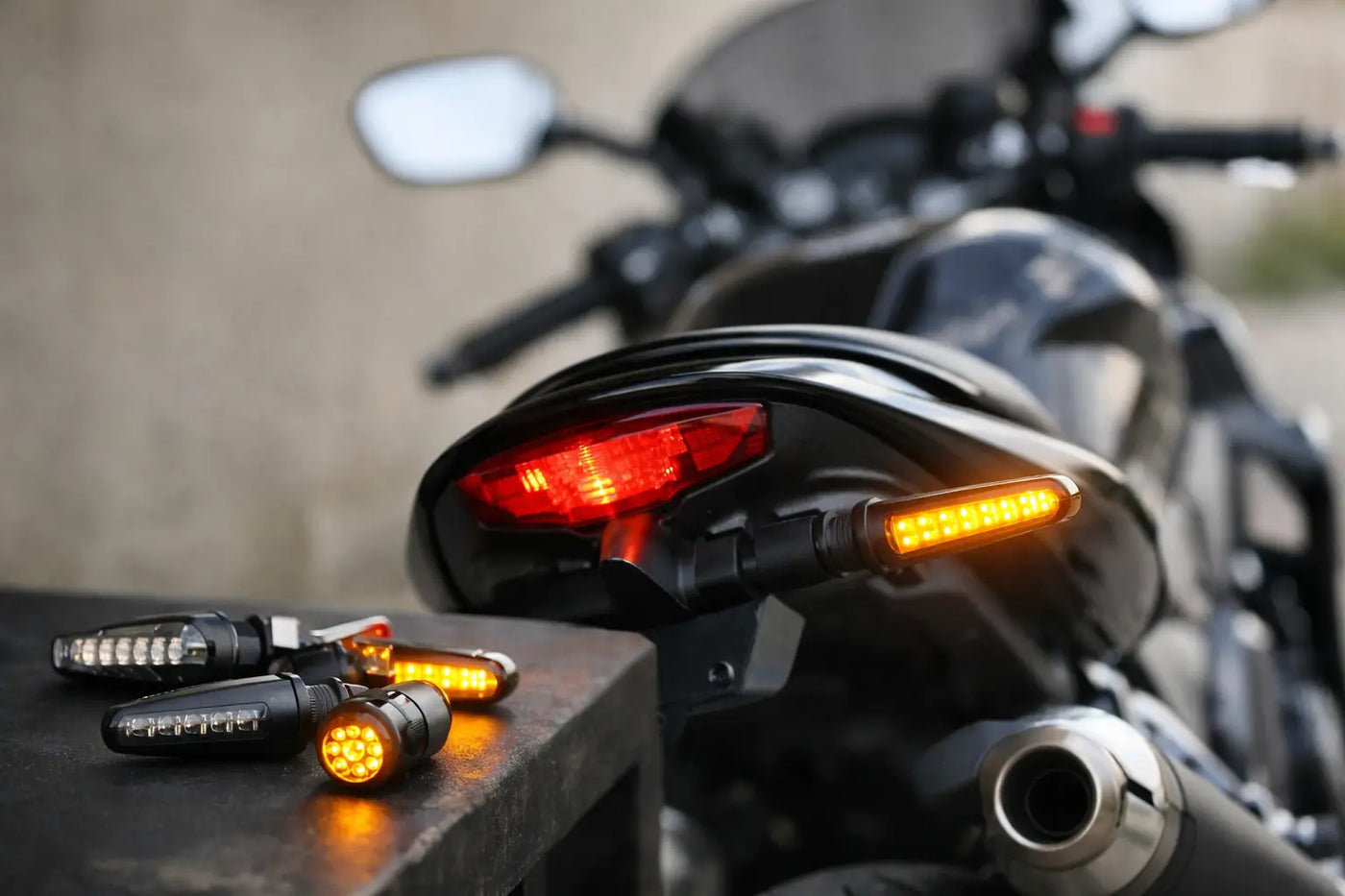
A weak blinker on a motorcycle is more than an eyesore. It is one of those small parts that can get you ignored in traffic, missed at an intersection, or rear-ended by a distracted driver who never caught your signal. That is why so many riders are switching to motorcycle turn signals LED setups - not for gimmicks, but for sharper visibility, cleaner styling, and less hassle over time.
LED turn signals have become the standard upgrade for riders who want their bike to look tighter and work harder. They light faster, run cooler, and usually last far longer than old-school incandescent bulbs. But not every set is worth bolting onto your machine. Brightness, fitment, wiring, lens color, and local street-legal rules all matter. Buy the wrong pair, and you can end up with hyper flash, weak daytime visibility, or signals that look good in a garage photo and disappear on the road.
Why motorcycle turn signals LED are worth the switch
The biggest reason riders move to LED is visibility. A good LED signal cuts through daylight better than a tired stock bulb, and it turns on instantly. That quick on-off response may sound minor, but every fraction of a second matters when a driver is already half-paying attention.
There is also the durability factor. Motorcycles vibrate. They get rained on, washed down, baked in the sun, and parked in cold weather. Incandescent bulbs are more fragile under that kind of abuse. LED units are generally built to handle more punishment, especially when the housing and wiring are sealed well.
Then there is style. A lot of stock turn signals stick out like plastic antennae. Riders going for a stripped-down cruiser build, club-style look, or custom bobber profile usually want a lower-profile setup. LED signals give you more options, from smoked lenses and bullet housings to slim stalks and integrated tail light combinations.
That said, smaller does not always mean better. The slickest low-profile signal in the catalog is useless if nobody can see it from thirty feet away in daylight.
What matters most before you buy
Brightness comes first. Ignore the hype words and focus on whether the signal is truly visible in both daytime and nighttime conditions. Some cheap LEDs are painfully bright in a dark garage and oddly weak in full sun. That is a bad trade.
Lens and housing design matter almost as much as raw output. A well-shaped lens spreads light in a way drivers can catch from an angle. If you ride in traffic a lot, side visibility is not optional. Drivers rarely line up perfectly behind or beside you.
Build quality is another line you do not want to cross. Thin wires, flimsy rubber stalks, and housings that let in moisture usually fail early. If the signal feels cheap in your hand, it will feel even cheaper after a season of vibration and weather.
Fitment is where riders waste money. Universal signals can work, but universal does not mean bolt-on perfection. You may need adapter plates, spacers, a different mounting bolt, or extra wiring work. On some bikes, especially cruisers and older models, getting the signal to sit clean and secure takes more than just tightening one nut.
The wiring issue riders run into
If you upgrade from incandescent to LED, your bike may start flashing too fast. That is hyper flash, and it happens because LEDs draw less power than the stock setup expects. Some riders fix it with load resistors. Others swap in an LED-compatible flasher relay. Both can work, but one may make more sense depending on your bike.
A relay swap is often the cleaner solution if your model supports it. Resistors can solve the issue too, but they add heat and extra wiring. If you are trying to keep the install simple and reliable, less clutter is usually better.
You also need to pay attention to whether the signals are single-function or dual-function. Some units only handle turn signaling. Others combine running lights and turn signals, especially on the front. If your bike uses a dual-function setup from the factory, replacing it with a basic single-function signal can create compatibility headaches unless you know exactly what you are changing.
Best styles for different bikes
The right LED signal depends on what you ride and how you want it to look.
For cruisers, bullet-style LED turn signals are a strong fit. They keep that classic American road presence while tightening up the shape and improving brightness. Black housings work well on murdered-out builds, while chrome still looks right on traditional V-twins.
For sport bikes and naked bikes, flush-mount or short-stalk LED signals usually make more sense. They clean up the bodywork and reduce that factory plastic look. The trade-off is visibility. Some flush-mount options look sharp but sit too close to the fairing to stand out in traffic.
For bobbers, choppers, and custom builds, compact LEDs can finish the look without throwing off the lines of the bike. Just be careful not to go so tiny that you give up road visibility for garage style. A custom machine still has to communicate with traffic.
Adventure and touring riders should lean toward tougher housings and weather resistance over minimal size. If you rack up miles in different conditions, reliability matters more than a super-clean silhouette.
Should you choose smoked or clear lenses?
This comes down to looks versus visibility, and sometimes legality. Smoked lenses can look mean on a blacked-out bike, but not all smoked signals perform equally. If the lens is too dark and the LED output is mediocre, your turn signal becomes decoration.
Clear or amber lenses are usually the safer bet for visibility. Amber output tends to read more clearly to other drivers, especially during the day. Many riders like the look of smoked housings with bright amber LEDs inside, but that only works if the signal is still easy to see.
Street-legal requirements vary by state and bike setup, so check what applies before making your final choice. Looking good on the lot is not worth getting hassled over equipment on the road.
Cheap vs premium LED signals
There is a price point where cheap turns into junk. If a set of four LEDs costs less than a decent lunch stop, keep your guard up. You are dealing with an electrical part that faces vibration, weather, heat, and road grime. Bargain-bin signals often cut corners on seals, wiring, and lens quality.
That does not mean the most expensive option is automatically the best. Some premium signals charge extra for design and branding, not necessarily for better performance. The sweet spot is usually a signal with solid construction, clear output specs, weather-resistant housing, and fitment details that make sense for your bike.
For most riders, the smart buy is not the cheapest set or the flashiest custom piece. It is the one that stays bright, stays mounted, and keeps working after months of real riding.
When integrated LED signals make sense
Integrated tail lights with built-in turn signals look clean, especially on sportier builds or bikes where you want to clear out the rear fender area. They can reduce clutter and sharpen the whole profile of the bike.
But they are not perfect for every rider. Putting brake and turn functions close together can make the rear of the bike harder for drivers to read quickly, especially in heavy traffic. On some bikes, separate rear turn signals create a clearer visual cue. If safety and visibility are your top priorities, wider spacing is often better.
This is one of those it-depends situations. If you ride mostly in town, lane split where legal, or deal with a lot of distracted traffic, clearly separated rear signals may be the stronger move.
A smart buying checklist
Before you order, make sure you know your mounting style, voltage compatibility, front and rear function requirements, and whether your bike needs a relay or resistors. Check the dimensions, not just the photos. A signal that looks compact online can still stick out farther than expected once mounted.
It also pays to think about your real-world riding. If your bike lives outside, weather sealing matters more. If you ride long highway miles, brightness and side visibility matter more. If your build is show-focused, style may carry more weight, but it still should not come at the cost of basic function.
Riders shopping gear and upgrades at American Legend Rider usually want both sides of the deal - hard-working parts and a look that matches the machine. That is exactly how LED turn signals should be chosen. Not just by appearance, and not just by price.
The right upgrade is the one drivers notice
The best motorcycle turn signals LED setup is not the one with the coolest product photo. It is the one that fits your bike cleanly, flashes bright in daylight, survives real miles, and gives other drivers no excuse to miss your next move. Buy for the road first, then the style. If you get both, that is money well spent.


No comments yet. Be the first rider to weigh in.