
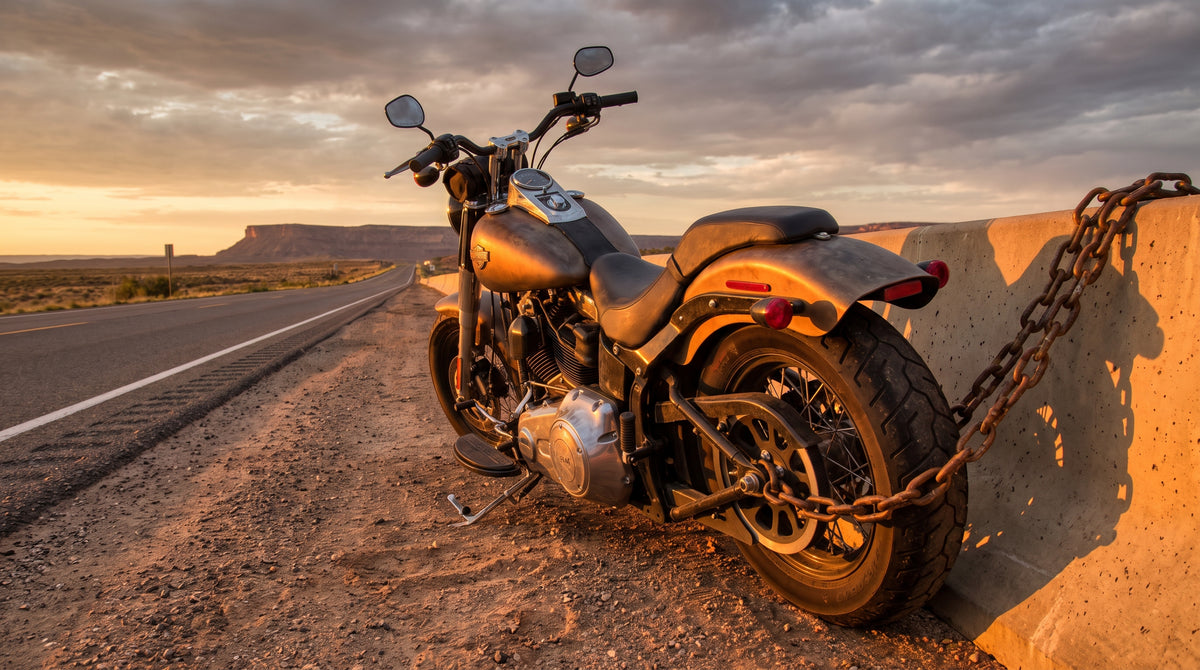
A thief with a $30 pair of bolt cutters can snap a cable lock in under 10 seconds. That is not an exaggeration. It is documented in every motorcycle theft study published since 2019. If you are relying on anything thinner than hardened steel chain to protect your bike, you are giving thieves a green light.

Chain locks sit at the top of the motorcycle security ladder for a reason: they are heavy, hard to cut, and they let you anchor your bike to something a thief cannot move. This guide breaks down steel grades, link thickness, lock cylinders, and the mistakes that get bikes stolen even when a chain is present.
What Makes a Motorcycle Chain Lock Worth Buying
Three things separate a real chain lock from a decorative one: link diameter, steel composition, and the lock cylinder.
Link diameter is the single biggest factor. A 10mm chain can be cropped with standard 42-inch bolt cutters in one squeeze. Move up to 13mm or 14mm hardened links and bolt cutters are useless. An angle grinder will still cut through, but it takes 30 to 60 seconds of sparks and noise, which is exactly the kind of attention a thief wants to avoid.
Steel composition matters almost as much. Look for manganese or boron-hardened steel. Kryptonite's New York Fahgettaboudit chain uses 14mm six-sided hardened manganese steel links, which is why it has held Sold Secure Diamond ratings for over a decade. Cheap chains use mild steel that grinds through fast and bends under leverage.
Lock cylinder is the weak link most people ignore. A chain is only as strong as its padlock. Disc-detainer cylinders resist picking far better than standard pin-tumbler locks. If the chain ships with a cheap padlock, replace it with an Abloy, ABUS Granit, or Squire SS65CS.

Motorcycle Chain Locks vs Disc Locks: When to Use Each One
This is the most common question in motorcycle security forums, and the answer is straightforward: they do different jobs.
A chain lock anchors your bike to a fixed object. A lamp post, a ground anchor, a fence. The thief cannot roll the bike away without cutting the chain. A disc lock clamps to the brake rotor and prevents the wheel from spinning, but two people can still lift the bike into a van.
The strongest setup combines both. Chain to an anchor, disc lock on the front rotor, and a GPS tracker hidden under the seat. Each layer adds time and risk for the thief.
| Feature | Chain Lock | Disc Lock |
|---|---|---|
| Anchors to object | Yes | No |
| Portable | Heavy (5-15 lbs) | Light (1-2 lbs) |
| Defeats bolt cutters | 13mm+ links: yes | Yes |
| Defeats lift-and-van | Yes (when anchored) | No |
| Price range | $40-$200+ | $20-$120 |
| Best for | Home, overnight, high-risk areas | Quick stops, daytime parking |
If you can only buy one, a chain lock protects against the most common theft method: rolling the bike away. If you can buy two, add a disc lock with an alarm for daytime stops.
Chain Link Thickness and What It Means for Security
This is where most buyers get confused. Chain manufacturers use millimeters to describe link diameter, and every millimeter matters.
- 8-10mm links: Entry-level chains. Standard 42-inch bolt cutters will crop them in a single cut. Fine for low-risk areas with short stops, but not overnight security.
- 11-12mm links: Mid-grade. Bolt cutters struggle, but a well-placed hydraulic cutter or a $50 angle grinder with a cutting disc will get through in about 20 seconds.
- 13-14mm links: The sweet spot for most riders. Bolt cutters are out of the picture entirely. An angle grinder takes 45 to 60 seconds and throws sparks that draw attention. Oxford's Beast chain uses 12mm square-profile links that add grinder resistance because the flat surface bounces.
- 16mm+ links: Maximum security. These chains weigh 15 to 22 pounds and are designed for home use with a ground anchor. Almax Immobiliser Series IV uses 19mm boron-steel links and is one of the few chains to survive coordinated tool attacks in independent testing.
For most riders who need to carry a chain on the bike, 13mm to 14mm is the right balance between weight and security.
Best Motorcycle Chain Locks by Security Level
Not every rider needs the heaviest chain on the market. Match the chain to your risk level and where you park most often.
| Security Level | Link Size | Weight | Best For |
|---|---|---|---|
| Budget (deterrent) | 8-10mm | 3-5 lbs | Low-crime areas, quick errands |
| Mid-range (solid) | 11-13mm | 6-10 lbs | Daily commuters, street parking |
| High (recommended) | 13-14mm | 9-14 lbs | Urban areas, overnight parking |
| Maximum | 16-19mm | 15-22 lbs | Home anchor, high-theft zones |
A 4-foot chain length works for anchoring to a ground bolt. If you need to wrap around a pole or lamp post, get 5 to 6 feet. Anything longer than 6 feet adds weight you will resent carrying.
How to Use a Motorcycle Chain Lock the Right Way
A $200 chain used badly is worse than a $60 chain used properly. Here is what the motorcycle theft prevention data actually shows.
Thread it through the frame, not just the wheel. A front wheel unbolts in under two minutes. Run the chain through the rear swingarm and rear wheel together, then loop it around your anchor point. This forces the thief to cut the chain to move the bike at all.
Keep the chain off the ground. A chain lying flat on concrete gives the thief leverage. They can brace the bolt cutters against the ground and use body weight. Wrap the chain high and tight so any cutting tool has to work against gravity.
Lock to something immovable. A signpost that is cemented into the ground works. A wooden fence does not. For home parking, install a ground anchor rated to Sold Secure Gold or Diamond. The Pragmasis Torc ground anchor bolts into concrete with M12 expanding bolts and resists pull-out forces over 3 tonnes.
Minimize slack. Every extra inch of loose chain gives a thief room to position tools. Pull the chain snug before closing the lock.
5 Chain Lock Mistakes That Get Bikes Stolen
Insurance claim data and police recovery reports paint a clear picture of what goes wrong.
- Buying a thick chain with a cheap padlock. The Kryptonite Evolution chain uses 10mm links, but its included lock has a standard pin-tumbler cylinder. A skilled picker can open it in under 90 seconds. Upgrade the padlock or buy a chain system where the lock matches the chain's rating.
- Locking only the front wheel. The front wheel is held on by a single axle nut. Remove it, slide the wheel out, roll the bike away. Always loop through the frame or swingarm.
- Leaving chain slack on the ground. Ground contact equals leverage. A short pry bar wedged into loose chain links on concrete can snap 10mm links without bolt cutters.
- Parking in the same unlit spot every night. Thieves scout locations. If your bike sits in the same dark corner every evening, they will bring the right tools on the right night. Vary your spot when possible and add motion-sensor lighting at home.
- Relying on one layer only. Professional thieves carry one tool. A disc lock stops the grinder crew. A chain stops the lift-and-van crew. A GPS tracker catches both after the fact. Layer your security.
Do You Need a Chain Lock with an Alarm?
Some chain lock systems include a built-in alarm that triggers when the chain is moved or cut. The Oxford Monster chain, for example, offers an alarm-equipped padlock variant.
Alarms add a deterrent layer, but they are not a substitute for thick steel. In a busy parking lot, an alarm draws attention that most thieves want to avoid. In an empty garage at 3 AM, nobody hears it. The chain's physical resistance is still what buys you time.
If you want alarm coverage, a standalone motorcycle alarm system mounted on the bike itself gives better sensor coverage than a padlock alarm. Pair it with a good chain for the best of both worlds.
What to Buy First
Start with a 13mm or 14mm chain, a quality padlock with a disc-detainer cylinder, and a ground anchor if you park at home. Add a disc lock for daytime stops. That combination covers the most common theft methods and puts your bike in the "too much trouble" category for opportunistic thieves.
If you are building out your security setup, the motorcycle locks and chain collection is where to start. And for the layer that catches a thief even after they cut the chain, a hidden GPS tracker is the backup plan that actually works.

No comments yet. Be the first rider to weigh in.