
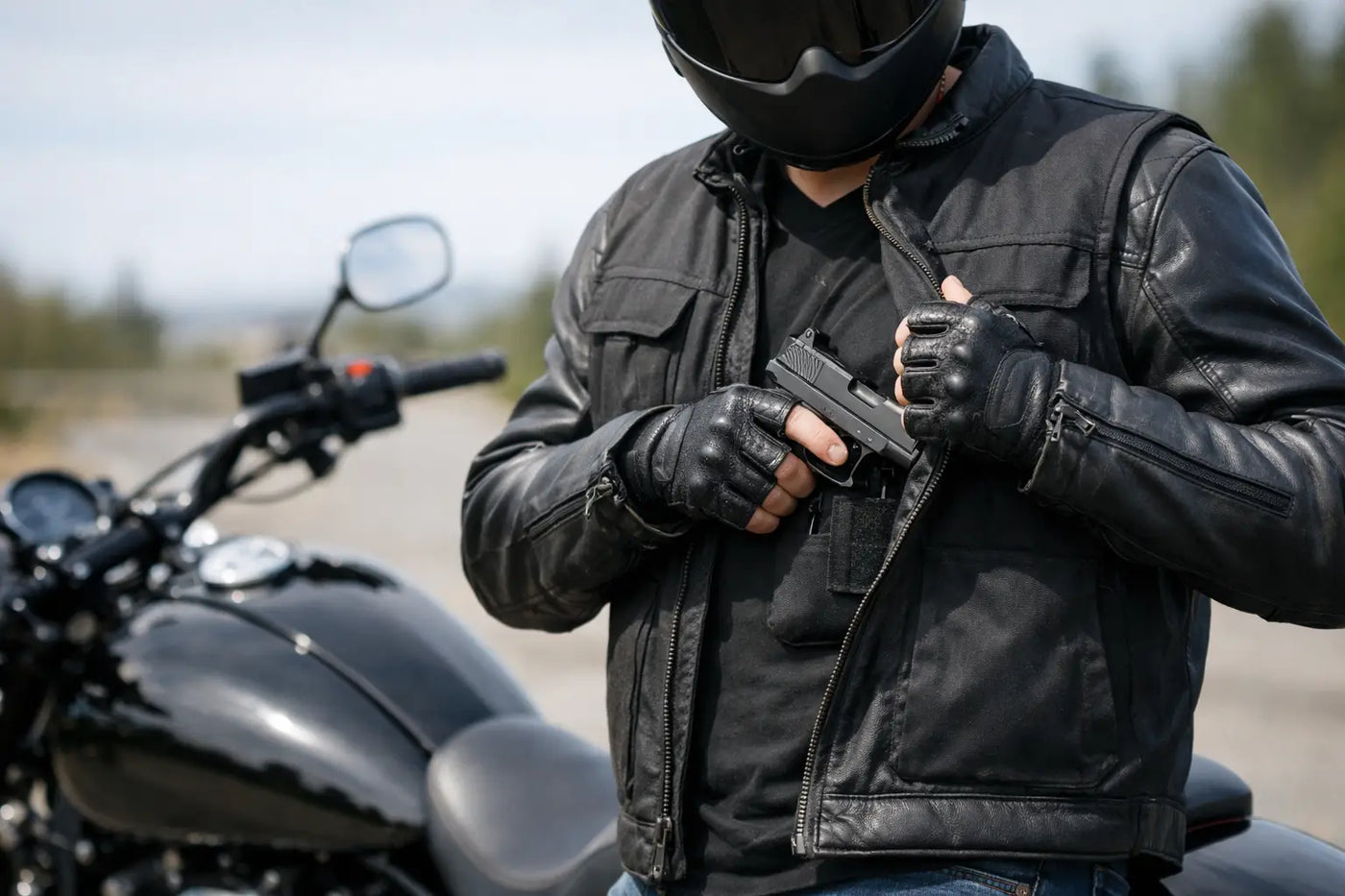
A concealed carry vest can look dead right on the bike and still fail where it counts - draw access, retention, comfort, or clean concealment at speed. That is why a real concealed carry vest review has to go beyond leather weight and snap count. Riders need a vest that works in motion, stays comfortable for long miles, and keeps the firearm stable without printing like a billboard every time the wind hits.
What a concealed carry vest review should actually cover
A lot of product copy talks tough. Fewer reviews get into the details that matter once you throw a leg over the bike. For riders, a carry vest is not just another layer. It is part of your road setup, and it has to balance access, security, and comfort without turning into a bulky mess.
The first thing to look at is pocket design. A proper concealment pocket needs enough depth for the firearm, a secure holster system or retention feature, and an opening that does not fight you on the draw. If the pocket is too shallow, the grip rides high and prints. If it is too soft or loose inside, the firearm can shift while riding. That is a hard no.
The second issue is stability. A vest can feel fine standing in a mirror, then start sagging on the bike because the weight is not distributed well. Heavier handguns expose weak construction fast. If the vest pulls to one side, flaps at speed, or rides up while seated, it is going to get old in a hurry.
Then there is concealment itself. Riders deal with forward-leaning posture, crosswinds, and constant movement. That changes how a handgun sits under the vest. A good vest hides shape without looking oversized and sloppy. Too tight, and the firearm prints. Too loose, and the whole thing looks like borrowed gear.
Fit matters more than most riders think
If you read any concealed carry vest review and the fit section gets rushed, move on. Fit decides comfort, concealment, and access.
A motorcycle vest has to work in two positions - standing and seated. That sounds obvious, but plenty of vests are cut for one and awkward in the other. When seated, the armholes should not bind, the chest should not bunch up, and the bottom should not jam into the seat. At the same time, the carry pockets need to stay reachable.
Length is a big part of this. A vest that is too short can expose the waistband area and shift around at speed. A vest that is too long may interfere with seated comfort or bunch over the holster pocket. Riders who wear layers underneath also need to think ahead. A perfect fit over a T-shirt can become too tight over a hoodie or flannel.
Material changes the fit too. Leather tends to break in and mold over time, but it can start stiffer and feel heavier on long rides. Textile and canvas options usually feel lighter and can breathe better, but they may not deliver the same structure or classic biker look. There is no universal winner here. It depends on your climate, your ride style, and how much structure you want around the carry setup.
Access on the bike versus off the bike
This is where a lot of buyers get tripped up. Fast access in a showroom is not the same as real access on the road.
Most concealed carry vests use left- and right-hand interior pockets so riders can choose their preferred side. That is a smart setup, but pocket angle and opening style matter. A zipper can give more security, but it may slow the draw. A snap can be faster, but only if it opens clean and stays reliable over time. Hook-and-loop closures can work, but some riders hate the noise and the wear factor.
The better designs let your hand get a consistent grip without fishing around. That means the pocket opening should be wide enough, and the holster position should keep the firearm oriented the same way every time. If the gun rotates inside the pocket or settles too low, your draw gets messy fast.
For most riders, the truth is simple - vest carry is usually more practical off the bike or immediately after dismounting than while actively riding. That does not make it a bad choice. It just means expectations should be realistic. A vest is about discreet carry, stable storage, and access when needed, not movie-scene speed while rolling down the interstate.
Retention and safety are not optional
Any concealed carry vest review worth reading should spend time here. A firearm pocket without real retention is just a loose compartment with a dangerous job.
Look for vests with built-in holster features, reinforced pocket interiors, or adjustable retention straps. A generic oversized pocket is not enough. The firearm should stay in place through vibration, road bumps, and normal body movement. If it swings, tips, or bounces, that is poor design.
Trigger protection also matters. The holster area should keep the trigger covered and the firearm separated from other items. Never use the same pocket for random gear, keys, wallets, or anything else that can interfere with the firearm. A dedicated carry pocket is the standard. Anything less is cutting corners.
This is also where build quality starts separating budget buys from smarter value picks. Double stitching, reinforced seams, and heavy-duty closures are not cosmetic upgrades. They support the weight of the firearm and repeated use over time. Cheap pocket liners and weak stitching tend to fail exactly where the gun rides.
Comfort on long rides
A vest can check every tactical box and still end up hanging in the closet if it is miserable after an hour in the saddle. Comfort matters because riders actually wear their gear for real miles, not just quick errands.
Weight is the first factor. A heavy leather vest with a full-size handgun, spare mag, wallet, phone, and patches can turn into a load. Some riders like that planted, substantial feel. Others want a lighter vest that disappears once it is on. Neither camp is wrong, but you need to be honest about how and where you ride.
Breathability matters more than people admit, especially in hot-weather states. Mesh lining, venting, or lighter interior materials can make a big difference. A vest that traps heat may still look great in spring and fall, but become unbearable in summer traffic.
Shoulder cut matters too. If the vest carries weight poorly, you feel it in the neck and upper back. That gets worse on long highway runs. A good vest distributes weight without digging in, and it stays planted without needing constant adjustment at fuel stops.
Style still counts - this is biker gear
Let’s be honest. Nobody shopping this category wants a vest that looks like range gear pretending to be biker gear. The right vest has to carry right and look right.
That means the cut should work with jeans, boots, leather, flannel, or a jacket underneath. It should have enough edge to fit the culture without piling on gimmicks that hurt function. Clean lines, durable hardware, and room for patches all matter to a lot of riders.
This is where some brands get the balance right and some miss it badly. Overbuilt tactical styling can look out of place on a cruiser rider. On the other side, a fashion-first leather vest with weak carry pockets is just costume. The sweet spot is road-ready gear with concealment features built in, not slapped on.
For shoppers browsing a store like American Legend Rider, that balance is the appeal. Riders want practical gear, but they also want a vest that belongs at the rally, the roadside stop, and the local bike night.
So what makes a good buy?
A strong concealed carry vest review usually ends up in the same place. The best choice is not the one with the most features on paper. It is the one that fits your handgun, your body type, your riding posture, and your climate.
If you ride long distances, prioritize comfort and weight distribution. If concealment is your top concern, focus on cut, structure, and anti-printing fit. If you carry a larger handgun, do not compromise on pocket reinforcement and retention. And if you mostly want one vest that covers both biker style and daily practicality, avoid anything that leans too far into either fashion or tactical excess.
Price matters, sure. But cheap becomes expensive fast when the pocket sags, the lining tears, or the fit never works on the bike. A better value is a vest that feels solid, gives reliable access, and holds up over time without looking like generic gear.
The smart move is to shop with a clear checklist instead of chasing hype. If the vest gives you stable carry, clean concealment, road comfort, and the right biker look, that is the one worth wearing mile after mile. Buy for the ride you actually take, not the fantasy one.



Thank you very much