
Picture a matte black sportbike rolling into a gas station with a bright red Elmo head bobbing on top of the rider's helmet. Half the lot laughs. The other half pull out their phones. That is what a good Elmo motorcycle helmet cover does. It turns a standard full-face lid into the most photographed helmet at any meetup, charity ride, or parking lot hangout.
This guide covers every Elmo helmet cover style available right now, which helmet types they actually fit, how to install one so it stays put at 70 mph, and the mistakes that waste your money. If you have been searching for an elmo motorcycle helmet that stands out, here is everything you need to know before buying.
What Is an Elmo Motorcycle Helmet Cover?
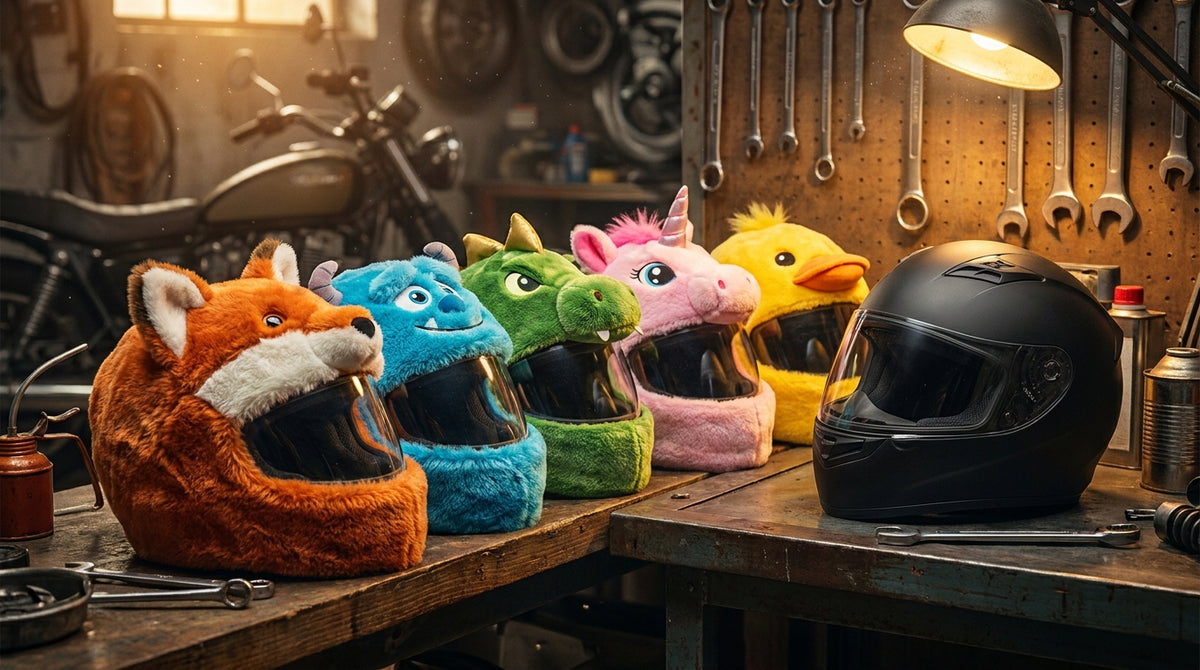
An Elmo motorcycle helmet cover is a plush, stretchy sleeve that pulls over a standard full-face motorcycle helmet. The cover is shaped and colored to look like the Sesame Street character, complete with oversized googly eyes near the crown and Elmo's signature wide grin across the front.
These covers are made from polyester plush fabric with elastic banding at the base that grips the helmet shell. A typical cover weighs around 6 to 8 ounces and adds roughly 2 to 3 inches of height to the helmet's profile. That extra height is what gives the character its exaggerated, bobble-head look on the road.
Elmo helmet covers are purely cosmetic. They sit on top of a DOT or ECE-certified helmet and do not change the helmet's safety rating. The cover does not replace a helmet. You still need a properly rated lid underneath. Most covers fit helmets with a head circumference of 22 to 24.5 inches (56 to 62 cm), which spans medium through XL in most brands. The elastic stretch accommodates some variation, but always check the seller's sizing chart before ordering.
If you want a broader look at what is out there, the full guide to motorcycle helmet covers breaks down every type on the market.
Elmo Helmet Cover Styles: Red, Blue and Green
Classic Red Elmo
The classic red Elmo is the most popular option and the version most riders picture first. It features bright red plush fabric with oversized white-and-black eyes positioned near the crown. The mouth area is a wide, open grin that sits across the visor zone. The red color pops hard against black, white, and matte helmets. On a sunny day, this cover is visible from 200 feet away.

Green Elmo (Monster Green)
The green version swaps the color to a deep monster-green finish. Same eye placement, same grin shape, different vibe. This one works especially well on darker base helmets where the green-on-black contrast stands out. Riders who want the Elmo shape without the "everyone has the red one" problem lean toward green. It also pairs well if you ride next to someone in the classic red.

Blue Elmo
The blue variant rounds out the lineup. It shares the same universal-fit design and elastic banding as the red and green versions. Some riders see this one as a nod to Cookie Monster from the same show, though it is sold as a blue Elmo cover. If you ride with a group and want matching character helmets in different colors, the three-color set gives you options for the whole crew. All three versions run $37.95 at the time of writing.

How Elmo Helmet Covers Fit Different Helmet Types
Full-face helmets are the ideal match. The smooth, rounded shell gives the elastic banding a consistent edge to grip, and the plush sits flush without bunching or sagging. Every Elmo cover on the market is designed with the full-face shape as the default.
Modular (flip-up) helmets work with some adjustment. The chin bar hinge creates a small gap where fabric can bunch near the jaw. Fold the cover's lower edge under the chin bar opening to get a clean look. It holds fine once set, but plan on an extra minute of fiddling compared to a solid full-face lid.
Half helmets and three-quarter lids are a poor match. The open face means there is no continuous bottom edge for the elastic to grab. The cover will slide backward, sag on one side, and eventually fall off at speed. If you ride with a half helmet, character covers are not the right accessory for your setup.
Adventure and dual-sport helmets with a peak visor can also cause problems. The peak blocks the cover from sitting flat on top. If your peak detaches with a few screws, remove it first and the cover usually fits. Most ADV riders skip character covers, but it is doable on a peakless shell.
For riders who want a fun look on a half helmet instead, check out the funniest motorcycle helmets that come with built-in designs.
How to Install an Elmo Helmet Cover
The whole process takes under two minutes. Here is how to do it right.
- Start from the top. Stretch the opening of the cover wide and pull it down over the crown of the helmet first. Center Elmo's eyes so they sit on top, roughly above your forehead area.
- Work down the sides. Pull the fabric evenly around both sides. Tuck the elastic banding under the helmet shell's bottom lip. On most helmets, the elastic sits just above where the EPS liner edge meets the outer shell.
- Align the face. Adjust the front so the eye and mouth design sits centered on the helmet. Open and close the visor twice to make sure the cover does not interfere with the mechanism. If fabric catches on the visor hinge, tuck it back and test again.
A cover that feels snug off the helmet will actually perform better on the road. Tight elastic means less flapping at speed. If the cover shifts during a ride, pull over and re-tuck the elastic at the base. Never adjust it while moving.
Does an Elmo Cover Change the Way You Ride?
In small ways, yes. At highway speeds between 65 and 80 mph, the plush fabric catches more wind than a bare helmet shell. You will notice a slight increase in drag on your neck, especially in crosswinds. On a sportbike in a tuck, the effect is minimal. On an upright cruiser with a windshield, you barely feel it. Without a windshield on an upright riding position, you notice it more.
Visibility is worth checking every time you install the cover. Make sure the fabric does not push against your visor or reduce your peripheral view. The visor must open and close freely with zero resistance from the cover. If the plush bunches near the chin vent or side vents, it can also muffle your hearing slightly.
The cover adds no structural protection and offers no impact absorption. It is a cosmetic accessory only. In rain, the plush soaks up water and gets heavy. A wet cover can add 3 to 4 extra ounces pulling unevenly, which adds minor neck strain on long rides. Most experienced riders remove the cover before heading out in heavy rain.
One practical upside: the plush fabric does reduce minor cosmetic scratches from parking-lot bumps, seatback contact, or bag rubs. Some riders keep a cover on between rides just as a soft protector for their helmet's paint job.
Where Riders Actually Wear Elmo Helmet Covers
Charity rides are the top spot. Events like Toys for Tots runs and children's hospital benefit rides draw hundreds of riders in character gear. An Elmo cover at a kids' charity ride gets more high-fives than any custom paint job. Several organized rides in Florida and Texas specifically encourage character helmets for the kids watching from the route.
Group rides and meetups are the second most common place. When 15 bikes line up at a diner, the one with a red Elmo head on top gets all the photos. Riders who want to be recognized in dashcam and GoPro footage from group rides use character covers as an easy identifier.
Daily commuters wear them too, though less often. A few riders in the bunny helmet cover community treat their covers as daily wear. The same applies to Elmo. Expect questions at every stoplight and a few thumbs-up from other cars. If you enjoy the attention, it makes a boring commute a lot more fun.
Track days and racing events are not the right setting. The added drag and loose fabric are not worth the risk in a performance environment. Keep character covers for street riding and events.
Character Helmet Covers Compared
Elmo is not the only character cover on the market. Here is how the popular options stack up against each other.
| Cover | Price Range | Material | Best For | Fits Full-Face | Standout Feature |
|---|---|---|---|---|---|
| Elmo (Red) | $35-40 | Polyester plush | Charity rides, kids' events | Yes | Instantly recognizable from any distance |
| Elmo (Green) | $35-40 | Polyester plush | Riders who want a unique twist | Yes | Same shape, stands out from the red crowd |
| Elmo (Blue) | $35-40 | Polyester plush | Group rides with color coordination | Yes | Cookie Monster vibes, crew matching |
| Stitch | $35-40 | Polyester plush | Disney fans, younger riders | Yes | Big ears add extra height and visibility |
| Bunny | $30-40 | Polyester plush | Easter rides, women riders | Yes | Floppy ears move in the wind |
| Pikachu | $30-40 | Polyester plush | Anime fans, cosplay rides | Yes | Pointed ears, bright yellow contrast |
All six options use the same universal-fit elastic design. The differences come down to color, ear shape, and which character you want staring back at the car behind you. For a full rundown of character and novelty options, the Pokemon motorcycle helmet guide covers the anime side in detail.
How to Care for Your Elmo Helmet Cover
Road dust, bugs, and UV exposure break down plush fabric faster than most riders expect. A cover that looked perfect in month one can fade and mat by month four without basic care.
Hand wash the cover in cold water with a mild detergent once a month, or after any particularly dusty or muddy ride. Machine washing on a gentle cycle works too, but skip the dryer completely. Heat shrinks the elastic banding and warps the plush shape. Lay the cover flat on a towel and let it air dry.
Store the cover in a cloth bag or pillowcase when you are not using it. Direct sunlight fades the red dye faster than any other factor. Riders who leave covers on their helmets in a sunny garage all week see noticeable fading within two months. The green and blue versions hold color slightly longer than red because the dyes are more UV-stable, but all three benefit from shade storage.
With regular use and proper care, expect a cover to last 1 to 2 riding seasons before the plush thins or the elastic loosens enough to need replacing. Replacement covers run $35 to $40.
5 Mistakes to Avoid When Buying an Elmo Helmet Cover
1. Buying without checking your helmet type. Half helmets, open-face lids, and peaked ADV helmets will not hold a standard elastic cover. Confirm you ride with a full-face or modular helmet before ordering.
2. Skipping the sizing chart. A cover that is too small stretches the elastic past its design limit and loosens within a few weeks. One that is too large sags at speed and catches extra wind. Measure your helmet's widest circumference and compare it to the seller's chart. Most covers fit 56 to 62 cm.
3. Riding in heavy rain with the cover on. Wet plush absorbs water and adds uneven weight. The cover also takes hours to dry if it gets soaked through. If rain is in the forecast, take 30 seconds to pull the cover off and stuff it in a saddlebag.
4. Going with the cheapest no-name option. Bottom-dollar marketplace covers often use thinner elastic that fails after a handful of rides. The stitching around the eyes and mouth tends to unravel first. A $5 savings is not worth a cover that falls apart on the highway.
5. Never cleaning it. Bug guts, road grime, and UV damage stack up ride after ride. A cover that never gets washed mats down, loses its color, and starts to smell. A five-minute hand wash once a month keeps it looking new.
An Elmo motorcycle helmet cover is one of the cheapest, most effective ways to stand out on any ride. Pick the color that matches your style, double-check your helmet type, and install it snug. If you are shopping for one, the motorcycle helmet covers collection has every color in stock.

No comments yet. Be the first rider to weigh in.